Stephen McKean, Giosu\`e Muratore, Wern Juin Gabriel Ong: Quadratic counts of highly tangent lines to hypersurfaces https://t.co/b4ghYGAzf6 https://t.co/PjorS6LKOw https://t.co/u1e4Zze7Hi
Today, the details of the second edition were announced https://t.co/uyiBaONivX
and I encourage all interest in the region to attend.
Thanks to the round 2 organizers for making it happen.
About a year and a half ago, David Bowman and I decided to organize a day-long workshop in algebraic topology, complementing the Kleine AG which has been running in North Rhine-Westphalia for decades.
It took some time, but first edition ran last October at the MPIM.
I had the great privilege to lead the A1BrouwerDegrees group at the Macaulay2 workshop this past summer in Madison, Wisconsin. V2 of the package is available in Macaulay2 v25.11 and later.
https://t.co/M4y140aCB6
@DiracDeltaFunk I am far from qualified about such matters, but I think the models that are scoring on the Putnam for example produce their responses in Lean, and are moreover specially trained for mathematics, versus LLMs which not specifically trained in this way.
Twenty years ago, a colleague in ancient philosophy asked me if I'd be willing to read Greek with an undergrad in the summer. I agreed. We had a great time reading Aristotle, which he hadn't read in Greek before. NOW ...
Reading some notes for my thesis which goes "In classical derived algebraic geometry..."
So I guess everything before the year 2020 is classical now...
The ancient Greeks loved enumerative geometry. So did mathematicians for millennia. Then the field faded away. Now a fresh crop of researchers are reinvigorating it. https://t.co/WlfghUtY8V
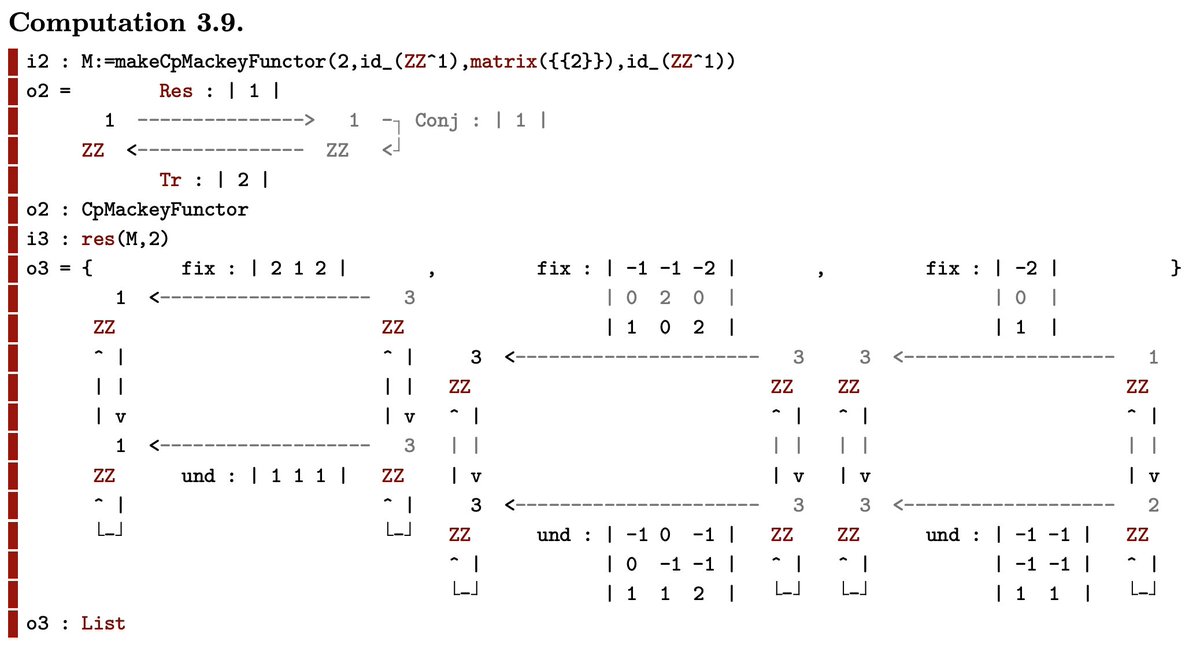
Very very happy with this project we ran at the M2 workshop this summer in Madison -- it is now possible to do compute Ext, Tor, etc. of C_p-Mackey functors by computer!
The image below show you can use the package to compute a free resolution of a C_p-Mackey functor.
The University of Chicago recently announced pauses on admissions to some of its humanities doctoral programs. @Tyler_A_Harper argues that it's “a particular gut-punch to the humanities, not just at the university itself, but nationally and even globally.” https://t.co/NcRYm5agPz
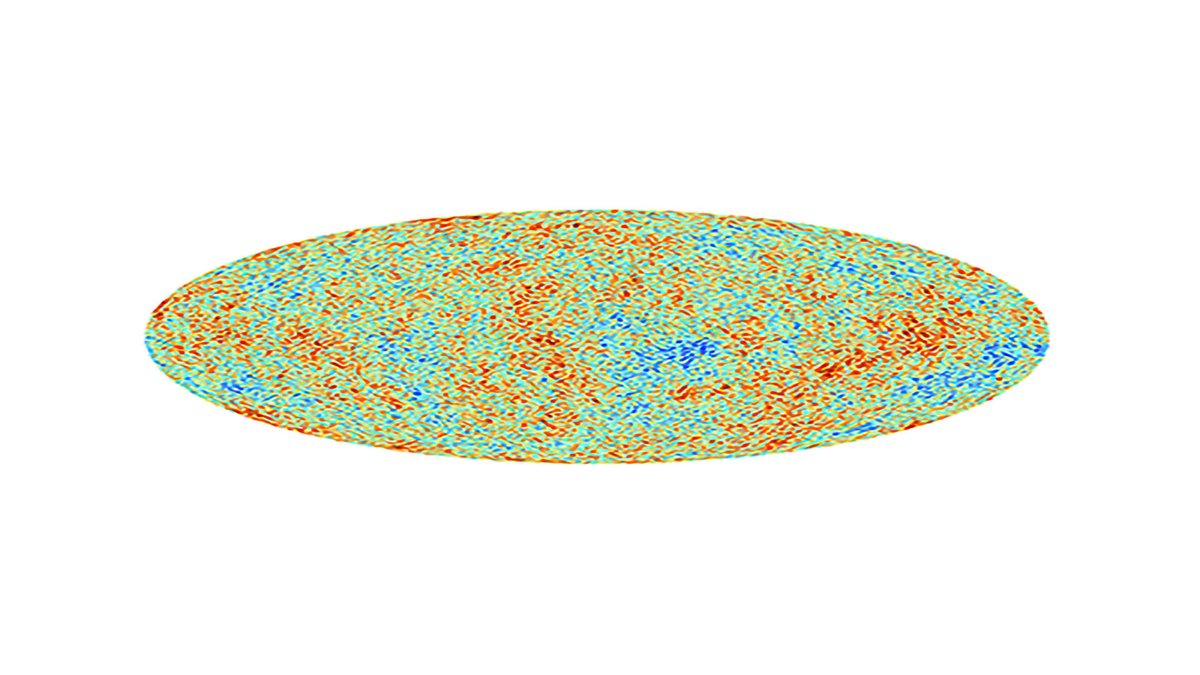
In “Algebraic and Positive Geometry of the Universe: From Particles to Galaxies,” Claudia Fevola and Anna-Laura Sattelberger explore connections that drive progress between algebraic geometry, the theory of 𝐷-modules, combinatorics, and physics in this months’ Notices.