Sometimes it's good to look back, smile and give a little wink..then strike the match and burn the bridge.
Keep moving towards the amazing things ahead
Pretty hard to imagine...
This is a model of what the Earth was like before the Younger Dryas events....
Just imagine all that melt water...most of the civilizations before the event are likely under the waves.
Coastal areas where human's populate, would have been diminished.
Imagine seeing the first survivors reach your shores.
Time has taken its toll on this old lone wolf who has wandered our area by himself for the past 3 years (footage from this past winter). He looks battered and weather from an intense and rugged lifestyle.
Aside from just being old, the wolf has a significant limp because he is missing his two front right toes. You can see this in the first sequence well.We don’t know how that injury happened.
How a wolf in this condition survives year after year is certainly intriguing. In particular, how he keeps himself fed is fascinating because it is hard to imagine him chasing down deer by himself but possible he is capable of it.
We suspect he is likely an expert scavenger, finding morsels of food here and there, but can a wolf like this persist just by scavenging all year? More specifically, is there enough food lying around on the forest floor year round for a wolf to exist solely on scavenging? Seems hard to imagine but perhaps.
Anyway, many years ago, we captured this wolf on camera once or twice when he was part of a pack that lived just outside of our study area. The pack made a few forays into our area which is when we observed him. At that time, the wolf was in his prime, though he still had the distinctive largely white face, and appeared to be the breeding male of that pack.
But such times would not last for this fella. And now after many years on his own, it seems this wolf likely doesn’t have many years left. "Time the conqueror", as Jackson Browne put it, has taken its toll.
Beauty of Nature in the Maldives 🇲🇻
Where the ocean meets the sky, every shade of blue feels like a dream. Turquoise waters, endless white sands, gentle waves, and breathtaking sunsets — the Maldives is nature at its most beautiful.
A place where you can slow down, breathe deeply, and simply enjoy the magic of being surrounded by paradise.
Some places are beautiful in pictures. The Maldives is even more beautiful in real life. 🌴
#Maldives #MaldivesTravel #NatureLovers #TropicalParadise #IslandLife #OceanDreams #TravelInspiration #ParadiseFound #Wanderlust #BeautifulDestinations
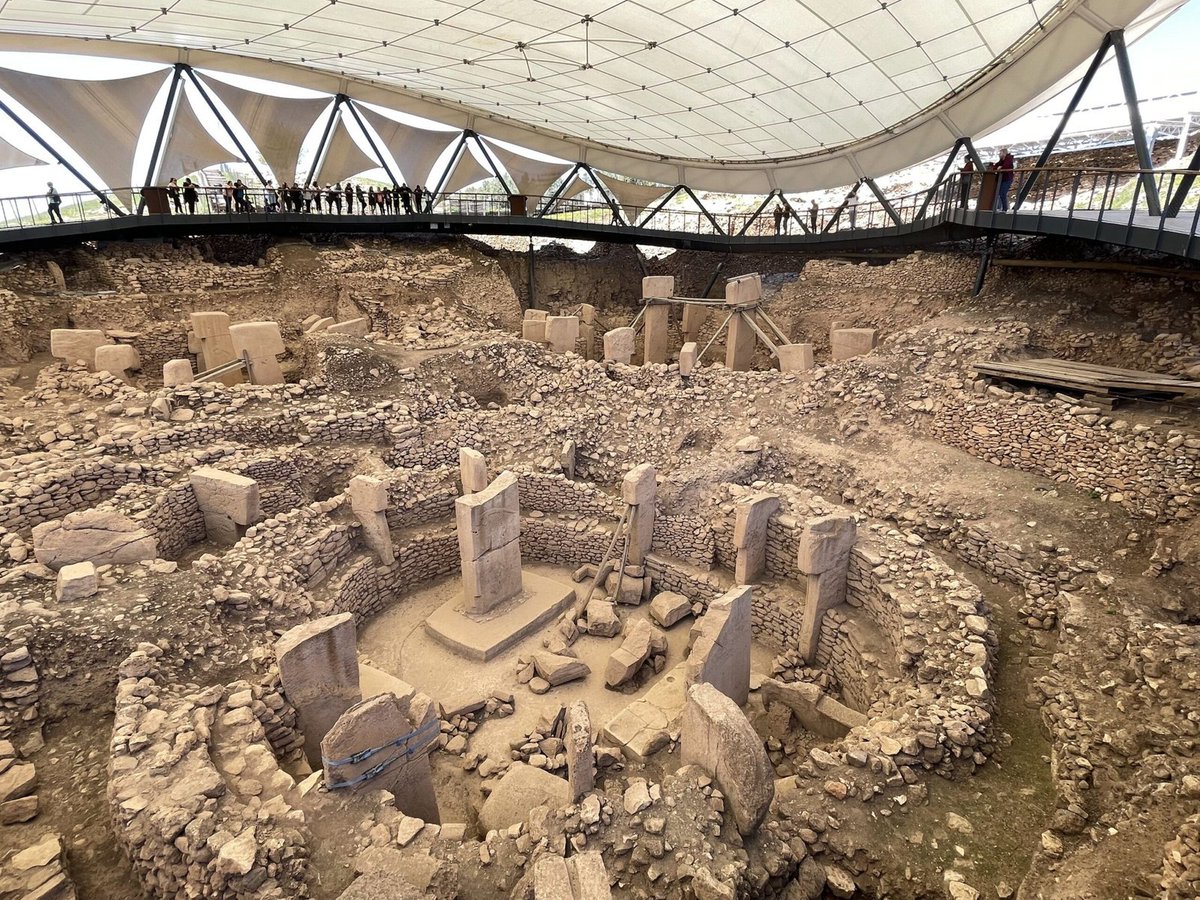
WHAT IF GÖBEKLI TEPE WASN’T THE BEGINNING… BUT THE REBUILD?
I keep coming back to this because the timeline is strange as all hell. Hear me out..
Göbekli Tepe appears around 9600 BCE, almost immediately after the Younger Dryas ended which is a period of crazy violent climate change and rising seas.
And when it appears, people are already moving massive stone pillars, carving complex symbols and organizing huge construction projects. Hmmm?
That doesn’t look like humanity starting from zero.
To me it looks like survivors remembering something.
Imagine our civilization collapsed tomorrow. Ten years later, a small group arrived who still understood agriculture, astronomy, medicine and construction.
To us, they would just be educated survivors.
To children born after the collapse, they would look like gods.
Then thousands of years later, the oldest written flood stories appear in Sumer. They describe a world before the Flood, a destroyed civilization and strange sages called the Apkallu who preserved and taught knowledge.
Im not saying crazy shit like they had smartphones 12,000 years ago.
I’m saying an organized coastal civilization may have existed, been destroyed and left most of its evidence beneath rising sea levels.
I don't think Göbekli Tepe is where civilization began.
It could be the first thing built after the old world ended.
It could also be that the gods were simply the last people who remembered how everything worked.
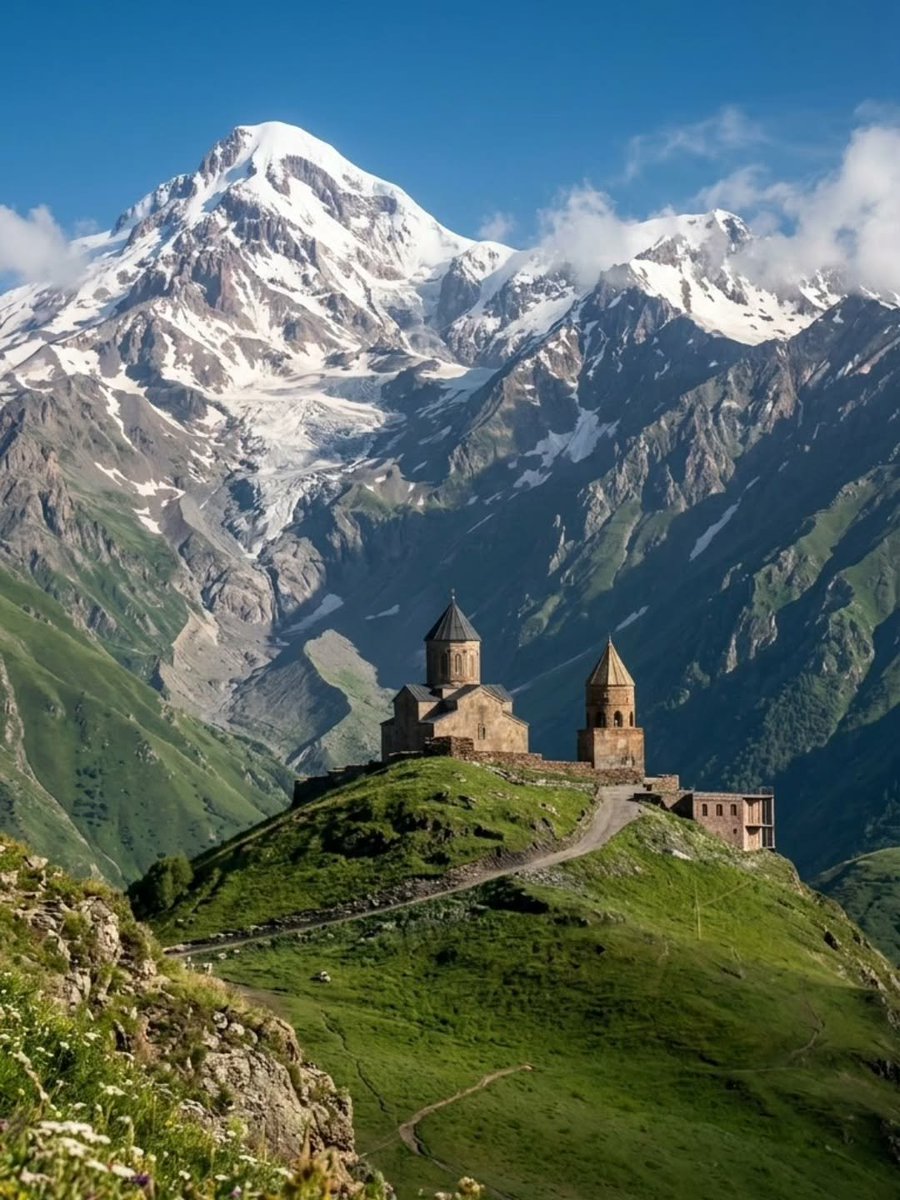
🇬🇪 Georgia ⛰️ Nestled between Europe and Asia, Georgia is a land of dramatic mountain peaks, ancient monasteries, charming villages, and legendary hospitality.
Some scenery is so breathtaking that simply gazing at it from afar is enough. In an instant, you feel your heart grow still. Snow-capped mountains, ancient pagodas and cherry blossoms! The beauty of this moment is well worth capturing!🦋💕🍎 🦋
One of those moments that I will never quite forget. While out on Charlotte Harbor with some good friends, we had the incredible experience of seeing several dolphins swimming and playing around the boat. One of them stayed alongside us, actually keeping up with the boat as we moved through the water. Watching it move so effortlessly was such an exciting and unexpected gift—it truly felt like nature was putting on a little show just for us.
I’m so thankful I had my phone ready and was able to capture one of them on video. Moments like this are what make being out on the water so special. It’s not just the beautiful scenery or the time spent with friends—it’s those unexpected, unforgettable encounters that you get to carry with you long after the boat ride is over.
Van Gogh once wrote one of the most beautiful sentences I have ever read:
"Just as we take the train to go to Tarascon or Rouen, we take death to reach a star."
You have seen the painting below hundreds of times, but you probably do not know the story behind it, and it is as unbearably beautiful as the words you just read...
Van Gogh had painted the night before. Yet, he had never painted it like this, because he had never been this far down, or reached this far up.
After a breakdown, Vincent had committed himself, of his own will, to an asylum at Saint-Rémy, a former monastery for the mentally ill. He was thirty-six years old. From the window of his room, behind iron bars, he could see a wheatfield and a strip of sky. He described it to his brother Theo like a man who had found something to hold onto:
"Through the iron-barred window I can make out a square of wheat in an enclosure, above which in the morning I see the sun rise in its glory."
Out of that view, that narrow slot of world seen from inside a mental institution, he made one of the most famous paintings that has ever existed. The night sky rolls and swirls like a living sea, eleven stars and a blazing crescent moon burn and turn in currents of blue, the whole heavens surging with a force that feels almost too large for the canvas to hold...
Vincent had trained as a preacher once, and though he had long since broken with the church, he never stopped reaching for something larger than himself. He had once written Theo a line that explains this whole painting:
"I have a tremendous need for, shall I say the word, religion. So I go outside at night to paint the stars."
That is what he was doing here: reaching for the divine the only way he had left, with a brush and a sky full of light. He made it locked away, ill, and more alone than he had ever been, and instead of despair he gave us what may be the most beautiful thing anyone has ever painted.
The lower he sank, the higher his work climbed, until he turned the view from a barred asylum window into the closest thing we have to heaven.
And if he was right, if death really is only the train we take to reach a star, then somewhere out past the swirling blue he painted from that cell, Vincent finally made the journey he was always looking up toward...