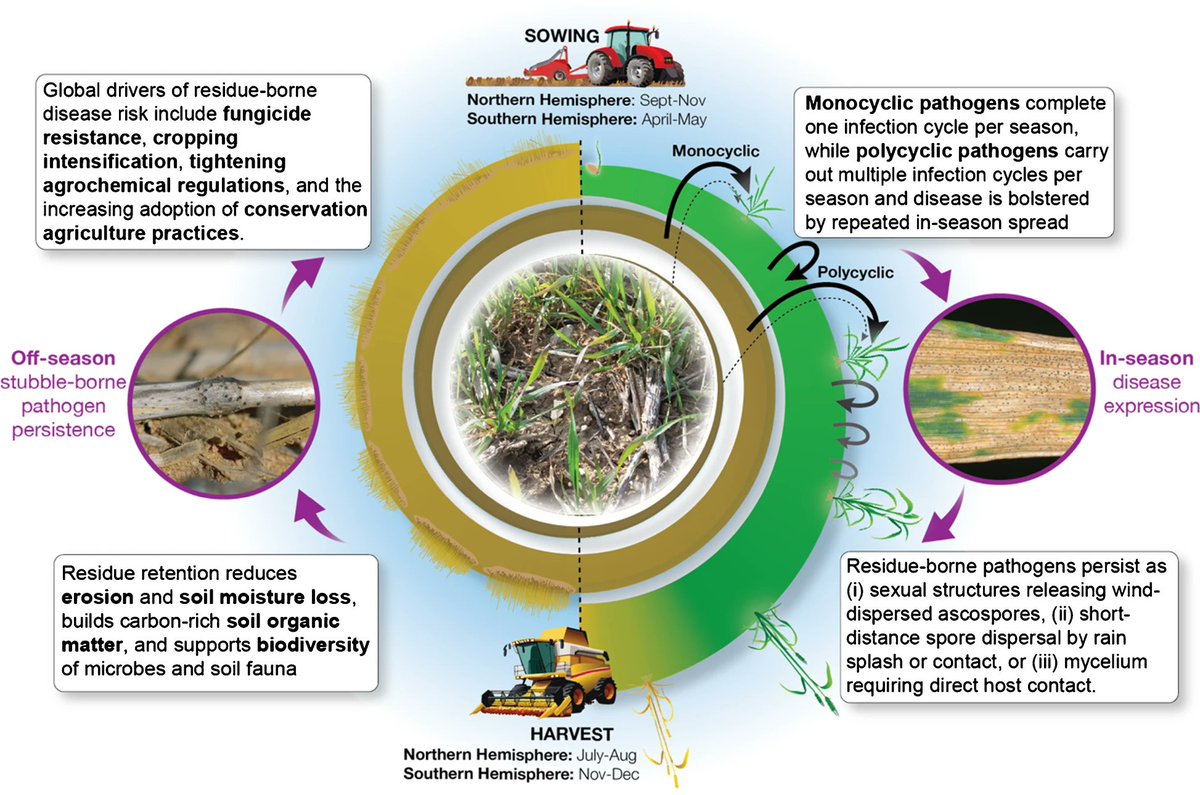
Glad to share our latest review, “Breaking the brown bridge for residue-borne fungal disease control in broadacre agricultural systems” — led by Katia Taylor @CSIRO 🙏 through a research linkage project with #BIOGER@INRAE_DPT_SPE@INRAE_Intl https://t.co/4MJto6y30P
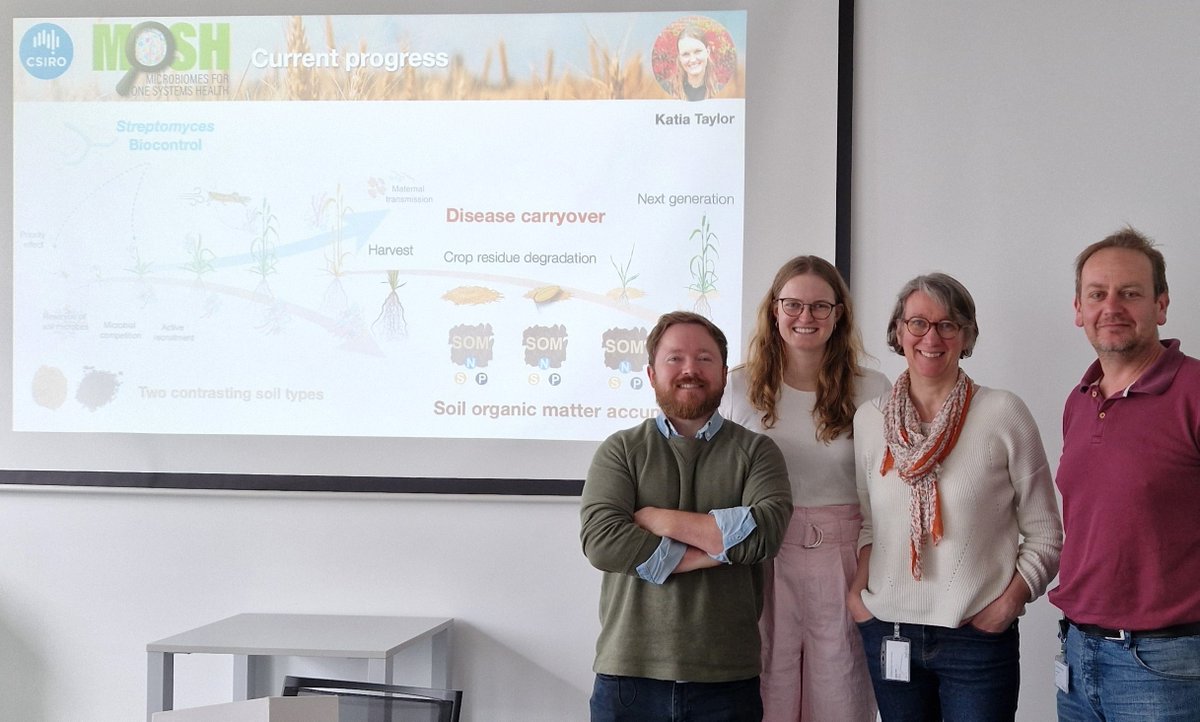
Thrilled to have hosted this week @INRAE_Bioger Simon Law & Katia Taylor for a linkage project @INRAE_France-@CSIRO#Australia. Great discussion on the microbiome of crop residues, both a challenge (source of pathogen inoculum) and a solution (good for soil health and C storage).
Multi-isolate GWAS identifies broad-spectrum and isolate-specific resistance-associated loci for #Septoria tritici blotch in synthetic hexaploid wheat https://t.co/n6xoqiMrrO
🚨 IPPC Pest Alert 🇱🇺
Luxembourg has detected Xylella fastidiosa, an emerging pest under the IPPC Pest Outbreak Alert and Response System (POARS), at 3 vineyard sites.
🔎 Authorities are taking action to prevent its spread.
🔗 Read the Pest Alert here: https://t.co/vtrZWogIli
#PlantHealth🌱 #IPPC
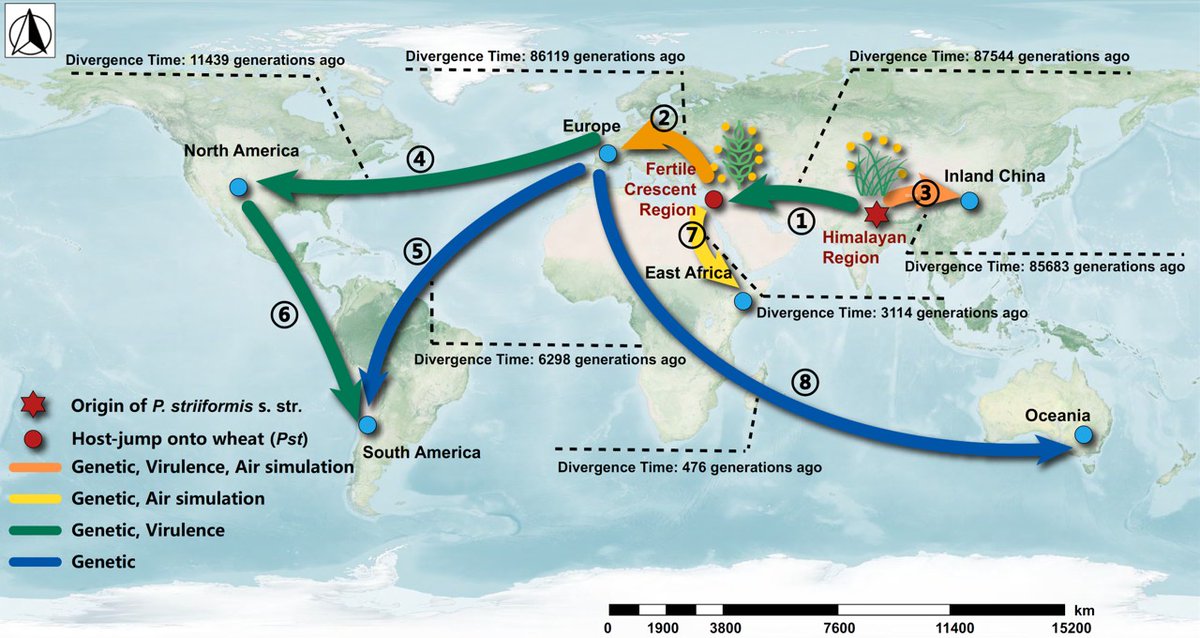
Global rise of a #wheat pathogen [#Puccinia striiformis f. sp. tritici] through two-stage evolutionary emergence coupled with aerial dispersal @NatureComms https://t.co/I5TsHvZ8My
I put this in Claude. Response unequivocal. @MDPIOpenAccess, you should try!
“Can you identify errors in this paper? Base your assessment on an in-depth literature search. Give me an opinion as a post-publi reviewer + your assessment of MDPI ed policy.”
https://t.co/UA5CMxWcp9
Interaction-specific early wheat responses to #Zymoseptoria tritici share enhanced defense-related transcription during incompatibility https://t.co/ptvnbvA9BX
"Plant biosecurity and phytosanitary regimes facing potential instrumentalization dynamics": the latest version of my article as @SSRN preprint, this time full in English https://t.co/iLmoxEgNmp
"Adaptation in #Zymoseptoria tritici: Implications of fungicide use and temperature conditions", PhD thesis by Eula Gems Mateo Oreiro #SLU#Sweden
https://t.co/03CA1yVQVy
Presentation by Subhasish Basak (@INRAE_France#BIOGER / #SAVE Bordeaux) of his poster on the "Evaluation of varietal diversification for sustainable control of #Septoria tritici blotch: a multi-scale modeling approach, at #Mix4Agroecology conference.
Interesting talk by Audrey Deheinzelin #AgroClim@INRAE_France on "Evaluating the reliability of a coupled crop-disease model for simulating intercropping effects on aerial fungal diseases" at #Mix4Agroecology conference.
Nice talk by Maxence Remérand #GQE@INRAE_France on "Formalization of plant-plant-pathogen interactions in the biodiversity ecosystem-functioning framework: case study in #wheat varietal mixtures" at #Mix4Agroecology conference.
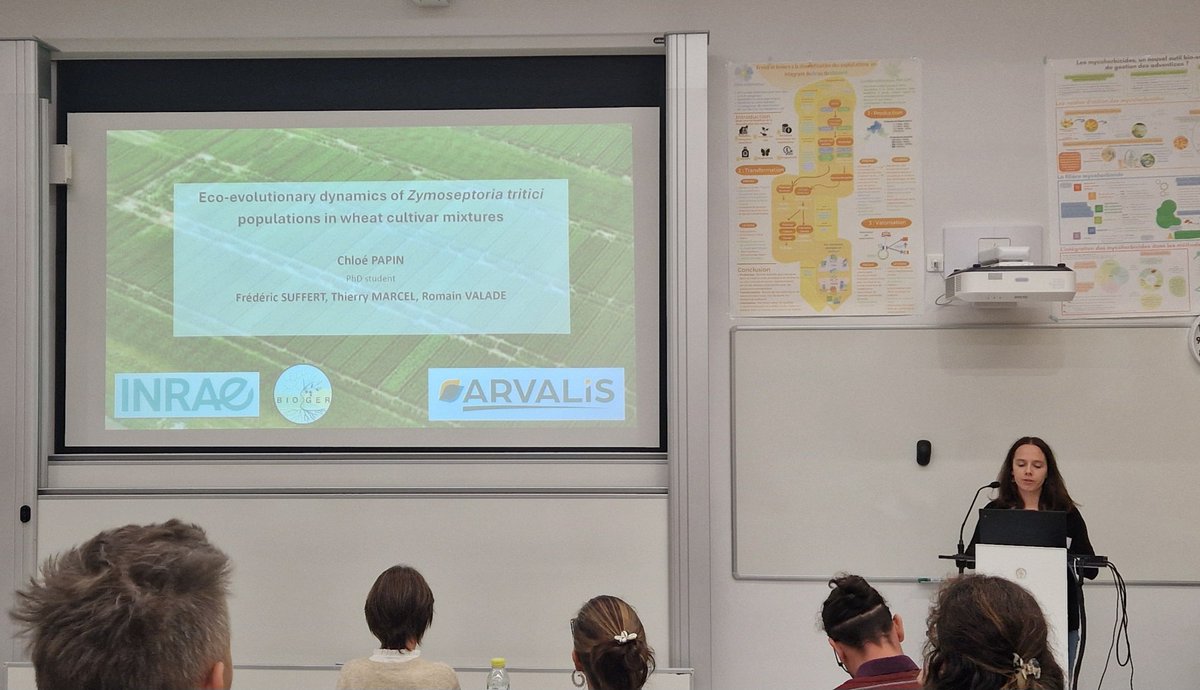
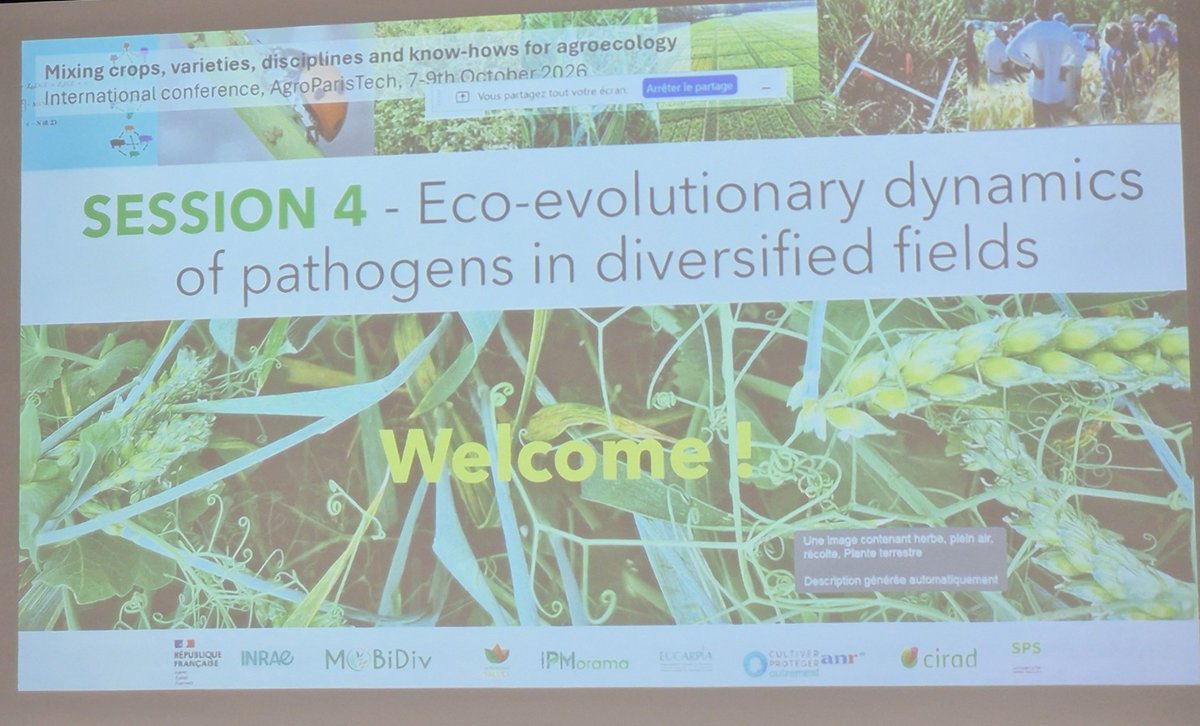
Now starting Session 4, “Eco-evolutionary dynamics of pathogens in diversified fields” at #Mix4Agroecology, introduced by Tiphaine Vidal #BIOGER@INRAE_DPT_SPE.
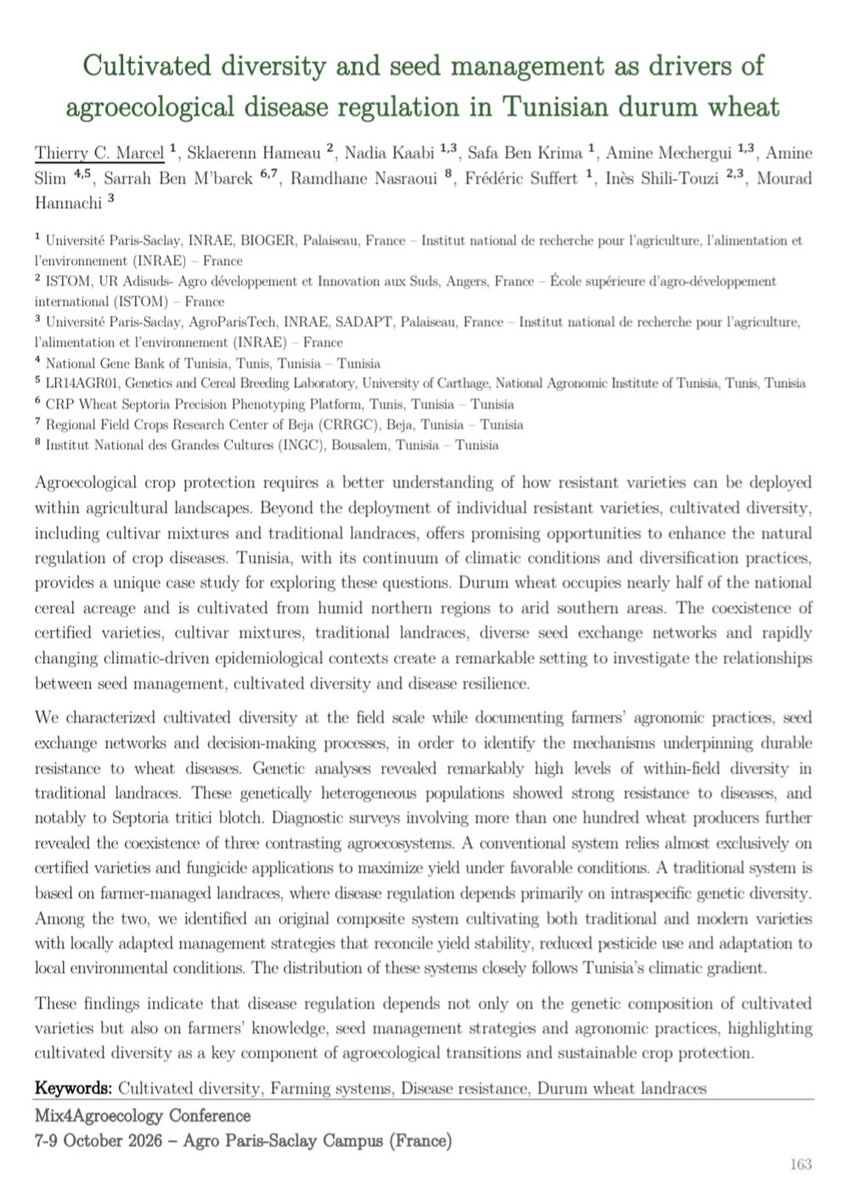
Presentation of the collaborative French-Tunisian project "Cultivated diversity and seed manegement as drivers of agroecological disease regulation in #Tunisian durum #wheat" by Thierry Marcel #BIOGER@INRAE_DPT_SPE at #Mix4Agroecology conference.
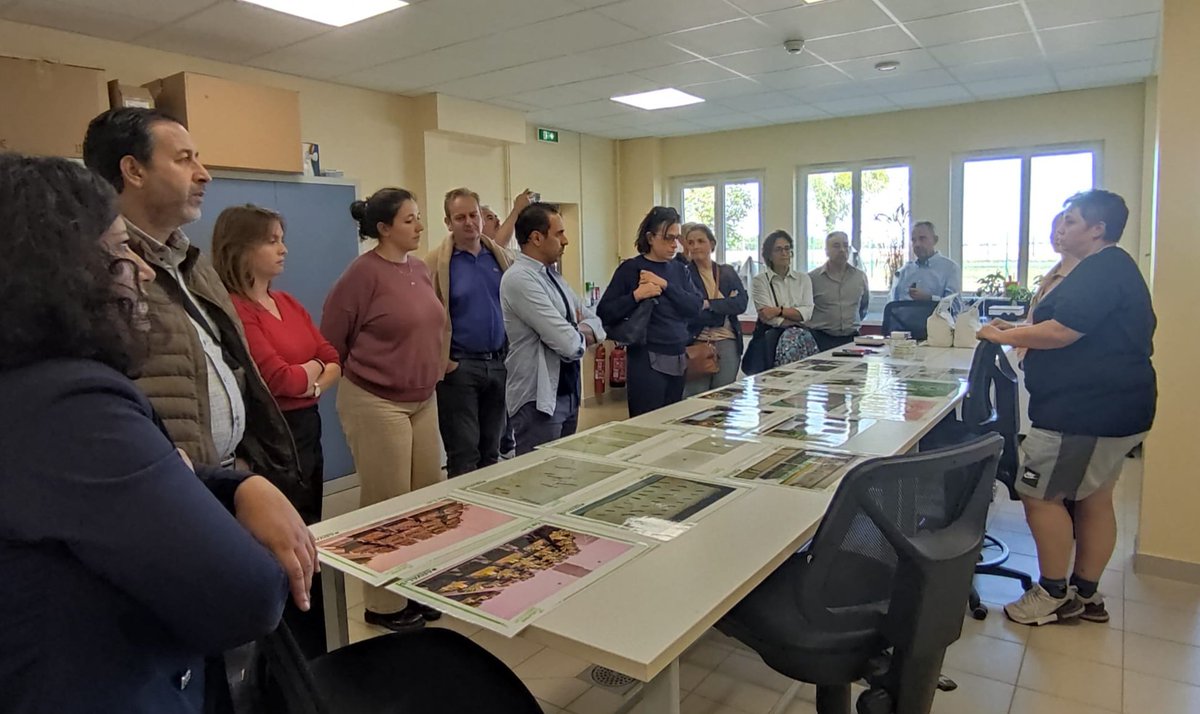
Ravis d'accueil nos collègues tunisiens 🇹🇳 à #BIOGER@INRAE_IDF@AgroParisTech pour poursuivre les échanges sur le thème "Résistances variétales en céréaliculture" en marge de la conférence #Mix4Agroecology !
Ravis d'accueil nos collègues tunisiens 🇹🇳 à #BIOGER@INRAE_IDF@AgroParisTech pour poursuivre les échanges sur le thème "Résistances variétales en céréaliculture" en marge de la conférence #Mix4Agroecology !
Début du séminaire transdisciplinaire tuniso-français 🇹🇳 🇲🇫 "Résistance variétales en céréaliculture" co-organisé à Tunis par #INRAT#INGC@istomingenieur@INRAE_France dans le cadre du MP SuMCrop.