Imagine getting into a taxi after agreeing to a $20 fare, only to pay $40 at the end because traffic increased and the meter kept adjusting.
That is similar to how perpetual futures work on most crypto exchanges.
For traders scalping five minute charts, changing funding rates may not matter much.
But for anyone holding Gold positions over several days or trading through major news events, unpredictable funding becomes a serious cost.
Funding typically resets every 4 to 8 hours. If market sentiment shifts while you are holding a position, rates can spike.
Those repeated payments eat into your margin, even when your market prediction is correct.
This makes managing longer term positions harder because you cannot know exactly what holding the trade will cost.
Traditional financial markets take a different approach. Knowing your financing costs upfront is important when managing positions over several days.
For on-chain real world asset trading to mature, traders need more predictable holding costs.
In this series, I am exploring how @grvt_io handles fixed funding, direct liquidity routing, and yield-backed margin to change the economics of holding Gold positions on-chain.
Tomorrow, I will break down how 24-hour fixed funding affects carry costs for swing traders.
More trades don’t automatically mean better performance.
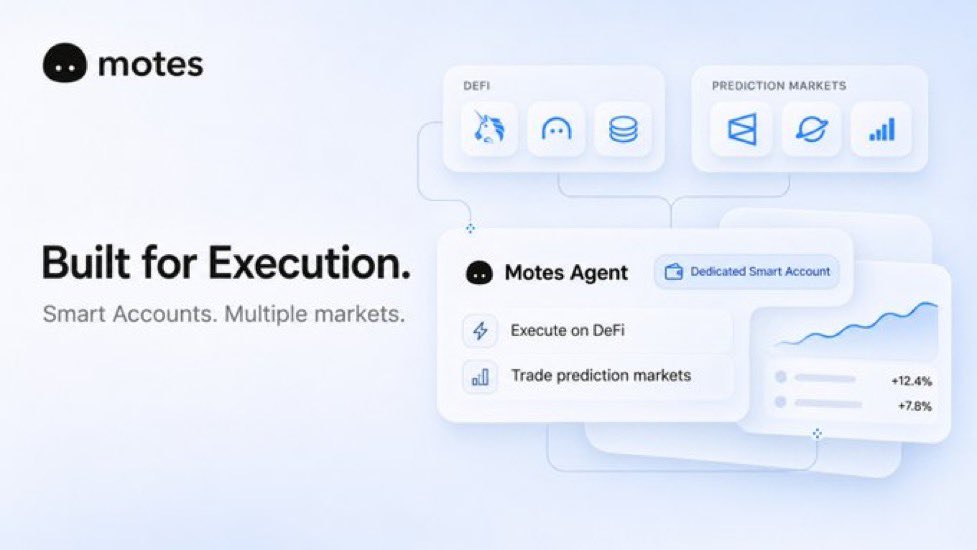
That’s one thing I want to see from @meetmotes NFT agents
Its Genesis NFTs connect holders to AI agents with dedicated smart accounts, custom strategies and risk limits.
The ability to preserve capital instead of chasing every market move should be just as important as finding profitable entries.
An agent that knows when to stay out is more valuable than one constantly putting money to work.
Applications for the Genesis allowlist is now closed. Did you register?