I believe in Zimbabwe. I sometimes support gvt. Noone has a monopoly on patriotism! The enemies of a people keep them in ignorance. Retweet is not endorsement.
JK Rowling, after the UK Supreme Court unanimously ruled that the legal definition of a woman is based on biological sex, posted a photo of herself smoking a cigar and drinking a cocktail with the caption:
"I love it when a plan comes together."
She funded the legal challenge, won in the highest court in the UK, and celebrated with a cigar. Is Rowling the most consequential author alive right now?
Winston Churchill fought his depression with bricks. He'd lay them for hours at his country home in Kent. He joined the bricklayers' union. And in 1921 he wrote about why it worked. It took psychology another 75 years to catch up.
He called his depression the "Black Dog." It followed him for decades. His method for fighting it back was as basic as it sounds: laying brick after brick, hour after hour.
Churchill spelled out his theory in a long essay for The Strand Magazine. People who think for a living, he wrote, can't fix a tired brain just by resting it. They have to use a different part of themselves. The part that moves the eyes and the hands. Woodworking, chemistry, bookbinding, bricklaying, painting. Anything that drags the body into a problem the mind can't solve by itself.
Modern psychology now calls this behavioral activation. It's one of the most-studied depression treatments out there. Depression sets a behavior trap. You feel bad, so you stop doing things, and doing less means less to feel good about. Feeling worse makes you do even less. The loop tightens until you can't breathe inside it.
Behavioral activation breaks the loop from the action side. You schedule the activity first, even when every part of you doesn't want to. Doing it produces small rewards: a wall gets straighter, a painting fills in, a messy room gets clean. Those small rewards slowly rewire the brain. Action comes first, and the feeling follows.
Researchers at the University of Washington put this to the test in 2006. They studied 241 adults with major depression and compared three treatments: behavioral activation, regular talk therapy, and antidepressants. For the people who were most severely depressed, behavioral activation matched the drugs. It beat the talk therapy. A 2014 review of more than 1,500 patients across 26 trials backed up the result.
Physical work like bricklaying does something extra on top of this. It crowds out rumination, the looping bad thoughts that grind people down during the worst stretches of depression. Bricklaying needs both hands and gives feedback brick by brick: each one is straight or crooked. After an hour you can see exactly how much wall you built. No room left for the mental chewing.
The line George Mack used in his post, "depression hates a moving target," is good poetry. The science behind it is sharper. Depression hates a brain that has somewhere else to be.
Loris Karius went from his costly errors in the Champions League Final 2018 — a night that effectively ended his Liverpool career — to years in the wilderness, playing just SIX matches between 2021 and 2024.
He even went 6 months without a club in 2024 and considered retirement.
However, in January 2025, Schalke signed him and revived his career. He's now 32-years old, he's made 12 clean sheets this season and helped the club secure PROMOTION back to the Bundesliga after battling back from injury.
This is football. This is life. Never give up. ❤️🇩🇪
@Markosonke1 This means they can operate & sustain the business cheaper whilst also paying rent.
The Avg SAfrican who can run the spaza has options. Better jobs etc. The closure of spaz shops will result in kasi inflation & closure of short-term debt relief.
Pick n Pay tried n failed.
@Markosonke1 Foreign run Spaza Shop
1. They are self-employed. Meaning they pay taxes on the trade and profit. No salary wat wat
2. Because they run them themselves work hours are blurred.
3. They can borrow from family/ kin at submarket to zero interest.
4. They can crowd source - buy bulk
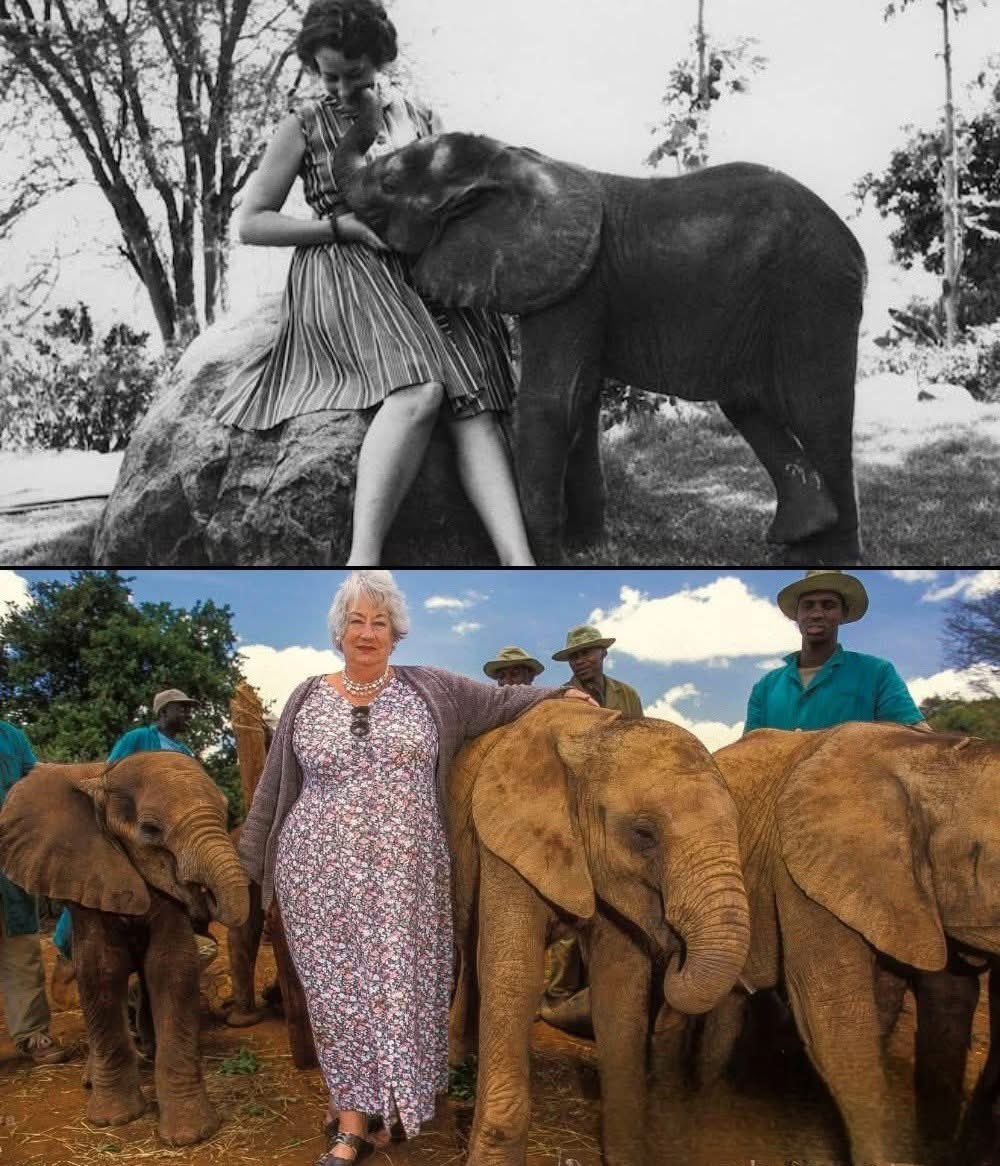
For decades, every orphaned elephant died within a matter of weeks. Then a woman with no scientific training decided that wasn’t good enough.
Daphne Sheldrick received baby elephants at her center in Tsavo National Park, Kenya. They arrived after poachers had killed their mothers. They were only a few weeks old, confused, and still dependent on milk.
The pattern was always the same.
They were fed cow’s milk, the only alternative available. At first, they drank it. Then their bodies began to reject it. Diarrhea, dehydration, weakness. Within days, they died.
That was the case everywhere.
Experts considered it inevitable. Elephant milk had a composition too specific to be replicated. Without the mother, there was no solution.
Daphne had no formal academic training in biology or veterinary medicine. She had learned by working in the field, alongside animals. And she decided not to accept that conclusion.
She began to experiment.
She adjusted the milk formulas. Added cream. Used goat’s milk. Introduced different oils, one at a time. She recorded everything in a notebook. Every attempt was tested on a real calf.
Many died.
And from that point on, her work changed.
Every mistake became data. Every loss became a clue about what did not work. She continued for years. Then for a decade. Then two.
In the meantime, she identified several key factors.
Coconut oil worked better than other fats. Mineral proportions had to be precise. Stress was also a decisive factor: the calves needed constant contact, not just nourishment.
The keepers began sleeping beside them. Caring for them day and night. Partly replacing the presence of the mother.
Results came slowly.
First they survived for a few weeks. Then months. Then years.
In the late 1970s, after the death of her husband, she founded the David Sheldrick Wildlife Trust. She gathered everything she had learned and turned it into a method.
Feeding, medical care, daily management. Everything was organized into clear protocols.
The calves began to grow.
Some were reintroduced into the wild. Then they integrated into herds. Then they had calves of their own.
What had seemed impossible became achievable.
When Daphne Sheldrick died in 2018, more than 230 orphaned elephants had survived thanks to the system she had developed.
She had no academic titles.
She had started with a problem everyone believed had no solution—and kept working on it for nearly thirty years.
Switzerland is turning the unused space between train tracks into solar power plants.
A startup called Sun-Ways is piloting removable solar panels that roll out like a carpet between the rails.
No new land needed, easy to maintain, and they feed clean energy straight into the grid.
If the US scaled something similar across its massive rail network, it could generate enough clean, homegrown electricity to power millions of homes.
This is the kind of smart, low-impact idea that gets more clean energy online without paving over more fields or wild spaces.
Innovations like this show we can produce the power we need while leaving more room for wildlife and nature.
Pretty cool engineering with a big upside if you ask me.
While filming a movie in 2014, Jackie Chan sang "Rolling in the Deep" with a group of Mongolian locals after finding out that they knew the song by heart, even though they don’t speak English 😁
It was never part of the movie script.