how american twitter leftists feel telling ukrainians that their 9 year old orphan cousin deserved to be raped and bombed because their country has neonazis and a bad president (there are more neonazis in the us than actual people in ukraine)
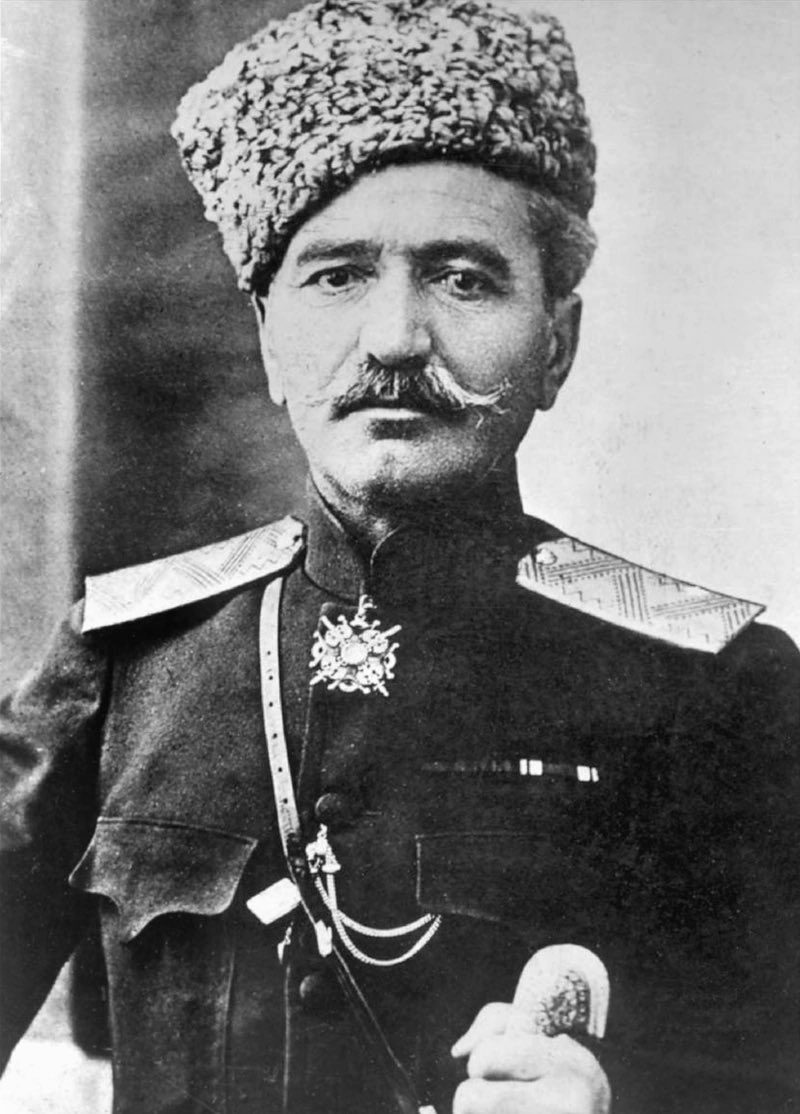
Let me tell you a little about Andranik Pasha, in spite of your overrated Ataturk.
— Battle of Holy Apostles Monastery, 1901, Mush: Andranik Pasha had only 30 men and fought against 4,000–6,000 Ottoman troops. He lost some of his fighters after days of combat, but the rest survived and withdrew successfully. Ottoman soldiers thought he was a ghost.
— During the Hamidian massacres (1894–1896), Andranik and other fedayi defended the Armenian villages of Mush and Sasun against Ottoman troops and Kurdish Hamidiye cavalry, protecting peasants during a wave of killings that claimed between 80,000 and 300,000 lives.
— Traveling to Tiflis in 1887, organizing ammunition and diplomacy for the Armenian cause, particularly for the defense of Van.
— In 1903 he organized a self-defense movement against Ottoman harassment of Armenians and pushed for promised reforms in the Armenian provinces, which led to the 1904 Sasun uprising. He was one of the commanders of the Armenian volunteers, fighting against 10,000 Turkish troops and 6,000–7,000 Kurdish cavalry. They held out for weeks in the mountains before being overwhelmed. Between 7,000 and 10,000 Armenian civilians were killed in the reprisals that followed.
— He was so principled that he severed ties with Tashnaktsutyun when they cooperated with the Young Turks, and left the country.
— In 1912–1913, Andranik commanded Armenian auxiliary troops in the Macedonian-Adrianopolitan Volunteer Corps within the Bulgarian army, leading a company of a few hundred volunteers alongside Garegin Nzhdeh. Trotsky himself reportedly called him 'a hero of song and legend.' He was commissioned as a first lieutenant by the Bulgarians and fought in several engagements against the Ottomans.
— During the First World War, Andranik commanded the first Armenian volunteer battalion within the Russian Imperial Army against the Ottoman Empire, eventually rising to Major-General. His forces fought around Van and Bitlis, and for a time the Armenian volunteers, backed by the Russians, captured and governed much of the traditional Armenian homeland. It was the closest Western Armenians came in that period to controlling their own ancestral territory.
— Even after the Russian army retreated and left the Armenian irregulars outnumbered, Andranik led the defense of Erzurum in early 1918. Logistical failures and the threat of encirclement ultimately forced his retreat.
— He had honor. He refused to recognize the First Republic of Armenia or the Treaty of Batum, viewing the new state as a truncated capitulation that abandoned Western Armenia. In his eyes, the fledgling republic, squeezed into a small fraction of historic Armenian territory and forced to sign away claims to the west, was a betrayal of everything he had fought for since the 1890s. He left the Armenian national movement.
— In 1936, Atatürk himself honored him, saying: 'He was a hero to his people, a soldier who stood up to armies with twenty or thirty men. The only difference between him and me is that he was defeated.'
The Ottomans lost two-thirds of their territory, yet Ataturk was content to rule what remained, unlike Andranik Pasha, who refused to accept anything less than full justice. Many eyewitnesses describe a hedonistic lifestyle and a leader who used power for personal gain. His academic theories, such as the Sun Language Theory, collapsed under scrutiny. He belonged to the same genocidal political movement as Cemal, Talaat, and Enver Pasha. Ataturk was a capable soldier, and that is all. He was neither an idealist nor a competent politician. An overrated leader, protected by law from the very criticism he deserves.