THIS CHINESE DEVELOPER VISUALIZED WHAT 300 KIMI K2.6 AGENTS LOOK LIKE IN ACTION - AND IT LOOKS EXACTLY LIKE A BRAIN WORKING FOR YOU
every line on screen is a connection firing in real time - hundreds of neurons across multiple layers, activations lighting up, signals passing through the network simultaneously in both directions
this is not a diagram and not a concept - this is the actual mechanics of what happens inside the model every time it processes your request
now multiply that by 300 parallel agents running 4,000 coordinated steps at the same time - while you drink coffee the entire system fires neurons and does the work for you
a team paying $62,000/month on Claude Opus cut their bill to $129 by switching to Kimi K2.6 as the execution layer - Opus plans, Kimi executes, $54,000/month stays in the business
what looks like fire on screen is your new employee who never sleeps, never asks for a raise and never goes on vacation
most people pay for subscriptions that forget everything tomorrow - he built a system that works and compounds while he sleeps
🚨TREND VĚKOVÉ VERIFIKACE SE POSUNUL K OPERAČNÍM SYSTÉMŮM
2⃣To by nebylo špatné (dokonce by to bylo velmi dobré), POKUD by ověřovatelem věku dítěte byl rodič. Přesto je doporučováno řešení, kde ověřovatelem je stát. Vyžaduje to, aby se každý uživatel včetně dospělých identifikoval již pro samotné použití zařízení. Jako preferovaný nástroj k tomu Komise volí evropskou peněženku digitální identity (EUDIW). Big Tech to podporuje.
Bývalý technický ředitel projektu digitálních identit financovaného Evropskou komisí Denis Roio však upozornil, že takový systém nebude umět jen vydávat přístupy, ale rovněž je i odebírat.
Vídeňská organizace Epicenter Works také zveřejnila analýzu, ve které upozornila, že „miliony lidí budou vyloučeny z internetu, který vyžaduje ověření přes identitu.“
Více v článku: https://t.co/xBAugzEkMs
🚨PLÁNY NA VĚKOVOU VERIFIKACI MAJÍ PŘIJÍT JIŽ KONCEM ČERVNA
1⃣Komise doporučila členským státům předložit plány na zavedení věkové verifikace pro sociální sítě do 30. června. Řada států však termín nedodrží. Mezitím se debata o verifikaci posunula až na úroveň operačních systémů. Uživatelé by měli ověřit svůj věk již v nastavení svého zařízení, a to by poté odesílalo aplikacím informaci o věku. Investigace odhaluje, že Meta za lobbing pro ověřování na úrovni OS již utratila nejméně desítky milionů dolarů. Zbavuje se tak zodpovědnosti na úkor provozovatelů operačních systémů i na úkor soukromí uživatelů.⤵️
MullvadVPN about age verification for social media:
"[...] politicians seek to massively invade everyone’s privacy and undermine democratic rights [...] they do not want to protect children; they want to impose control."
Huge milestone for Cashu.
After 3 years of work, we finally have unruggable mints.
I'm testing the first on-chain Cashu mint running inside a Trusted Execution Environment (TEE), where the mint keys are generated entirely within the enclave and remain unknown to the operator.
That means the operator cannot inflate the ecash supply and cannot access the Bitcoin reserves backing it.
We've moved from trusting operators to relying on hardware-enforced cryptographic guarantees.
There's still work to do, but the path forward is clear. This is an incredibly exciting step toward trust-minimized ecash.
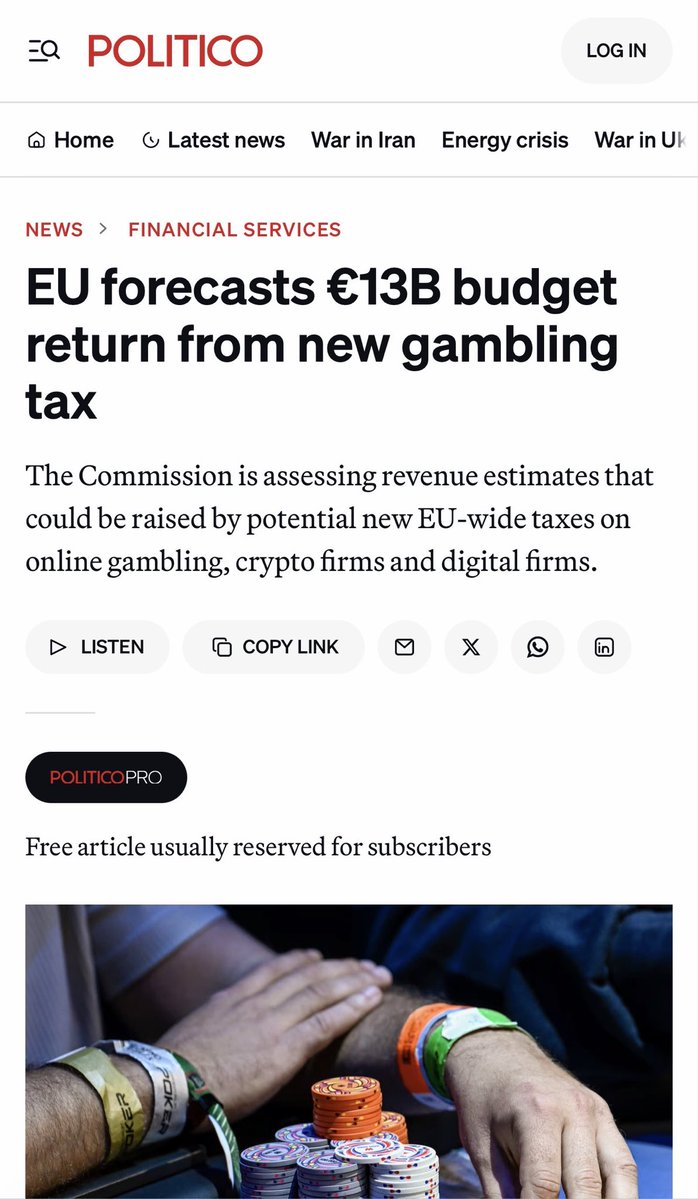
🇪🇺🚨 EU-WIDE CRYPTO TAX
Politico literally just leaked an internal document from the European Commission on how to collect more taxes.
The answer: EU-wide taxes on digital asset transactions and capital gains.
So while they are trying to figure out how to tax you more, you should be trying to figure out how to exit.
Because eventually, EU-wide taxation will turn into global taxation; European countries will tax their citizens globally, like the U.S. does.
Eventually may be soon.
So buy Bitcoin and get it off exchanges.
And get a second passport from a sovereign that respects your freedom.
Alza nic takového nepotvrdila, a jistě by to bylo považováno za bezpečnostní a reputační problém. Jak je tedy možné, že EU aktuálně zavádí systém, který bude mít ještě nebezpečnější technické možnosti, než jaké by dostal potenciální útočník v tomto případě?Potvrdili to nejlepší kryptografové světa:
- sbírat nejcitlivější data o občanech
- propojovat je a potenciálně tak profilovat občany
- odebírat občanům přístup ke službám
A když mluvím o občanech, mluvím samozřejmě i o dětech. I děti mají lidská práva, včetně práva na soukromí. Evropská peněženka digitální identity, která má sloužit k věkové verifikaci, spoléhá na technologický rámec, který neumožňuje nepropojitelnost sbíraných dat, a to navzdory tomu, že to zákony EU zakazují. Neprostá většina států to neví a neřeší. Poslanci netuší, jak je systém navržen a jakými trpí problémy. Novináři tomu nerozumí, a tak citují pouze tiskové zprávy a propagační materiály od Evropské komise, aniž by se pouštěli do investigativy. Děsí vás, že by někdo získal přístup k vašim datům z Alzy? A teď si představte, že má někdo přístup k vašim datům ze všech možných oblastí běžného života. Zdravotnictví, bankovnictví, cestovní doklady, řidičská oprávnění, zbrojní průkazy, přístupy k sociálním sítím. ⤵️
Bezpečnostní výzkumníci varují před novou phishingovou kampaní, která míří na uživatele Signalu a snaží se z nich vylákat obnovovací klíč k šifrovaným zálohám. Útok začíná zprávou vydávající se za „Signal Support”. Tvrdí, že data uživatele (zprávy a média) jsou kvůli chybě synchronizace v ohrožení a hrozí jejich trvalá ztráta. Aby oběť o data nepřišla, má podle návodu otevřít nastavení záloh, zobrazit obnovovací klíč a vložit ho přímo do chatu. Legitimní podpora Signalu by o obnovovací klíč nikdy nepožádala.
Kampaň zneužívá funkci Secure Backups, kterou Signal spustil loni. Ta umožňuje ukládat šifrovaný archiv konverzací na servery Signalu a chrání ho 64znakový obnovovací klíč. Tento klíč podle Signalu nikdy neopouští zařízení uživatele a není sdílen se servery společnosti. Bez něj nedokáže archiv dešifrovat nikdo, ani samotný Signal.
Privacy and security on computing devices need to become far stronger to protect people from pervasive violations of their rights. Users have their privacy pervasively violated by corporations, criminals and governments. There are endless privacy and security weaknesses in software with exploits of those happening on a large scale. Operating systems, browsers and other apps need to do a much better job protecting users. Enormous progress is needed on both privacy and security.
GrapheneOS provides a massive upgrade for privacy and security over the standard Android Open Source Project. GrapheneOS is nowhere near good enough and we have an enormous amount of work to do improving both. Our work is an ongoing process and doesn't have an end point. Privacy and security heavily involve competition between attackers and defenders. Most defenders are making little progress and falling increasingly far behind.
Attackers continue improving their exploits of privacy and security weaknesses. Commercial exploit tools are increasingly widely deployed for broad attacks. Software has a very high density of privacy and security vulnerabilities. LLMs are accelerating both vulnerability discovery and exploit development. For most computing devices, defense is increasingly far behind offense. iOS and GrapheneOS are exceptional cases not representative of degrading privacy and security across computing devices.
Growing numbers of internet connected devices are incorporated into botnets. This harms the privacy and security of the internet as a whole through heavily pushing it towards centralization behind services such as Cloudflare. Insecure devices without security patches harm the internet as a whole. It isn't only embedded devices but also desktops, mobile devices and servers being used as part of these botnets. It isn't only people with these insecure devices who are harmed. It can get much worse.
We're building GrapheneOS to protect everyone's privacy and security. It's aimed at widespread adoption and is highly usable. It's compatible with the vast majority of Android apps. It has major privacy benefits for every user including stopping a lot of data collection by apps and services with a better permission model increasingly addressing being coerced to grant access. GrapheneOS has many users with little technical knowledge and isn't hard to install or use.
We're continuing to work on improving privacy, security, usability and app compatibility for all of our users. Contact Scopes, Storage Scopes, per-app Sensors toggle, VPN leak protection and many other features we provde are very important privacy protections. We're building alternatives to the Camera, Microphone and other permissions too. Our major improvements to exploit protections are there to protect user privacy. Privacy depends on security and that's why we heavily work on security too.
Contrary to what's often claimed, GrapheneOS is far more usable and requires far less sacrifice compared to other alternatives. Providing far better protection against sophisticated exploits isn't at the expense of that. Our opt-in sandboxed Google Play compatibility layer combines privacy and high usability. We're gradually making replacements for more Google services apps rely on. Location services, network-based location, geocoding and more has already been replaced and much more is coming.
Today, among the goods that are universally intended for everyone, we must also include new forms of property, such as patents, algorithms, digital platforms, technological infrastructure and data. In a context where the wealth of nations depends increasingly on knowledge and technology, when these goods remain concentrated in the hands of a few, without adequate forms of sharing and access, a new imbalance is created that contradicts the universal destination of goods. In turn, it widens the gap between the included and the excluded, between those who can participate in the digital revolution and those who remain on the margins. #MagnificaHumanitas
Po delší době vzdělávací vlákno 🧵👇🏼
Taky vás nebaví neustále generovat novou bitcoin:native adresu kvůli soukromí? A co kdyby existovalo řešení jak mít jen JEDNU adresu, kterou můžete sdílet do nekonečna se zachováním soukromí?
To přesně umí funkce Silent Payments. 🤫
Do not install VLC.
Once you install it, you can never go back.
You will never pay 99 cents for a codec again.
You will never buy QuickTime Pro again.
You will never renew RealPlayer Plus again.
You will never pay for Blu-ray decoder software again.
You will never see the words "this file format is not supported" again.
You will become the family tech support person. Forever. Your dad will call you at 11 PM because he downloaded a .mkv from somewhere and Windows refuses to open it.
Your answer will always be the same. "Install VLC."
And then the orange traffic cone will eat his problem in 4 seconds and he will call you a genius.
You did not do that. A French student named Jean-Baptiste Kempf did, in 1996, as a school project at École Centrale Paris. His roommate brought a traffic cone home from the street that year. They made it the logo. 6 billion downloads later, the cone is still undefeated.
Repo: https://t.co/0Tlbn7KNan. 18,463 stars. GPL-2.0. Pushed today.
Here is the wildest part:
The warning is real. Just not for you.
Apple sold QuickTime Pro for $29.99. VLC killed it. Apple shut it down in 2016.
Microsoft sold Windows Media Center for $9.99. VLC killed it. Microsoft shut it down with Windows 10.
RealNetworks charged $39.99 a year for RealPlayer Plus. VLC killed it.
Sony built Blu-ray to need a $79.99 licensed decoder. VLC ships with libdvdcss and a French court ruling that protects it.
The codec mafia spent 30 years building a tollbooth on every video file on Earth.
A guy whose GitHub location is literally "Coneland" walked through every tollbooth with a cone on his head and never paid a cent.
He was offered millions of dollars to sell it. He said no.
So yes. Do not install VLC. The codec industry has not recovered from the last 6 billion people who did.
100% Opensource.
100% Free.
100% Yours.
The biggest media companies on Earth spent three decades trying to charge you to play your own files.
One French student and a cone he found on the street made all of it pointless.
ExpressVPN, @torproject, Tuta, Mozilla, @EFF and Mullvad, alongside 13 other organizations advocating for digital privacy rights, have published an open letter.
In the letter, they express serious concerns regarding the age verification measures planned for implementation across the internet following the introduction of a new child protection law.
The organizations argue that forcing users to prove their age across most websites and online services could severely undermine privacy, anonymity, and the open nature of the internet.
The central message of the letter is that protecting children should not come at the cost of jeopardizing the freedom, security, and privacy of all internet users. The signatories are calling for more balanced, privacy preserving solutions to be developed instead.
The 19 organizations that signed the letter are:
1- Big Brother Watch
2- Defend Digital Me
3- Electronic Frontier Foundation
4- ExpressVPN
5- Gamers Voice
6- Global Partners Digital
7- Index on Censorship
8- Internet Society
9- Mozilla
10- Mullvad
11- IPVanish
12- NO2ID
13- Open Rights Group
14- Privacymatters
15- Proton
16- Stop Killing Games
17- Tor Project
18- Tuta
19- VPN Trust Initiative





![CR1337's tweet photo. MullvadVPN about age verification for social media:
"[...] politicians seek to massively invade everyone’s privacy and undermine democratic rights [...] they do not want to protect children; they want to impose control." https://t.co/hz2wF3MQUk](https://pbs.twimg.com/media/HJx3TStakAAuB8H.jpg)