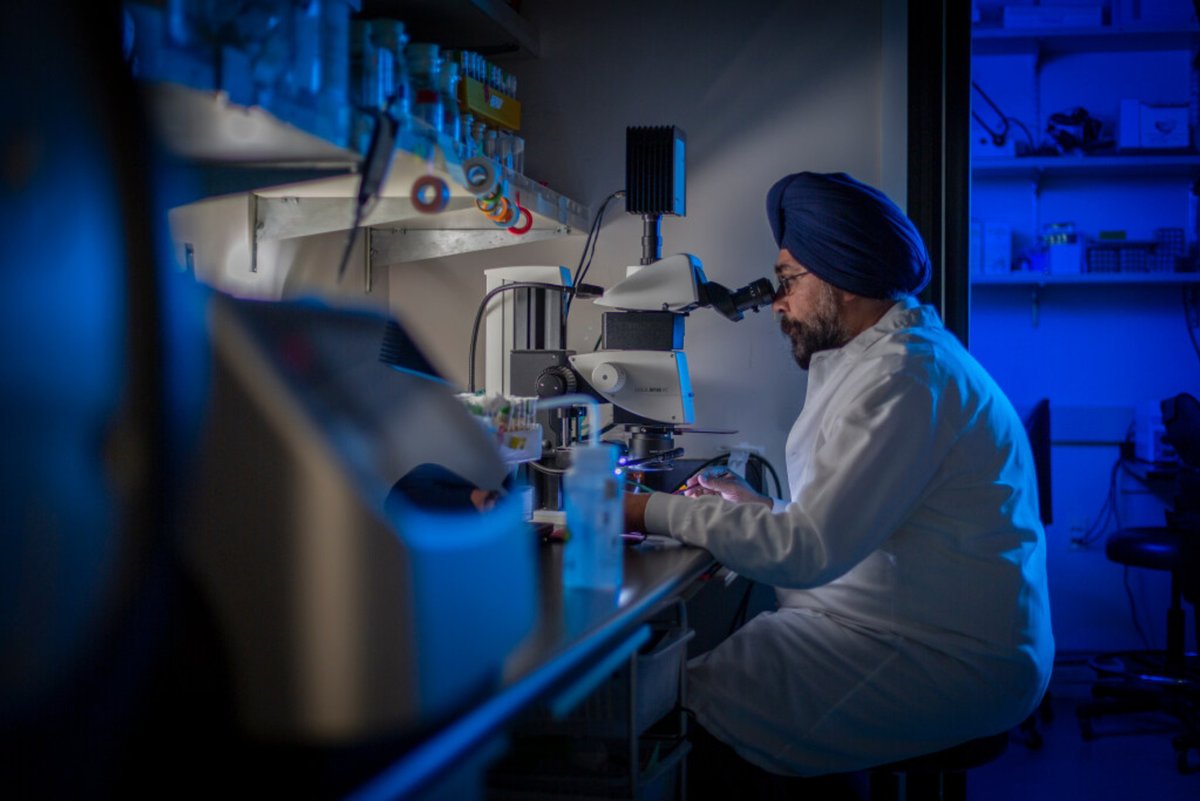
@scifri features Whitehead postdoc @KutayDeniz's latest research on Danionella cerebrum, a tiny, transparent fish that could offer new insights into the brain and regeneration.
https://t.co/RH1Ltd967U
A detailed map of this kind could help scientists pinpoint when things go wrong in birth defects, trace how cancer cells acquire the ability to spread or resist treatment, and better guide stem cells into mature, functional cell types.
Every cell in our body comes from 1 fertilized egg — & now we can trace that dev. #HHMIInvestigators Jonathan Weissman & Jay Shendure & teams have created new tools that generate maps of the origin & outcome of vast numbers of cells in a developing mouse: https://t.co/lUsYVy56tE
Two Whitehead Institute Members have received Bose Research Grants: Iain Cheeseman will study overlooked versions of known proteins linked to disease, while Siniša Hrvatin will explore how some animals survive freezing to advance cryopreservation.
https://t.co/FQ9VWxj1ib
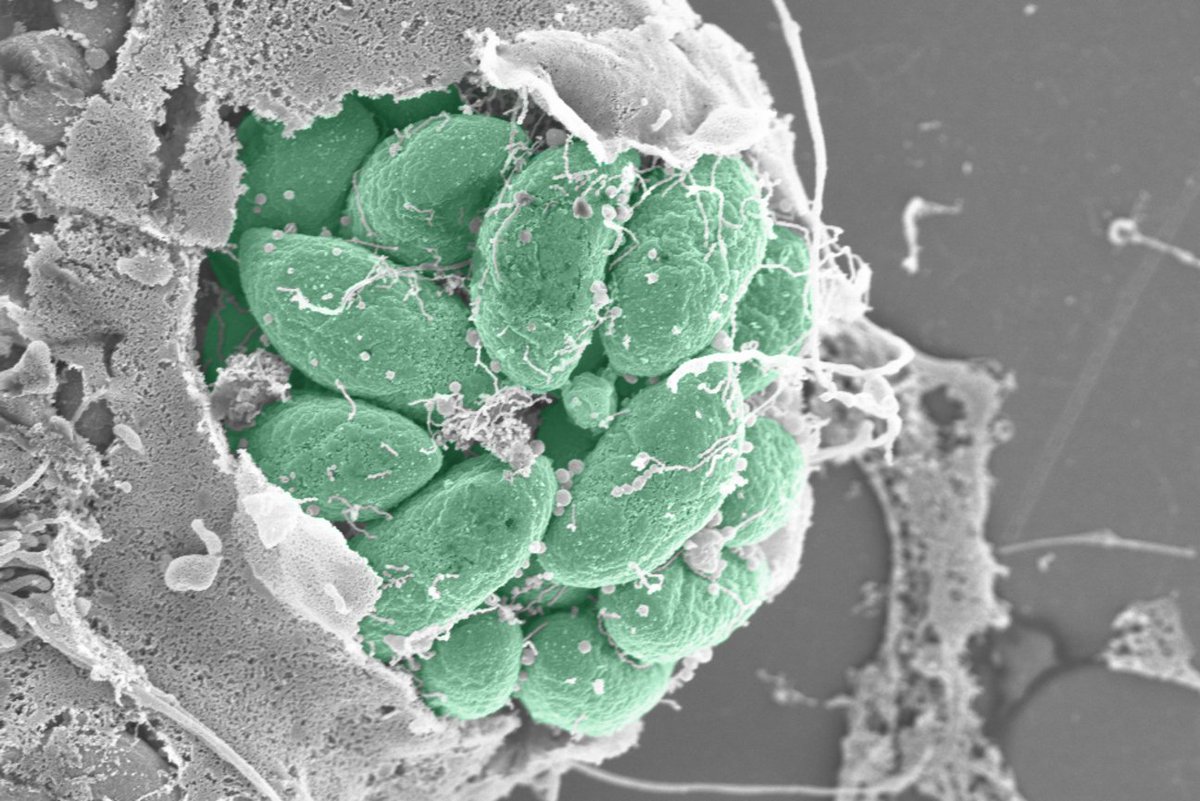
Toxoplasma gondii, the parasite that causes toxoplasmosis, can invade a host cell in less than a minute. New research out of Whitehead reveals that Toxoplasma doesn’t simply recognize a ready-made doorway into a cell. Instead, it helps create the conditions its entry.
What happens when artificial intelligence (AI) makes its way into the lab? In a new @Nature feature, Whitehead scientists Kalon Overholt and Anna Pertl share how they're using AI as a tool for scientific discovery and why human expertise remains essential: https://t.co/OmNDxAseMY
Whitehead Institute’s Scientific Advisory Board brings together leading scientists to engage with our researchers and offer outside perspective.
Hear more from @HarmitMalik of @fredhutch and @UW about his decision to get involved with Whitehead: https://t.co/0ew0ASRmCj
Messenger RNA carries genetic instructions that make proteins. But all RNA molecules are naturally sticky.
Now, Whitehead Institute researchers have discovered one way cells may have evolved to keep them from clumping together.
https://t.co/NvSD8oaZuU
Alum Alicia Zhou reflects on her journey from being at Whitehead Institute Founding Member Robert Weinberg’s lab to CEO of the Cancer Research Institute (CRI).
Read the full conversation: https://t.co/qB3KQN2Yja
Excited to share our new preprint led by
@YiChenNeumann with incredible collaborators @labs_mann, @BenGewurz, @StephenE92884, and @hopfnerlab
to characterize the function of thousands of viral microproteins from human-infecting viruses! https://t.co/iRXXkWES0N
Lehmann Lab postdoc KangBo Ng has received a 2026 Robertson Foundation - Jane Coffin Childs Fellowship.
The award will support his research into how somatic and germ cells exchange resources during early development.
Congratulations, KangBo! #JCCFellow https://t.co/cVjg5T8qrL
Weissman Lab postdoc Mohamed El-Brolosy has been named one of @fredhutch's eight recipients of this year’s Dr. Eddie Méndez Scholar Award. Congratulations, Mohamed!
https://t.co/1Z1EMWQzSQ
For us, this is a powerful reminder that transformative therapies begin with fundamental discoveries. We're proud to have helped lay the scientific groundwork that made this breakthrough possible 4/4
The path from foundational biology research to life-saving therapies is often measured in decades. This year, that journey for one Whitehead discovery reached a remarkable milestone 1/4
This year, the experimental drug daraxonrasib, which targets Ras-driven cancers, has shown historic progress against pancreatic cancer — one of the deadliest and most difficult cancers to treat. Researchers call it the most significant advance in cancer treatment in 15 years 3/4
“I’ve also really valued the richly collaborative community, and being able to take a lot of risks in how I address the questions I have the opportunity to pursue,” says grad student Giselle Valdes, reflecting on her time at @MIT and Whitehead Institute.
https://t.co/hWGBUUIYNH
When I was in college @MITBiology, I worked in the @WhiteheadInst lab of the scientist, Bob Weinberg, who discovered the very first oncogene, ras. Decades later, a drug targeting ras has finally made historic progress in pancreatic cancer. A great moment.
Wheat, rice & corn feed the world; #HHMIInvestigator Mary Gehring's lab has built a gene expression “map” of seed development in a plant model that could help improve crops' ability to withstand environmental stress: https://t.co/AnbCXtk1aR.
Crops are facing increasing stress from heat, drought, and poor soil conditions. Now Whitehead researchers have created a gene expression “map” of seed development that could help guide future efforts to improve crop yield, nutrition, and resilience: https://t.co/lPTAtn8mNw