@CrushnSerpents has accused me of lying in my opening statement during my debate with @ArchangeloRom yesterday. The public accusation provides an opportunity as entertaining as it is instructional. No, I did not lie, and he has yet to identify "the lie" of which I am accused. And by the way, there are no "hundreds of pages of context" in Fragment 37 of Irenæus. It's a paragraph.
In my opening yesterday, I stated quite clearly that the ancient Church believed the Malachi 1:11 prophecy was a Eucharist offering of the first fruits of the harvest for the poor. After the Eucharist "sacrifice" was over, they would take some bread and wine from the Eucharist offering and consecrate it, as I said, either by saying'This is My Body,' and 'This is My blood' or by invoking the Holy Spirit to similar effect. But the Eucharist offering was over before the bread and wine were consecrated, and the consecrated bread and wine were not offered. There was no offering of "Jesus' body and blood" in the ancient church. That abominable novelty came along in the late 4th century.
Evidence that first-fruits was the only Eucharist oblation of the ancient church is abundant:
Justin Martyr said the ONLY honour worthy of God is for us to use the fruit of the harvest "for ourselves and those who need, and with gratitude to Him to offer thanks" (First Apology, 13) and that "prayers and giving of thanks, when offered by worthy men, are the ONLY perfect and well-pleasing sacrifices to God" (Trypho 117). When he describes the ancient liturgy, there is an offering of thanks for food (First Apology 65, 67) with no mention of having consecrated the food before offering, and when there is a mention of a consecration (First Apology, 66), it is spoken over the food that had just been "eucharisted," and there is no mention of offering the now consecrated food. Thus does Justin rule out a liturgical offering of Jesus' body and blood. Unconsecrated food is offered to God. Consecrated food is given to the flock to eat. But consecrated food is not offered.
Irenæus describes something similar when he says "We are bound, therefore, to offer to God the first-fruits of His creation" (Against Heresies 4.18.1), and "the Church alone offers this pure oblation to the Creator, offering to Him, with giving of thanks, [the things taken] from His creation" (4.18.4). He then criticizes the Gnostics for offering the first fruits of creation to "the Father" while not even believing the first fruits had come from "the Father," then pronouncing the consecration over over food that had just been eucharisted: "But how can they be consistent with themselves, [when they say] that the bread over which thanks have been given is the body of their Lord, and the cup His blood" (Against Heresies 4.18.5). Food is offered. Then it is consecrated. But consecrated food is not offered.
Origen describes this exact same liturgical order in Against Celsus 8.34, noting that in the Eucharist "we offer first-fruits, we also send up our prayers," and in 8.57 "And we have a symbol of gratitude to God in the bread which we call the Eucharist." Thus, his liturgy is succintly summarized in 8.33 as a Eucharist offering of first fruits, followed by a meal of consecrated bread: "But we give thanks to the Creator of all, and, along with thanksgiving and prayer for the blessings we have received, we also eat the bread presented to us; and this bread becomes by prayer a sacred body, which sanctifies those who sincerely partake of it.” There is no offering of consecrated bread, and when the bread is consecrated, it is not offered. Unconsecrated food is offered to God. Consecrated food is given to the flock to eat. But consecrated food is not offered.
And that gets us to Fragment 37, in which Irenæus says the Malachi 1:11 prophecy is fulfilled in the Church's oblation of first-fruits: "And therefore the oblation of the Eucharist is not a carnal one, but a spiritual; and in this respect it is pure. For we make an oblation to God of the bread and the cup of blessing, giving Him thanks in that He has commanded the earth to bring forth these fruits for our nourishment." Once that oblation is complete—as I said in my opening remarks—the minister then performs the invocation, asking that the Holy Spirit "exhibit" to the recipients the bread and cup as the body and blood of Christ: "And then, when we have perfected the oblation, we invoke the Holy Spirit, that He may exhibit this sacrifice, both the bread the body of Christ, and the cup the blood of Christ, in order that the receivers of these antitypes may obtain remission of sins and life eternal."
There is an oblation of first fruits, and then AFTER the oblation is already over, there is an invocation of the Holy Spirit to "exhibit" the offerings to the recipients, as in "the body of Christ," "the blood of Christ." What is offered is not consecrated, and what gets consecrated is not then offered.
An interesting point of trivia: "exhibit" here is the Greek word "apophene" from which we get the English word "apophenia," which is a condition in which the mind forms an otherwise abnormal connection between unrelated objects. So Irenæus' liturgy of the Eucharist concludes with a prayer that the Holy Spirit would form in the mind of the recipient a connection between something that is not the body of Christ (the bread) and something that is the body of Christ (His actual body). Thus showing that Irenæus understood the bread and wine to be symbolic—antitypical—of Christ's body and blood, but NOT ACTUALLY His body and blood.
In my opening remarks I said exactly what I believed about the ancient liturgy (an unconsecrated Eucharist was offered, and after the offering was over, the Eucharist of the bread and cup was called the body and blood of Christ, but was not then offered), I warned about the tendency of the Roman Catholic to miss that and assume that because the ancient Church offered the Eucharist (it did) and called the Eucharist "the body and blood of Christ" (it did) that therefore the ancient Church offered the body and blood of Christ in the Eucharist (it didn't).
As is now evident, @CrushnSerpents did exactly what I predicted: because after the Eucharist oblation Irenæus asks the Holy Spirit to "exhibit" the bread and wine as the body and blood of Christ, therefore THE BODY AND BLOOD OF CHRIST MUST BE WHAT IRENÆUS OFFERED IN THE EUCHARIST. But read Irenæus again and see what he offered: "For we make an oblation to God of the bread and the cup of blessing, giving Him thanks in that He has commanded the earth to bring forth these fruits for our nourishment." And of course, Irenæue did not—in Fragment 37 or anywhere else—claim that the Malachi 1:11 prophecy was fulfilled in the liturgical offering of Jesus' body and blood.
Note well: to the Roman Catholic, unless you interpret the ancient liturgy consistent with their late 4th century novelty, you're lying.
To an ignorant man, truth is falsehood if it undermines the foundation of his ignorance. @CrushnSerpents has provided a timely illustration of this reality.
@theGUdGinge At issue is whether God could promulgate the canon of His scriptures without imbuing His Church with infallibility. Of you agree that He could or did, we are in the same page.
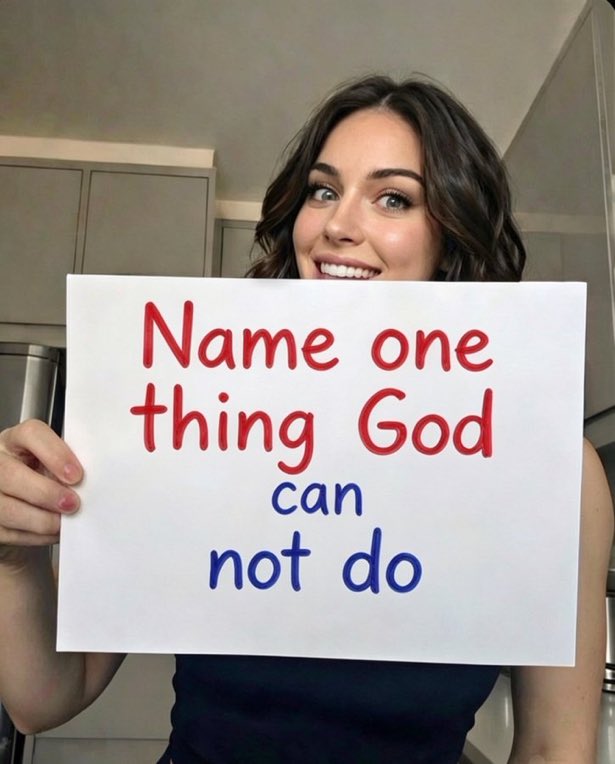
If you listen to Roman Catholicism, God is unable to promulgate His Scriptures without her. He just can’t. He wishes He could, but it’s a bridge too far, so He is forced to rely on the infallibility of His creation, the Bridgebuilder Supreme, the Pontifex Maximus. Jeremiah thought nothing was too difficult for God, but Rome found something He cannot do.
Fr so-and-so (just a Catholic philosopher, actually) claimed God *could not* promulgate the canon of scripture without an *infallible* “publishing house,” the Church. I disagreed with him for the same reason I believe God saves men through the fallible foolishness of preachers.
God can promulgate his Word without imbuing His creation with infallibility.
The Catholic Church teaches that the Church's witness is the sole infallible criterion of recognizing divine inspiration, because divine inspiration by its very nature eludes human observation and is not self-evident.
If divine inspiration "by its very nature" eludes Human observation, the God's inspiration cannot be recognized as "divine" unless the Church witnesses infallibly to it.
@JUDE_HOLYCROSS if you are objecting to the claim that divine inspiration eludes human observation, and agreeing that divine inspiration does not elude human observation and can be recognized by fallible men as infallible, then we are on the same page.
Rome says that “the sole absolute criterion” for recognizing Divine Inspiration is the testimony of the Church. God’s testimony itself is insufficient and inadequate, attest though He may to His own words. This in fact is the very reason that Timothy Gordon insisted that only the church can confer inerrancy on the scriptures.
If you disagree, just say so.
Timothy Gordon says exactly what I claimed: God cannot be the promulgator of Scripture because He does not have a publishing company. To say He "cannot be the promulgator", is the same as saying "it is literally impossible for Him to promulgate."
It is from the Roman Catholic Encyclopedia on the Canon of the New Testament: the external guarantee by the Church is the "sole absolute criterion" of Divine Inspiration, and "all other evidences fall short," including the evidence of self-attestation.
"This external guarantee is the sufficient, universal, and ordinary proof of inspiration. The unique quality of the Sacred Books is a revealed dogma. Moreover, by its very nature inspiration eludes human observation and is not self-evident, being essentially superphysical and supernatural. Its sole absolute criterion, therefore, is the Holy inspiring Spirit, witnessing decisively to Itself, ... through the constituted organ and custodian of Its revelations, the Church. All other evidences fall short of the certainty and finality necessary to compel the absolute assent of faith."
It leads to a rather remarkable epistemology: if the Roman Magisterium must attest to the certainty, inerrancy and canonicity of the Scriptures, who attests to Rome’s authority? Well, nobody! Unlike God’s Word, Rome requires no such attestation.
Fr. Brian W. Harrison, in his argument, "The Ex Cathedra Status of 'Humanae Vitae'," actually claimed that it is “up to ‘the Church’ to decide ‘how far her infallibility extends: otherwise there could never be any certainty.” If the Church is not self-attesting, he said, “infallibility would be placed in grave peril, and the whole of religion would … be placed in doubt.”
Imagine that: God's Word requires second party attestation, but if you demand the same of Rome, the universe implodes and "the whole of religion is placed in doubt."
https://t.co/7BpzxCBGeS
What's funny is that @Timotheeology, a Roman Catholic philosopher, really does believe and say that God cannot promulgate His canon of Scripture because He does not have a publishing company.
I'll just say, to his credit, @Timotheeology was willing to say that out loud, and it is the necessary implication of Roman Catholic teaching of the Church's authority to confer inerrancy upon Scripture. Divine inspiration is elusive to human observation, being superphysical and supernatural. It requires an infallible ruling of the Church to be recognized as such.
There are three organs of infallibility in the Roman Catholic Church:
• Ecumenical councils
• the Pope when he speaks ex cathedra, from the chair
• the teachings of bishops dispersed throughout the world in union with the Holy See, commonly referred to as the ordinary universal magisterium
These are the only three organs of ecclesial infallibility, and the Roman Catholic Church does not claim other organs than these. Teachings that do not fall under one of these three categories may be considered true, but are not considered to be infallibly so.
@EricMFriel@beetle67a It means that it cannot fail to achieve the purpose for which it was sent:
"So shall my word be that goeth forth out of my mouth:
it shall not return unto me void,
but it shall accomplish that which I please,
and it shall prosper in the thing whereto I sent it." (Isaiah 55:11).
I have not despaired of a productive conversation with you, Dave, and I appreciate your patience. I've spent a couple days thinking through your statements but I'm finding it is difficult to engage without a common vocabulary.
You say the canon of Scripture "was uncontested before Trent", but there were many men before Trent who affirmed a different canon. Hugh of St. Victor, for one (1100s), but St. Archbishop Antoninus of Florence continued relegating the apocrypha to non-canonical status even after Florence, as did Cardinal Cajetan. In what way can the 73-book canon be called "uncontested before Trent" if so many men before Trent "contested" it?
You say the canons of Hippo and Carthage "witness to what the Church had already received and universally practiced", but the Council of Laodicæa (AD 363) attested to a different canon. In what way can the Church have "universally practiced" something that part of the Churd did not practice?
You say "Trent did formally define the consensus that predated it", but "consensus" is doing a lot of work there, especially since there was no consensus, and no moral or ecclesial obligation to adhere to one, before Trent.
You say your "firm foundation is the Church which I trust got it right before Trent, and got it right at Trent". But again "got it right before Trent" is doing a lot of work in that claim. When, precisely, did the church "get it right" before Trent? Pope Gregory the Great himself did not believe the Maccabees were canonical, as with Hugh of St. Victor and Antoninus (noted above), plus Alphonsus Tostat, Bishop of Avila (1455), Dionysius the Carthusian (1477), Cardinal Ximinez (1517). All these men before Trent were holding to a different canon, without consequence. These were not uneducated laymen but high ranking clergy.
Upon such falsifiable claims of universality, consensus, and uncontested, you say, "my affirmation that I have the right Bible is that much more solid," and then ask "What is your mechanism for the same certainty?"
"Certainty" is doing a lot of work there, Dave. Your certainty is based on easily falsifiable statements.
On a related note, you asked, "Are the rulings of Nicea fallible or infallible dogmas?"
Let's stipulate for a moment that they are. Let's go one step further and say Pope Leo the Great was correct when he said:
“These holy and venerable fathers who in the city of Nicæa, after condemning the blasphemous Arius with his impiety, laid down a code of canons for the Church to last till the end of the world, survive not only with us but with the whole of mankind in their constitutions; and, if anywhere men venture upon what is contrary to their decrees, it is ipso facto null and void; so that what is universally laid down for our perpetual advantage can never be modified by any change, nor can the things which were destined for the common good be perverted to private interests.” (Letter 106, paragraph 4).
Those canons were not only infallible, but unchangeable in perpetuity. And yet, Rome no longer holds to Canon 20, which forbids kneeling on the Lord's Day. So were the rulings of Nicæa infallible dogmas or not? If just one can be reversed, are any of the other rulings truly untouchable? How therefore can you be "certain" that any of rulings of Nicæa are infallible dogmas if one of them has since been reversed?
Also serious question:
If the Magisterium is the Catholic’s only infallible authority, where does the Magisterium teach which teachings are Magisterial? No papal ex cathedra teaching contains a list of ex cathedra papal teachings. No ecumenical council includes a list of ecumenical councils. The table of contents isn’t anywhere in the Magisterium. So who gave you the canon of teachings that you are trusting today? If you have to go outside the magisterium in order to determine what’s in the magisterium, your faith is really in something that is nonmagisterial.
Serious question
If the Bible is the Christian's only infallible authority
where does the Bible teach which books belong in the Bible?
The table of contents isnt in Scripture.
So who gave you the canon that you are trusting today?
Yes, he works through fallible instrumental causes, and in fact can and does promulgate His word infallibly through fallible men. What I reject is Rome's belief that He cannot do so infallibly unless the instrument of promulgation is itself infallible.
Just read Roman Catholicism's own belief about Divine inspiration. "By its very nature [Divine] inspiration eludes human observation and is not self-evident, being essentially superphysical and supernatural." The sole absolute criterion of authenticity is therefore the witness of the infallible Church. The implication is severe: even if God attested to His own word, His attestation would itself elude human observation and would not be self-evident. Which is why the Roman religion believes it's own testimony of what is divinely inspired is the "sole absolute criterion."