I still think Twitter remains the best source of breaking news, but I don't think I've ever been that great a fit for the medium (as seen in my follower account😂), so I'm moving most of my posts to Substack. 1/2 https://t.co/hE4dnWfjX8
@g_shullenberger@SamBuntz Advocates of Great Books have an argument for reading texts on aesthetic, ethical, and/or more overtly pol grounds, but the idea is they have lasting value, which runs counter to prog scholarship with no end, and its focus undergraduate teaching clashes with the research u model.
@g_shullenberger@SamBuntz The fundamental problem is the German research university model with its focus on creating “new” knowledge isn’t credible for the study of literature in a world with no tradition and no canon. There is no baseline from which to innovate; no author to slay. 1/2
@baseballcrank I’ve seen microfilm of the letter book where a War Dept clerk wrote out their angry letters to one another in perfect handwriting (Scott’s own handwriting is perhaps the worst hand I’ve ever seen). I always wondered what he thought of the exchange. 😂
Certain field such as premodernists finding new evidence via archaeology or technical cunning or folks waiting for archives to open can avoid this question, because empiricism is legitimately new for them. But the “so what” question is Nemesis and always arrives in the end.
This is legit impressive, but it doesn’t solve the discipline’s larger problem of a vast and unwieldy specialist literature whose significance is still unclear. I know AI boosters tho by that AI will resolve that, but I doubt it.
This is legit impressive, but it doesn’t solve the discipline’s larger problem of a vast and unwieldy specialist literature whose significance is still unclear. I know AI boosters tho by that AI will resolve that, but I doubt it.
In testing GPT-6.2, I used it to make a significant historical discovery which I detail in the post below. This suggests that the process of research and discovery we’re already seeing in verifiable domains like math is starting to generalize to non-deterministic fields like history.
You can read the full post here:
https://t.co/Vm7MA2R3aQ
In a nutshell, Yale’s Beinecke Library holds an anonymous sketchbook of an 1808 journey from Montreal to Lake Superior and back. I’ve spent many hours over the years trying to figure out who made the sketches with no luck. The artist could literally be any one of several thousand people. There are few clues: only four dated and labelled images.
With minimal prompting, in just 22 minutes, Astra used publicly available sources to identify a minor French aristocrat, the vicomte de Chabot, as the artist and suggested that we test the hypothesis by ordering copies of a little known microfilmed diary of Chabot’s trip it also found.
I was truly stunned. I’d never heard of Chabot or this diary! New document finds are also exceedingly rare in a well worn field like fur trade history.
I ordered scans of the journal from microfilm and when they arrived the handwriting matched the captions in the sketchbook. The itinerary also aligned perfectly with the few dated drawings in the book. But there was actually the type of conclusive evidence we rarely get as historians: on 18 June 1808, after Chabot’s canoe reached Fort St. Joseph, he wrote “I took a sketch” before describing the exact view of the fort depicted in a matching drawing.
The journal itself is also a major find. It had been mentioned once in a dissertation footnote, but in a completely different area of history and is unknown to fur trade or Canadian historians. It’s long and detailed, covering some 162 notebook pages which makes this a significant new document to my field. Attached to the journal was another trove of documents too: excerpts from long-destroyed North West Company papers, journals, and letters. Again, this almost never happens. Both finds equally surprised the other leading experts I consulted.
Although we can construct a coherent narrative in hindsight, I cannot emphasize enough how exceedingly difficult this sort of thinking and recall is for humans. Unlike a human, Astra was able to tackle the problem from both ends at once: working forward from the scant facts of the 1808 journey pictured in the sketchbook and backwards from the immense number of surviving facts about 1808 British North America in general.
While we can technically explain Astra’s path to this find as a product of enhanced search capabilities, it conducted the investigation from end to end. I basically acted as the research assistant, restricting copies of the paper documents it needed.
To my mind, this puts historians in a similar position as the mathematicians found themselves about eleven months ago, when LLMs started to solve the first Erdős problems. Over the past year, we’ve watched these same models go from learning to read handwriting, to beginning to think historically, to mastering the undergraduate essay, and finally to making small but real contributions to human knowledge more or less autonomously.
The trajectory seems clear.
New: Google plans to make a 24/7 AI TV channel that will use the information it knows about you to create personalized “shows” starring *you* and featuring customized advertisements
https://t.co/HA8tQ1anSr
HRC mostly shrugging off the email and security clearance issues, plus all the crazy stuff Trump has done, presages why Huang’s indiscretions seem to have little impact beyond NatSec types. Hence all the MJ and Napoleon edits.
@haravayin_hogh Compare this rather obscure book with an Ivy League grad of today. Just pretending that something hasn't been lost when it comes to literate culture is just bizarre to me. https://t.co/dzYpZgb09g
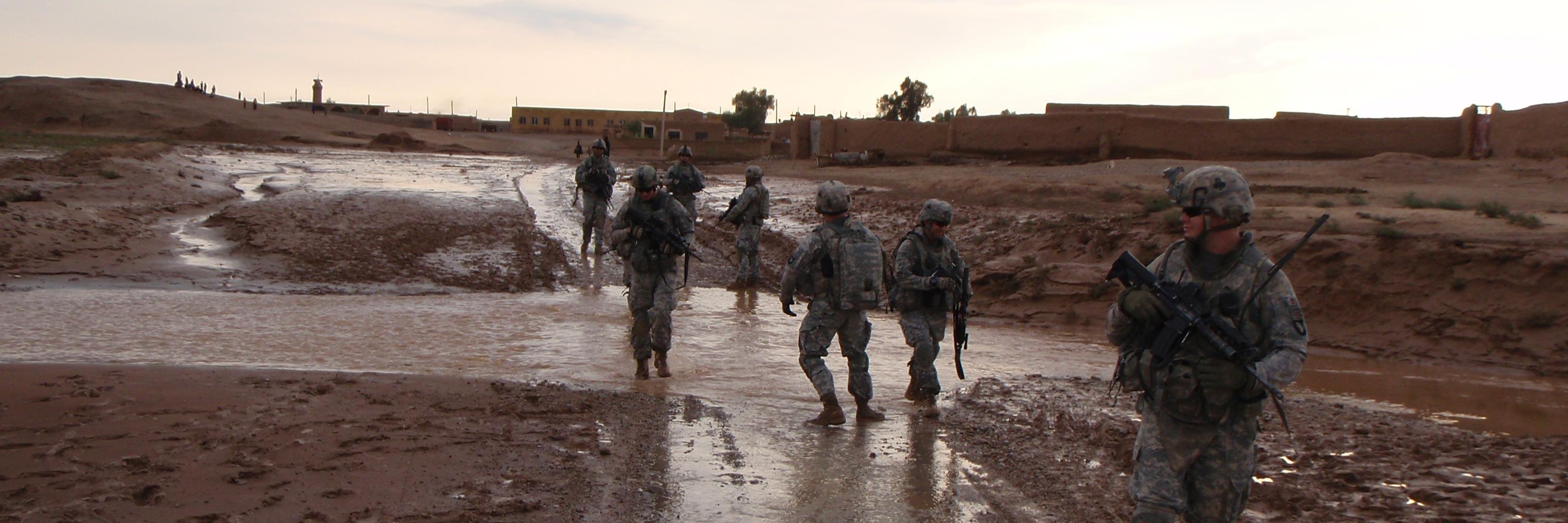
SNEAKO tries to get the Taliban to trash America and claim that America created them.
A Taliban member quickly shuts it down:
“I will be honest with you… it was not created by the USSR or the Americans.”
it’s funny bc I had this feeling of superiority over the English majors at my college (a woke liberal arts school) and now the tables have really turned because ability to handle the English language in a decidedly NOT-AI way is the real talent and doing math is not impressive at all anymore