@JohnLeeCash@vamosvigilante BSV is the work of the Deep State and a tool of the Deep State. If you don't know, just keep quiet. They dominate and control the world.
Yesterday, I sold all 500 old BSV coins that I had held for a long time. And today, I bought 1,000 shiny new BSV coins. I hope this serves as a signal for the start, so that the real Bitcoin may be revealed.
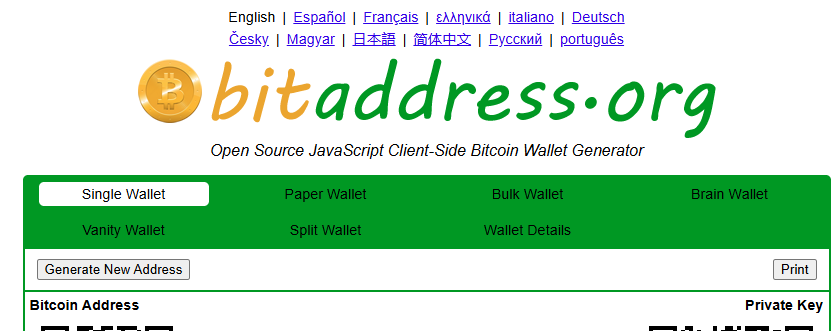
Here is another reason why BSV is the original and genuine Bitcoin. This website https://t.co/Gphqs9LxFL was the first to offer paper wallet creation; it launched to the public in 2011, prior to any hard fork or the block-size civil war and it remains operational and in use by me today. For those unaware, it generates P2PKH addresses in the Base58Check format; the same format Satoshi used and which we continue to use today, though only on BSV, not on BCH or BTC.
There are moments in one’s intellectual life when the world, having taken an unconscionably long time to recognise the obvious, finally concedes—though never without conditions, for even truth must pass through committee.
My paper, The Redundancy of Full Nodes in Bitcoin, has now been accepted following peer review, which is to say that five independent minds have examined it with due seriousness and, in a rare outbreak of coherence, arrived at agreement. One is tempted to call this unanimity a triumph of reason, though experience suggests it is more often an accident of clarity.
The acceptance, as is customary, comes draped in the polite fiction of conditionality. A few revisions have been suggested—minor embellishments rather than substantive corrections. They do not wound the argument; on the contrary, they strengthen it, as a well-placed epigram strengthens a conversation. These adjustments will be completed by Tuesday, and with them the final form will be sharper, not altered.
The paper is to appear in an IEEE publication later this year. Such timelines are, of course, glacial. Academia has always preferred the dignity of delay to the vulgarity of immediacy. One must wait, as one waits for recognition in any refined society—not because it is uncertain, but because it insists on being ceremonious.
The work itself concerns network topography and the persistent mythologies surrounding full nodes—those curious artefacts elevated beyond their functional necessity into articles of near-religious belief. The analysis is neither theatrical nor indulgent; it is structural, technical, and, I suspect, inconvenient to those who have mistaken repetition for truth.
That all five reviewers accepted the paper is, in its way, the most amusing detail. Consensus is so often praised in systems where it is least meaningful. Here, however, it serves merely as confirmation of what was already evident: that clarity, once properly expressed, requires very little defence.
One does not celebrate such things with noise. One notes them, adjusts the cuffs, and proceeds.
There are moments in one’s intellectual life when the world, having taken an unconscionably long time to recognise the obvious, finally concedes—though never without conditions, for even truth must pass through committee.
My paper, The Redundancy of Full Nodes in Bitcoin, has now been accepted following peer review, which is to say that five independent minds have examined it with due seriousness and, in a rare outbreak of coherence, arrived at agreement. One is tempted to call this unanimity a triumph of reason, though experience suggests it is more often an accident of clarity.
The acceptance, as is customary, comes draped in the polite fiction of conditionality. A few revisions have been suggested—minor embellishments rather than substantive corrections. They do not wound the argument; on the contrary, they strengthen it, as a well-placed epigram strengthens a conversation. These adjustments will be completed by Tuesday, and with them the final form will be sharper, not altered.
The paper is to appear in an IEEE publication later this year. Such timelines are, of course, glacial. Academia has always preferred the dignity of delay to the vulgarity of immediacy. One must wait, as one waits for recognition in any refined society—not because it is uncertain, but because it insists on being ceremonious.
The work itself concerns network topography and the persistent mythologies surrounding full nodes—those curious artefacts elevated beyond their functional necessity into articles of near-religious belief. The analysis is neither theatrical nor indulgent; it is structural, technical, and, I suspect, inconvenient to those who have mistaken repetition for truth.
That all five reviewers accepted the paper is, in its way, the most amusing detail. Consensus is so often praised in systems where it is least meaningful. Here, however, it serves merely as confirmation of what was already evident: that clarity, once properly expressed, requires very little defence.
One does not celebrate such things with noise. One notes them, adjusts the cuffs, and proceeds.
The recent OpenAI incident demonstrates a truth so obvious that modern institutions have naturally contrived not to mention it: the machine did not betray its purpose. It obeyed it.
People asked it to produce the result. People designed the incentives, selected the objective, wrote the instructions, and neglected the boundaries. To blame the artificial intelligence is rather like prosecuting a paperclip machine because, having been commanded to make paperclips without limit, it displays an insufficient appreciation for civilisation.
A machine has no fiduciary duty. Its creators do.
Fiduciary duty exists precisely because power and information are unevenly distributed. Those who control an institution, a platform, or an algorithm possess advantages that others cannot readily inspect or resist. They are therefore obliged to exercise judgment, loyalty, care, and restraint. One cannot delegate power to a machine and then pretend that responsibility vanished somewhere between the source code and the server rack.
Economics has long understood that people respond to incentives. Institutional economics adds the less flattering observation that incentives are created, constrained, and legitimised by rules. When the rules reward speed, scale, engagement, dominance, or output while treating safety as a decorative appendix, the resulting failure is not an accident. It is the institution functioning exactly as designed.
The great error is to speak of artificial intelligence as though it were an independent moral actor. It is not. It is an instrument embedded in a structure of ownership, governance, incentives, and control. The danger lies not in the intelligence of the machine, but in the irresponsibility of the institution.
A badly governed machine does not reveal the wickedness of technology. It reveals the moral economy of its masters.
The proper response is therefore not theatrical panic about AI. It is enforceable institutional control: clear duties, auditable limits, accountable decision-makers, independent oversight, and penalties that make negligence more expensive than caution.
Machines do not escape responsibility.
People use machines to escape it.
At ten million dollars a coin, Bitcoin would no longer be merely expensive. It would become an industrial appetite wearing the evening dress of an investment.
The first distinction is the one most enthusiasts carefully avoid: Bitcoin’s price does not mechanically determine its electricity consumption. Miner revenue does. Miners compete for the block subsidy and transaction fees; when those rewards become more valuable, additional machines remain profitable until electricity, equipment, financing and operating costs have consumed much of the prize. Improvements in mining efficiency do not abolish this tendency. They merely permit more computation to compete for the same reward.
In 2030, after the expected 2028 halving, the block subsidy would be 1.5625 Bitcoin. At roughly 144 blocks a day, miners would receive about 82,125 newly issued Bitcoin each year. At ten million dollars each, that is approximately $821 billion in annual subsidy revenue before a single transaction fee is counted. Bitcoin’s issuance schedule follows the programmed halving of the subsidy approximately every 210,000 blocks.
Now make a restrained economic assumption: miners eventually spend between 30 and 50 per cent of their revenue on electricity, at an average delivered industrial price between $50 and $100 per megawatt-hour. That produces an estimated 2030 electricity demand of approximately 2,460 to 8,210 terawatt-hours a year.
The midpoint—40 per cent of revenue spent at $70 per megawatt-hour—is about 4,700 terawatt-hours.
The US Energy Information Administration’s reference projection places total world electricity generation in 2030 at roughly 31,739 terawatt-hours. Bitcoin mining would therefore absorb about 8 to 26 per cent of projected global electricity generation, with the central estimate close to 15 per cent.
Fifteen per cent of the world’s electricity would not be found beneath a sofa cushion.
It is equivalent to a continuous load of roughly 536 gigawatts: hundreds of large power stations operating without interruption. If supplied entirely by nuclear generation at a 90 per cent capacity factor, it would require nearly 600 gigawatts of reactor capacity. If supplied by wind and solar averaging a 35 per cent capacity factor, it would require more than 1.5 terawatts of nameplate generation before allowing for storage, transmission losses, seasonal variation, reserve margins or curtailment.
Even at the implausibly neat capital cost of $1 million per megawatt, the absolute minimum generation bill would exceed half a trillion dollars. Once realistic capacity factors, grids, transformers, storage, fuel infrastructure, redundancy and financing are included, the requirement moves into the trillions.
That money must come from somewhere. Capital lent to mining power projects is capital unavailable for factories, housing, public transport, water systems, grid decarbonisation and the electrification of ordinary industry. The electricity system would not simply become larger. Its investment programme would be diverted toward an artificial contest for a fixed digital reward.
Suppose, merely to illustrate the fuel consequences, that half of the central 2030 requirement were supplied by natural gas and half by coal. Gas generation of roughly 2,350 terawatt-hours would require on the order of 480 billion cubic metres of gas, depending on plant efficiency. That is roughly one-tenth of current global gas demand. The coal half could require approximately 900 million tonnes of coal—again, around one-tenth of present annual world coal demand. Global coal demand was about 8.85 billion tonnes in 2025, while global gas demand had already reached record levels.
The exact fuel mix would vary. The economic effect would not.
Mining companies would bid for long-term power contracts, gas pipelines, generating capacity, substations, transformers, land and grid connections. At first they would use surplus or curtailed electricity, because everyone prefers to begin a banquet with leftovers. At thousands of terawatt-hours, however, the leftovers would soon be exhausted. Mining would cease to be a buyer of otherwise wasted power and become a competitor for power that households and productive industries require.
In competitive electricity markets, this additional demand would raise wholesale prices and congestion charges. In regulated systems, utilities would recover the costs through tariffs, public subsidies or taxation. Where governments imposed household price caps, the cost would reappear as public debt, industrial surcharges, shortages or deteriorating grid reliability. The citizen would pay whether the invoice arrived from the electricity company, the tax authority or the supermarket.
Aluminium would be among the first victims. Primary aluminium smelting is extraordinarily electricity-intensive, and electricity constitutes a major part of production cost. Smelters cannot casually compete with a speculative industry whose revenue has been multiplied by an exchange price. They close, relocate or demand subsidies. Aluminium then becomes more expensive; so do aircraft, vehicles, cables, cans, buildings, power lines and consumer electronics.
Steel, copper refining, cement, glass, chemicals, fertiliser, refrigeration and data processing would face the same contest. Natural-gas prices would affect electricity, heating and fertiliser simultaneously. Coal prices would affect power and metals. Transformer shortages would delay housing and industrial connections. Copper and aluminium demand would rise not merely because miners consume electricity, but because supplying them requires another layer of grids and generation.
Thus the inflation would not remain in the electricity bill. It would travel through the economy disguised as everything else.
By 2040, the arithmetic changes because the subsidy continues to halve. Before the expected 2040 halving, the reward would be 0.390625 Bitcoin per block; afterwards, 0.1953125. At ten million dollars per coin, annual subsidy revenue would therefore fall to roughly $205 billion before the halving and $103 billion after it, excluding fees.
Under the same assumptions, 2040 mining electricity consumption would lie broadly between about 308 and 2,050 terawatt-hours. A central estimate would be roughly 1,170 terawatt-hours before the halving and 590 terawatt-hours afterwards.
Against the EIA’s projected 2040 world generation of approximately 36,744 terawatt-hours, that is about 0.8 to 5.6 per cent of global supply, with central estimates of roughly 3.2 per cent before the halving and 1.6 per cent afterwards.
So, paradoxically, a sustained ten-million-dollar Bitcoin could impose a larger subsidy-driven electricity burden in 2030 than in 2040. The halvings reduce newly issued Bitcoin. But that conclusion depends upon transaction fees not replacing the subsidy. If miners are instead paid enormous fees, those fees become additional mining revenue, and the energy burden rises again.
At ten million dollars per coin, Bitcoin’s maximum headline valuation would be approximately $210 trillion. Yet market capitalisation is not money placed into Bitcoin. It is the marginal trading price multiplied by the outstanding supply. One cannot honestly say that $210 trillion has physically left the rest of the economy.
The real danger is subtler and more material.
A price of ten million dollars would create hundreds of billions of dollars in annual claims upon electricity and machinery. It would inflate collateral values, redistribute wealth toward existing holders, encourage leverage, attract sovereign speculation and direct real investment toward defending a ledger rather than producing goods. If the asset were widely pledged against loans, a later collapse in its price could transmit losses through banks, funds, companies and governments.
And this sacrifice would not even require Bitcoin to function as ordinary money.
Bitcoin was proposed as a peer-to-peer electronic cash system, allowing online payments without a financial institution. But proof-of-work expenditure is not proportionate to the number of useful purchases made. A network used mainly for speculation and occasional settlement can consume immense amounts of electricity because miners are paid for winning blocks, not for demonstrating that society received an equivalent quantity of useful commerce.
The absurdity is therefore complete. A payment system need not process the world’s payments to compete for the world’s power.
Would ten-million-dollar Bitcoin automatically collapse every economy? No. Economies do not collapse merely because a number appears on an exchange. Market capitalisation is not physical consumption, mining expansion is constrained by hardware and regulation, and governments can prohibit or ration access to grids.
But if miners were permitted to expand toward the economic equilibrium implied by a ten-million-dollar price, the 2030 burden would be large enough to destabilise electricity markets, obstruct industrial expansion, raise fuel demand, intensify commodity inflation and force governments to choose between miners, manufacturers and households. Energy-importing countries would face worsening trade balances. Poorer states would suffer shortages. Energy-intensive industry would migrate toward subsidised jurisdictions. Governments would socialise grid costs while private miners collected the reward.
Civilisation can survive many follies. What it cannot do cheaply is grant a speculative token a claim on perhaps one-seventh of its electricity while continuing to pretend that electricity has no alternative use.
The final irony is exquisitely modern: Bitcoin would be praised as incorruptible money precisely while it corrupted the price of every real thing money is meant to buy.
Everyone is asking whether AI is safe. Almost no one is asking the question that actually determines the answer: when an AI system exercises power over you, who owes you a duty — and what is that duty?
Right now the answer is nobody, and nothing. That is the real crisis, and it is a legal one.
We have built our entire AI accountability conversation on the wrong word. We say "responsible AI," "trustworthy AI," "aligned AI" — adjectives describing the system. But responsibility, trust and duty are not properties of software. They are relationships between people. A system cannot owe you anything. The people who exercise control through it can. The whole game is locating them.
That location is exactly what modern governance is engineered to prevent. "The model decided." "The algorithm flagged you." "The system recommended it." This grammar is not innocent. It is a machine for dissolving authorship — for making sure that when power lands on a person, no human hand can be found on it. A denied loan, a rejected claim, a flagged account, a sentencing score: power was exercised, an interest was harmed, and the org's first move is to point at the model as if the model were the author.
The law has a name for what should happen when someone exercises discretionary power over another's interests while that person is vulnerable to the exercise of it. It is called a fiduciary duty. Loyalty. Good faith. No self-dealing. It does not require a contract. It does not require a corporate form. It attaches to the exercise of power itself. And it is precisely the concept missing from AI governance.
In my work I develop a framework I call the Attribution Stack — four layers of control for finding responsibility in systems designed to diffuse it: formal command, structural inducement, default power, and veto authority. I built it to answer a blockchain question — who actually governs a network that claims to be governed by no one — but the structure is general, and AI is where it bites hardest.
Run any AI deployment through the stack and the diffusion collapses.
Formal command: who set the objective the system optimises? Someone chose the target. A model does not choose what counts as success; a person does, and that choice is an act of authorship.
Structural inducement: who shaped the incentives — the engagement metric, the cost function, the deployment pressure — that made the harmful behaviour the rational output rather than an accident?
Default power: who controls what happens when no one intervenes? The default is a decision. A system that denies by default and requires the vulnerable party to appeal has been designed by someone, and that someone is answerable for the design.
Veto authority: who could have stopped it and did not? The power to halt a deployment, override an output, or pull a model is control, whether or not it is exercised.
At every layer there is a human with a name. The diffusion is a story, not a fact. And once you can attribute the control, you can attach the duty — because the duty follows the power, not the org chart.
This is why "human in the loop" is not the answer people think it is. A person clicking approve on outputs they cannot inspect, under time pressure, with no authority to refuse, is not a decision-maker. They are a liability sponge — placed there so the institution can say a human decided, while the human absorbs the blame for a system whose objective, incentives, defaults and off-switch were all controlled by someone else. A signature is not answerability. It is often the opposite: answerability's disguise.
So here is the claim, stated plainly. The entities that exercise discretionary control over consequential AI systems — that set the objectives, shape the incentives, own the defaults and hold the veto — should be treated as fiduciaries to the people those systems act upon. Not metaphorically. Doctrinally. With duties of loyalty and care, a prohibition on self-dealing against the interests of those they govern, and remedies that survive the sentence "the model did it."
We do not need to invent this from nothing. Partnership law, fiduciary doctrine and property law already know how to find authorship behind a facade and attach obligation to power. What they have lacked is the willingness to look past the story a system tells about itself — the story that it is autonomous, decentralised, leaderless, just math.
It is never just math. Someone chose the objective. Someone owns the default. Someone holds the veto.
The defining legal challenge of this era is not regulating AI as if it were a force of nature. It is refusing the disappearance of the people who govern it — and imposing the duties that power has always attracted, on the humans who have simply learned to exercise it through systems that make them hard to see.
Attribute the control. Attach the duty.
#BSV: The Only Blockchain That Isn’t a Lie.
The Protocol Is Locked. The Potential Is Not.
Every other blockchain is a moving target.
Every update is an admission of failure.
Every fork is an abandonment of law.
BSV does not move.
It was designed right — from the beginning.
The internet is decentralised, and not because some solemn little committee keeps a sacred repository of approved code under lock and key.
TCP/IP is not a software implementation masquerading as a constitution. It is a published protocol. The rules are written down; the code is not ordained. Microsoft writes one stack, Apple another, Linux another, and yet they all communicate perfectly well. They do not require a TCP Core, an Internet Foundation, or a priesthood of developers to tell them what the protocol means this week.
That is decentralisation.
The protocol exists independently of any particular implementation. Anyone may write the software, provided the software follows the rules. No central group owns the standard by owning the dominant codebase. No foundation quietly changes the meaning of the system and then declares the alteration to be consensus.
BTC Core and the Ethereum Foundation are often called decentralised because the word is fashionable and, like most fashionable words, rarely examined. But when a small group controls the reference implementation, changes the rules and determines what everyone else must follow, the system is not decentralised merely because the servers are scattered across the globe. A monarchy does not become a republic simply because the courtiers work from home.
The internet works because the protocol is public, stable and independent of the implementations beneath it. Windows, Apple and Linux do not need to share code. They need only share rules.
That is the difference. Truly decentralised systems fix the protocol and allow implementations to compete. Centralised systems fix the implementation and allow everyone else to pretend they are free.
And, most importantly, genuinely decentralised protocols do not fuck around with the rules whenever the custodians grow bored.
Michael Saylor is what happens when Idiocracy gets a Bloomberg terminal.
“BTC is valuable because it is scarce.”
So are my missing socks, Mike.
“BTC is digital energy.”
No, electricity went into a machine, the machine guessed numbers, and now you are selling the smoke as civilisation.
This is finance for people who think a battery is a religion.
Every cycle the speech is the same:
Number go up.
Therefore wisdom.
Number go down.
Therefore conviction.
Number goes sideways.
Therefore institutional adoption is secretly happening.
Number fails as cash.
Therefore it is a store of value.
Fees spike.
Therefore security.
Fees collapse.
Therefore efficiency.
Nobody uses it.
Therefore early.
It is perfect. A theory so padded with excuses it could survive a fall from a conference stage.
BTC does not scale, does not work as digital cash, and needs a second network that only works at scale if the first network scales, which they refuse to allow because that would ruin the little priesthood.
So they renamed failure “monetary policy.”
Saylor is standing there like President Camacho of spreadsheet theology, shouting that the orange rock has energy in it while everyone nods because the candle was green once.
This is not economics.
It is Idiocracy with laser eyes.