@TyKeynes That’s because we understand monopolies. To the extent they can exert pricing power and generate outsized profits, free market monopolies attract competion. Because of that they are short-lived. Monopolies created by government hinder competion.
@TyKeynes A Boeing worker can never hope to buy a jumbo jet, but a worker at Campbell’s Soup can afford a can of chicken noodle every few minutes. Ergo, one of these employers is unjust.
@TyKeynes Contracts, not laws. Laws are just what 50% + 1 say they are. A contract is what two parties voluntarily agree to. Government laws are what enforced slavery.
@destructor_y@TyKeynes You might have a surplus of peanut butter and another person might have a peanut allergy. That just argues that matching food to needy recipients, as well as kidneys, is important.
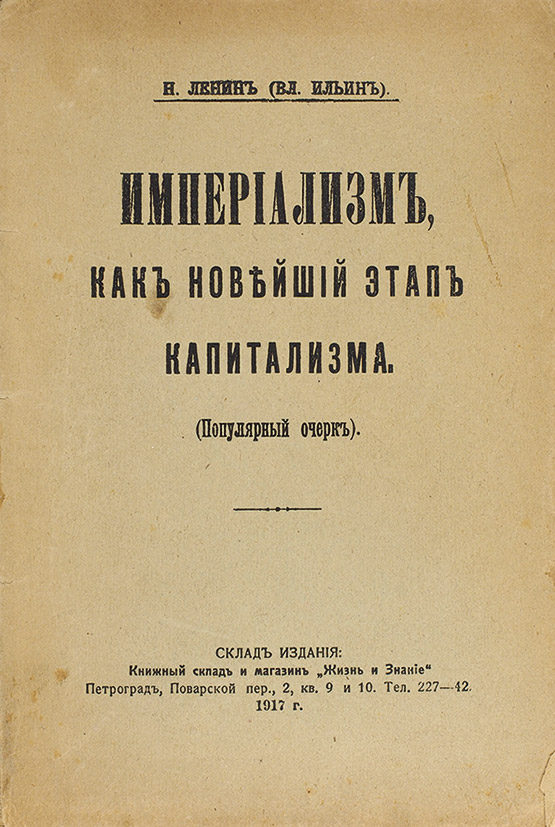
@_itzsammy "Imperialism, the Highest Stage of Capitalism," Lenin's attempt to explain why (contrary to all communist theory) capitalist nations were not collapsing left and right from all their darn internal contradictions.
@_itzsammy There is nothing about capitalism that assumes or requires constant growth and expansion. That old canard was made up by Lenin a century ago.
@destructor_y@TyKeynes 1) You have a surplus. 2) Others will die without access to your surplus. 3) You choose not to share your surplus.
I think the analogy is rather obvious. The conclusion, however, is uncomfortable to socialists since it makes the violence inherent in redistribution clear.
@soyozmino Too bad photosynthesis doesn't work on humans. You can't just stick your toes into the dirt, soak up the sun and rain and thrive. Capitalism is not to blame for this.
Need food and a kidney to live, most have more than they need, some not enough. Inconvenient to have the surplus taken from you. I think the analogy is good. It makes the violence inherent in redistribution clearer.