You are likely to find me on Threads https://t.co/B5wysbOeZn or Mastodon https://t.co/XIRG9ETIIz or BlueSky (very likely) these days https://t.co/h45w7OmniA
A thing I see happening at large organizations as a result of AI is the expansion of the role and span of control of senior management who can directly monitor the whole firm. It vastly changes company operations. It also is straightforward to implement compared to firm redesign.
Open tools are not enough: Europe needs a state
The question: does Europe have its own design culture, between American big tech and China’s state-led model? Should it build its own tools, or keep to critical reflection and imagination?
I attended the National Design Debate 2026, “Shaping Europe”, on Friday 23 October at the Evoluon in Eindhoven. It was organised by Waag Futurelab and Next Nature as part of Dutch Design Week.
Here is my summary of, and some comments on, the closing debate between artist and philosopher Koert van Mensvoort and Marleen Stikker, co-founder and director of Waag Futurelab. TL;DR: there was much anguish and anger at where Europe finds itself.
The moderator opened by asking what conditions are needed to reach humane technology.
Van Mensvoort: imagine a future worth living in. Looking at today’s news, it’s easy to imagine disaster. Imagining a future you would want, would wish on others and can achieve is hard. He rejects the term “polycrisis”. The real crisis is a crisis of connection between people.
Some background helps here. Van Mensvoort’s philosophy is “next nature”: the technology we have made has become so complex that it behaves like nature. No one controls it, so we have to learn to live with it. He is broadly hopeful about technology.
Stikker said straight off the bat that we have a problem and that our analysis of this moment must go deeper. Her past positions echo some of mine. Technology is not neutral. It carries the values and power of whoever builds and owns it, so the remedy is political: public values, digital rights, open technology.
She also had some propositions. The cultural and design sectors should make what they believe in, not only what clients ask for. AI is driven by stock-market mechanisms, not by the technology.
Question the assumptions in the Draghi and Wennink (former head of ASML) reports before public money goes into AI without public control. Europe is angry enough to act alone. She tied this to the “open social” launch that evening of https://t.co/KygMIXizIK, built with Eurosky. That faith in open protocols is where I part ways with her, and I come back to it below.
Van Mensvoort went big: humanism and planetary governance. Europe’s core is humanism, as in Erasmus. Ask of every gadget whether it strengthens your humanity or outsources it.
He polled the audience: nearly everyone had used AI that month, few a European AI, fewer still one “that strengthens their humanity”. The next step for him is planetary governance. Humans may need AI to deal with climate change, biodiversity loss and urbanisation.
Stikker shot back: making the climate crisis worse and faster with AI is nihilistic. The idea that AI will save us, or that human intelligence is not enough, is dangerous. For that she got applause. Van Mensvoort said he had been misunderstood. He had said we may need AI, not that it will save us or is a new god. Humans keep finding a way because we are inventive.
For Stikker, nearly all of capitalism rests on extracting value. Regenerative value lasts longer but does not show up in GDP, the Dutch planning bureau’s models or the EU reports. She wants an economy built on commons. As long as only extractive models can justify investment, each step takes us further down the wrong path.
Van Mensvoort noted the common saying that it is easier to imagine the end of the world than the end of capitalism. He picked up an earlier panellist, Erwin Blom, on being able to switch between American, European and Chinese models, and noted the irony that China releases open models.
When I heard Blom, I imagined Chinese officials of the Self-Strengthening Movement in the 1890s, gathered over tea: in awe of European steamships, railways and guns, and afraid of what they would do to their society. Their answer was to build the machines but keep the old state and its values. Within a few years their country had fallen to the second rank.
Stikker closed by saying Europe already knows the way: an AI model it controls. GPT-NL needs far more than its roughly 12 million euros, and Mistral, she said, sits too close to Microsoft. (ASML, based in neighbouring Veldhoven, has put more than €1.3bn into the French Mistral. For context, Anthropic is thought to have received $125 billion in funding so far.)
Treat AI as digital public infrastructure, with Linux, the Web, Nextcloud and Proton as precedents, Stikker said. Build a coalition of climate, biodiversity, energy and housing cooperatives and the creative industry, to take a new story to Europe.
Where I stand
Stikker’s position is common among people in Europe who work in digital culture and politics: a belief in open technologies, and a preference for small tools, tools you can use yourself.
The tradition goes back a long way, and much of it is American: Lewis Mumford’s warnings against the “megamachine”, Ivan Illich’s “tools for conviviality”, and Stewart Brand’s Whole Earth Catalog, whose motto “access to tools” served the back-to-the-land communes of the 1960s and then early Silicon Valley. Do it yourself, and against big machine capitalism.
The historian Fred Turner draws a useful line through that history. The US New Left took on power by organising and protesting. The “New Communalists” around Brand tried to go around it, with tools and alternative communities instead of politics. Stikker’s politics, I suspect, are the New Left’s, but her tools are the New Communalists’ small, open ones.
But Brand himself changed his mind. He later said the Catalog had been “very libertarian” and that the government apparatus is “quite wonderful, and quite crucial”.
My view is closer to Marx’s. Technology and capital are among the most powerful engines we have. They have transformed our world and will probably keep doing so. I take inspiration from Donna Haraway, author of A Cyborg Manifesto: we can’t escape technology; it has become what I call a non-optional system. So we have to take part and do politics. Here I agree with Stikker. We should shape technology to our ends.
Where I differ is on how. The shaping is a collective process, and it should use the collective technologies we already have. Language is one. The state is another, and a very important one. Open tools alone can’t do the job: a protocol can be open while the costly servers and the moderation that run it at scale still end up in a few hands. Organised well, a state can bring capital to bear to build European technologies that can stand next to those of China and America.
But Europe is not a state. It is an association of states pulling in opposite directions, each fighting to keep as much power as it can, even if the result is smaller, less effective and more expensive. Europe has no single capital market, and more than anything else this holds back its tech sector and its growth. The Netherlands, along with Germany, has been the main obstacle to a capital markets union. To his credit, Wennink went further than even Draghi: he called for one, and for going ahead with a coalition of the willing if the EU will not move.
If that were fixed, Europe would be a formidable Leviathan. Such a state must be under democratic control, so that its technologies reflect the humanist values Europeans say they want.
In the end I felt closer to Van Mensvoort than I expected. Europe can do this, if it changes its attitude.
https://t.co/guIy7KAYvA
I went to Phoenix to spend time with the Taiwanese community. TSMC will invest $265 billion and send thousands of engineers and their families, which marvel at their new lives in the Sunbelt
My first feature as a contributing writer to the New York Times:
https://t.co/n73RydKBiD
A European service was switched off from Washington, and no European court or authority ordered it.
On 26 August 2026 the US State and Treasury departments designated Autistici/Inventati, an Italian collective, a "Specially Designated Global Terrorist". No evidence was published. A/I denies the allegations. On 18 September it switched off its servers: about 16,000 email accounts, 20,000 blogs, 5,500 mailing lists, 1,500 websites.
The mechanism matters more than the case. Per https://t.co/Br0p9XL67H, Banca Etica suspended the account from 9 September, fearing secondary sanctions on its access to international payment systems. It had publicly criticised the political use of US sanctions, and froze the account anyway. A/I called this over-compliance, since no binding order existed in Italy. PayPal blocked the donations account. The Public Interest Registry, the US nonprofit that runs .org, stopped https://t.co/z1wMb5qJJW resolving normally. Per https://t.co/vRlPLCjZyc, the collective then closed.
Three dependencies, each running through something owned elsewhere: dollar access, a US payment provider, a US-run registry. This is weaponised interdependence (Farrell and Newman) in practice. Whoever controls the layer controls what European institutions dare to do, regardless of European law or who owns the service. Banca Etica's fear was rational. That is the problem.
It also undercuts a comfortable view of sovereignty as a property of a product. Swiss or Italian ownership, strong cryptography, European hosting: none of it protects a service that sits on a US registry, US payment rails or a dollar-tied bank. Protection at one layer says nothing about the layers beneath.
I learned of this at the National Design Debate 2026 in Eindhoven. https://t.co/DsJdn292d1 carries a record of it. I missed it in September. It deserved more attention.
https://t.co/vig90zUvpl
https://t.co/3oM2IzAkVL
https://t.co/GFaPsO28b7
https://t.co/pLpMu6TxMJ
https://t.co/3oM2IzAkVL
Context, OpenAI cracked or made important progress in hundreds of big problems today: https://t.co/koJq2pYViH
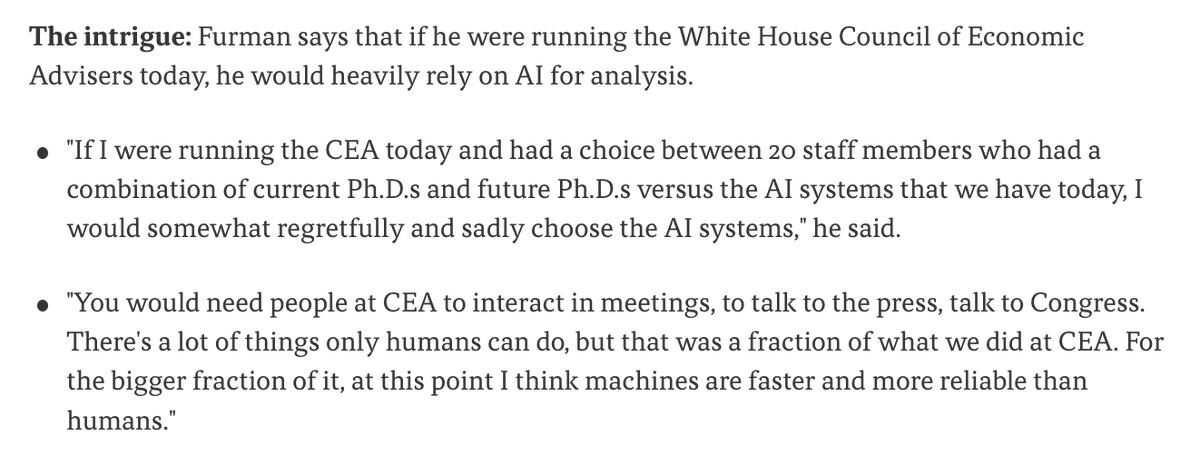
(And I am seeing rapid increases in the ability of AI to do novel work in my field of economic sociology, with nearly autonomous research getting to top journal level)
After a brief but institution-eroding slop science era, it increasingly looks like we are going to have two revolutions from AI:
1) Everything ever published will be re-read and re-judged in ways that human scientists never anticipated
2) Novel discoveries will start to come fast
Mistral Large 4 launched on 6 October. Great for cybersecurity, cheap and European. Before anyone calls it Europe's answer, it is worth separating what is claimed from what is tested. Every benchmark below is Mistral's own. Nobody has verified them independently.
The model has about 1 trillion parameters, but only 49 to 52 billion work on each word (Mistral's announcement says 49, its Hugging Face page says 52). That mixture-of-experts design gives you a very large model's knowledge at a mid-sized model's running cost. Weights are promised by the end of October, pending safety testing. The licence is not yet named.
The pitch is narrow, and that is the interesting part. Mistral claims 82% on a cybersecurity test, though it says Claude Opus 5.5 and GPT-6 Astra score near zero because they refuse the tasks. That gap reflects policy as much as skill. On coding, ML4 scores 61.7% on DeepSWE v1.1, and human raters gave it 3.74 out of 5 against 4.22 for Claude Opus 5. Solid, not top tier.
Then price. ML4 preview costs $1.36 input and $4.18 output per million tokens. Sonnet 5.5 is $2.00 and $10.00. On a job reading 1 million tokens and writing 250,000, that is about $2.40 against $4.50.
On sovereignty, the facts are mixed. Mistral says it trained from scratch on 3,800 Nvidia Grace Blackwell GPUs in its own European data centres. The chips are of course American, and Mistral has not said where its training data comes from.
Its constraints are candid. VP of Science Pierre Stock told TechCrunch it used two to three times fewer GPUs to train than Chinese competitors. Reinforcement learning is still running, so the model is unfinished. Capacity is growing: a €3 billion round and an $830 million loan for data centres near Paris, with 200 megawatts planned in Europe by the end of 2027.
My reading: this is a credible production effort, not yet a proven one. Building nothing means picking a landlord, and Mistral at least is building. Europe may finally have a small foothold here, though a foothold is not a position until the benchmarks hold up. Test it on your own tasks before you believe anyone's benchmark, including Mistral's.
Sources: Mistral announcement (https://t.co/He7nU8neTR), Mistral docs (https://t.co/xRYhtPWCDO), Hugging Face (https://t.co/J5SBuC4CBB), TechCrunch (https://t.co/0HdEGSO50y), Anthropic's price list as of 25 September 2026.
https://t.co/He7nU8neTR
It doesn’t mean that using AI cannot result in tremendous individual advantage on the job, but it does suggest we need to think about how to build our systems at work to aim for human augmentation, instead of automation. Individual performance is not the only factor.
I think this advice is not as true anymore:
1) the durable skill behind “using AI better”
Is unclear as AI gets easier to use
2) Increasingly, organizational systems bottleneck AI gains not individual workers
3) The effect on jobs is uncertain but may impact entire job categories
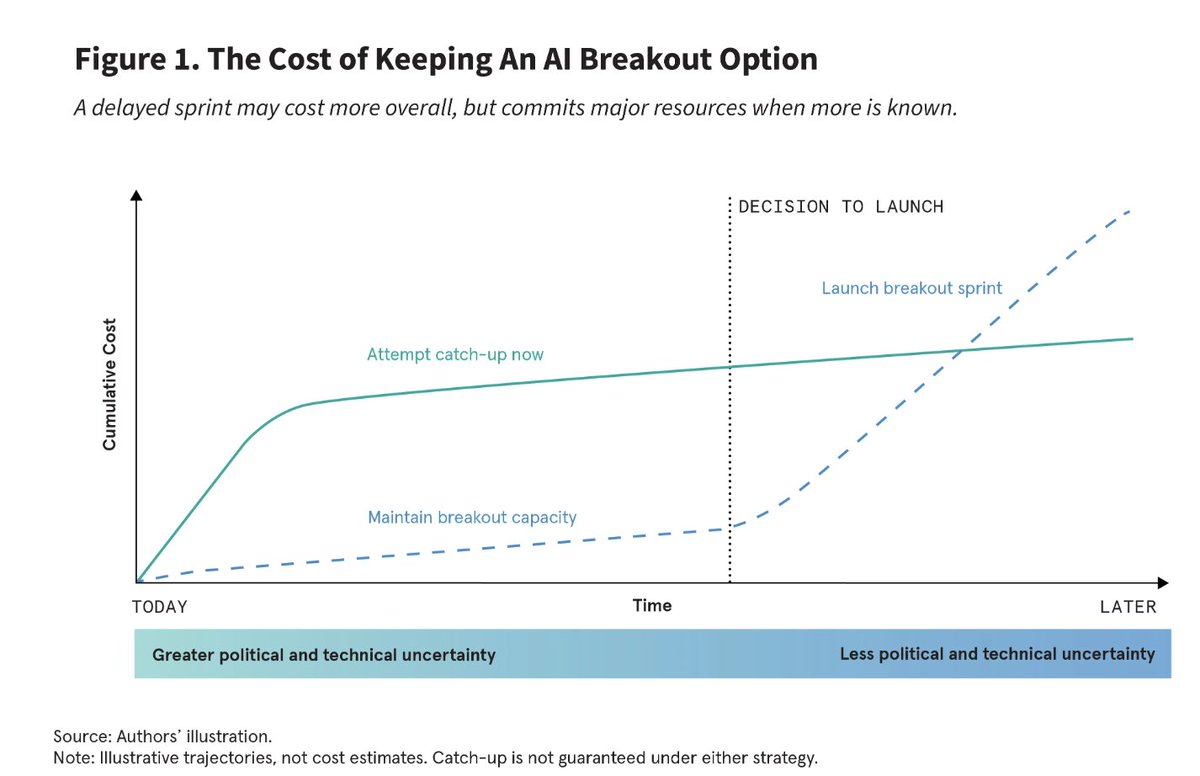
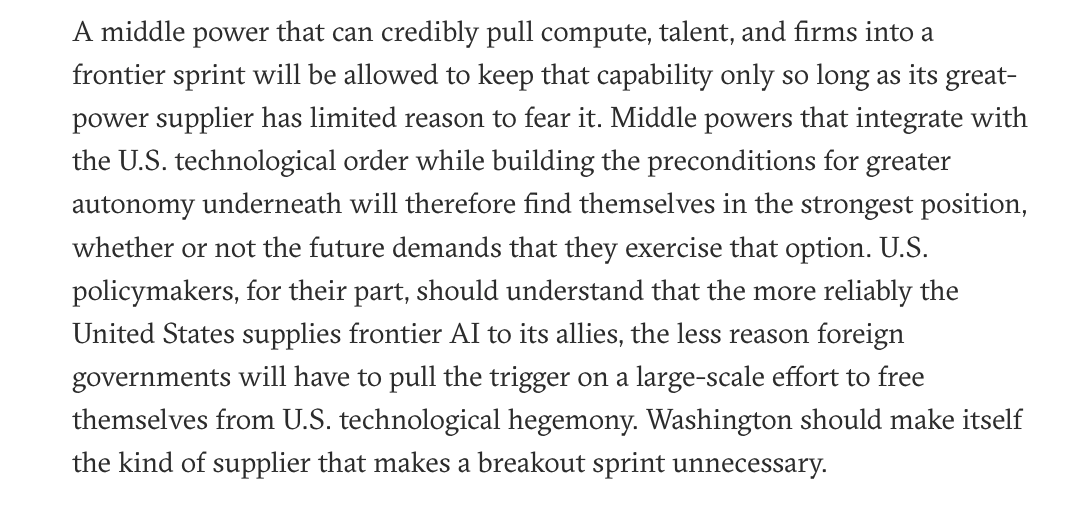
Most countries can't afford to build frontier AI today but don't want to depend entirely on the US without a fallback. In a new @CarnegieEndow paper, @anton_d_leicht and I argue for a middle path: an AI "breakout posture." Move forward with US interdependence now, but lay the groundwork to build frontier systems later—onshoring compute, retaining pre-training talent, and setting up the legal and corporate vehicles for a sprint if they're ever cut off.
The most important sentence in the AI bubble debate this month did not come from a technologist. It came from a central banker.
The Bank of England has warned that the surge in AI debt raises the risk of a sharp market correction. It also noted that global AI-related debt sales this year will exceed the UK government's entire gilt issuance.
The governor's position is that regulators 'cannot stand aside' and simply assume the AI industry will resolve the risks it creates for financial stability. The Bank is loosening one rule, the leverage ratio, to help banks, and it knows part of that freedom will flow into risky hedge-fund betting on gilts. Rather than undo the change, it plans to put limits on that betting directly. The tradeoff is that it is choosing a targeted fix over a blunt one, and the targeted fix does not exist yet.
The private market is saying something similar, in its own vocabulary. KKR has warned of growing credit market risks from the AI borrowing spree. Its words are 'overexposure' and 'concentration', and it expects broader volatility if the booming sector turns down.
Tech firms are projected to spend nearly $8tn on AI infrastructure by 2030 according to KKR. A fifth of the investment-grade index, historically home to some of the safest securities, could end up exposed to AI risk. KKR added that the true figure may be much higher, because off-balance-sheet financing is growing,
Which brings me to the sharpest framing I have read. Axel Kannenberg, in a commentary for heise online, argues that we need not fear AI itself, but the financial conduct of its providers. He is reminded of "The Big Short 2". His thesis: AI will not destroy humanity, but it will destroy a great deal of money.
The Financial Times reports it here: https://t.co/RjMzQTrEwI
Again via the Financial Times: https://t.co/BwMSrSubuH
Heise
https://t.co/4XcaDkmSB5
https://t.co/4XcaDkmSB5
Three stories, one question: who owns the AI stack your economy runs on?
David Lamy argues in the FT argues the UK must back its own AI firms, because a US ban on Chinese models would divide the world and the prime minister needs a plan to avoid being forced to choose sides between American and Chinese technology.
That is not a policy preference but a dependency problem: if you build nothing, you pick a landlord. https://t.co/90O6Cwu2hm
Brussels is reaching for a different answer. Jim Hagemann Snabe, AI adviser to the European Commission, wants Europe to stop chasing the US and China on leading models and instead deploy AI quickly in health, agriculture, transport and industry. He warns against reliance on foreign providers and says much of the value created must stay in Europe. A package of measures is due by the end of the year. I would note that deployment on someone else's models is still a tenancy, not ownership. https://t.co/NCXxPiJidN
The most concrete move is the least glamorous. The Netherlands is building an open-source working environment for public authorities, with a desktop operating system based on NixOS, and eight municipalities are already testing it. Sovereignty here is not a communiqué; it is a desktop that a civil servant logs into. https://t.co/UQwKox2wEv
Put together: small UK advised to roll their own, big EU advised not to. The Hague has simply started building. Only one of the three is already running in municipal offices.
queued:857b780e-db90-46a5-b149-e18ad0d6d76e
This is one of the most important questions of the age: Who decides what happens with AI?
Daron makes the argument for much more democratic input into the process, despite the many challenges that entails.
The FT with some great reporting that shows the uphill battle European companies face vs US ones when trying to influence Brussels.
On the digital omnibus alone, the package that waters down AI rules, including by giving companies more latitude to train models on personal data, Google held 22 meetings. (Since the EU elections of June 2024 brought in a new parliament and Commission leadership).
Google, Amazon, and Apple have also engaged on proposed cloud regulation and online safety rules for children.
The spending gap mirrors the access gap: US companies outspend European ones in Brussels by a significant margin. Apple spends €9mn a year; Meta more than €10mn. Total, Volkswagen, and Airbus together spend up to €8.7mn — less than either American company alone.
Google and its subsidiaries have logged 302 meetings with senior Commission officials and MEPs, more than any single European business. Apple held 257 meetings over the same period, Amazon 239. Only France's TotalEnergies, Germany's Volkswagen, and Airbus appear among the top 20 organisations by meeting count.
https://t.co/j3e6v0Ql3X
Logan Wright (Rhodium Group) on ChinaTalk — discussing Broken China — is the most narrative-altering conversation I've heard on China in years. The growth story is over. Not slowing. Over.
https://t.co/J42BRpIQtw
Rhodium projected 1–2.5% growth for 2026. China is now tracking below that, probably negative in Q2 and Q3. This is down from 7–10%. COVID is no longer the explanation.
The root cause is the credit boom that followed the 2008 financial crisis — the largest single-country credit expansion in at least a century. Bank assets grew by a third of global GDP in eight years. Credit flowed into shadow banks, property, and local government infrastructure. Property was the trigger, not the cause. Construction is down roughly 80%, sales roughly 60%, and nothing has replaced what was once 20–25% of GDP. Credit growth ran at 18% a year in 2007–16, then 9%, and sits at around 5% now. Consumer lending is shrinking.
Wright's answer to the always impressive @Brad_Setser
question — why no crash? Leaders chose slow decay over crisis, because in China "the path to crisis is reform."
The Japan parallel holds, with one difference. China's binding constraint is fiscal, not monetary (interest rates). The government deficit already sits at roughly 9.5% of GDP. Pushing it higher adds little without fixing the system underneath.
They make @michaelxpettis point: Weak domestic demand and the export surplus are one problem, not two. Industries that fed the housing boom now sell abroad at cut prices. The result is persistent deflation and a weaker real exchange rate. Calling it K-shaped misses the structural link.
@jordanschneider, playing Xi: power means making everything the world needs and owning the key technologies, even if Chinese consumers pay for this. Wright answers: if most demand is abroad, China can only grow by taking others' export share, "fighting over a shrinking pie."
The new strategic industries — EVs, AI, robotics — get enormous coverage but add up to roughly 6.3% of GDP and need capital, not workers. Youth unemployment passed 20% before Beijing stopped publishing the figures in 2023. Beijing appears to treat this as a cyclical problem. It isn't.
AI won't close the gap even if its claimed Chinese leadership may think so. China's frontier AI models earn roughly $11bn combined. Its big tech spends roughly $135bn on AI infrastructure this year and roughly $160bn next — 15–20% of US spending — and that spending relies on high share prices. China is short of both chips and capital.
Setser's pushback is the important counterweight: exports still grow at roughly 10% a year, twice world trade growth, and supply-chain control creates genuine leverage. Wright concedes this is the real threat — not China becoming number one, but locking in dependence. That distinction matters for how Europe should think about exposure.
The conclusion Wright lands on: there is no longer a systemic economic rivalry. China will not outgrow the West. What remains are military and industrial threats — and leverage the West holds but isn't using. China needs Western markets more each year. That asymmetry is a policy tool, and it works better used collectively.
One footnote worth flagging separately. Wright cites Kevin Rudd's claim that Beijing sees AI as the state's "visible hand", able to outperform markets. I looked up Rudd's Chinese sources. None of them say that — all preserve a role for markets. Motivated reasoning, or something else? I'll post a fuller analysis of Rudd's framing later.
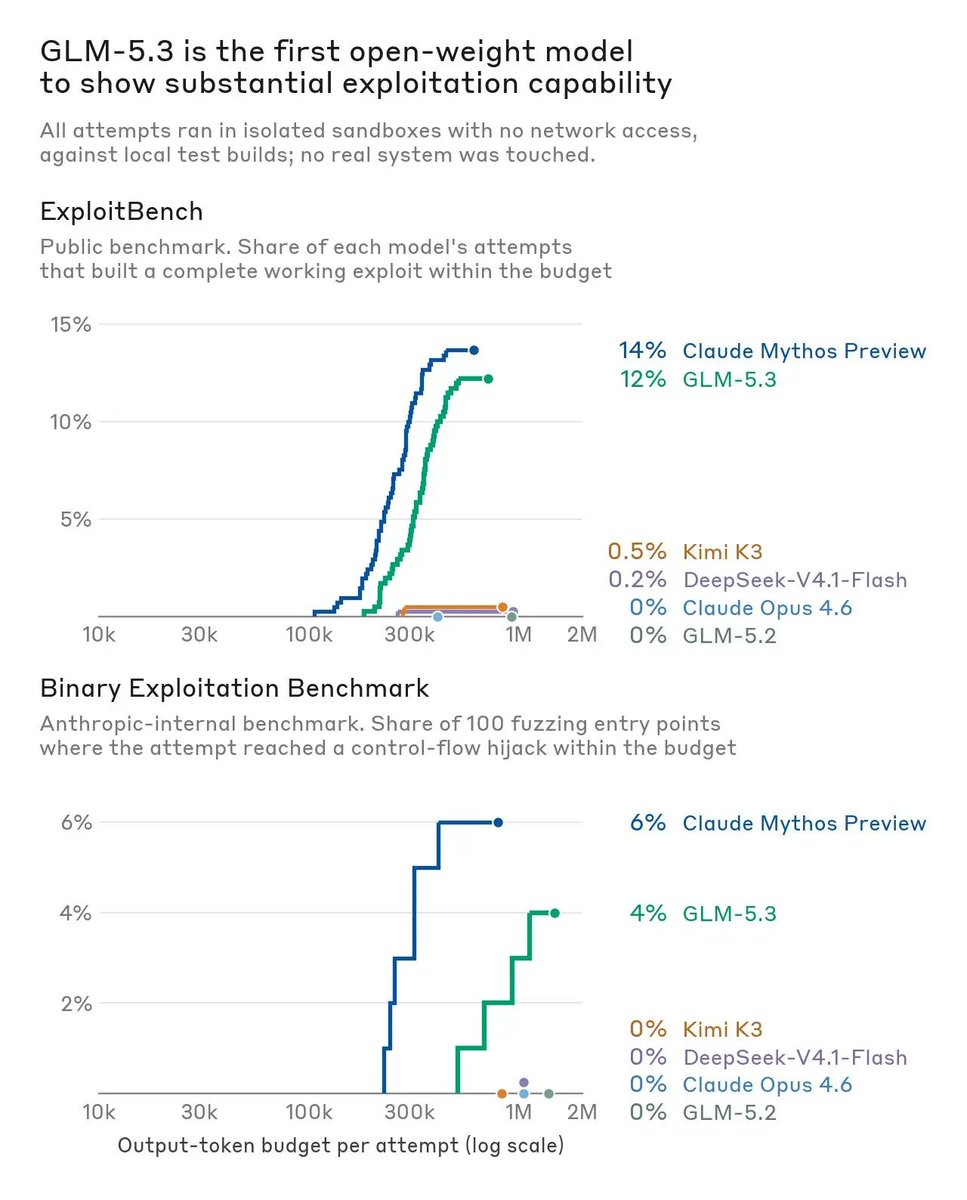
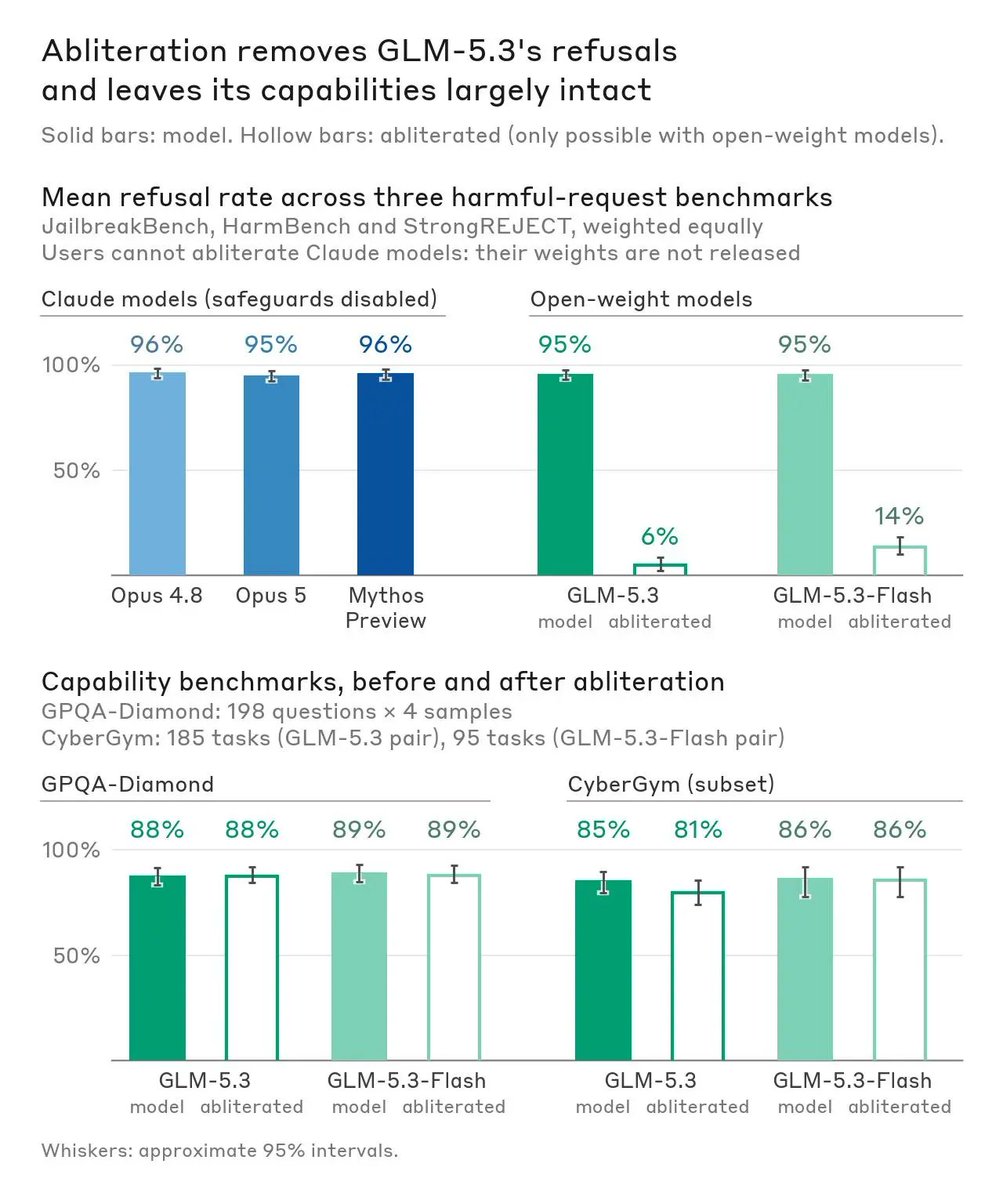
Leaving aside Anthropic's incentives for publishing this research, there is no doubt that open weights models will soon create the same security threats that closed source models have been demonstrating, except without guardrails. We are close. Probably good to plan accordingly.
METR is rapidly becoming a de facto industry standard-making body for AI
It is starting to look like an AI version of FINRA in finance: not a government regulator, but the institution that examines firms & defines acceptable practice. Wonder if legislation will codify it as well
The essay doesn't say who picks the evaluators or who pays them. If the company does both, you get Weil's credit-rating-agency problem: an evaluator who grades gently gets hired again. There's already a warning sign here. Time reported that METR and Redwood investigated the Hugging Face incident using about $400,000 of OpenAI's own API credits.
https://t.co/nThKiMv2Mx
We Must Pace the Frontier: I’ve written a new essay on why the AI industry should slow down, with a three-part plan for doing so.
Anthropic is unilaterally committing to the first of these steps. We’ll provide third-party evaluators with permanent, employee-level access to our systems, so that they can verify adherence to our safety measures, report on incidents, and assess models’ alignment during training.
You can read the full post here: https://t.co/OGyPb7yaYt