H. pylori Screen-and-Treat Programs for Gastric Cancer Prevention — IARC Working Group Report https://t.co/skXkAtwXAe. Quality indicators for H.pylori programs are important. However, I think the origin of the problem lies in water access, ozonification and sanitation policies.
“The lonely gal” Asking about food triggers of symptoms or use of a food diary are key for this condition and avoid mislabeling it as IBS. ”https://t.co/by6y6gmtCw
🌎 El Dr. Cadman Leggett (Mayo Clinic, EE. UU.) será uno de los expertos internacionales en #Gastrolima2026.
🔹 Endoscopía avanzada
🔹 Detección precoz de lesiones GI
🔹 EMR
📝 Inscripciones:
https://t.co/c5mjZyUGKo
#Gastroenterología#Endoscopía#MayoClinic
New from Diseases of the Esophagus: Risk stratification for stricture formation after endoscopic submucosal dissection for esophageal dysplasia
View the full article in the journal: https://t.co/mzM1pGMb0C
#Esophagus#Esophagectomy#ISDE
How does gastric conduit shape and peristalsis affect quality of life after #esophagectomy? A new prospective study uses dynamic MRI to explore conduit function in long-term survivors — findings could help guide future treatment. https://t.co/AqNRJxoSKd
#EsophagealCancer
Celebrating the 30th Annual Fellows’ Recognition! 🎉
We proudly honor our 2026 graduating Gastroenterology, Hepatology, and Advanced fellows.
Your dedication, achievements, and impact inspire us all—we can’t wait to see what’s ahead for each of you.
Stay tuned to see where their journeys lead next!
Honored to have this opportunity! Hoping to use this experience to further explore my interest in creating a product that can improve gastric cancer screening in Peru.
Congratulations to Dr. Amir Seid, Dr. Saqr Alsakarneh, & Dr. Wilfor Diaz Fernandez on his acceptance into the Mayo Clinic School of Graduate Medical Education Clinical Innovation and Entrepreneurship Academy! This prestigious longitudinal program equips trainees with the skills to drive clinical innovation and entrepreneurship, with mentorship from leaders in innovation, commercialization, AI, and strategic communication.
🧬 New in Nature: Inherited VSIG10L gene mutations disrupt esophageal cell integrity, raising the risk of Barrett's esophagus & esophageal cancer.
Chronic GERD suppresses VSIG10L expression ~3x, silencing the gene protecting the esophagus. new BRCA? #BarrettsEsophagus
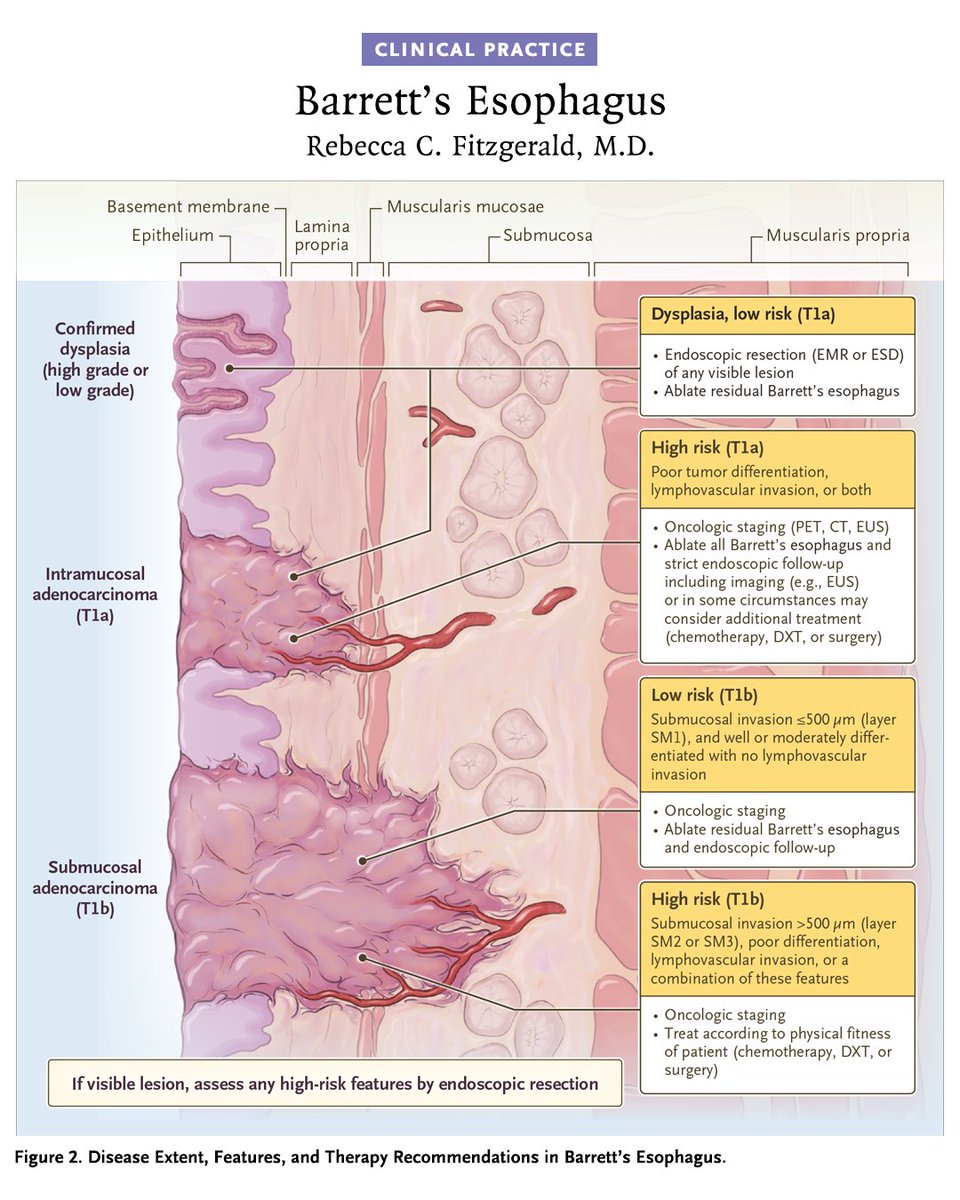
The 2026 status of Barrett’s esophagus highlights the importance of personalized care, with biomarker panels, noninvasive cell collection devices and AI. Great pleasure to meet author@RC_Fitzgerald. Barrett’s Esophagus | New England Journal of Medicine https://t.co/eMp1RKaEtX
The 2026 status of Barrett’s esophagus highlights the importance of personalized care, with biomarker panels, noninvasive cell collection devices and AI-powered detection systems for risk assessment.
A new Clinical Practice article summarizes the pathogenesis, diagnosis, and management of Barrett’s esophagus, a reflux-related condition with increased adenocarcinoma risk, highlighting endoscopic diagnosis, surveillance, and early curative therapy.
Read “Barrett’s Esophagus” by Rebecca C. Fitzgerald, MD (@RFitzgerald_lab), from the University of Cambridge (@cambridge_uni): https://t.co/M7xOCEsdRH
#Oncology
Honored to be part of an all-star lineup of both Texas and national faculty - 50th anniversary TXGI course
Amazing, diverse topics. Engaging speakers. The Texas G.I. Society is extremely impressive, uniting culture, driving advocacy, and education
#GITwitter#GIFellows
⏹️ Are you still using clarithromycin or levofloxacin to treat #Helicobacterpylori infection?
⏹️ If so, current resistance patterns should give you pause.
⏹️Based on recent guidelines, they should only be used if there is demonstrated susceptibility.
@umfoodoc on #Hpylori infection at #ACGVGSMASGNA.
What health condition do older adults fear most?
It’s not cancer, heart disease, or stroke.
It’s dementia.
And one factor speaks volumes about your future brain health:
Muscle health.
The research is clear:
1⃣ Adults 65+ with sarcopenia face 2.4x the risk of dementia.
2⃣ Men in their late 60s who lost more muscle over four years experienced faster cognitive decline.
3⃣ In adults in their early 70s, low muscle mass was linked to accelerated executive function decline over three years.
Muscle isn’t just about strength—it’s about protecting your brain.