Senator Jon Ossoff’s surprisingly bitter and personal attack on GOP senatorial nominee Mike Collins teaches us several things. First, for all the money he has raised from California and other radical Democrats Ossoff is afraid of Collins. Second, that Ossoff knows he cannot win a campaign on the issues and so his only hope is to make vicious, dishonest personal attacks on Mike Collins. Third, that Ossoff will wage an endlessly negative campaign trying to smear Collins out of the race. Let me give a couple examples of how anti-Georgia and how vulnerable Ossoff’s record is. According to America’s New Majority Project (available at its website) 75%, three out of every four, want to limit women’s athletics to people born as females. Ossoff voted against the Protection of Women and Girls in Sports Act. 81% favor having only US citizens vote. Ossoff opposes the Save Act. 88% believe every American should have the right to choose the kind of vehicle they wanted. Ossoff voted against repealing the extremely restrictive restrictive California electric vehicle mandate. Some 82% believe parents have a right to see the school curriculum for their children. Ossoff opposes these policies.73% favor expanding domestic oil and gas production to bring down the cost of fuel. Ossoff favors phasing our fossil fuels. Finally, 79% favor middle class tax relief but Ossoff voted against every tax cut and in favor of a giant tax increase in 2025. With a radical anti-Geiorgia record like this you can understand why Ossoff is turning to viscous dishonest personal attacks to smear Mike Collins instead of debating the issues.
During the FIFA World Cup games, we’ll welcome visitors with a brand of hospitality they won’t find anywhere else in this tournament. The "Georgia, the Whole Day Through" experience will showcase all the Peach State has to offer, so come experience what makes our state so great!
https://t.co/ecGTPSRo7i
Breaking news: A Ford dealership in Kansas can't release a sold F-250 because a robin moved in first.
An employee at the dealership located outside Kansas City noticed a robin building a nest on the tire of a brand new F-250 that was already sold. The robin laid four eggs and successfully hatched them.
The truck is now stuck on the lot until the chicks fledge, because the Migratory Bird Treaty Act of 1918 makes it illegal to disturb an active nest of any native bird in the United States.
The buyer has been a good sport. The dealership called it the only F-250 in America currently protected under federal law.
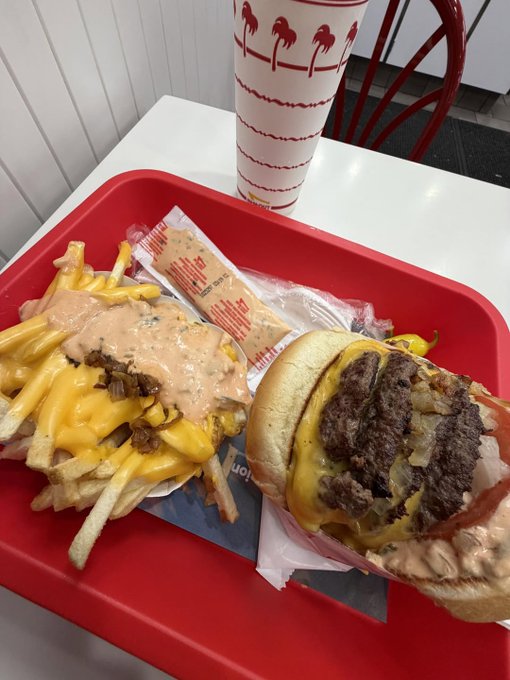
Details on the new 10,000+ sq. ft. In-N-Out in Vegas
•No drive-thru — all about the vibe. Walk inside (or upstairs) for fresh, made-to-order burgers in a spacious, high-energy spot.
•Rooftop patio with killer Vegas views. Chill with Animal Style fries under the neon lights.
•Flagship merch store. Exclusive In-N-Out gear, apparel & collectibles you can’t get anywhere else.
•Now hiring! Join the crew for Vegas’ biggest In-N-Out.
Opening Summer 2026. Get ready — it’s going to be massive.
Truist Park and The Battery brought in more money than Cobb County paid on the stadium debt in 2025, which is good for taxpayers.
Simply put, the project is making money instead of losing it.
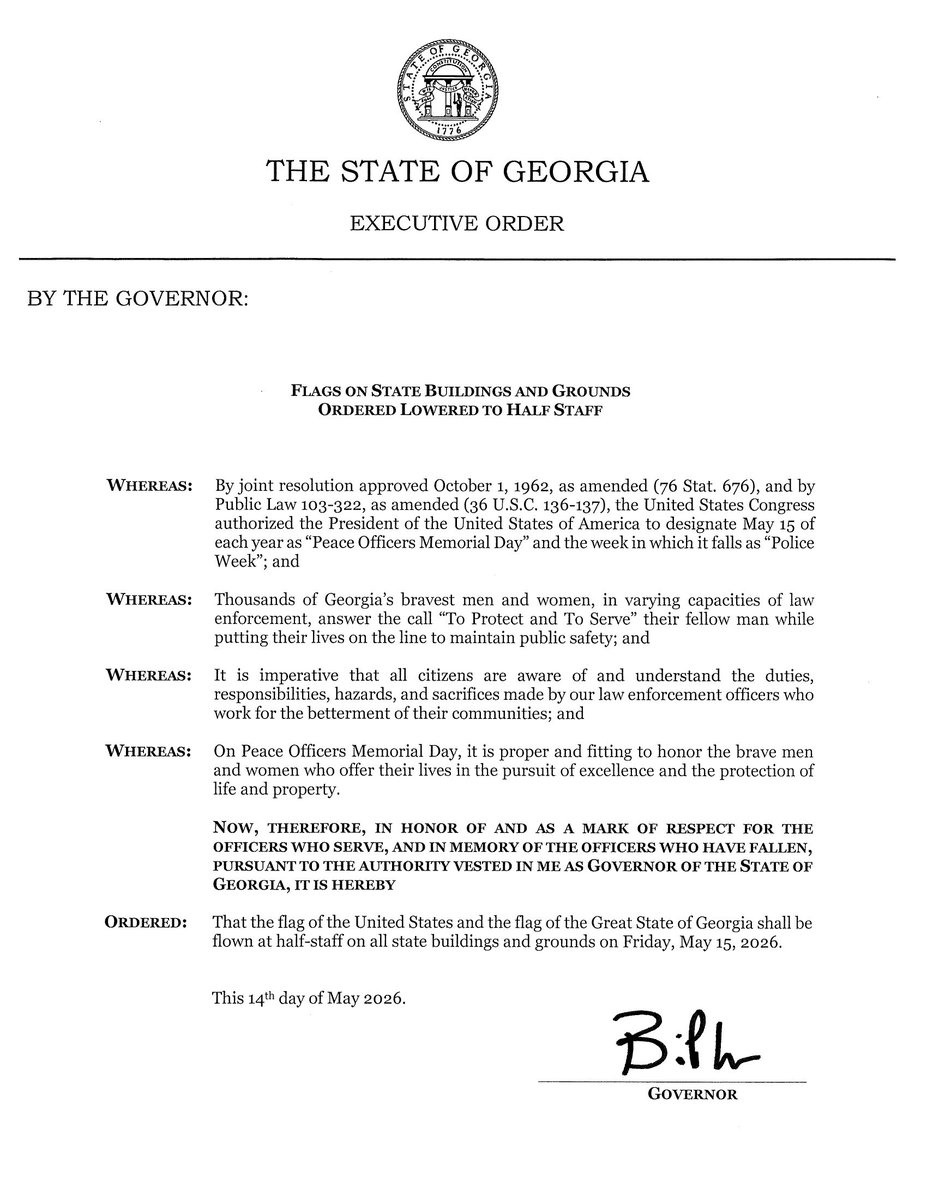
As we commemorate National Police Week and prepare to observe Peace Officers Memorial Day tomorrow, I am ordering flags to be lowered in honor of all the brave law enforcement who have sacrificed so much to protect others. Please keep all public safety officers in your prayers as they keep our communities safe.
Starting June 1, we’re doing things better at Steak n Shake — all our beef will come straight from pasture-raised cattle. This beef will be 100% grass-fed and grass-finished, making us the only American burger joint serving the healthiest kind of beef.
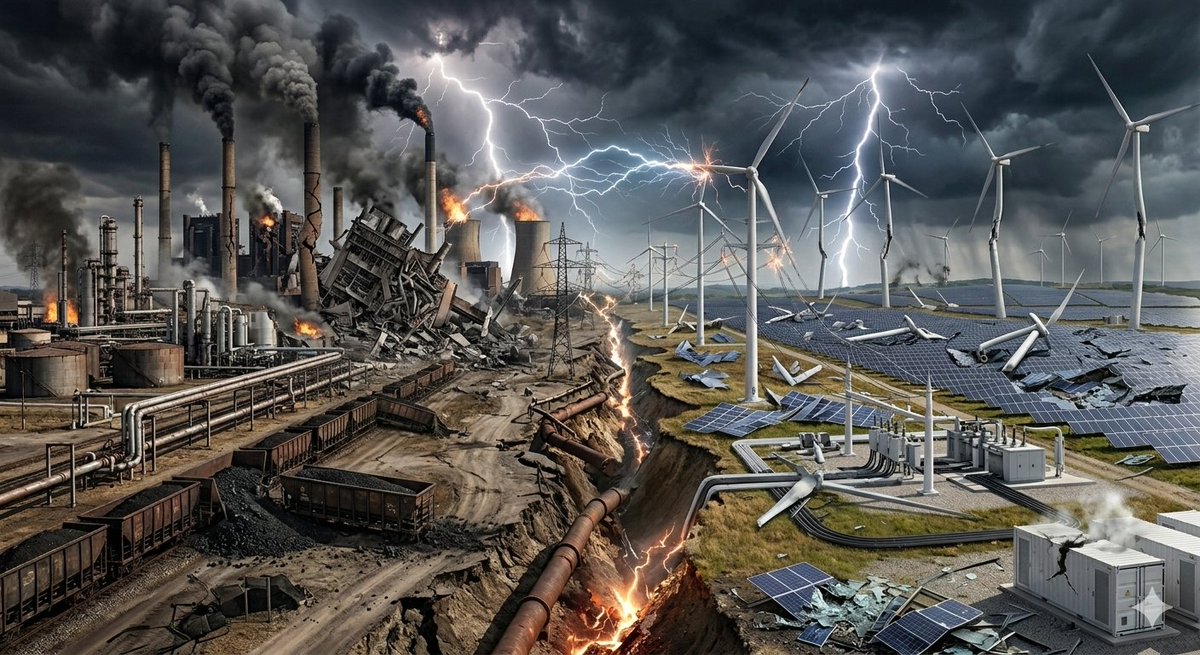
If wind and solar were truly economically and engineeringly superior to fossil fuels, we wouldn’t be talking about a transition.
We would be witnessing a wholesale acceptance.
Think back to the great energy shifts of the past. We didn’t need global treaties to move from wood to coal, or from whale oil to kerosene. We didn’t need to demonise the forest to convince people to use a coal stove. The market moved because the new energy source offered higher energy density, lower cost and greater reliability.
If renewables really were the 'cheapest form of energy' in town, as the narrative argues black and blue, the market would have pivoted years ago without a single subsidy. Capital investment always flows toward efficiency.
Instead, we see persistent intermittency. We see huge, costly wind and solar arrays lying dormant when the winds are still, on cloudy days and at night. Only an ongoing dependence on coal, oil, and gas keeps the lights on. That is not a business plan.
Without a massive, currently non-existent method for long-duration storage, wind and solar remain an adjunct to the grid - not the solution. We are essentially building two parallel grids: one for wind and sun, and a ghostly 'shadow grid' of coal and gas. This is the definition of engineering failure.
The campaign to demonise CO2 served one function: when a product cannot compete on its own merits, you change the rules of the game. If you can’t make the new technology cheaper, you make existing technology illegal.
True progress doesn't require a code red crisis to crush debate. It proves itself by providing energy and grid stability from Day 1. If renewables worked as advertised, the transition would be over in a week.
Instead, we're being told to sacrifice national sovereignty, energy security, and our industrial base - trading away jobs for a flawed system that cannot survive for a day without a backup plan.
Each spring, the Cahaba River comes alive with one of the Southeast’s most remarkable blooms. The Cahaba lily thrives in swift, sunlit water, anchoring itself to rocks as it blooms in bright white clusters across the river.
Photo by Keith Boseman
Turbine blade graveyards, 20-year replacement cycles for renewables and a staggering $275 trillion cost to meet Net Zero in 25 years time.
These are the exposés that are clearly striking a nerve with many people. They are revealing unimaginable levels of incompetence, waste and government failures everywhere. The enforced replacement of ageing and decaying wind turbines every 20 to 25 years is an unexpected massive extra financial burden for the world. Not to mention massive new copper and mineral mining requirements needed for that 25-year replacement - all using fossil fuels.
These cycles of replacement will continue to come around forever as the arrays fall into disrepair and are left as rusting hulks, often in farmlands, country hideaways and coastal retreats. Many components cannot be recycled since it costs more to recycle them than their actual value.
Most people in western countries did not ask for or need a 'clean energy' electricity system. They wanted a cheap and efficient energy system. This is not being delivered anywhere. Most nations now have the highest electricity prices in history. Industries are facing hollowed out jobs; some economies - like Germany and the UK - are literally falling apart.
There are few provisions or funds to cover unplanned replacement costs for wind and solar, probably amounting to billions more every few years. McKinsey Global estimates annual all-in structural costs of $9.2 trillion a year, just to keep the climate carousel turning. This will go on for another 25 years. These are colossal resource realities no amount of modelling can wish away.
Recent arguments about green hydrogen are following the same unsettling pattern. Australia's super green hydrogen push has stalled already in numerous subsidised projects. Multiple major projects have been cancelled, delayed or had funding pulled (Queensland's CQ-H2, BP's Pilbara, Fortescue efforts, Origin's withdrawal, etc).
Subsidies continue (e.g. for Orica - ammonia production) but analyses increasingly call out the fundamental cost and efficiency barriers. The include high electricity input, intermittent energy setbacks, costs of grid and wiring replacement and transport challenges.
The Snowy 2 hydro upgrade started in 2017 with a $2 billion price tag. It's now reached $42 billion with no end in sight. Even supportive voices now talk about refocusing on niche domestic hard-to-abate uses rather than Australia's full 'green hydrogen superpower/export' vision.
All-in costs of $6–9 trillion for Australia's Net Zero commitment line up with cumulative modelling estimates. Critics of the strategy point to the same hydrogen flaws of pure physics and economics: the embrittlement of steel, perpetual leakage, failure to reach baseload needs, and the loss of opportunities by sidelining coal, gas and uranium domestically.
It's not anti-progress to question trillion-dollar bets on technologies that have never scaled commercially anywhere in the world. Energy policy should prioritise what works the cheapest and most reliably for Australian households and industry first.
Niche audiences like energy analysts, policy watchers and the resource sector will always engage. But most people just turn off, stunned by the colossal failures on the horizon.
In 1776
James Madison was 25
Alexander Hamilton was 21
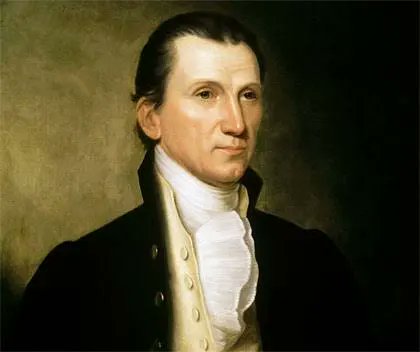
James Monroe was 18
Henry Knox was 25
Nathan Hale was 21
We coddle our youth.
We should give them more responsibility and expect more of them.