Without the right to life, nothing else matters.
A culture that values human dignity must be willing to defend life precisely when it is most vulnerable.
Every human life has value. Every human life deserves dignity.
2/2
Let’s create policies that support crisis pregnancy centres and make adoption more accessible and supportive for families.
https://t.co/jYsZ800KzM
@sanjeevsanyal - he is part of the economic advisory team of our Narendra modi government
#StandwithJCDPrabhakar#marchforlifeindia
A TikToker from England who spent years defending Islam to more than 100,000 followers is speaking out about his decision to follow Christ — describing the theological doubts, death threats from former supporters, and a series of vivid dreams involving Jesus that ultimately changed the course of his life. Before publicly embracing Christianity, Kieos had spent years creating Islamic content & defending Islam to an audience of more than 100,000 followers.
Kieos is clear that leaving Islam was not a sudden or dramatic departure. "It was definitely a slow, gradual process."
Then, a striking moment in Kieos' journey came. On three consecutive nights, he says he dreamed of Jesus — an experience he still finds difficult to fully explain.
"I never have dreams," he told Britannia Daily. He acknowledges the psychological interpretation but says it does not account for his specific circumstances. "People could argue that if I were looking at images of Jesus, they could be brought forward in my subconscious whilst sleeping. But I never did, which makes it strange."
FULL STORY: https://t.co/pxppEQ3Y3G
The Bolsheviks ✡️⬇️
The Bolshevik Revolution comprised mostly of Jews were responsible for exterminating 60+ million Christians
In a total of 545 members the Bolshevik administration comprizes.
447 Jews
30 Russians
34 Letts
22 Armenians
12 Germans
3 Finns
2 Poles
1 Georgian
1 Czech
1 Hungarian
#Bangladesh
In #Madaraipur district, Islamists abducted a 4 years old Hindu girl and raped her.
After the torture, Islamists left the girl in front of her home.
Her mother is crying in front of the local influential Muslim leaders for justice.
This is the condition of the Hindu minorities in Bangladesh. They have no right to get justice.
The man who scored the goal that made Spain the world champion, Ferran Torres, is a great patriot.
This is the hat he wore to celebrate the victory.
Also he is a devout Christian and very humble and kind person.
Based! 🇪🇸
Convert, pay Jizya or face the sword.
From 5000 to 50 Christian families in Mosul.
@bishopwarda on @ireland_acn:
“From 2004, with the bombing of churches, the message was: you have no place here & by 2014 that was obvious.”
The only Assyro-Chaldean bishop telling this story.
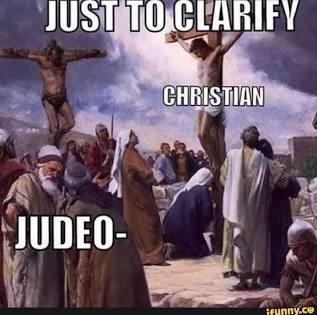
Understand this: The movies and shows about the crucifixion have been tame when compared to what He actually went through.
Even The Passion Of The Christ was forced to hold back a little in order to avoid an X rating.
Crucifixion was, and still is, arguably the most excruciating death someone can experience.
The night before in Gethsemane, He was sweating blood. This is known as hematidrosis. This would have caused His skin to become extremely sensitive, thus making the beatings to come even worse.
The fear He felt was the beginning of His feeling the weight of our iniquities being laid on Him.
Yet - in this moment, He didn’t demand that the Father take it from Him. He only asked for the cup to pass Him over if it was within the Father’s will.
Up next came the Cat of Nine Tails, or a Roman Flagrum. This was a weapon with long leather “tails”, each embedded with sharp bones and metal.
He was flogged 39 times as Jewish law mandated “40 minus one”, because 40 was said to kill a man.
This flogging wasn’t like being punished by your father’s leather belt.
Every strike tore flesh, every strike exposed muscle. Every strike exposed nerve endings. Every strike tore flesh to the bone.
This would be like getting struck with razor blades over and over again, leading to hypovolemic shock from blood loss.
Oh, and the crown of thorns? These weren’t rose thorns. These were thorns which were 2-3 inches long. Beaten into his skull.
These thorns would have pierced his skull, tripping the trigeminal nerve, thus causing unimaginable pain and even more blood loss from the dozens of head wounds.
At this point, extreme nausea and dizziness would begin to set in.
What came next? Carrying the cross. Which weighed around 300lbs. This would be like carrying two full kegs on your back.
Splinters and wood grating against the open flesh on His back. And He had to carry it 650 yards, or close to a half mile.
Imagine carrying a log on your back after being skinned alive.
Up next? He was nailed to the cross with spikes 5-7in in length. Piercing His wrists - this no doubt pierced the median nerve, causing extreme burning sensations up and down His arms.
A spike was driven through his ankles - severing nerves and tendons. This would have felt like standing on broken glass every time He pushed Himself up in order to breathe.
He suffered for 6 hours.
His chest muscles collapsing, making every single breath a fight for life.
His shoulders were dislocated, His arms stretching unnaturally long.
His heart was struggling to pump blood.
He was extremely dehydrated, His lips cracking.
His heart more than likely literally ruptured from the stress.
And on top of all of that, He had to feel a separation with the Father for a period of time in order to REALLY bear the weight of our sin.
He took up this burden for ALL sin before Him, and ALL sin which came after Him.
HE DID IT ALL FOR US.
To free us. To defeat sin. To give us a pathway to the Kingdom.
Every sin we commit is exactly why He had to do it.
And the real kicker? He knew what was coming when He rode into Jerusalem … and He didn’t turn around. He kept going.
For us.
The History of Blasphemy Laws in Pakistan
To understand the gravity of Section 295-C, one must first trace the history of religious offenses in Pakistan. In the current climate, speaking out against these draconian #blasphemy laws is nearly impossible for those living within the country. Contrary to popular belief that these laws emerged during General Zia-ul-Haq’s Islamization in the 1980s, their origins actually lie in the #British colonial era. They’ve evolved over time—shaped by various political and religious influences—into the complex and contentious legal landscape we encounter today.
Pakistan Penal Code and Religious Offenses
The Pakistan Penal Code (PPC) features several sections that address religious offenses, outlining the legal limits on free speech and behavior. These laws make it a crime to misuse religious titles, desecrate the #Quran, or engage in actions that are meant to offend religious sentiments. They also prohibit any remarks about #Muhammad or other Islamic figures. Each section has its own historical context, level of Islamic authority, procedural rules, and penalties, which can range from fines to the death penalty.
1860 – Arrival of the British Penal Code in the Subcontinent
Before the British arrival and the establishment of the colonial legal system, the subcontinent didn’t really have a clear, written law that dealt specifically with blasphemy. Back then, the legal philosophy leaned more towards flexible and corrective punishments rather than strict codes. Everything changed dramatically with the introduction of British legal traditions and the Indian Penal Code (IPC). For the first time, laws were officially written down, including those addressing religious offenses: Section 295, which made it illegal to defile or damage places of worship, and Section 298, which targeted words meant to insult religious sentiments.
1927 – Sectarian Riots in British India
Although Britain attempted to maintain harmony among different sects, it played a significant role in promoting the politics of religious figures in the region, which culminated in sectarian violence in the early 20th century. In these conditions of sectarian tension, a Hindu publisher named Mahashay Rajpal published a book titled Rangila Rasul. This book was written as a satirical and humorous response to a pamphlet called Sitaka Chinala (which had insulted Sita, Ram's wife in Hindu tradition, by calling her immoral). In retaliation, the Arya Samaj decided to respond to mockery with mockery, portraying the life of Muhammad's wives as "colorful" (rangila, implying satirical or lewd).
In other words:
One side mocked a Hindu goddess with insults through Sitaka Chinala,
The other side mocked Muhammad's marital life by calling it "rangila."
The book was originally written and published in Urdu (in Lahore by Mahashay Rajpal in 1924), and later translated into Hindi.
(Note: The text mentions that in 2015, the author and companions publicized this book on social media, leading to severe backlash, and three friends were sentenced to death on January 9, 2021, as has occurred in Pakistan's blasphemy cases involving social media content sharing.)
Both sides attempted to defile each other's sacred figures humorously—and history placed them in the same position.
However, Sections 295 and 298 at the time only covered desecration of places of worship and verbal insults to revered persons. As a result, Mahashay Rajpal was acquitted. A Muslim named Ilmuddin decided to take the law into his own hands and stabbed Rajpal to death with a dagger. Ilmuddin was sentenced to death, and the British government, faced with the situation, decided that the existing law was insufficient to curb such insults. As a consequence, they introduced Section 295-A in 1927, which criminalized deliberate and malicious acts (verbal or written) intended to outrage religious feelings by insulting a religion or its believers.
1953 and 1974 – Riots Against the Ahmadi Community / Second Amendment
After gaining independence, tensions against #Ahmadis flared up multiple times. The first significant incident took place in 1953, followed by another in 1974. In 1953, various religious groups pushed for laws targeting Ahmadis, but the government held its ground. However, in 1974, Prime Minister Zulfikar Ali Bhutto gave in to the mounting pressure. After holding secret discussions with top leaders from Jamaat-e-Islami, he brought forth the Second Amendment to the Constitution, officially labeling Ahmadis as non-Muslims.
1980s – Zia-ul-Haq Era
After overthrowing Zulfikar Ali Bhutto, military dictator General Zia-ul-Haq focused on Islamization. To satisfy the Sunni majority and address some Shia concerns—particularly regarding the Zakat and Ushr ordinance—he introduced Section 298-A. This law prohibited any insults against the Muhammad's companions, with a maximum penalty of three years in prison. It was the first time the Government of Pakistan implemented a law specifically aimed at protecting revered figures from insults.
(Keep in mind that in Shia traditions, there are practices that involve cursing certain Muhammad's companions.)
From 1980 to 1984 – Other Laws Passed During Zia-ul-Haq's Rule General Zia implemented a series of ordinances that included the following: Section 295-B, which makes defiling the Quran punishable by life imprisonment. Then there are Sections 298-B and 298-C, which specifically prohibit Ahmadis from using Islamic titles, mimicking Muslims, or claiming Islam as their faith.
It's worth mentioning that Section 295-C, the key blasphemy law concerning the Muhammad, wasn't introduced through a presidential ordinance. Instead, back in 1986, a private member's bill was brought to Parliament, calling for an amendment to Section 295-C to impose the death penalty for blasphemy Muhammad.
It should be kept in mind that the final law on blasphemy was not merely enacted and enforced according to the wishes of a dictatorial ruler; Parliament and public participation were involved in its development.
1991 – Federal Shariat Court Decision
As a result of the Federal Shariat Court's ruling in 1991, the option of life imprisonment was removed from the law, and the death penalty was made mandatory, with no possibility of pardon thereafter. The current form of Section 295-C (prescribing only the death penalty) remains in force to this day.
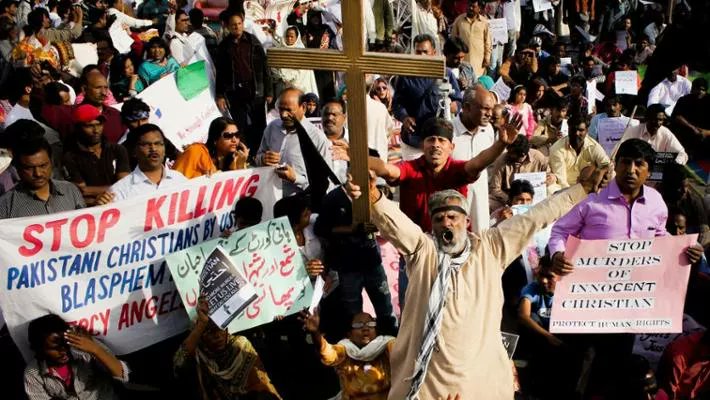
The historical trajectory of these laws has created a legal landscape that is increasingly weaponized against Pakistan’s most vulnerable communities. Initially intended to foster communal harmony, the way Section 295-C is applied today has turned it into a weapon for systemic oppression. It’s often misused by the majority to settle personal grudges, land conflicts, or business rivalries. The #Christian minority, in particular, lives in a constant state of fear; for them, a single unverified accusation—often spread through social media—can completely bypass the judicial system, leading to mob violence, arson, and extrajudicial killings. In this climate, the law doesn’t just punish alleged blasphemy; it offers a legal shield for religious extremism and allows for the collective punishment of entire neighborhoods.
In the end, the shift of these laws into mandatory death sentences has effectively stifled any real conversation about reform. The "institutional asymmetry" and the ever-present threat of being accused oneself make it nearly impossible for lawyers, judges, or activists to defend the falsely accused without putting their own lives at risk. As we move from the pamphlets of 1924 to the digital platforms of 2026, the danger has only grown. Without a strong mechanism to penalize false accusers and a return to the "malicious intent" standard of the 1927 era, the law will continue to hang like a sword over the heads of minorities, ensuring that for Pakistan's Christians, seeking justice remains a perilous endeavor.
In the Islamic apartheid state of Pakistan, Nazir Masih, a local shoe maker and member of the minority Christian community, was attacked by a mob of angry Islamists and stoned to death.
He was falsely accused of blasphemy against the false prophet Mohammed.