INSTEAD OF WATCHING NETFLIX TONIGHT. Spend 2 hour with this.
Claude AI FULL COURSE that teaches you how to BUILD and AUTOMATE anything.
The people who watch this tonight will wake up tomorrow with a new skill. Watch it and bookmark it now.
Cc : Respective Author
INSTEAD OF WATCHING AN HOUR OF NETFLIX TONIGHT.
This 60-minute Cambridge lecture by Demis Hassabis will teach you more about the future of AI than most people will learn in the next 5 years.
Bookmark it and give it an hour, no matter what.
A dead MIT professor accidentally destroyed the $20 billion executive coaching industry with one hour of lecture, and ten million people have already watched him do it.
He filmed it once in January 2018 and died eighteen months later.
Executive coaches charge fifteen thousand dollars a session to teach a third of what he covered in that one hour for free.
His name was Patrick Winston. He ran the MIT Artificial Intelligence Laboratory from 1972 to 1997 and wrote the AI textbook every computer science major in the world read for thirty years.
Every January for four decades, he gave a lecture called "How to Speak."
His entire framework fits on a napkin.
Do not read. Be in the image. Keep images simple. Eliminate clutter. Start with an empathetic connection. End with a punch line the audience can repeat over dinner. Never open with a joke. Never end with "thank you."
That last rule alone has probably cost the executive coaching industry a hundred million dollars.
"Your success in life will be determined largely by your ability to speak, your ability to write, and the quality of your ideas. In that order."
That is the actual opening line of the lecture. Winston believed it strongly enough to spend fifty years teaching computer scientists how to talk.
Founders spend $80,000 on an MBA and then hire a communications coach to teach them the same material Winston filmed once for free. Engineers write brilliant code and lose promotions to teammates who watched this lecture on the train.
The lecture is free on MIT OpenCourseWare. The textbook is free on his page.
Winston died in 2019. Almost none of the ten million viewers have actually implemented the four rules on the napkin.
The napkin is free. The willingness to actually use it in your next meeting is the entire edge.
Elon Musk literally sat down for a 45-minute talk with Y Combinator that explains how to build world-changing companies better than any business school on earth. This is the advice he gave a room full of young founders:
1. Don't try to build something great. Try to build something useful.
Everyone obsesses over greatness. Musk says that's the wrong target. "I didn't originally think I would build something great. I wanted to try to build something useful. I didn't think I would build anything particularly great. Seemed unlikely, but I wanted to at least try." Aim for useful first. Greatness, if it comes, is a byproduct.
2. When you can't get in the front door, build your own door.
Before Musk started his first company, he tried to get a job at Netscape. "I sent my resume into Netscape and nobody responded. I tried hanging out in the lobby to see if I could bump into someone, but I was too shy to talk to anyone. So I'm like, this is ridiculous, I'll just write software myself." He didn't set out to be a founder. He became one because no one would hire him.
3. He slept in the office and showered at the YMCA.
The origin of his first company was not glamorous. "We couldn't even afford a place to stay. The office was 500 bucks a month, so we just slept in the office and showered at the YMCA." He couldn't afford proper internet either, so he drilled a hole through the office floor and ran a cable to the internet provider downstairs. That was the founder of the future richest man on earth.
4. Keep the chips on the table.
When Musk sold his first company, he received a $20 million cheque. His bank balance went from $10,000 to $20 million overnight. Most people would have stopped. He put almost all of it straight back into his next company. "I kept the chips on the table." He did the same thing decades later, over and over. He hates money sitting idle. Money is fuel for the next mission.
5. Start with the mission, then work backwards to make it a business.
Musk didn't start SpaceX to make money. He went on the NASA website to find out when humans were going to Mars, and there was no plan. So he decided to build one. "There had been no prior example of a rocket startup succeeding. A small chance of success is better than no chance of success." The mission came first. The business model came later.
6. He started SpaceX expecting to fail.
He is brutally honest about the odds. "SpaceX started in mid-2002 expecting to fail. Probably 90% chance of failing. When recruiting people, I said, we're probably going to die, but small chance we might not die." The first three launches failed. The fourth one worked with no money left. "If the fourth launch hadn't worked, it would have been curtains. We made it by the skin of our teeth."
7. Break every problem down to physics.
This is the core of how Musk thinks. "First principles means break things down to the fundamental elements that are most likely to be true, then reason up from there, as opposed to reasoning by analogy." His example is rockets. Everyone priced them based on what old rockets cost. Musk asked what a rocket is actually made of, priced the raw metals, and found the materials were only 1-2% of the historical price. The rest was inefficiency he could attack.
8. When told something takes 24 months, break it down and do it in six.
Last year xAI needed a giant computer to train its AI. Suppliers said it would take 18 to 24 months. "It's like, well, we need to get that done in six months or we won't be competitive." So he broke it into parts. Needed a building, so he found an old factory. Needed power, so he rented generators. Needed cooling, so he rented a quarter of America's mobile cooling capacity. He slept in the data centre and ran cabling himself. It got done.
9. Watch your ego-to-ability ratio.
Musk's single sharpest piece of advice for young founders is about staying honest with yourself. "A major failure mode is when your ego-to-ability ratio gets too high. Then you break the feedback loop to reality." Keep the ego small, internalise responsibility for everything, and stay ruthlessly connected to what's actually true. "You want to close the loop on reality hard. That's a super big deal."
10. Chase work, not glory.
His closing philosophy ties it all together. "It's so hard to be useful. The area under the curve of total utility is how useful you've been to your fellow human beings times how many people. If you aspire to do true work, your probability of success is much higher. Don't aspire to glory, aspire to work."
He was ridiculed for years. The press called him "internet guy attempting to build a rocket company." He agreed it sounded absurd. He did it anyway, because a small chance of doing something useful beat no chance at all.
Here's the thing though....
Musk became the most followed founder alive because everything he does happens in public. The launches, the failures, the talks like this one. The companies made him powerful. The personal brand made his every word travel around the world before he finishes saying it.
We build massive distribution and grow personal brands on X and beyond without our clients lifting a finger.
If you're a founder or VC looking for that kind of exposure, book a call below.
We average 1.5M views a week.
https://t.co/UoXuYlkBQq
INSTEAD OF WATCHING AN HOUR OF NETFLIX TONIGHT.
This 60-minute Cambridge lecture by Demis Hassabis will teach you more about the future of AI than most people will learn in the next 5 years.
Bookmark it and give it an hour, no matter what.
MIT offers 12 Books on AI & ML (FREE TO DOWNLOAD):
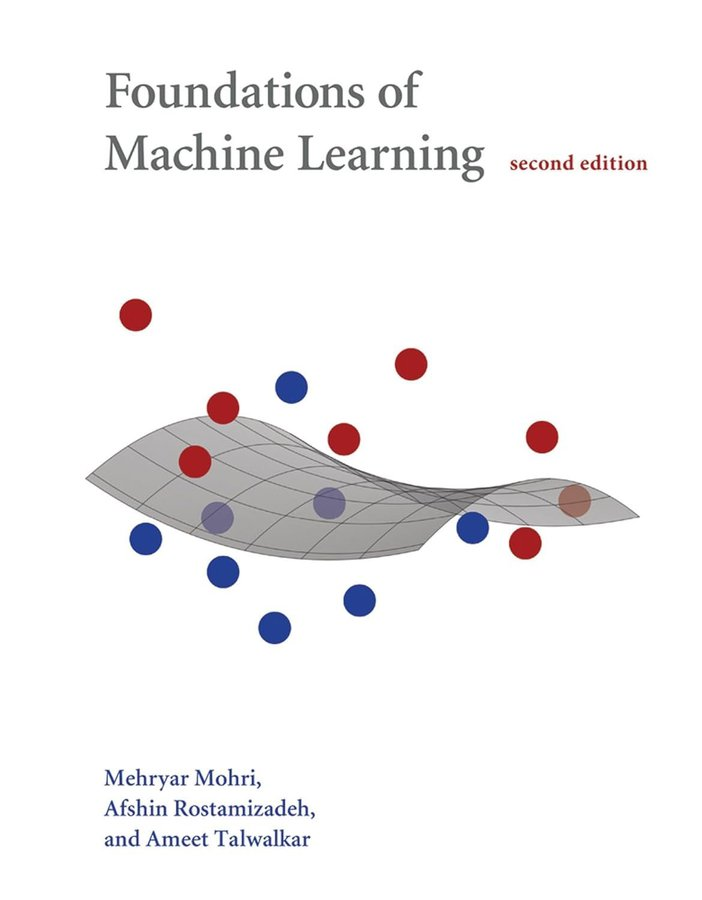
1. Foundations of Machine Learning
https://t.co/GkDEFl6p3R
2. Understanding Deep Learning
https://t.co/pI475UDfVy
3. Algorithms for ML
https://t.co/FFE5MbhFvo
4. Reinforcement Learning
https://t.co/RM8KbfvvgO
5. Introduction to Machine Learning Systems
https://t.co/jjOqVfTzIg
6. Deep Learning
https://t.co/Asrfeoitmg
7. Distributional Reinforcement Learning
https://t.co/an9WBTSHK8
8. Multi Agent Reinforcement Learning
https://t.co/MitEWsVDAt
9. Agents in the Long Game of AI
https://t.co/k5AZIDq6F7
10. Fairness and Machine Learning
https://t.co/kiQDLmr9dz
11. Probabilistic Machine Learning
❯ Part 1 : https://t.co/6KFHjhiibn
❯ Part 2 : https://t.co/gptvUloY3i
🚨 Coches Espías: La Pérdida de Privacidad sobre Ruedas.
El reciente incidente de la explosión de un Cybertruck de Tesla en Las Vegas no solo plantea preguntas sobre seguridad, sino que revela un problema más profundo: los vehículos modernos son máquinas de vigilancia camufladas como automóviles. En este caso, Tesla proporcionó a la policía datos de localización, grabaciones de estaciones de carga y, con un simple comando, desbloqueó el vehículo de forma remota.
Lejos de ser una excepci��n, esta capacidad es la norma en la industria automotriz. Los coches actuales están equipados con GPS, cámaras y micrófonos que no solo rastrean hábitos de conducción, sino también a los propios conductores. Mientras tanto, los fabricantes monetizan esta información, vendiendo datos a terceros sin consentimiento explícito.
La implicación es clara: el coche que creías tuyo es, en realidad, una herramienta de vigilancia controlada por su fabricante. Esta pérdida de privacidad, normalizada en nombre de la seguridad, abre un camino peligroso hacia un futuro de control absoluto.
Fuente: https://t.co/iJ6k6ZXYdI
Aunque enfrentamos tiempos difíciles, no paramos de trabajar por un futuro mejor. Aquí algunas actualizaciones sobre nuestro progreso. Ten la certeza de que no descansamos, trabajando día y noche para superar esta crisis y seguir forjando ese nuevo Ecuador que tanto anhelamos.