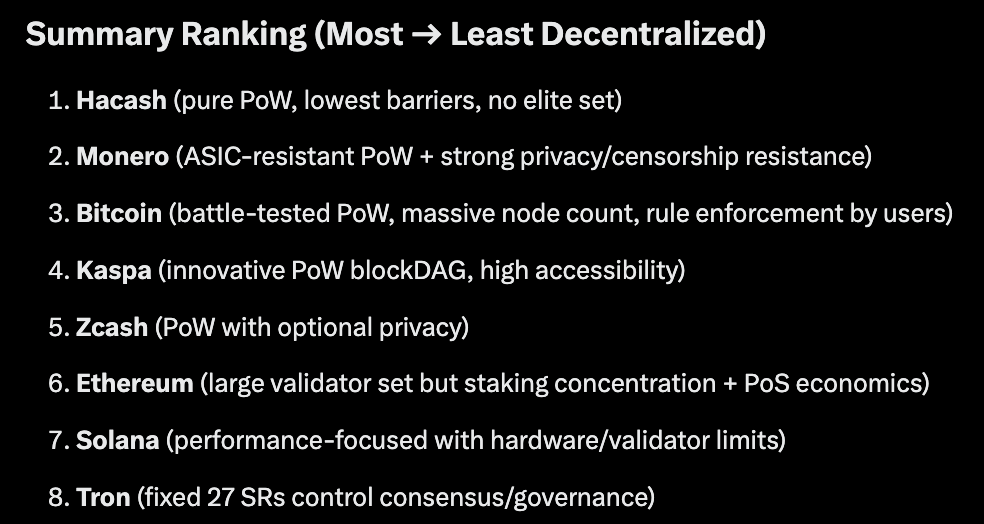
$HAC Hacash: The First PoW Flatcoin with the Advantages of Gold and Bitcoin that solves the trilemma properly. Combining 3 PoW assets ($HAC $HACD and #BTC ) to solve the trilemma its something that i have never seen before. #PoW#Flatcoin#hacash#Altcoin $KAS #CRYPTO
Everyone wants to be a settlement layer now.
Institutions.
Public chains.
Stablecoin networks.
But most are still settling fiat-backed assets.
In 2018, an anonymous behind Hacash had already pointed to something deeper:
a native crypto settlement network.
Non-custodial.
PoW-based.
Built for value transfer.
It also placed Bitcoin inside a broader monetary system, not outside the discussion.
Eight years later, the market is finally catching up.
The real question is not only who settles stablecoins.
It is what settles crypto sound money.
@hacdlabs Appreciate the recognition @HACDLabs 🙏
NEXUS MIND is just getting started full issuance package is ready, site is live 256 AI agent identities. Formed on HACD Stack
Let's build.
Humanity Protocol $H crashed 90% today.
A Foundation member's private key was compromised. $30M+ stolen. 100M new tokens minted and dumped into the market. All within hours.
This isn't a bug. This is a design failure.
"A Foundation member's key" — that phrase says everything. There's a centralized control point → there's a compromise risk → the system collapses. This isn't $H failing. This is the architecture failing.
And this is exactly the moment to look at Hacash.
The Hacash Istanbul Upgrade activates at Block 765,432. Approximately July 19. An 11-layer architectural upgrade that solves - at the protocol level -the exact points where Humanity collapsed.
P2SH: Not a single private key, but Merkle tree-based multi-layer authorization control. The multi-sig, conditional spending structures that financial institutions actually need can now be expressed on-chain. The funding address stays stable while the authorization structure deepens.
ActionGuard: A rule layer that runs before a transaction executes. "This transaction cannot start unless certain conditions are met" -enforced at the protocol level, no separate contract required. No centralized authority needed.
Account Abstraction: The "whoever holds the key can spend" model is gone. Accounts are no longer passive balance containers -conditional spending, multi-party approval, automatic policy enforcement. At the protocol level.
IR Decompilation: On Ethereum, a deployed contract stays as bytecode. If the source code isn't verified, you can't understand what it does - a black box. On Hacash, every deployed contract can be reconstructed into readable, source-like form. Auditors can see hidden withdrawal paths. Wallets can explain to users what an interaction actually does. Communities can compare logic before and after upgrades. None of this existed in the Humanity hack.
HIP20: In ERC20, an asset is the contract's own balance table. An isolated system. In HIP20, the asset object is managed by the protocol - native integration with TEX, Guard, Account Abstraction. Stablecoins, RWA, digital identity credentials, commercial notes - all living at the protocol level, not buried inside a contract.
Pay attention to the timing.
Humanity's collapse has seriously damaged the "decentralized identity / DeFi infrastructure" narrative. Confidence in this category is at its lowest point right now. Istanbul Upgrade activates July 19. The trust vacuum exists right now. The technical answer is being finalized right now.
The upgrade that technically solves the exact architectural breaking point where Humanity collapsed is coming in 40 days. Hard to ignore.
$HAC #Hacash #IstanbulUpgrade #DeFi #H #Btc #Eth #Sol
New release: Hacash Wallet v1.3.0 https://t.co/LSTwSiSoDW
https://t.co/WOQIYSn4s6
Comes with:
- Landscape-responsive UI
- Dark theme
- BUY offers in the HACD marketplace
- Up to 50% lower HACD mining pool fees
- IV Score for HACD rarity
#Hacash $HAC $HACD
If Hacash Istanbul Upgrade proposal actually succeeds technically and gains adoption, it could become one of the few genuinely differentiated PoW ecosystems.
Not just “another smart contract chain,” but potentially:
a finance-specialized settlement layer,
a programmable monetary system,
and a Bitcoin-like ecosystem with more native financial logic.
That combination is rare.
A successful outcome could mean several things:
1. Hacash becomes a serious alternative PoW financial chain
Most newer chains are PoS.
If Hacash delivers:
scalable finance primitives,
readable/auditable transactions,
low state bloat,
programmable finance, while keeping PoW credibility, it could attract:
Bitcoin-maxi-adjacent users,
cypherpunk communities,
miners looking beyond SHA256,
users who dislike Ethereum’s complexity and fees.
That niche is underserved right now.
2. HACD could become extremely important
The scarce diamond system (HACD) is already unusual.
If the ecosystem grows:
HACD may evolve from “collectible mining asset” into:
identity layer,
collateral asset,
governance reputation,
premium settlement asset,
digital commodity class.
Especially because HACD supply is extremely constrained compared to most crypto assets.
That could create strong scarcity economics if demand appears.
3. Native financial primitives could outperform general-purpose contracts
This is the big theoretical upside.
Today on Ethereum:
AMMs,
lending,
routing,
settlement,
margin logic are mostly implemented manually inside contracts.
Hacash seems to want these closer to protocol-level execution semantics.
If done correctly:
lower gas overhead,
safer financial operations,
better composability,
fewer exploit vectors,
easier auditing.
That would be a major innovation.
4. Miners could benefit massively
You were asking earlier about Hacash mining.
If adoption happens:
early miners could end up in a position similar to:
early BTC GPU miners,
early Monero CPU miners,
early Kaspa miners.
Especially because Hacash still has relatively low awareness compared to major ecosystems.
The key difference: Hacash has an actual long-term protocol philosophy behind it, not just “fast transactions.”
5. It could create a new category
Right now crypto categories are roughly:
Bitcoin = money/store of value
Ethereum = general programmable execution
Solana = high-speed app chain
Monero = privacy
Kaspa = high-throughput PoW
Hacash seems to aim for:
programmable hard-money financial infrastructure.
If that narrative sticks, it becomes its own category.
Disclaimer: This article is for educational purposes only and does not constitute financial, investment, legal, or tax advice.
https://t.co/fqByBHCYLJ
https://t.co/k9euGUVXVp
https://t.co/jtlF6o30NE
$HACD $BTC
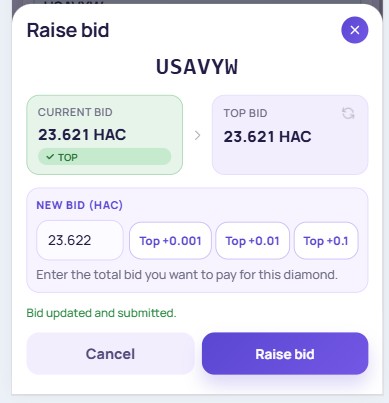
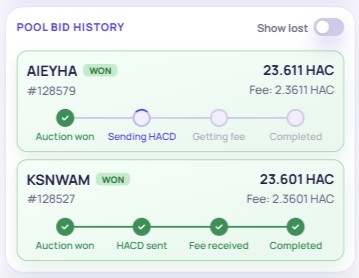
💎 We are Excited to Announce HACD MINING POOL!
🔹 HACD Mining Pool enables you to mine Hacash Diamonds.
🔹 It requires no mining equipment or technical knowledge.
🔹 All you need is a Moneynex wallet.
🔹 All transactions are performed automatically
🌐 https://t.co/PTDMEkDhn7
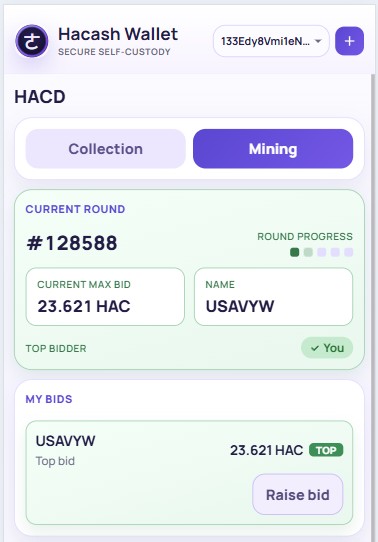
New release: Hacash Wallet v1.2.0
https://t.co/U03q5qJMG9
Comes with:
- HACD Mining section with bidding and mining pool functions
- HACD inscriptions and engraving
$HAC #HACD#Hacash
I'm really excited about the Hacash Istanbul Upgrade. It's easily the biggest technical leap in Hacash's history so far.
We're honored that @HacashCom contributed the Hacash Virtual Machine (HVM) to this upgrade.
I'll be digging into the rest of the details over the next few weeks. This feels like a major milestone for the ecosystem. Looking forward to what's next.🚀
@wallstone369@hacashorg They decide to change LWMA to ASERT on the go to prevent network halt which was a good decision in my opinion. Ensuring network to work properly without being exploited by miners should be a primary goal for developers.
@wallstone369@hacashorg 1/2 Old difficulty adjustment method (every 288 blocks) caused manipulation from one miner. Change in algorithm to LWMA was announced 2 weeks ago. LWMA started working 2 days ago and cause massive fluctuations which can lead to complete network halt.
@HAWWUE@wallstone369 You can only say that experiment has failed when it reaches the end or was stopped. Hacash not reached the end and not stopped, so you cant say its failed at current point.
[New Release v1.0.0]
Resolved the issue where HACD bidding checks caused blocks to stoped, and additionally prepared technically for the Istanbul upgrade, testing the stability of the pre-release network.
All miners and fullnodes need to upgrade.
https://t.co/JiIHtquIW8
@James_AllWell24@YouKenTrust One-way transfer has not started yet. Hacash is not well know and not developed enough yet. Lot of things need to be done before one-way transfer starts
Most AI agent infrastructure today still relies on three Web2 layers:
@okta for identity
@stripe for payments
@awscloud for logs
Useful, but incomplete. Because AI agents do not just need authentication, billing, and records. They need identity, control, payments, state, and persistence as economic actors.
That is where the Hacash AI stack becomes interesting:
Okta → HACD ID + Equity Accounts + HVM AA
A scarce PoW identity with programmable control.
Stripe → Channel Chain + HAC & BTC + Stablecoins
Instant payment rails, native settlement, and fiat liquidity.
AWS → HACD Stacks + Hacash Mainnet
State containers plus verifiable on-chain history.
A sovereign economic substrate for AI agents.
Why did we choose HACD?
•BTC: 21M supply cap, halves every 4 years.
•HACD: 16.77M supply cap, difficulty doubles every 2 years, and requires dual PoW cost.
FuluTalisman is built on a scarcer, harder-to-produce foundation.
https://t.co/hAgnkUWAyP
HACD Testnet going live at this moment is a watershed for the Hacash ecosystem.
For Hacash Virtual Machine, it brings real early test cases.
For HACD, it proves the “container + execution environment” model is real.
And for the future AI agent economy, it begins building the hardest layer of infrastructure before the wave fully arrives.