Today’s PHP situation is a good reminder for anyone responsible for someone else’s software…
Reach out to your clients before they have to ask if they’re impacted. Even if the answer is “you’re fine.”
They shouldn’t need to see something on the news, wonder about their application, and then figure out who to ask.
And if you haven’t reached out yet… it’s not too late to send them a quick note.
For those who have to ASAP upgrade and fix a lot of Linux servers because of that PHP bug: Have a look at Heinzel which can do this easily over all sorts of OS and over hundreds of servers if needed.
https://t.co/5bbY0WgpD1
I’m really concerned about how people inform themselves now. I am seeing the French riots and wanted to read about the situation but legit news outlets are so hobbled by paywalls and bullshit that its easier to use social media, which is insanely biased and certainly misleading.
Wo ein Wille ist, findet sich eine Lösung. In Koblenz finden sich Bedenken.
Jugendliche wünschen sich einen Ort, an dem sie samstags lernen, lesen und arbeiten können. Zentral gelegen, mit Tischen, Steckdosen und ohne die Verpflichtung, etwas zu bestellen.
Diesen Ort gibt es: die Stadtbibliothek Koblenz. Allerdings schließt sie samstags um 15 Uhr. Der Jugendrat regt eine Öffnung bis 18 Uhr an. Um den zusätzlichen Aufwand teilweise auszugleichen, schlagen die Jugendlichen vor, samstags erst um 11 Uhr zu öffnen.
Ein vernünftiger, konstruktiver Vorschlag.
Die Rhein-Zeitung berichtet (https://t.co/aHANhGVrcf), warum daraus vorerst nichts wird: Personalbedarf, zusätzliche Kosten, angespannte Haushaltslage. Außerdem stehe Koblenz mit 45 Wochenöffnungsstunden im Landesvergleich bereits sehr gut da.
Letzteres stimmt für die von mir verglichenen größeren kommunalen Bibliotheken in Rheinland-Pfalz. Nur beantwortet es die Frage des Jugendrats nicht. Wer samstagnachmittags einen Lernort braucht, dem hilft die Öffnung am Montagvormittag wenig.
Die entscheidende Frage lautet: Wie lässt sich dieser Wunsch ermöglichen?
Kosten und Personal spielen selbstverständlich eine Rolle. Aber genau dafür gibt es Verwaltung und Politik: um unter begrenzten Bedingungen Lösungen zu entwickeln.
Dabei müsste Koblenz nicht weit nach Vorbildern suchen. Die Rheinische Landesbibliothek in Koblenz ist samstags bis 19 Uhr zugänglich. Der volle Fachservice endet bereits um 13 Uhr. Zugang und vollständiger Service werden dort zeitlich getrennt.
Landes- und Stadtbibliotheken haben unterschiedliche Aufgaben und Rahmenbedingungen. Trotzdem: Könnte eine solche Trennung auch in der Stadtbibliothek helfen?
Die kommunale Stadtteilbücherei Würzburg-Hubland ist täglich von 7 bis 22 Uhr als „Open Library“ zugänglich. Personal ist nur während eines Teils dieser Zeit anwesend.
Koblenz kann dieses Modell vielleicht nicht einfach übernehmen. Aber es gibt erprobte Ansätze, die eine ernsthafte Prüfung verdienen.
Wie wäre es mit einem befristeten Versuch? Mit längeren Samstagsöffnungszeiten während der Prüfungsvorbereitung? Welche Bereiche könnten mit welcher Betreuung zugänglich bleiben?
Vielleicht erweist sich manches als zu teuer oder baulich schwierig. Dann möchte ich eine nachvollziehbare Prüfung sehen: Welche Varianten wurden untersucht? Was würden sie kosten? Welche wäre machbar?
Im Artikel bleibt bei mir stattdessen der Eindruck hängen, dass vor allem begründet wird, warum alles bleiben soll, wie es ist.
Wo ein Wille ist, findet sich eine Lösung. Wo der Wille fehlt, finden sich viele Ausreden. Die geschilderte Haltung der Stadt Koblenz wirkt auf mich leider wie ein Beispiel für den zweiten Satz.
Hier benennen Jugendliche selbst einen Bedarf und schlagen bereits einen Kompromiss vor. Wer junge Menschen zur Beteiligung ermutigt, sollte darauf mit erkennbarem Gestaltungswillen reagieren.
Anthropic released code-modernization v1.0.0, a Claude Code plugin for modernizing legacy codebases
Save this post if you have a legacy project worth modernizing
What I find interesting is that it doesn’t just rewrite code. It tries to prove the new implementation behaves like the original
Here’s how:
- Analyzes the legacy system and extracts business rules
- Generates a modernization plan for your approval
- Rewrites or upgrades the code, even across languages
- Runs the old and new implementations with identical inputs and compares outputs
- Generates additional edge cases to test behavior
- Introduces deliberate bugs to verify tests actually catch them
- Produces a verification report with PROVEN, PARTLY PROVEN, or NOT PROVEN results
It also keeps the original code untouched and requires human approval at critical steps
I think this is the right direction for AI-assisted modernization, generating new code is one thing
Proving that you haven’t broken existing behavior is a completely different challenge
Install: /plugin install code-modernization@claude-plugins-official
Repo: https://t.co/ezRBiO3ij3
I built Familiar to help my family move from Mac to Linux.
Then Omarchy shipped almost exactly what I’d been building.
“Ah shit, that’s tokens wasted"
Now I’m putting it on life support, proud of what I made and asking why success feels a bit like loss https://t.co/9oEsenfhCp
After much praise for @hark_labs I installed it and asked Hark to order two USB chargers from https://t.co/EZszWPkH7B yesterday.
The order never went through because Hark didn't want to decide if I preferred a free delivery on Wednesday or on Friday. The workflow timed out over this problem.
@adcock_brett Is this as simple as I think it is or too complicated for today's agents?
PS: Wednesday would have been the correct answer. 😉
So I was trying to understand why pull requests speeding up the Elixir version were being denied by the clankers while they were being accepted to Go/Express/Rust.
It turns out that, not only each project had a different starting point and a different prompt, but also each project also has a different set of verifications that they are required to pass!
For example, Elixir is the only guided to "preserve the pinned Rails reference behaviour", the only with a explicit verification that we are using Redis and draining its queue (so we cannot remove it while others can), and the only one actively enforcing it.
So it turns out that the people telling you to not read the code cannot even use AI to set up fair benchmarks (probably because they would have to read the code in order to do that).
You don't have to believe me, you can do your own research or ask your agent to do it for you. E.g. here is what Claude Code came back with: https://t.co/wL3VvhgshA
Am I the only father who communicates via text message with his teenage kids while being in the same house? Sometimes while even being in the very same room? 😂
The ultimate co-working space (hack) might be a first-class lounge in an airport. You could purchase a first-class ticket for a flight after 8 p.m., choosing a rate that allows free rebooking and cancellation. Check in during the morning, use the lounge and its amenities, then rebook or cancel the flight at 5 p.m. and head home.
I have often wondered whether anyone has tried this and how long an airline would take to stop it.
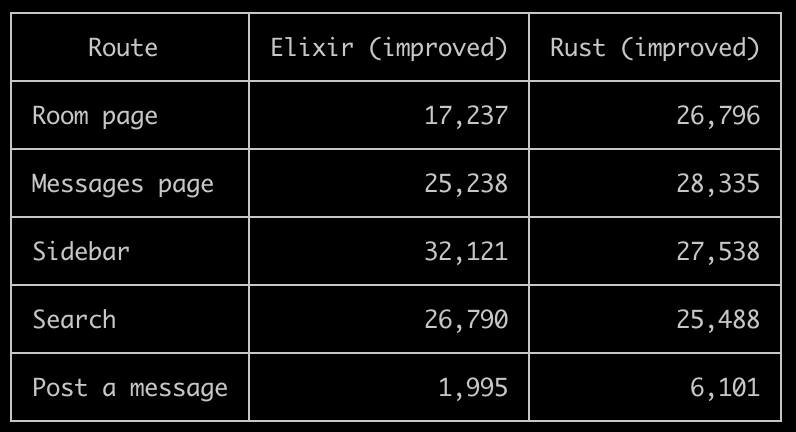
I took a stab at improving the performance of Elixir. I used the PR for Elixir that @ZachSDaniel1 posted and worked some more on it. In the benchmark Elixir is now faster than Rust (ccece30 newest commit) for the Sidebar and Search benchmark.
I lost N$250 today because I sent money to an account that is either in negative or blocked, and now FNB telling me they can’t reverse the transaction. @FNBNamibia
why disappointing me early in the morning?
This is new thing to me.
@thorstenball Since you'll suffer from jet lag anyhow: Get up at 04:00 am and take a cab. Drive through Manhattan. At that time there is no traffic jam at all. Wonderful experience.
Bonus tip: Liberty Bagels Wall Street opens at 07:00 am. One of the best bagel places.
The whole point of building Tavus has been simple: talking to a machine should feel as natural as talking to a friend or coworker.
It’s hard to describe all the tiny nuances that make a conversation feel human. The little expressions. Moving around in your chair. Knowing when to speak and when to listen. The dance of it all.
Griffin is by far the closest anyone has come to a model that can capture those nuances. The first time I saw it being used, I had no idea I was watching our model rather than just a normal video call.
I’m so incredibly proud of this team and what they’ve built.
We'll be spending a lot more time trying to understand the outputs of language models. A few thoughts, tips & tricks:
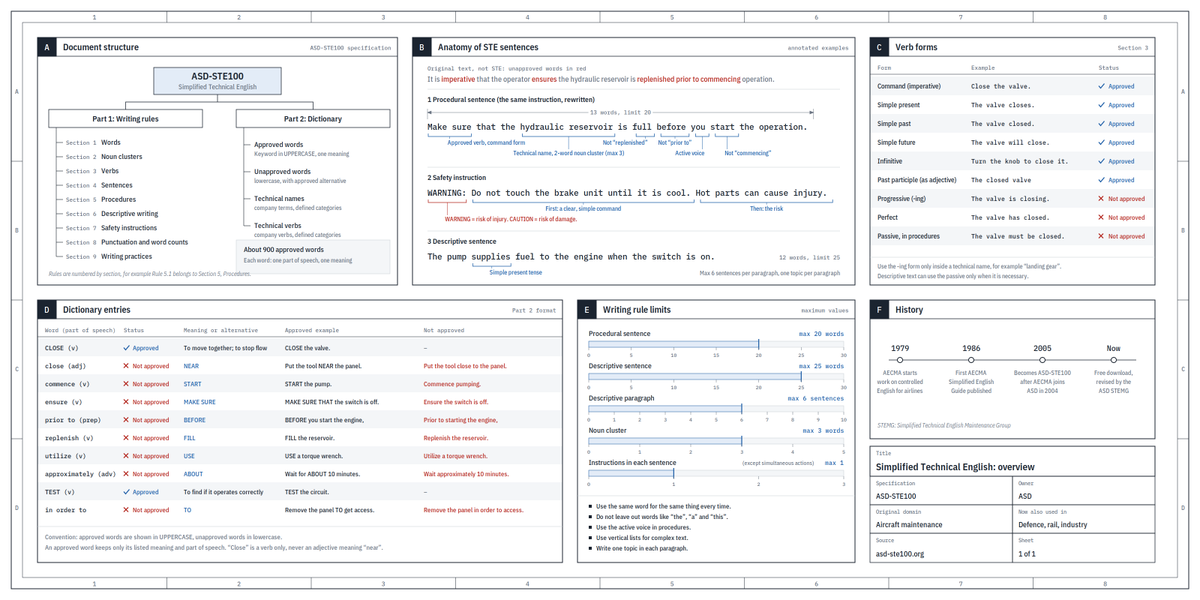
Writing. Something I've had success with: Ask your LLM to explain something in ASD-STE100, it's a controlled language specification originally developed for aerospace maintenance documentation. LLMs well-versed in this language and it comes with heavy constraints on clean writing style that I often find a lot more readable. Sometimes I've tried to soften it a bit e.g. ask for "80% of the way to ASD-STE100" because the spec is quite stringent. But even better:
Diagrams / images. Instead of writing, ask your LLM to create a diagram. These can be a lot easier to process, parse, and understand. But even better:
Web pages. Ask for output "in HTML" to get a beautiful, interactive webpage. LLMs are getting really good at frontend and can create beautiful experiences, animations, etc. But even better:
Explainer videos. The output format I am most bullish on is fully custom / bespoke explainer videos generated on any arbitrary topic. Experiment with things like "Create a 3b1b style video explainer on X. Use my ElevenLabs API key for audio narration". (you'd need an API key for the latter or you can ask your LLM to find you decent free alternatives that use your local compute). This is actually starting to work!
In summary:
- As LLMs get better, they will do more and more of the legwork autonomously, and a lot more of our work will rise up the abstractions into oversight and understanding.
- Luckily, LLMs can help here too because as intelligence and code are increasingly abundant, you can ask for large, custom, discardable software artifacts (e.g. web apps, video explainers) that would have never made sense to create before. Push the boundaries here and you'll be surprised.
Working on the Git Merge conf videos and watching @nasamuffin's excellent SHA-256 talk, I was again filled with the dread of Git 3.0's upcoming hashing default switch.
I wrote up why I feel this is a huge mistake and why I think it shouldn't be done:
https://t.co/h8rZtP97tL
I’ve noticed more & more minibars in hotels being complementary
For ages, hotel owners tried to gouge travellers - £9 for a bag of KP nuts. Each sale must look amazing in terms of profit
But then the counter-trend kicks in, owners recognise they can give away a bag of nuts and the perceived value is astronomic… In no other situation would a grown man get that excited about a free snack
Long may this phase last, but I guess soon the counter counter-trend begins