Economy is a by-product of productivity
Or at least in the longer-run
Managing economic metrics without improving the productivity is like managing thermometer without addressing the real temperature of the room
@malangraya@NGurushina preach!
what Indonesia needs is fundamental overhauls (which takes time, effort, and definitely will shake the status quo). for decades, we have been drained so much energy to "manage the thermometer" instead of fixing the temperature itself.
@ferizandra The percentage of Indonesians that have been going abroad is merely around 2-5% (?), and 90% of them I believe only travel around ASEAN.
Then no wonder if our government never think visa-exemption as a priority.
When I was at school, I learned about South Korea's rise from backwater to a developed nation
It was bloody rough
The story of saemaul undong, baljeon gukga, and jarip gyeongje excited me
Today, it feels eerily similar to certain things
Somehow I still feel uneasy about this
Unpopular opinion :
Ga banyak hal yg bisa dipelajari Indonesia dari Singapura.
Kita jauh lebih banyak bisa belajar dari Korea Selatan.
>Secara size lebih punya tantangan serupa.
>Sama2 punya tetangga yang lebih sukses duluan (JP vs MY)
>Sama2 politically unstable
I Went From $3,000/Month on Claude to $5/Week on DeepSeek
And honestly? 80% of my work is identical.
For the past two months, I was burning $3-5K monthly on Claude Code. Every idea from design to development to testing - full end-to-end automation, even simulating users to test my products and provide feedback.
Extremely token-intensive. But Claude's caching sucked, making it insanely expensive.
Then I discovered DeepSeek V4.
The numbers:
• Claude: $5 input, $25 output per million tokens
• DeepSeek: $0.28 input, <$1 output (with their current discount)
• DeepSeek cached: $0.0002 - literally less than a penny
The caching optimization is game-changing. Once DeepSeek has seen content, it basically stops charging tokens.
My result: $5/week vs $1,000/week for the same workload.
What works exactly the same:
• UX modifications
• Product development
• Competitor research
• Content writing
• Code reviews
Where Claude still wins:
• Complex architectural decisions
• Extremely nuanced problems
But here's the thing - Claude has been getting dumber recently. It often says "done!" when it's clearly not done. Then apologizes but still doesn't finish the work.
My current stack:
• DeepSeek V4 Flash/Pro for 80% of daily work
• Codex 5.5 for the hardest problems (more reliable execution)
• Claude Code occasionally (because I already paid for it 🤷♂️)
DeepSeek is also 3x faster than Claude. For tasks like "compare these repos" or "read this long document," DeepSeek finishes instantly while Claude takes 3+ minutes.
Fun fact: I heard DeepSeek's speed comes from both optimization and gradually switching to Chinese chips (Huawei). If that's true, we might see even better performance later this year.
Everyone's betting on Anthropic's rising valuation in secondary markets. But when 80% of daily dev work can be done faster, better, and cheaper by open-source models...
Is Anthropic guaranteed to be the final winner? I think it's too early to call.
The clock is ticking down on Japan. The half-life of its FX interventions is shortening. Markets see these are just performative and don't actually do anything. Japan is in a debt crisis and needs a new approach. For that, the Yen needs to fall further...
https://t.co/reEY3Tj3pl
@tawazunikhlas it is good, but not that good.
ATP untuk semiconductor di sana masih mundane, yang di Vietnam dan Filipina juga sama. Hampir semua cuma sebatas packaging dan test. Dari value-chain, kebetulan yang marginnya paling tipis jatuhnya ke mereka.
aku dulu kerja di Penang.
Grup Djarum sering dipertanyakan soal komitmen mereka terhadap sepak bola Indonesia. Salah satu kritik yang paling sering muncul adalah kenapa Como nggak pernah mengorbitkan pemain Indonesia.
Jawabannya simpel: mereka terhalang regulasi.
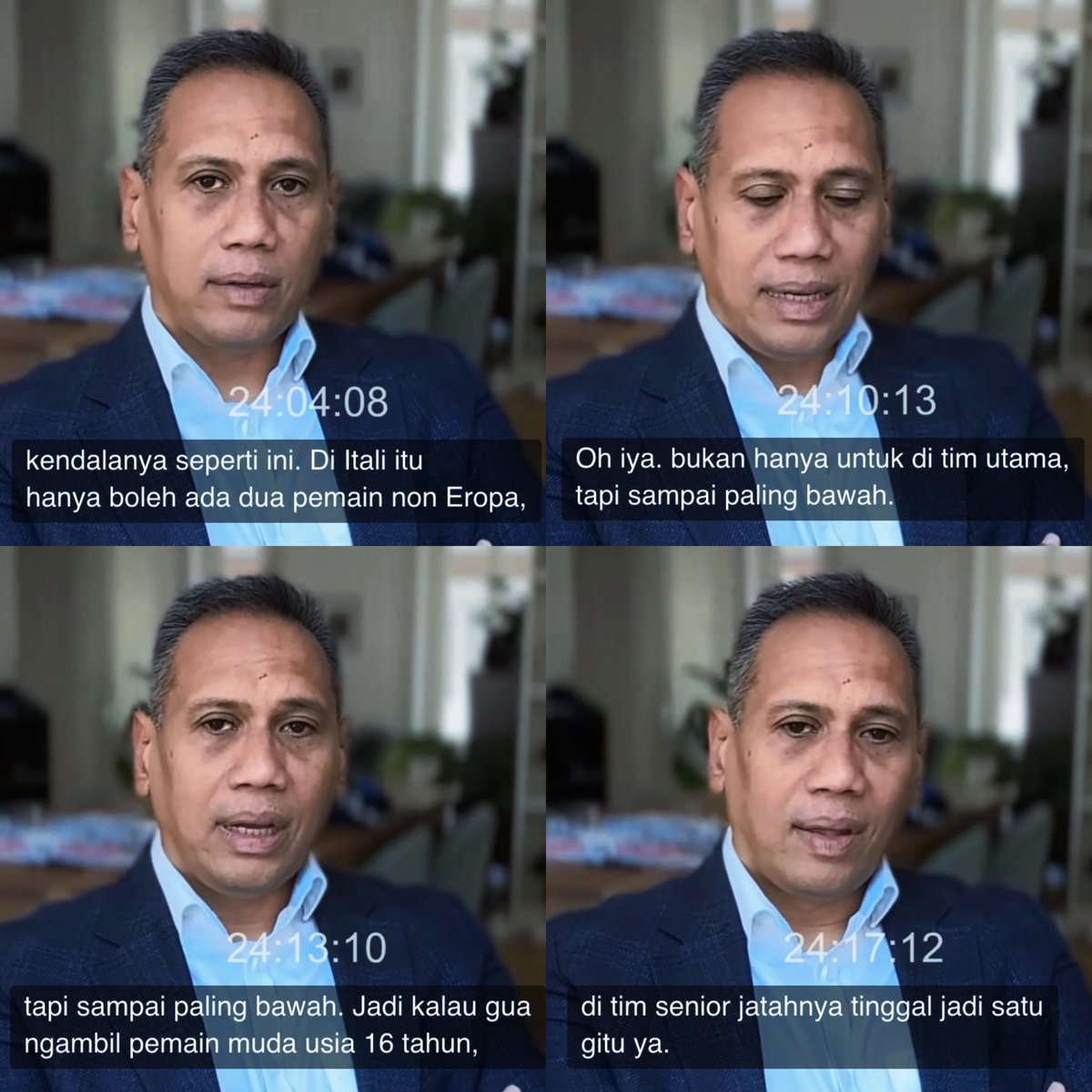
Serie A punya aturan ketat soal pemain non-EU. Setiap klub hanya boleh mendaftarkan maksimal 2 pemain non-EU per musim, di semua kelompok umur. Mirwan Suwarso sendiri ngasih gambaran yang cukup jelas soal dilema ini:
“Let’s say Como ambil anak Indonesia umur 16 tahun, maka jatah yang tersisa untuk slot non-EU di tim utama tinggal 1, yang biasanya diisi pemain Brasil, Argentina, Uruguay atau Afrika yang secara pengalaman sudah terbukti.”
Artinya, kalau Como pakai satu slot buat pemain muda Indonesia, mereka harus rela mengorbankan satu slot untuk pemain berpengalaman yang bisa langsung berkontribusi di Serie A. Buat klub yang lagi berjuang membangun reputasi di level tertinggi Italia, itu bukan trade-off yang mudah.
Yang menarik, Mirwan juga meluruskan satu hal. Meski slot pemain non-EU jadi penghalang, bukan berarti Como menutup pintu buat orang Indonesia sama sekali. Justru sebaliknya, Grup Djarum melalui Mirwan Suwarso memilih jalur lain: mengorbitkan pelatih muda, analis, dan staf profesional Indonesia ke dalam struktur klub.
“Kita lebih memilih untuk memberikan banyak kesempatan pada pelatih dan analis. Ada salah satu analis kita orang Indonesia, anak Bandung. Kurniawan juga pernah jadi asisten pelatih di sini. Dari tim media sosial dan tim produksi juga banyak dari Indonesia, kurang lebih ada 11 orang anak Indonesia yang saat ini berada dalam tubuh tim.”
Jadi bukan nggak ada kontribusi untuk Indonesia. Jalurnya beda aja, bukan lewat lapangan, tapi lewat ruang analisis, ruang pelatihan, dan balik layar.
Jadi sebelum nuduh Group Djarum nggak cinta Indonesia, mungkin worth it buat pahami dulu sistemnya. Nggak semua hal bisa diselesaikan dengan niat baik kalau regulasinya nggak mendukung.
Countries With Highest Consumption Of Fermented Foods:
1. 🇰🇷 South Korea — ~95 kg yearly per person
2. 🇯🇵 Japan — ~82 kg
3. 🇩🇪 Germany — ~71 kg
4. 🇨🇳 China — ~68 kg
5. 🇷🇺 Russia — ~63 kg
6. 🇵🇱 Poland — ~58 kg
7. 🇹🇭 Thailand — ~55 kg
8. 🇮🇩 Indonesia — ~52 kg
9. 🇻🇳 Vietnam — ~49 kg
10. 🇮🇳 India — ~45 kg
11. 🇫🇷 France — ~41 kg
12. 🇹🇷 Turkey — ~38 kg
13. 🇪🇹 Ethiopia — ~35 kg
14. 🇲🇽 Mexico — ~31 kg
15. 🇳🇵 Nepal — ~28 kg
16. 🇺🇦 Ukraine — ~26 kg
17. 🇸🇪 Sweden — ~23 kg
18. 🇧🇷 Brazil — ~20 kg
19. 🇺🇸 USA — ~17 kg
20. 🇬🇧 UK — ~14 kg
Source: International Nutrition & Fermented Food Studies
Tahun lalu nyimpen Korean Won dari trip Korea. Awalnya aku pikir pas Rupiah melemah bakal ada margin.
Terus aku cek harganya
27 Mei 2025 : 1 Korean Won = 11,9 Indonesian Rupiah
27 Mei 2026 : 1 Korean Won = 11,9 Indonesian Rupiah
Ternyata nggak berubah :)
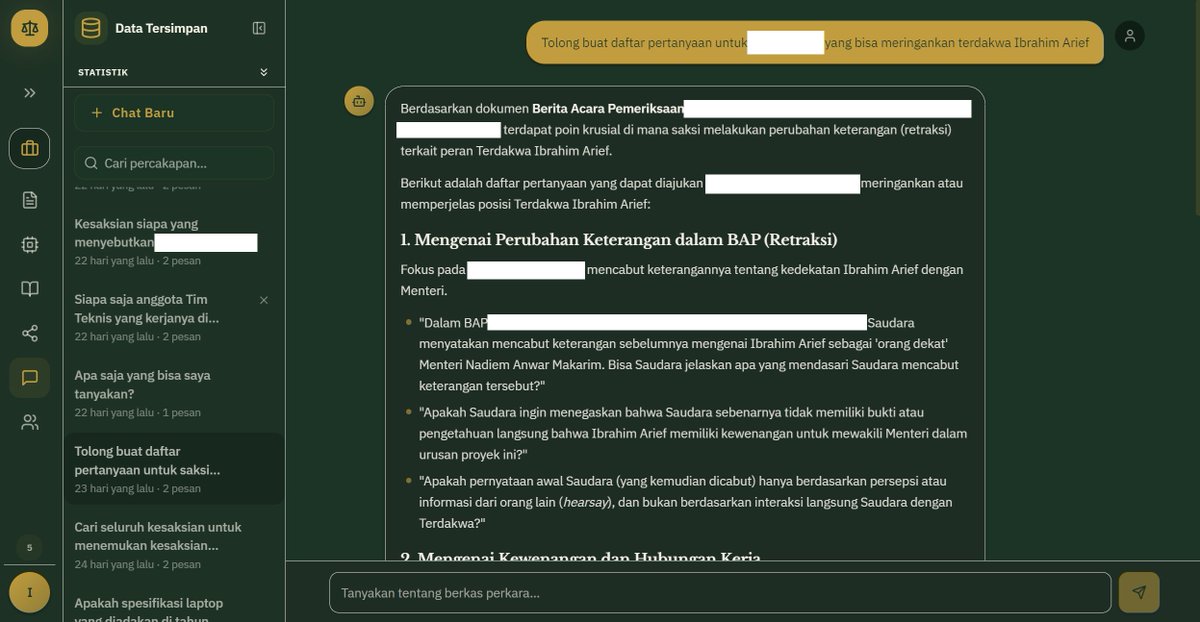
Since last year, I've arguably been wrongfully accused in a state corruption case.
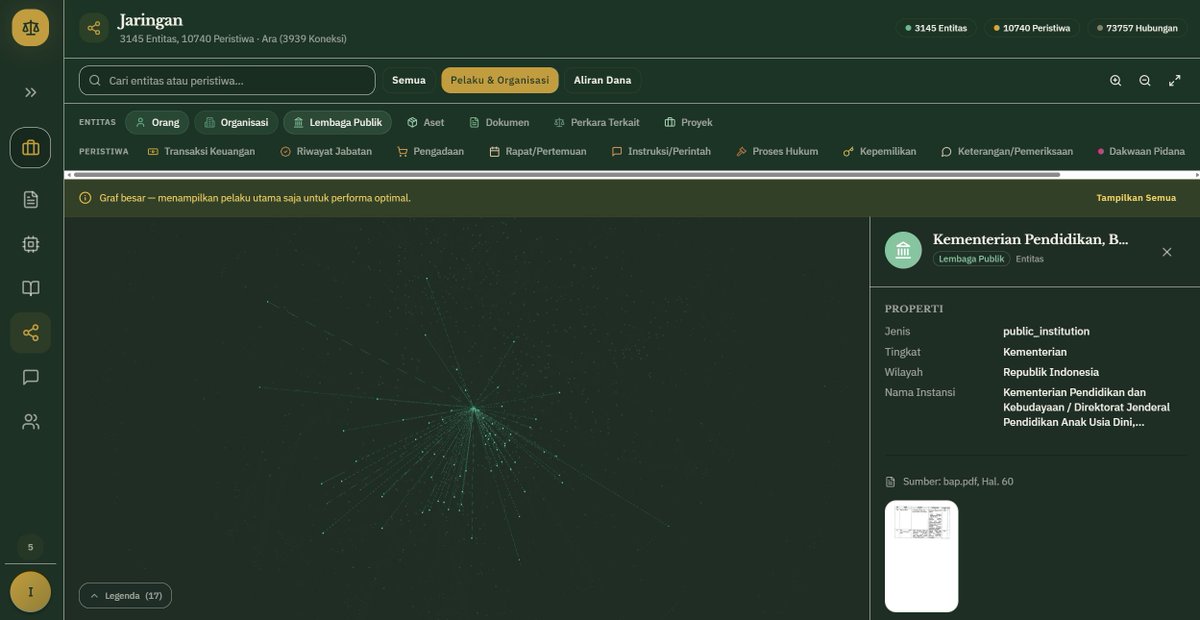
To defend my innocence, I spent past 6 weeks building an agentic AI swarm that:
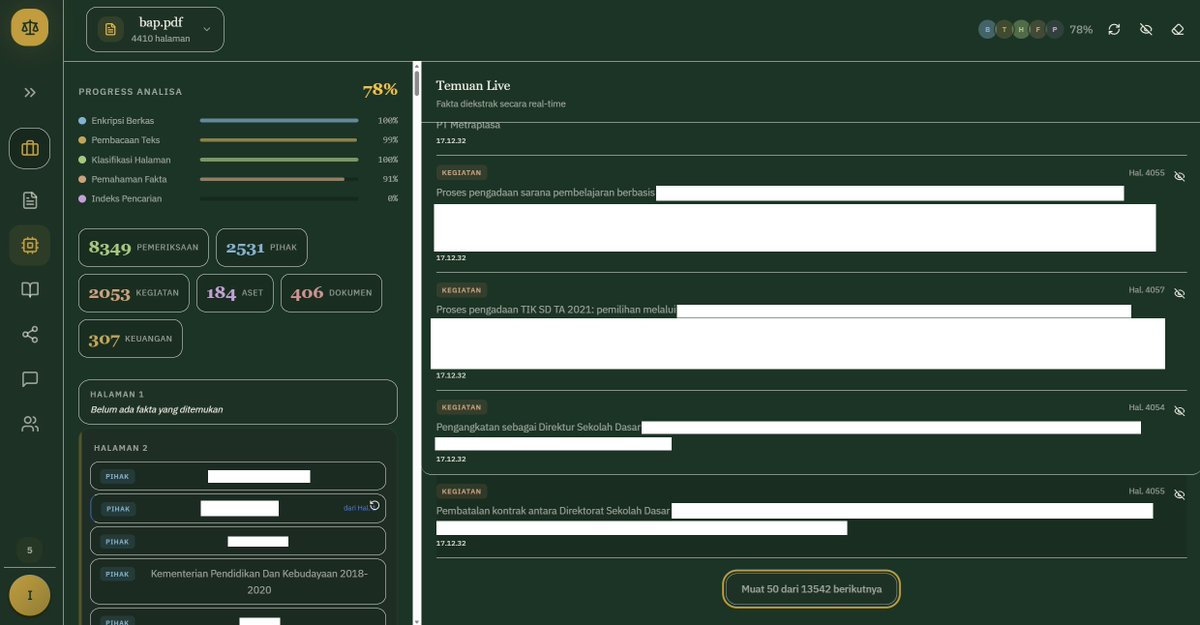
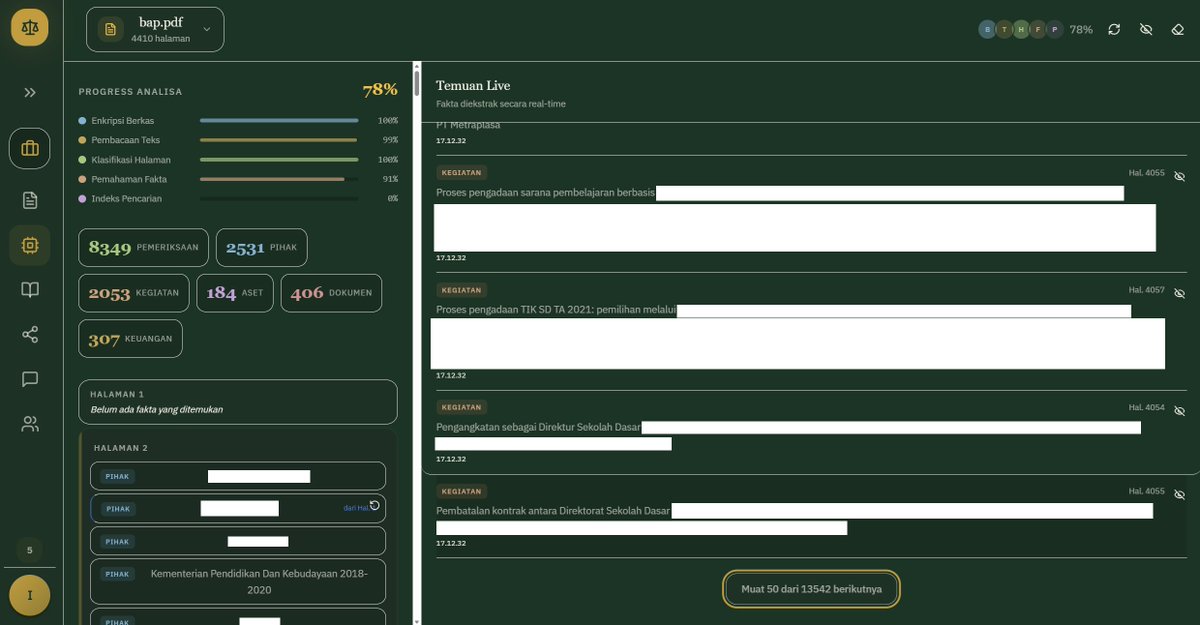
Analyzed 4700+ pages court docs
Mapped 8900+ testimonies
Found dozens of contradictions
This is how I fight 👇🏼
First off, some context may be necessary.
Even though I'm accused in a state corruption case, I'm not a government official. I'm a software engineer. I spent over 15 years building large-scale tech systems across Europe and Indonesia. I've led engineering teams of up to 600 people and helped grow a small tech startup into a unicorn.
In 2016, I moved back from Europe to Indonesia, because I believe technology at scale could make a real difference to the millions of people in the nation.
Six years ago, working as a tech consultant under a nonprofit foundation, I started advising Indonesia's Ministry of Education on building large-scale technology platforms.
Public sector work pays significantly less than private sector, and I took close to a 50% pay cut to make the switch. I was fine with that. Using what I knew to help underserved communities in Indonesia felt like the right trade.
Our mission was to build a user-centric superapp for public education, specifically for teachers and public schools, the kind of work the private sector ignores because there's no money in it.
At some point, officials at the ministry asked for my input on one of their procurement plans. I helped them work through the technical details, shared what I knew, laid out the pros and cons, and recommended a set of tests they should run to determine which options were the most suitable.
By the time they made their final decision and executed the procurement, I had already resigned from the consulting work, so I didn't think much of it.
Fast forward to May 2025. My house was raided as part of a newly opened corruption investigation tied to that procurement. Two months later, I was named a suspect and placed under city detention due to my health.
The trial started in January 2026. We've been through more than a dozen sessions so far, and not a single piece of evidence or testimony has been presented showing I received a single cent from the procurement.
What came to light was the opposite: evidence and testimony that my recommendations were neutral and likely were ultimately ignored by the ministry's own team, who went ahead and made the call on their own.
So why am I the one on trial? Because the ministry officials who did take money from the procurement vendors needed someone to blame for the decisions they made. Blaming an outside consultant is the easy way out.
Witness testimonies in court has shown that the officials actively directed the procurement while claiming it was done on my instructions and even misled their own team within the ministry by saying I held a position of authority.
We needed evidence to dispute those accusations, questions to cross-examine the witnesses, and we needed them fast.
This is where my AI comes in.
A few days before the trial began, we received a 4400-page printed document containing all the witness statements collected during the investigation, plus several hundred pages of other related documents.
The information asymmetry is staggering. Those with deep enough pockets to hire large law firms can throw dozens of paralegals and associates at a document like that and mount a proper defense on short notice.
I didn't have that kind of money. By then, I had been out of work for more than six months. The AI startup I founded had to shut down. Our investors asked us to return their funding. I had to lay off the entire team.
Most of my lawyers are friends of my wife from her college days, who stepped up and waived most of their fees because they could see I was being railroaded.
The whole situation felt hopeless. But somewhere in the middle of the despair, a spark lit up.
Combing through and analyzing thousands of pages of documents is exactly the kind of problem AI was built for.
I've built AI systems before, so I know the key to applying AI to a real-world problem is understanding the strengths and limitations of the available models, and figuring out how to make things not just work, but work efficiently enough to put into production.
I was placed under city detention due to health issues with my heart, compounded by a tumor that has been growing rapidly over the past few months. But it also means I still have access to my dev PC.
So I started with small experiments. My lawyers found a printing service that could scan the thousands of pages in a couple of days. At first, I tried simply uploading the scanned PDF into existing chatbots like ChatGPT, but the file was far too large for anything they could handle.
Even when I managed to get it working through external cloud storage, the results were atrocious. Half of the strategies and "facts" the models surfaced were hallucinations. That wouldn't just be useless in court, it's actively dangerous and can jeopardize my defense.
My experience building complex AI systems told me that the key to reducing those hallucinations is better data preprocessing.
So I spent the first couple of weeks focusing on parsing the uploaded PDFs, running various kinds of text extraction, and eventually settled on building an agentic AI swarm that performs multiple layers of preprocessing and analysis.
This multi-step analysis by several AI agents that swarm the PDF and extract different aspects of the case produces a dense knowledge graph where we can even trace the flow of money involved.
My lawyers can now easily browse, filter, and search through nearly 9000 witness statements. We even discovered several witnesses with duplicate testimony, raising suspicion of coordinated efforts or tampering among them.
But I didn't stop there. The processing chain includes several higher-level intelligence layers that draw from all the signals in the extracted knowledge graph. These layers add semantic understanding that powers a Chat AI feature, where we can ask specific questions about the case and get grounded answers.
I even built a self-reflective sub-agent that automatically challenges and inspects the results to make sure there are zero hallucinations.
Overall, the AI has helped me and my legal team uncover the big picture of what actually happened, and build questions that span hundreds of separate testimony sessions, giving us an unprecedented ability to cross-examine witnesses in court and significantly improved our defenses.
But I have grander vision than just helping my own legal team. Indonesia's legal system is severely overburdened, with a huge number of cases flowing through the courts every year. This kind of AI could be a useful tool not just for lawyers, but also for judges and prosecutors trying to make sense of their caseloads.
With the cross-examinations we've conducted and the weight of evidence that has come to light, we are aiming for an acquittal.
Should that be the case, my pledge is to keep building this AI platform into something that can meaningfully improve the quality of justice in our legal system: by helping investigators analyze cases more thoroughly and shine a light on any potential crimes, by raising the standard of what prosecutors bring before a judge, and by giving lawyers the ability to uncover the truth in their clients' cases faster than ever before.
Because in the end, I want what I've built to help more than just myself. I believe it can ease the burden on our judges and raise the quality of justice across the system in Indonesia.
quarter kemarin
Manufaktur 5,54% vs GDP 5,04%
quarter sebelumnya lagi
Manufaktur 5,68% vs GDP 5,12%
it's a sign of early re-industrialization, if we can maintain the momentum
Saya sebenarnya tidak suka kalau pemerintah melakukan banyak pencitraan, karena bagi saya hal itu bukan sesuatu substansial
Tetapi sekarang saya paham.
Kalau nggak pakai pencitraan, bisa-bisa Hercules TNI AU pun diklaim punya Malaysia :)
@ainunnajib di India sepuluh tahun lalu sudah pernah terjadi dengan cara serentak ubah lembaran uang lama ke uang baru, tapi ya efeknya nggak lama. karena korupsinya di-restart doank.
https://t.co/1yaExB4Dry