Since last week, we have opened registration for the #InteroperableEuropeAcademy#SeasonalSchool2026.
Join us in June and get acquainted with the skills and tools needed to develop truly #interoperable digital public services.
Secure your spot now!
👉https://t.co/6Q3Dxi8daP
What is #DigitalReadyPolicymaking (#DPRM) and why does it matter?
Check out our video interview with our programme manager Zsofia Sziranyi and learn how Digital Ready Policymaking shapes better laws across Europe.
Watch it now and start your journey:
👉https://t.co/YGCntIsR4H
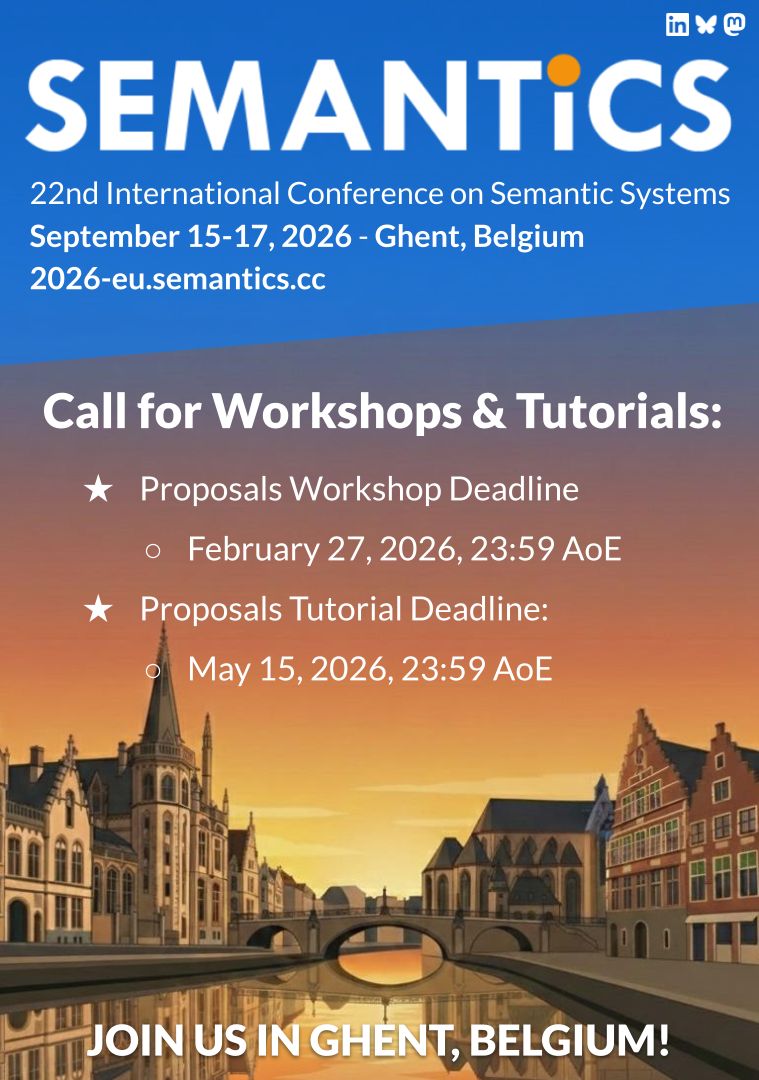
📢 Call for Workshops and Tutorials Proposal
Workshops and tutorials at SEMANTiCS 2026 allow your organization or project to advance and share knowledge, as well as build collaborative networks. We are looking forward to your proposal!
https://t.co/eUiS1ZuXUR
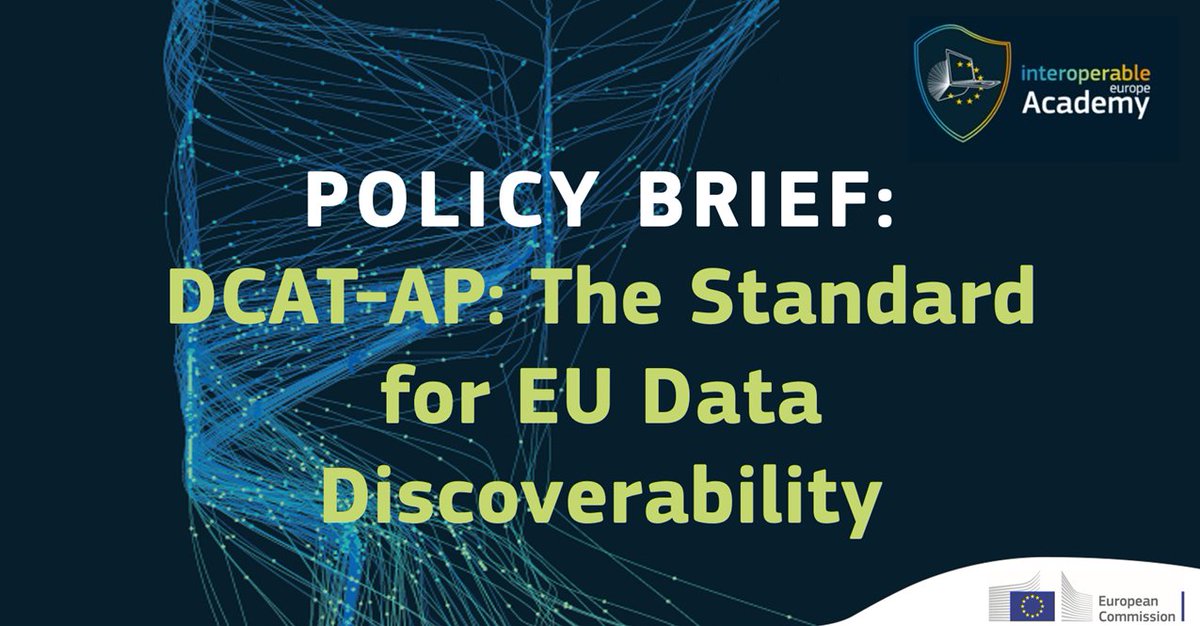
📢 The #InteroperableEuropeAcademy has released a new policy brief on #DCAT_AP, the standard application profile for EU #Data discoverability.
Discover your own practical, non-technical route for your public administration to start using DCAT-AP!
👉https://t.co/tzX5iil5M1
How do organisations across Europe approach #semantic modelling? Which tools and methods do they use?
Register and discover it online during the #SEMIC2025 workshop session at 25 November from 9 .a.m. CET!
👉https://t.co/fAtoR3fIDB
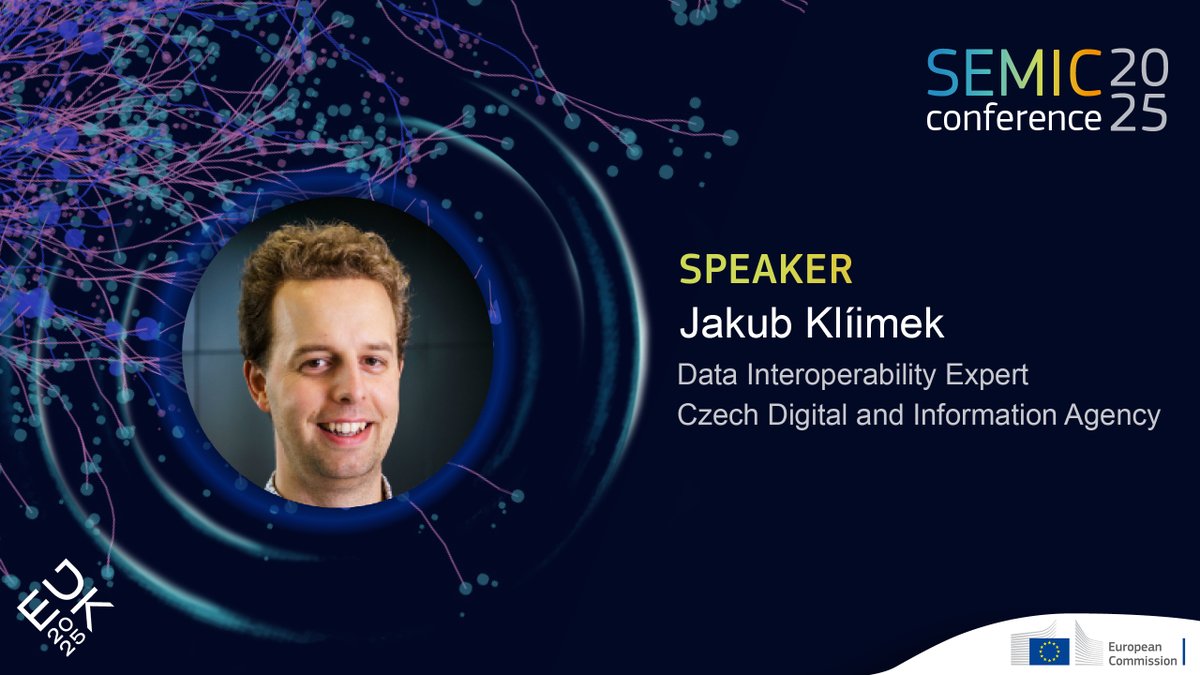
Participants of this session include a.o.:
On Thursday November 13, PLDN will organize, in collaboration with HAN and NXP, the Linked Data in Smart Industry event. More info: https://t.co/QoM5B3JJFc (free, but seats are limited and registration is required) #linkeddatanl#smartIndustry#dataspaces#digitalproductpassport
AI agents are getting better at looking at different types of data in businesses to spot patterns and create value. This is making data silos increasingly painful. This is why I increasingly try to select software that lets me control my own data, so I can make it available to my AI agents.
Because of AI’s growing capabilities, the value you can now create from “connecting the dots” between different pieces of data is higher than ever. For example, if an email click is logged in one vendor’s system and a subsequent online purchase is logged in a different one, then it is valuable to build agents that can access both of these data sources to see how they correlate to make better decisions.
Unfortunately, many SaaS vendors try to create a data silo in their customer’s business. By making it hard for you to extract your data, they create high switching costs. This also allows them to steer you to buy their AI agent services — sometimes at high expense and/or of low quality — rather than build your own or buy from a different vendor. Unfortunately, some SaaS vendors are seeing AI agents coming for this data and working to make it harder for you (and your AI agents) to efficiently access it.
One of my teams just told me that a SaaS vendor we have been using to store our customer data wants to charge over $20,000 for an API key to get at our data. This high cost — no doubt intentionally designed to make it hard for customers to get their data out — is adding a barrier to implementing agentic workflows that take advantage of that data.
Through AI Aspire (an AI advisory firm), I advise a number of businesses on their AI strategies. When it comes to buying SaaS, I often advise them to try to control their own data (which, sadly, some vendors mightily resist). This way, you can hire a SaaS vendor to record and operate on your data, but ultimately you decide how to route it to the appropriate human or AI system for processing.
Over the past decade, a lot of work has gone into organizing businesses’ structured data. Because AI can now process unstructured data much better than before, the value of organizing your unstructured data (including PDF files, which LandingAI’s Agentic Document Extraction specializes in!) is higher than ever before.
In the era of generative AI, businesses and individuals have important work ahead to organize their data to be AI-ready.
P.S. As an individual, my favorite note-taking app is Obsidian. I am happy to “hire” Obsidian to operate on my notes files. And, all my notes are saved as Markdown files in my file system, and I have built AI agents that read from or write to my Obsidian files. This is a small example of how controlling my own notes data lets me do more with AI agents!
[Original text: https://t.co/1bwB2lBowg ]
The #SEMIC Supporting Centre is in the process of building an #AI Assistant for #DataModelling!
Amongst others, it helps:
- reuse concepts
- align definitions/URIs, &
- spot gaps,
making #semantic#interoperability easier across public services!
More:
👉https://t.co/BCN1moeeSr
Preparations for our flagship event #SEMIC2025🎇are well underway! Have a look at our recently published agenda and book your spot!
Can't make your way to Copenhagen? Remember you can also register to follow the conference online.
👉 https://t.co/fAtoR3fIDB
Vi ses snart! 🇩🇰
An English report is now available about Germany's new framework for reliable cross-border #PublicSector#DataReuse!
It sets out how #interoperable legal terms and AI-powered tools like eLexa can be used to achieve this goal.
Explore it here:
👉https://t.co/fQgVSrVGn1
#SEMIC
The full agenda of the #SEMIC2025 conference is now live!
Follow your excitement, see how this year’s programme is shaping up, and register for the conference! The in person seats are almost taken!
📖Agenda: 👉https://t.co/kt5wNHH7e1
📝Registration:👉 https://t.co/rRb36fCJXW
Your data is worth more than you think. 💻
Every click, search, and cookie builds a profile — often sold to the highest bidder.
We believe that should be transparent, fair, and in your control. That’s what we’re working on at Stichting Nederlandse Datakluis.
🎉 The Semantic Web 2025 workshop and poster proceedings are now online!
We are delighted to share that the proceedings are freely accessible on CEUR-WS: https://t.co/zdYPYjOLzW
A big thank you to all contributors, reviewers, and organizers who made this possible!
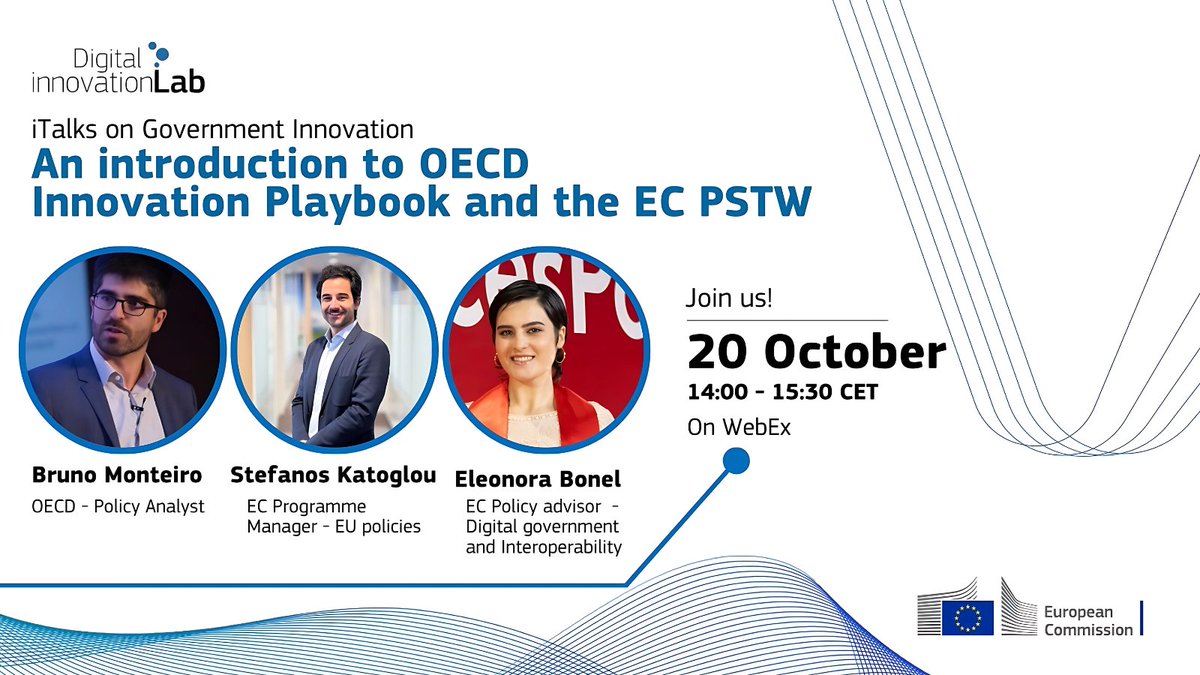
On 20 October, the #iLab hosts an💻online event in which its introduces you to our #PublicSectorWatch and the #InnovationPlaybook of the @OECD.
Register and discover how to make the transformation of you public services more innovative and impactful!
👉https://t.co/3snaO5vitl
Meet Professor Heng Ji , from the University of Illinois School of Computing and Data Science. 👩💻
In this video, she shares her vision for the future of AI, multilingual knowledge, and interdisciplinary research.
https://t.co/qBiX15QlgY
#SemanticsConf#LinkedData#SemanticWeb
Good to see the how BOMOS and the Semantic Treehouse are evolving as collaborative open community practices, useful for different use cases, e.g. to accelerate standardization processes, generate, share, evaluate data models, etc. BOMOS link: https://t.co/CygQpN6QTS #ENDORSE2025
Excellent presentation by Stefaan Verhulst about rethinking data stewardship and what shifts are needed to achieve the 4th wave of open data with a FAIR-R Commons approach to make structured and unstructured data much more usable, interoperable and ready for AI #ENDORSE2025