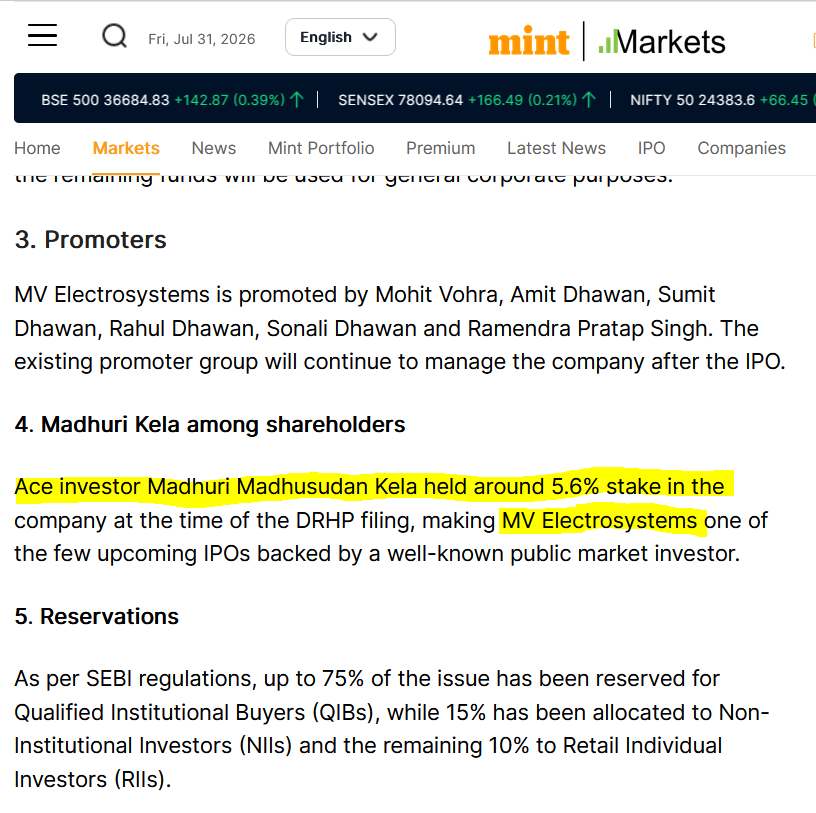
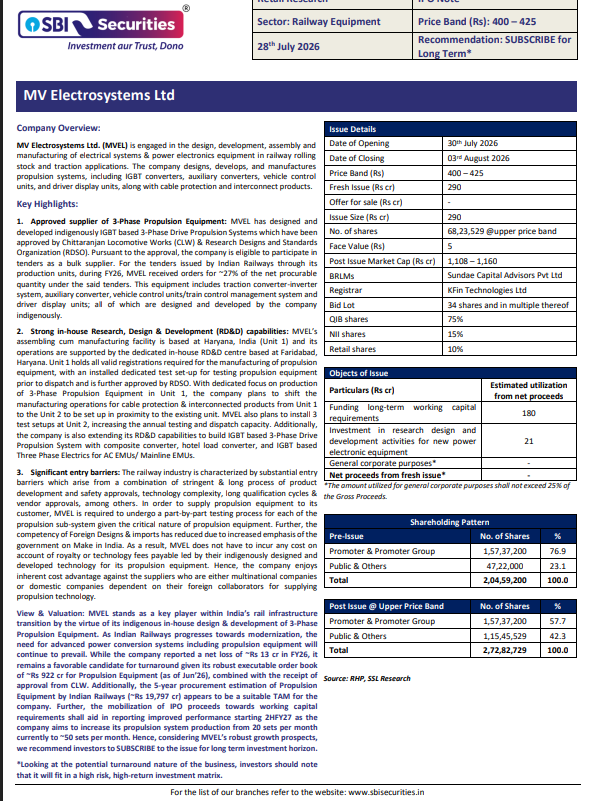
Madhu Kela holds 5.6% stake in MV Electrosystems
IPO is oversubscribed 12X
Issue Size is 290 Cr
It is a railway electrification and power electronics company.
#MVElecroSystem#IPO
Most people think productivity is about working faster.
It isn't.
Productivity has two parts:
Efficiency → Doing things right.
• Build systems
• Improve your skills
• Use the right tools
• Stay disciplined
Effectiveness → Doing the right things.
• Focus on high-impact work
• Learn from feedback
• Listen to mentors
• Choose opportunities that scale
You can spend 12 hours being busy...
Or 4 hours creating results that actually matter.
The goal isn't to fill your calendar.
The goal is to make your work count.
Ian Ball, the game theory legend who conquered unpredictability itself:
"The moment I understood why randomizing on purpose beats picking the smartest move every time, in a genuinely adversarial trade, it changed everything about how I size risk, and I can show you exactly why the math forces that conclusion."
this is the exact mathematical proof behind why unpredictability itself can be the correct, calculated choice, not a lack of one.
cut through the theory and the logic is precise. in a genuinely adversarial situation, any fixed rule can eventually be studied and countered.
the only stable solution, the one neither side can improve on by switching approach, requires randomizing across options in specific proportions, not picking whatever feels cleverest in the moment.
that's not a philosophical point about being unpredictable for its own sake. it's a provable mathematical requirement, the equilibrium simply doesn't exist any other way once both sides are genuinely trying to outguess each other.
most people assume the smartest move in a competitive situation is finding the single best option, without realizing that in genuinely adversarial settings, the smartest move is often refusing to have a single best option at all.
zoom out to how this plays out sizing or timing trades against a counterparty who's actively trying to read your pattern on a desk today.
any consistent, deterministic rule for entering or exiting positions can eventually be studied and exploited by a sophisticated counterparty, and the only genuinely stable approach requires randomizing in the correct proportions, not just picking whichever option looks smartest at the time.
this is exactly what "I have a clear, consistent strategy" confidence skips. having a fixed strategy and having an unexploitable one are different claims, and in a genuinely adversarial market, only the second one survives contact with someone actually trying to predict you.
the winning strategy was never a single clever choice. it was refusing to let a single choice exist at all.
Bookmark this alpha and follow @mindarchx for more gems.
One thing, done for 18 years: equity research. Talk to us about premium membership. SEBI Regd Research Analyst INH100004775. Investments are subject to market risks.
Timepass talk on Sunday
1. Ujjivan Small Finance Bank
If you look at the top 10 highest-volume trading days on the NSE over the last 12 months, four of them occurred on four consecutive trading sessions, July 23, July 24, July 27, and July 28. This highlights the exceptionally strong investor participation and heightened market activity following the earnings season.
Why such interest?
Strong Balance Sheet & Deposit Expansion: Ujjivan delivered a well-rounded quarter, with its gross loan book growing 28.9% YoY and deposits rising 25% YoY, supported by an impressive 37.8% YoY growth in CASA deposits. While many financial institutions have managed strong loan growth but struggled to mobilize deposits, Ujjivan successfully delivered healthy growth on both fronts, reflecting the strength of its franchise.
Cost of Funds Benefits: The steady deposit mobilization supported a favorable liability mix, keeping the overall cost of funds on a downward trajectory at 6.86% for the quarter.
Accelerated Non-MFI Asset Diversification: Secured loans expanded 42.7% YoY to constitute 50.4% of the total book, keeping the bank on track for its 56% secured mix target by FY27-end.
High-Margin Growth Engines: Emerging portfolios saw rapid scaling: Gold loans jumped 248.1% YoY, Vehicle loans rose 85.1% YoY, and MSME Agri loans grew 68.6% YoY.
Improving Asset Quality & Reduced Slippages: Bank-level GNPA dropped 10 bps QoQ to 2.17% with a strong 85% PCR, supported by annualized MFI slippages dropping to 1.72% (down from 2.68% in Q4 FY26).
Upgraded Guidance for Profitability & Asset Quality: Management raised its FY27 ROA guidance to 1.8%-2.0% and lowered credit cost expectations to 0.9%-1.0% of average total assets.
Operational Efficiency Cushion: The management optimized full-year OPEX guidance downward to ~6.4% of average assets, even after factoring in ₹250 crore in planned capacity building and branch additions.
Could the re-rating be finally on the cards?
2. Privi Speciality Chemicals
Privi posted yet another good quarter living up to it's consistent compounder tag!
Management is confident of maintaining a 20% revenue CAGR with 24-25% EBITDA margins.
FY27 Growth Triggers
Phase 1 capacity expansion: 48,000 MT → 54,000 MT by September 2026, with current utilization already at ~90%
Merger completion: Consolidation of Privi Fine Sciences and Biotechnologies adds ~6,000 MT capacity and operational synergies by FY27 year-end
Givaudan JV scaling: JV turned profitable in Q4 FY26 (₹18 crores revenue with an EBITDA margin of 14-15%); additional ₹50 crore equity infusion planned for next phase of 42 products
FY28 Growth Triggers
Phase 2 capacity expansion: 54,000 MT → 66,000 MT by September 2027, adding 12,000 MT of flagship product capacity
New specialty products commercialization: Maltol, Ethyl Maltol, Musk T, Cyclopentanone and 10+ specialty molecules coming online by H2 FY28, furfural vertical alone targets ₹1,000+ crore revenue
Backward integration moat: Only global player fully integrated from corn cob to maltol/ethyl maltol, capturing China+1 demand as 95%+ supply currently comes from China
3. Gravita India
If one has a preference for value buys, Gravita could present an interesting opportunity over the next month or two!
Near Term challenges
Scrap supply disruption: 15-20% of imports from Gulf remain stuck due to Middle East war; Q2 will still see some impact
Low lead volumes: First YoY decline in lead volumes seen in Q1; recovery depends on supply normalization
High working capital: 95-day cycle and INR 150cr net debt due to copper inventory and transit stock
Copper utilization stuck at ~50%: Debottlenecking only by end-FY27, so near-term margins diluted
Growth Triggers for H2FY27 & FY28
Own scrap yards in US/developed nations: Setting up now; operational by year-end to replace Gulf dependency and cut costs
Copper debottlenecking + new Gujarat plant: Utilization to hit 60%+ by Q4FY27; EBITDA/ton to rise from INR 55k to 60k by year-end, 70-75k over 2-3 years
Lead capacity utilization recovery: Phagi and Mundra expansions at ~45-50% now; to reach ~70% as scrap flows normalize
Copper capacity doubling: From ~30k to 60k MTPA over next 3 years via organic expansion
LME brand listing for lead: Opens global OEM doors and export opportunities
Value-added product mix: Already at 63% (from 45%); even ex-copper improved to ~50%, supporting margins
Lithium-ion battery recycling: R&D for full value chain (not just black mass); refining unit planned as volumes scale
Strong balance sheet: AA rating, capex fully funded by internal accruals; no equity dilution risk
4. Ramkrishna Forgings
After going thru multiple struggles for several quarters, RK Forgings has delivered back to back good quarters with good growth and margin expansion.
Management claims they are on track to hit 8000 crore revenues by FY29 and that essentially means a 23-25% CAGR for the next three years. Management also assured that company should see continued improvement in terms of margin every quarter from now onwards.
In the previous earnings cycle, company used to operate at 21-22% margins and that's perhaps would be the first target to reach.
Company is planning to reduce debt by at least ₹500 crore in FY27 and that should directly flow into PAT!
The company is targeting an ROCE of 12-15% in FY27 and 20% in FY28 (it was in single digits last two financial years)
So where is the growth coming from?
Exports: Management stated that FY27 could be one of the best years in export revenue
Mexico Plant: Contributed ₹6 crore revenue in Q1 and but expected to clock significant numbers from Q3 FY27
Railway & Wheel JV: Trial production has already started, expected to submit the samples to Indian railways in August, and management is hoping to start Bulk by September or October 2026.
Future Growth Trigger: Company has commenced bulk supplies of aluminum forgings, marking non-ferrous products as its next major growth lever. Management is aggressively expanding into aluminum, stainless steel, Inconel, and other advanced alloys for aerospace, semiconductors, and robotics, with meaningful revenue contribution expected over the next 12–24 months.
5. ACCs and Battery chemicals
Recently Nuvama published an interesting read about Battery Chemicals and here is the short summary of it:
Advanced Chemistry Cells (ACC): Next-generation rechargeable battery cells, including Lithium-ion (LFP, NMC, LMFP, NCA), Sodium-ion, Solid-state, and other advanced chemistries. Today, lithium-ion accounts for more than 95% of global ACC demand.
India ACC demand to grow at 39% CAGR during 2025-30E and the demand would grow at 27% CAGR during 2030-35E; EV battery demand to grow at 35% CAGR during FY25-30; BESS is likely to see a 78% CAGR during FY25-30 (although supply seems to be low as of now).
India is transitioning from being primarily an importer of battery materials to developing a domestic battery chemicals ecosystem.
The Government launched the ₹18,100 crore PLI Scheme for ACC Batteries to establish 50 GWh of domestic cell manufacturing capacity.
In addition, over 10 manufacturers have announced around 178 GWh of battery manufacturing capacity, creating significant downstream demand for battery chemicals.
Cathode materials alone account for roughly 35–45% of battery cost, with anode and electrolyte adding another 20–25% combined.
Key Indian players
Neogen Chemicals: Electrolytes, Electrolyte salts (LupF6), electrolyte additives
Himadri Speciality: Synthetic graphite, silicon-carbon anodes, LFP cathode materials
Gujarat Fluorochemicals: LiPF₆(electrolyte salt), Electrolyte formulations & additives, LFP Cathode Active Material (CAM), PVDF & PTFE battery binders, Next-generation anode materials
Tatva Chintan Pharma Chem: Electrolyte additives and specialty chemicals
Sudeep Pharma: Battery-grade iron phosphate and other derivatives for Cathode Active Material (CAM)
That's all for this edition. Have a great Sunday!
Disclaimer: None or buy or sell recommendations. This publicly available information is shared for learning and education purposes.
"What's a compounding engine?"
"I've broken it into just two factors. Efficiency, how much profit you make on every rupee deployed, that's your ROCE, your ROE. And the one nobody ever talks about, reinvestment rate."
"Say we start a pani puri cart together with 10,000 rupees. Day one, we do 20,000 in revenue, 10,000 profit. Day two, we take 5,000 out as our salary and put 15,000 back into the business."
"If the business has room to grow and efficiency stays constant, that 15,000 becomes 30,000. Put 20,000 back on day three, it becomes 40,000. That's compounding. That's earning growth.
"Cut open any business in the world down to its basic structure, and it's exactly this. Capital efficiency, plus a way to redeploy the profit back into itself."
@AkshaySGulati on How to Do Company Analysis
Watch Full Podcast : https://t.co/tgYEvnj49j
If you want help spotting which of your own holdings actually have this compounding engine running, Book a Free Call Here : https://t.co/Vah5j3yIit
For 18 years, one craft: equity research. Discover how my invitation-only PMS works — 7 high-conviction stocks, your own demat, performance-only fees. Investments are subject to market risks.
Madhu Kela holds 5.6% stake in MV Electrosystems. IPO is oversubscribed 12x. GMP 30%. Co makes Propulsion Equipment for Railways. Significant entry barriers. Order book is ₹921.64 Cr (18.6x of FY26 revenue). TAM is ₹19797 Cr. Loss ₹13 Cr in FY26. Favorable turnaround candidate
Forget stock tips or ideas, this is the real funda of wealth creation.
People spend lot of time, energy & effort looking for the next multibagger, but in reality big wealth isn't created by finding 1 magical stock. It is actually created through a few important boring habits followed consistently for decades.
Start early. Invest regularly. Increase your investments as your income grows. Stay invested when markets fall.
It sounds simple because it is. The difficult part is sticking to it.
Here is what the numbers actually tell us.
1. Starting early is your biggest advantage
If a 25 year old invests ₹10,000 every month in a broad market index fund earning an average 12% annual return, the corpus can grow to roughly ₹3.5 Crores by age 55.
Now compare that with someone who starts at age 35 with the exact same monthly investment. By age 55, the corpus is only about ₹1 Crore.
Nothing changed except starting 10 years later.
That single delay can cost more than ₹2.5 Crores because time is doing most of the compounding.
2. The biggest gains usually come in the final years
Many investors quit too early because the early years feel slow.
With a ₹10,000 monthly SIP earning 12% annually, you invest about ₹12 Lakhs in the first decade and build a portfolio worth around ₹23 Lakhs.
By the end of the second decade, that grows to nearly ₹1 Crore.
Then something interesting happens.
During the final 10 yrs, the same portfolio grows from around ₹1 Crore to almost ₹3.5 Crores!!
Over 70% of the final wealth is created in the last decade, only if you stay invested long enough to experience it.
3. Small annual increases can make a huge difference
Yes salaries do increase over time, but many SIPs never do.
A flat ₹10,000 monthly SIP for 20 years at 12% grows to around ₹1 Cr.
Now imagine increasing that monthly investment by just 10% every year.
Your total investment becomes roughly ₹68 Lakhs, while your final portfolio grows to nearly ₹2.3 Cr
4. Every EMI has an opportunity cost
A car loan with a ₹25,000 monthly EMI for 5years means paying ~ ₹15 Lakhs for an asset that keeps losing value.
Instead, if that same ₹25,000 is invested every month for five years and then allowed to compound for another 15 years, it can grow to more than ₹1.2 Cr
Avoiding the wrong expense is super vital in making wealth.
5. Surviving market crashes is part of investing
Market corrections are normal : A 20% to 40% fall has happened many times before and will happen again.
The investors who usually suffer the most are not the ones who picked bad companies but the ones forced to sell during difficult times.
Keeping 6 to 12 months of expenses in liquid funds or fixed deposits gives you the freedom to leave your long term investments untouched while markets recover.
👉 Here's the bigger picture:
History has shown that India's equity markets have rewarded disciplined investors over long periods. Even after taxes and inflation, diversified equity investments have delivered attractive real returns over multi decade periods.
You don't need to predict market moves or cycles and yes you certainly don't need to trade every week.
You don't need to find the next hidden multibagger.
Save consistently & agressively & make sure you top up your investments as your income grows. Stay invested through the ups and downs.
Over time, those simple habits have created far more wealth than chasing the latest market trend ever has.
A introspective few questions for you:
• At what age did you start your very first SIP?
• What do you find harder: handling market volatility or resisting lifestyle inflation?
• Do you increase your mutual fund SIP every year or is it still the same as when you started?
I am bullish on Zinc.
Right now Zinc is the new Silver.
People close to me know I have been overweight on Zinc for the past few days.
I know how to spot the trend and I trust my own study.
That’s why I don’t run around networking.
My work runs purely on my research.
https://t.co/yyVlVGZPDl
L&T Precision Engineering and Systems has inaugurated a new Satellite Assembly & Integration Facility at its Precision Manufacturing & Systems Complex (PMSC) in Coimbatore, Tamil Nadu.
The facility supports:
Assembly and integration of large satellites.
Simultaneous production of multiple small satellites.
Advanced cleanrooms, testing stations, and end-to-end integration infrastructure.
It was inaugurated by M. Sankaran, Director of the U R Rao Satellite Centre (URSC), ISRO, and marks a milestone in strengthening India’s indigenous space capabilities.
This development strengthens private sector capacity in India’s upstream space ecosystem of satellite manufacturing and integration.