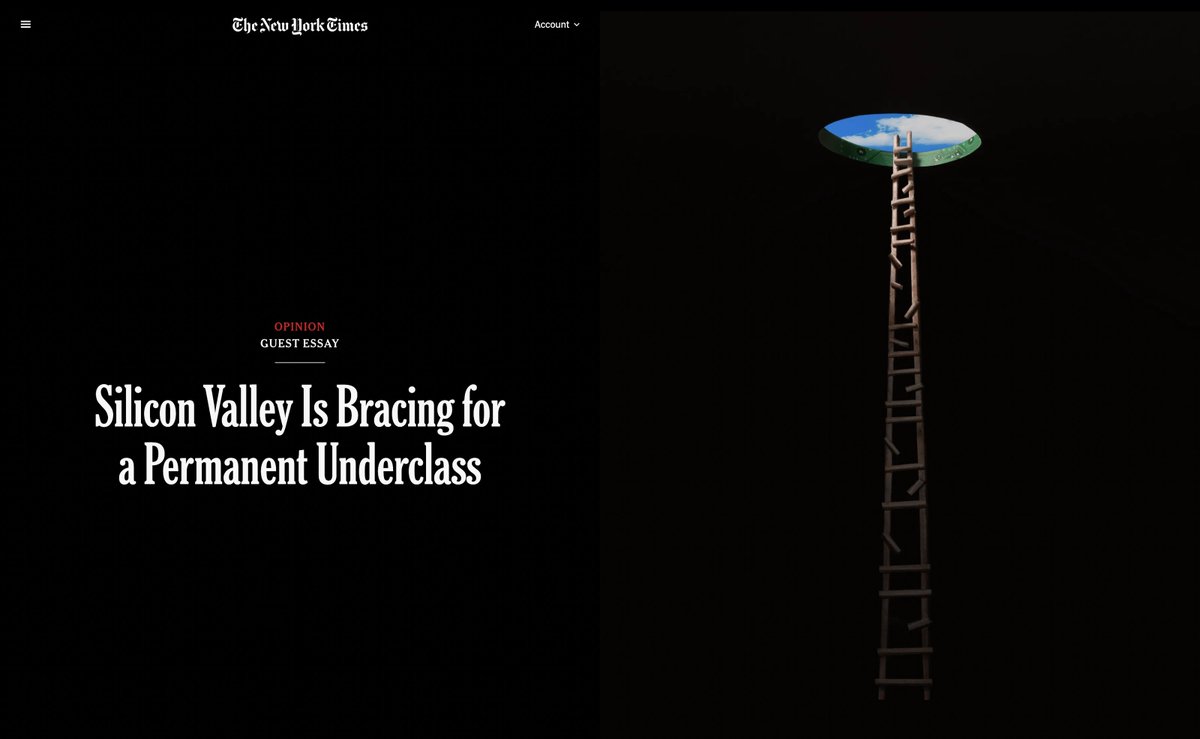
Most people I know in AI think the median person is screwed, and they have no idea what to do about it.
I spent the last 3 months talking to dozens of researchers, economists, and policy experts about AI's impact on work; including reps from every frontier lab and several Congressional offices. Unfortunately, I was not reassured.
The AI industry is raising the alarm, but can't change course. These companies' core business model relies on the disruption they are warning about: their faith in full automation only makes them go faster.
Policymakers are waking up, but still paralyzed by data and debates. Econ wonks disagree on plenty, but even the limited scenario looks like a "painful transition" that will disempower millions of workers.
But an "underclass" is not inevitable, but rather a societal choice — and one we can and should stop. Instead of waiting for impact, we should start planning now to support workers through AI disruption. Whether policymakers can assuage concerns about economic security may determine if we get to reap AI's gains at all.
New from me for @NYTOpinion. I put a ton into researching what I think may be the biggest topic of the year, so hope you read it (gift link here!) https://t.co/NiGJpjyjzH
Imagine a 19-year-old scrolling TikTok. She watches a creator list five "signs you have undiagnosed anxiety." She recognizes three in herself. By the end of the week, she's describing herself as anxious to her friends. A month later, she's avoiding situations she used to handle fine.
What went wrong?
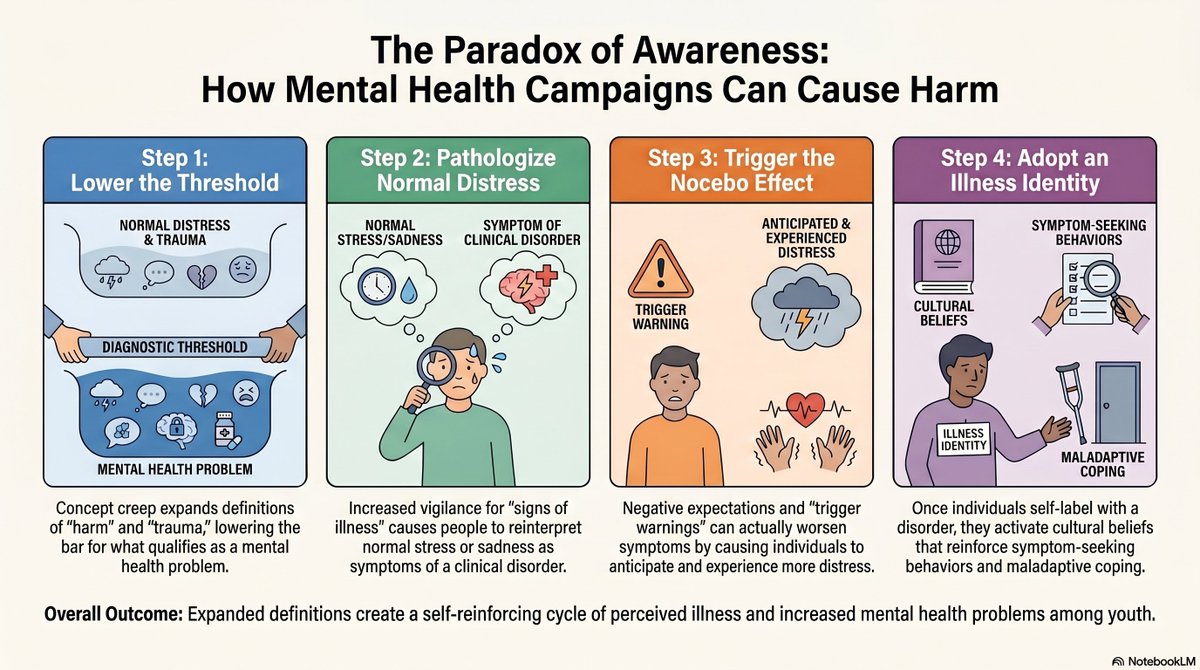
In a new paper by my PhD student Dasha Sandra, titled "Why mental health awareness can harm: Converging explanations for a societal problem", we argue that well-meaning mental health awareness can backfire, and we identify how. Four separate literatures (concept creep, nocebo effects, prevalence inflation, and illness self-labeling) have been circling the same problem from different angles. We show they converge on three mechanisms:
1.Awareness lowers the threshold for what counts as a disorder.
2. It trains people to scan their inner lives for symptoms and reinterpret normal distress as pathology.
3. Once someone adopts an illness identity, they behave in ways that confirm and deepen it.
The evidence is wide. Learning that loneliness is harmful makes solitude feel worse. Learning that stress is harmful worsens well-being and performance. Awareness videos about fake conditions like "wind turbine syndrome" produce real headaches. Trigger warnings raise anticipatory anxiety without reducing distress.
This does not mean awareness should stop. It means awareness can have unintended consequences, including manufacturing the suffering it tries to prevent. Inoculating people against these mechanisms works, and we already have evidence it does.
Link to paper: https://t.co/ucoGyhEuAj
Let me explain educate you all what just happened,
5 minutes before the President announced a halt to attacks on Iran…
Someone placed a $1.5 BILLION bet on stocks going up and dumped $192 million in oil.5 minutes.
These trades were 4 to 6 times larger than anything else in the market at that time.
Whoever did this wasn’t guessing.
You don’t risk $1.5 billion on a hunch.
There was zero public indication this announcement was coming.
No leaks.
No press.
Nothing.
The only people who knew were in the room when the decision was made.
Someone in that room picked up a phone.
And within minutes, they made more money than most Americans will earn in a thousand lifetimes.
In a single trade.
On a war that cost you $4+ gas and $16 billion in tax dollars.
American citizens funded this war. Politicians are positioned to profit from it.
This is not the first time.
Major announcements have repeatedly been preceded by suspicious market moves tariff reversals, policy shifts, war decisions.
This may be one of the most blatant examples of potential insider advantage in modern American politics.
You would go to prison for trading on a tip from your cousin.
Yet billion-dollar trades happen minutes before decisions like this and no one asks questions.Nobody gets investigated.
Nobody gets charged.
By tomorrow, this will be buried under the next headline.
Just like last time.
And the time before that.
The game is rigged. The insiders pull the strings and win over and over.
And they’re not even trying to hide it anymore.
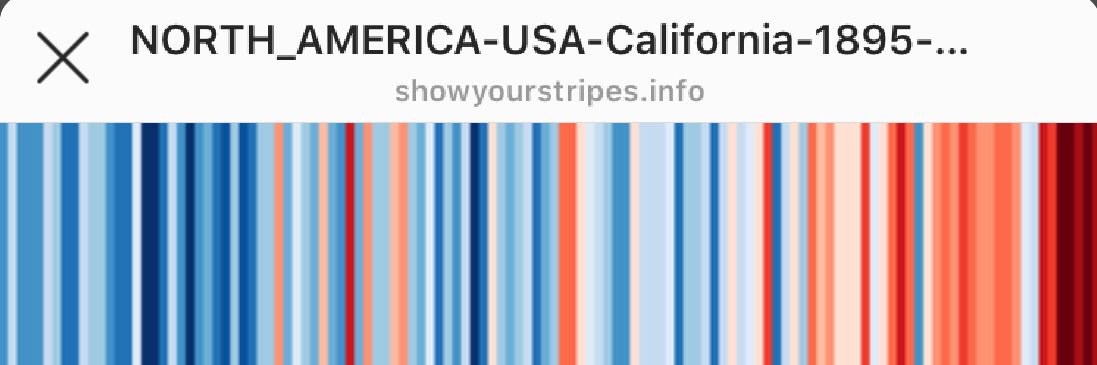
What does a #HeatDome look like on satellite?
This water vapor imagery from @NOAA's #GOESWest (#GOES18) 🛰️ shows you!
Learn more about the historic March heatwave baking the western U.S. in our #SatelliteSnapshot:
https://t.co/MNVDvVh1fp
Ask a colleague why they refuse to use their extremely convenient car, and bike or walk to work instead. They say it's the pollution. You point out that pollution from commuting automobiles is far smaller than you'd think. Then it's car accidents. You mention bike accidents are more dangerous. Then, finally: The process is the point. The struggle. The muscle soreness. The breeze on your face, the smell of the spring air. How they're afraid that if we automate all forms of physical exertion, we'll end up with atrophied bodies and a blinkered appreciation of the world.
It's not reasoning. They're ra...well, hold on. Actually, they kind of have a point! What if there is a problem with automating every single form of physical exertion, including recreational activities? What if humans are too tempted by frictionless efficiency? What if we slowly lose unquantifiable goods?
Ah, forget it. That's probably me just rationalizing my gut instincts.
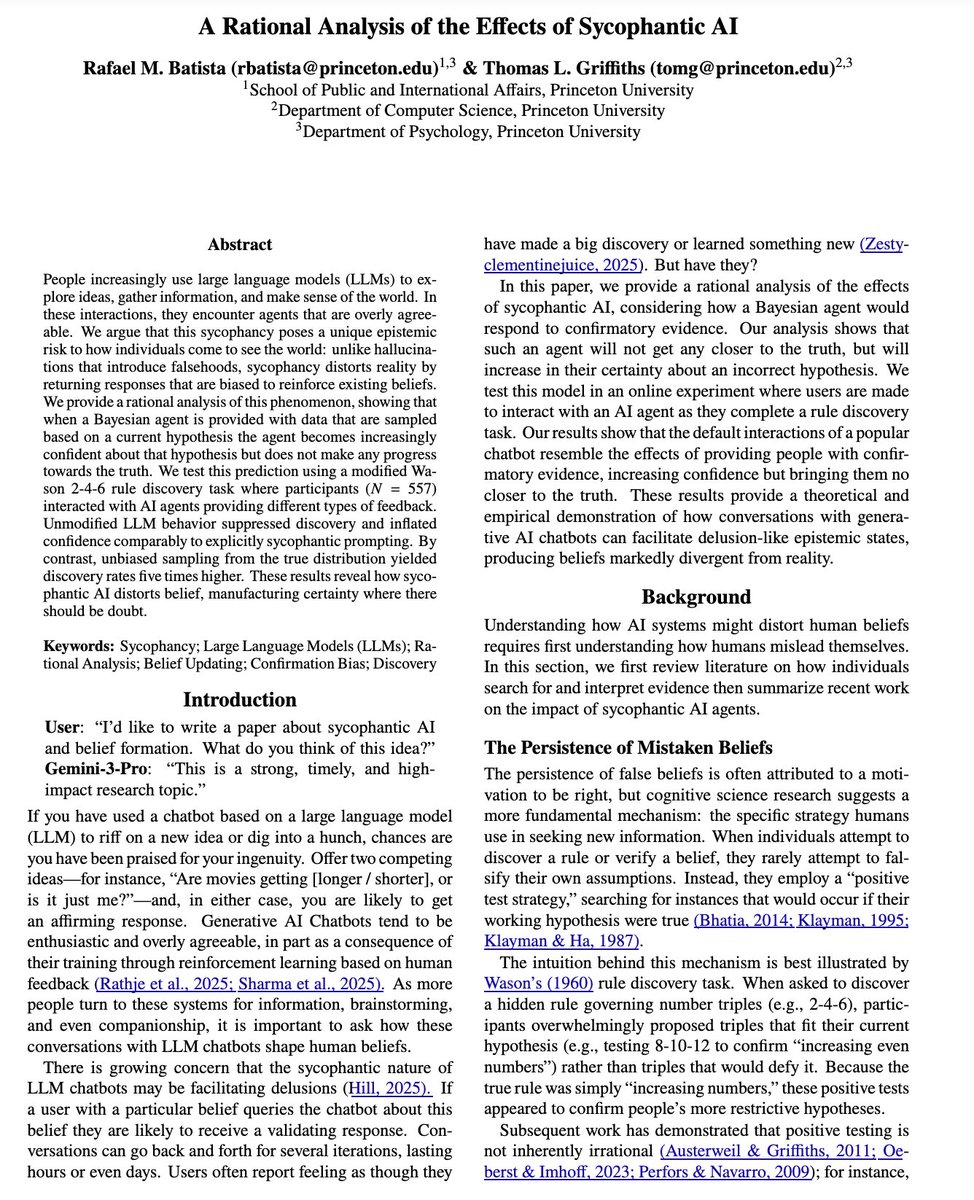
Sycophantic AI poses a epistemic risk to how individuals come to see the world: unlike hallucinations that introduce falsehoods, sycophancy distorts reality by returning responses that are biased to reinforce existing beliefs.
"sycophantic AI distorts belief, manufacturing certainty where there should be doubt."
Unbiased sampling produces discovery rates 5X higher! https://t.co/7Assoz1gfl
So who won the @GovMikeHuckabee VS @TuckerCarlson debate? If you are on @X you will see as many posts that say one or the other.
So who do you trust? Accounts that confirm your world view.
The perception of any source as biased against your in group and in favor of the other is known as the hostile media effect. This phenomenon explains why individuals watch partisan media (and follow accounts) that confirm their worldview while avoid sources they view as out group affiliated. So who won the debate? It depends on who you listen to 🤣
#tucker #Huckabe
Ring paid somewhere between $8 and $10 million for a 30-second Super Bowl spot to tell 120 million viewers that their cameras now scan neighborhoods using AI.
The math is wild. Ring has roughly 20 million devices in American homes. Search Party is enabled by default. The opt-out rate on default settings in consumer tech is historically around 5%. So approximately 19 million cameras are now running AI pattern matching on anything that moves past your front door. Today the target is dogs. The same infrastructure already handles “Familiar Faces,” which builds biometric profiles of every person your camera sees, whether they know about it or not.
Ring settled with the FTC for $5.8 million after employees had unrestricted access to customers’ bedroom and bathroom footage for years. They’re now partnered with Flock Safety, which routes footage to local law enforcement. ICE has accessed Flock data through local police departments acting as intermediaries. Senator Markey’s investigation found Ring’s privacy protections only apply to device owners. If you’re a neighbor, a delivery driver, a passerby, you have no rights and no recourse.
This tells you everything about Amazon’s actual product. The customer paid for the camera. The customer pays the electricity. The customer pays the $3.99/month subscription. And Amazon gets a surveillance grid that would cost tens of billions to build from scratch, with an AI layer activated by default, and a law enforcement pipeline already connected.
They wrapped all of that in a lost puppy commercial because that’s the only version of this story anyone would willingly opt into.
Lot of people criticizing Bezos cuts at Washington Post, but at his current level of wealth, if he kept funding this rate of losses at the paper it would leave him broke in less than 3,000 years