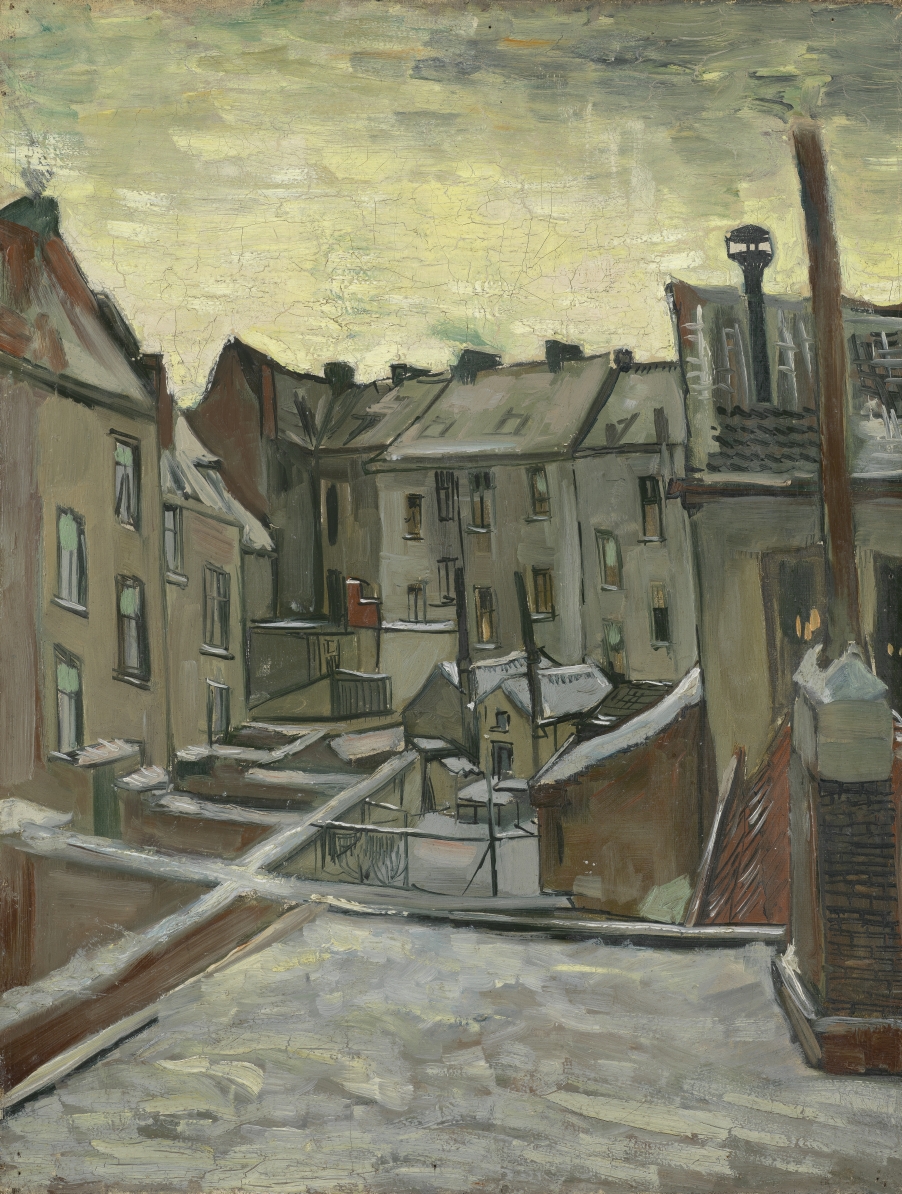
Vincent’s paintings hardly ever show wealth and castles; he had a soft spot for houses like this, packed together in the poor districts of Antwerp. He painted this work from an apartment at Lange Beeldekensstraat 194, where he rented a small room from a Dutch couple. 🏠
Van Gogh made this portrait of a woman while practising for what he saw as his first ‘masterwork’, The Potato Eaters. He didn’t want to idealise Gordina; she has bags under her eyes and stares absently into the distance. He painted reality.
Monet was enormously impressed by the bulb fields of Holland. He wrote to a friend that the sight was ‘impossible to convey with our poor colours’. Vincent gradually came to admire Monet’s swift brushstrokes and bright colours.
🖼Claude Monet, Tulip Fields near The Hague (1886)
The old farmhouses in Auvers (FR) reminded Van Gogh of his native region of Brabant (NL). After arriving in Auvers, he immediately started painting these farmhouses.
🌻 Vincent van Gogh, Farmhouse (1890)
‘…to keep on, keep on, that’s what’s needed’. While writing to his brother Theo, Vincent encouraged himself: ‘But on the road that I’m on I must continue; if I do nothing, if I don’t study, if I don’t keep on trying, then I’m lost, then woe betide me’. 🌸
These are examples of drawing materials used by Van Gogh, such as charcoal, chalk, graphite and India ink. In Arles Van Gogh cut his own pens from the reeds growing along the banks of the canals. 🖋️
Van Gogh was in a hurry to paint lots of works as quickly as he could. He wrote to his brother: ‘… but for Christ’s sake get the paint to me without delay. The season of orchards in blossom is so short…’
🌻 Vincent van Gogh, Blossoming Peach Trees (1888)
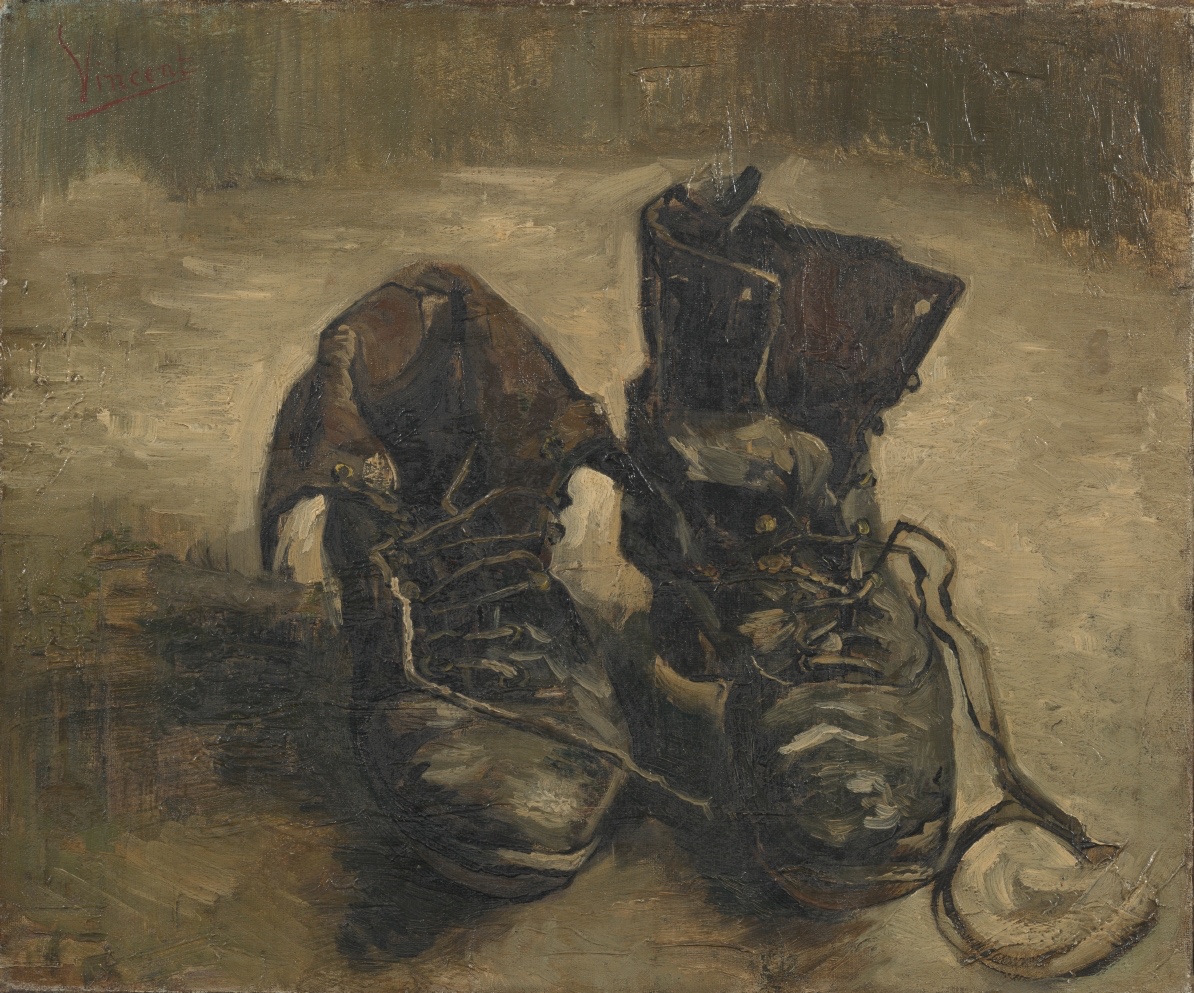
An acquaintance of Van Gogh’s in Paris described how he bought old work shoes at a flea market. Vincent then walked through the mud in them until they were filthy. Only then did he feel they were interesting enough to paint.
🌻 Vincent van Gogh, Shoes (1886)
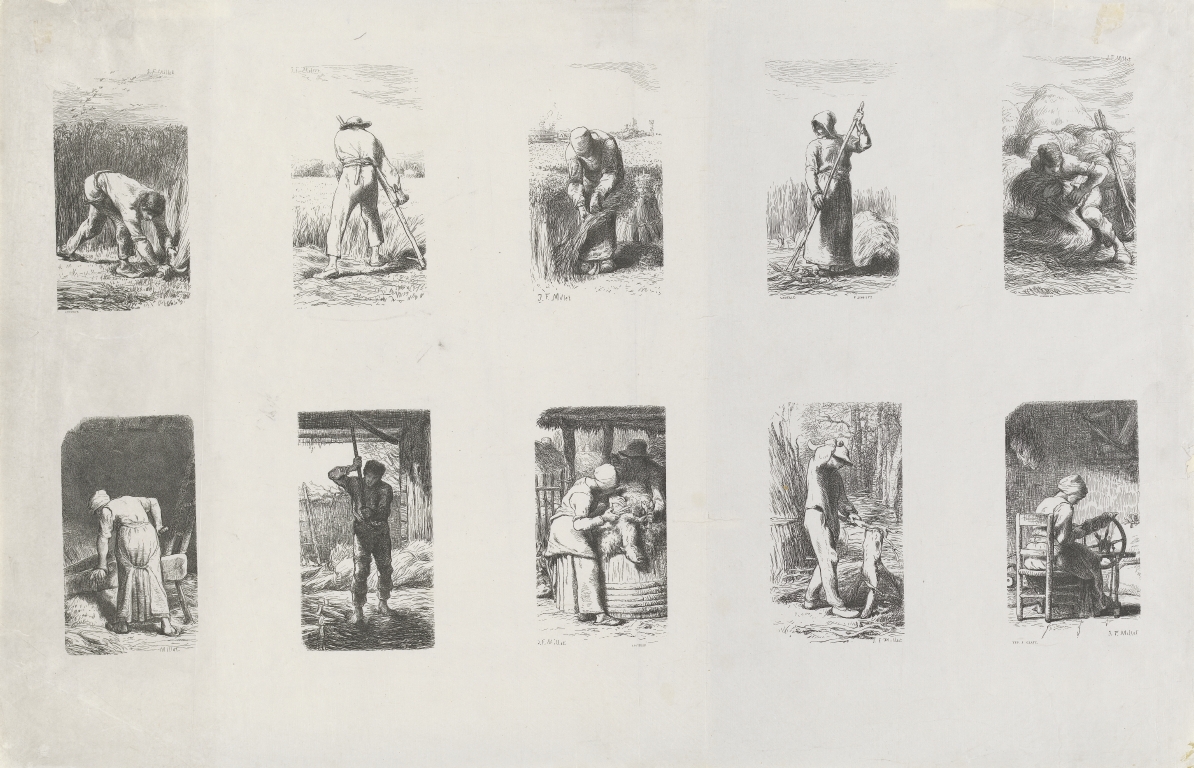
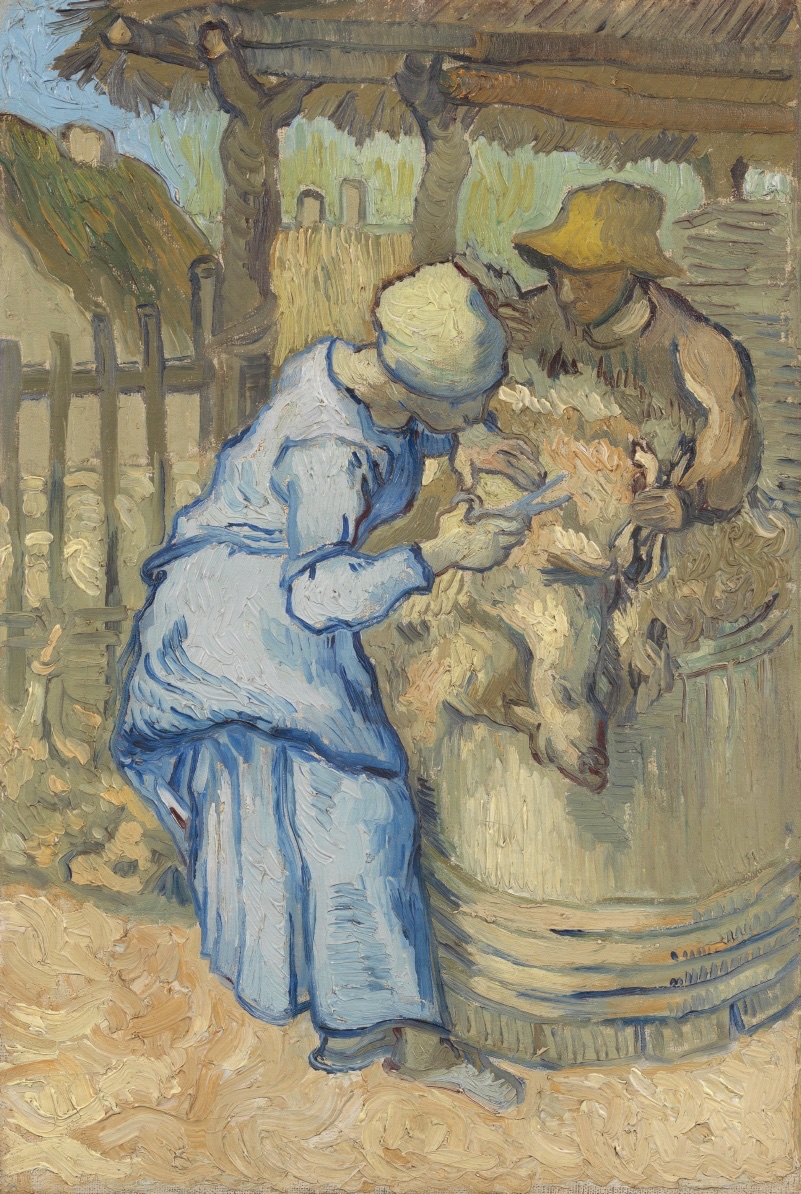
Someone who Van Gogh held in high regard was the French artist Jean-François Millet. Later in Vincent’s career as a painter, Millet moved increasingly further into the background as a source of inspiration. And yet he returned to Millet’s work during a tough period in his life.
What’s your favourite painting by Van Gogh? Vincent was pleased with this still life; he only signed and dated a work if he was satisfied with it.
🌻Vincent van Gogh, Carafe and Dish with Citrus Fruit (1887)
Success doesn’t always just fall into your lap. In the case of Van Gogh, it only came after his death. The widow of his brother Theo, Jo van Gogh-Bonger, was one of the people who was dedicated to Vincent’s success. Partly thanks to her, we can still enjoy Vincent’s work today.
After Vincent was fired from his job, he busily started looking for a new position. It took a while, but he eventually found a job at a school in England. His persistence was rewarded. Van Gogh stayed in England for a while before returning to the Netherlands.
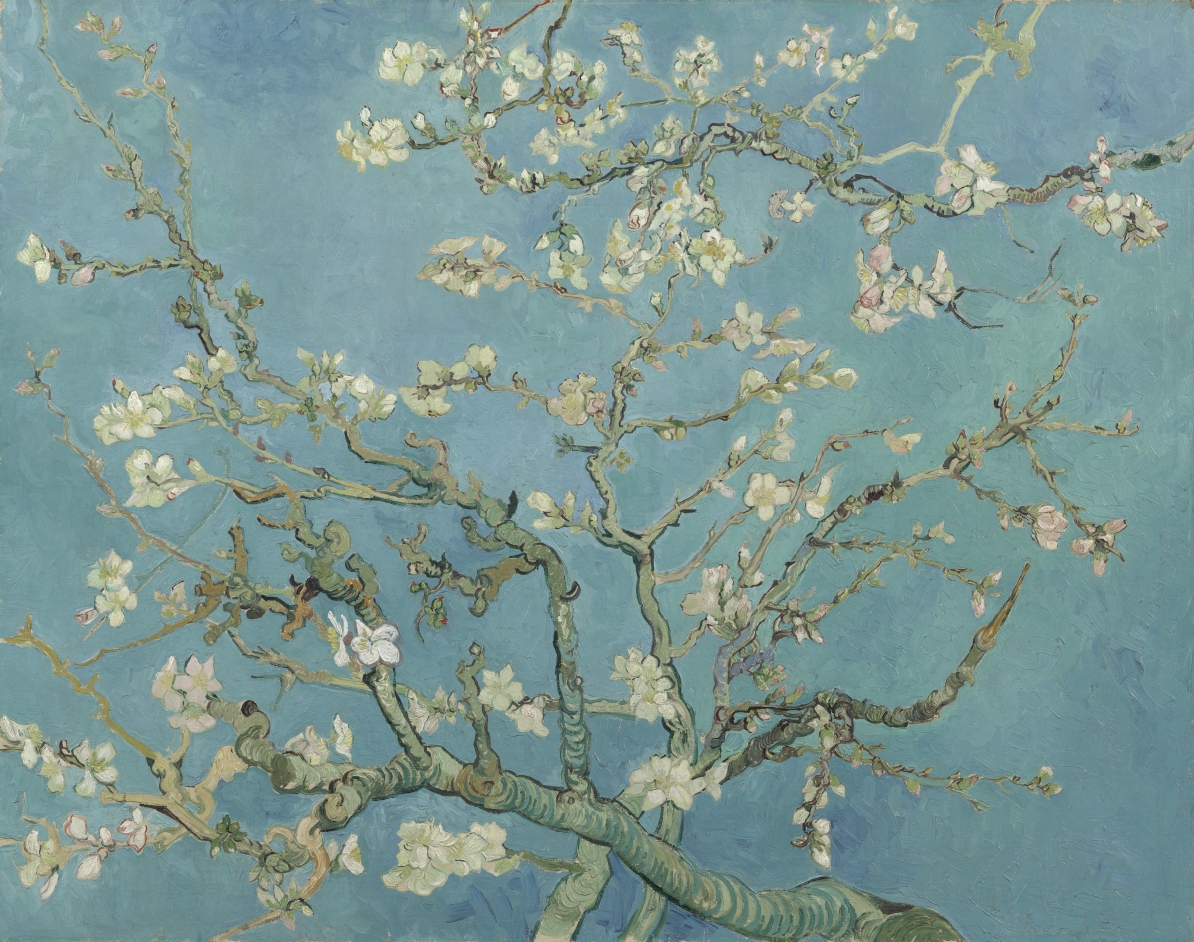
Take a look at the Almond Blossom branch and try to situate yourself in relation to it. Are you looking up, down or straight at it? How did Vincent do this?
The flat, blue background affects your perception of perspective, making the viewer’s position unclear.
🌾 The rise of industry and the growth of large cities made the contrast between city and rural life ever clearer. Painters like Millet and Van Gogh were drawn to the hard but honest peasant life, which was so closely connected to nature. 🌻 Thresher (after Millet) (1889)
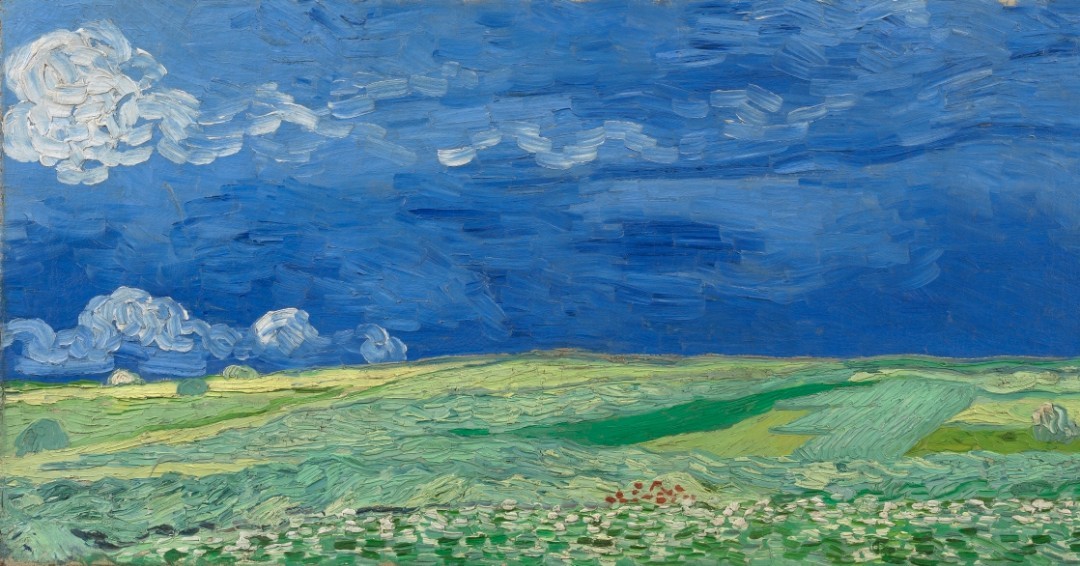
📝 ‘I’d almost believe that these canvases will tell you what I can’t say in words, what I consider healthy and fortifying about the countryside’, wrote Vincent to his brother Theo. 🌻 Vincent van Gogh, Wheatfield under Thunderclouds (1890) #seevangogh#vangoghmuseum#vangogh
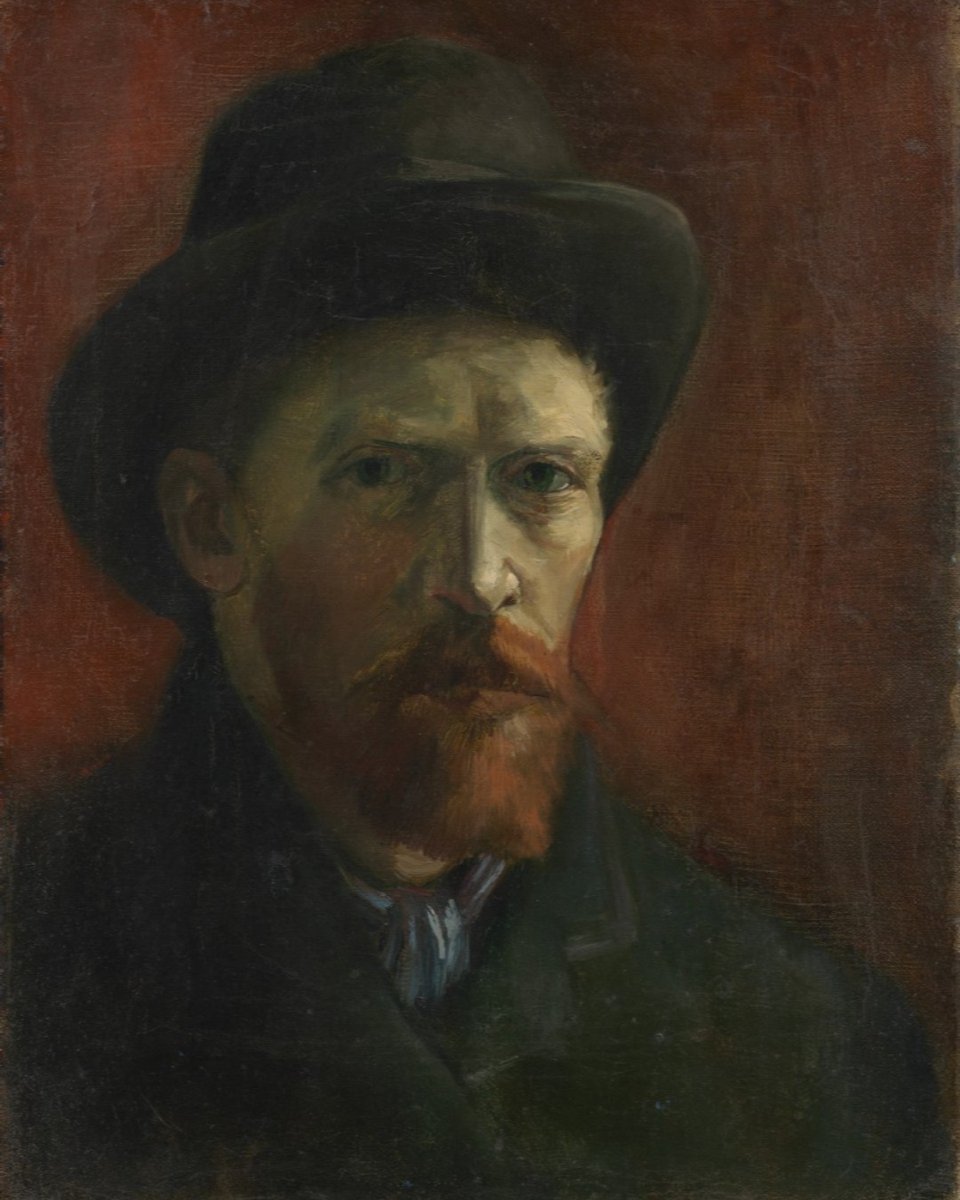
Why did Van Gogh become an artist? After three failed careers, it was quite a leap of faith. But Vincent had always enjoyed drawing, and he also liked art. So when his brother Theo advised him to become an artist, he decided to go for it! 🌻Self-Portrait with Felt Hat (1886-1887)