Autodidactic, unapologetic old school nerd. Sci-fi / fantasy = The Commons for Nerds - use and recreate. Political Distributist. 30s. Protestant. Philosopher.
#Christianity#Christian#Philosophy#DigitalID
Be vigilant and be sure you say "NO!" to the Digital ID regardless of how anyone threatens you - repent and believe in Jesus' person, in His atoning death for your sins, His finished work and His resurrection; nothing more.
The tapestry depicts Celtic mythology's Four Treasures, which directly inspired Arthurian legend. The Dagda’s Cauldron of abundance evolved into the Holy Grail. Lugh’s fiery Spear became the Bleeding Lance. Nuada’s invincible Sword of light inspired Excalibur. Finally, the Dagda’s magical Harp transformed into the enchanting bardic music and prophecies surrounding Merlin’s Arthurian court.
This is an example of pagan mythology, molded into Christian legends.
🎨Celtic Tapestry (2002) by Howard David Johnson, for Celtic Mythology.
Greek sirens began as half-bird, half-woman creatures whose enchanting songs lured sailors onto deadly rocks.
Over centuries, Roman adaptations morphed them into beautiful, half-fish mermaids, heavily blending their identity with sea nymphs.
This hybrid concept influenced Celtic and Germanic folklore, manifesting as dangerous water spirits like the Irish Merrow, the Slavic Rusalka, and the German Lorelei.
🎨 “The Siren's Lair” by Richard Hescox
A child opened an old library book and found a small paper card tucked inside the back cover.
It was covered in dates.
March 4, 1982.
June 17, 1984.
October 9, 1987.
February 22, 1991.
May 6, 1996.
Dozens of little stamps, one beneath another, marking every time the book had left the library in someone else’s hands.
The child stared at it for a while.
“Wait,” she asked. “All these people read the same book?”
Her grandmother smiled.
“Yes,” she said. “That was the point.”
The book was not new. Its corners were soft. The cover was faded. A few pages had been repaired with clear tape. Someone had written a tiny note in pencil near a sentence they must have loved. The whole thing had the feeling of an object that had lived many lives without ever needing to be replaced.
One book. Dozens of readers.
A lonely teenager, maybe. A mother reading after work. A retired man sitting by a window. A child discovering a world bigger than her own neighborhood. People who would never meet, all sharing the same pages across time.
There is something quietly radical about that.
In most of modern life, we are taught that access means ownership. If you need something, buy it. If you use it once, store it forever. If it breaks, replace it. If everyone needs one, then everyone must purchase one.
But a library book tells a different story.
It says one thing can serve many people. It says value does not disappear when something is shared. It says a community can be richer not because every person owns more, but because everyone can access what they need.
That little stamp card was more than a record of due dates.
It was evidence of another kind of economy.
One built on trust. Return. Care. Circulation. Enoughness.
A world where objects do not have to sit unused in private closets while someone else goes without. A world where the same book can pass from hand to hand, gathering memory instead of waste.
Maybe that is why old library books feel so alive.
They remind us that sharing is not a sacrifice. Sometimes sharing is what lets an object become more meaningful.
One book. Many lives.
And a small paper card proving that abundance does not always mean having more.
Image is for demonstration purpose only.
Something that I have been thinking about for a while now: The trouble with reading Narnia, The Hobbit, and LOTR to your children is that they’ll eventually discover how few people share those reference points anymore.
My son said to me recently: “Dad, no one knows these stories. No one will know what I’m talking about.”
This came up when I suggested he draw on them for class discussions or group work. The shared cultural language that once connected generations feels like it’s fading into something private.
It’s not just the boys who’ve changed, the devices have reshaped the teachers too. Class work leans heavily into “media analysis” and deconstructing ‘celebrity’. The common ground for everyone in the room seems to me to have narrowed to whatever is immediate.
The kids are bright and curious. But their shared world , and the adults guiding them , seems to be defined by the same digital feed. I think there is a real loss here. Shared great stories that built imagination and connections between friends (especially amongst young boys) are becoming solitary activities instead of communal ones.
@HarrisonGarlic1@BBHerodotus
Once people stop reading books civilizations fall.
4th century AD Roman historian and soldier Ammianus Marcellinus notes that Roman nobles began regarding reading as poison.
They only read lightweight satires for pleasure, but touch no other works. It was at this time Rome began to fall.
That is why you must read old books. To gain new insights and ancient knowledge.
Because without it we will lose our civilization.
Reasons to read old books:
1) They’re often very pretty
2) Because they’re second-hand, they’re a lot cheaper than new books (this one cost £4)
3) Old books are 100% AI proof. When you see that something was printed in 1926 (for example) you know AI had nothing to do with it, and that it’s also insulated against the internet in general; they're time-machines
4) Not all books printed in the past were good quality, but the ones that have survived are: thicker (and nicer) paper than we use today, plus tougher bindings. These quality materials also mean they’re nicer just to hold in your hands.
5) If you read what everybody else is reading, the odds are you’ll end up thinking what everybody else is thinking. History is very long, and just reading books from the year 2026, or the 2020s, or even the 21st century, will warp your perspective. Reading old books (not even the greats, just random old books) teaches you more, because it acts as a foil to the present and helps you see it more clearly by comparison.
6) You often get old inscriptions in the endpapers: names, dates, awards, gifts. Sometimes you even get annotations. It’s a small thing, but knowing somebody one hundred years ago owned and loved a book you’re now reading is… well, it’s something.
7) Time is the best possible filter for quality. Many great books weren’t considered great in their own time; most books considered great in their own time have been forgotten. The same will happen to the best-selling books of the 21st century.
8) They generally look nicer on shelves
9) Unlike most modern paperbacks or hardbacks, older books were often printed in actual pocket-sized editions, so you can take them around easily
@AlchemicRaker I was taught chivalry and heroism through D&D as a child.
I owe my stance on serving Christ being a vassalship to D&D.
Firmatus is the natural result of that. D&D will always be Christ-coded under my roof.
Modern RPG character creation
“I spent three hours writing my tragic backstory.”
Original Traveller character creation
“You joined the Navy, served two terms, learned engineering, survived a war, got promoted…”
“Wow! Awesome!”
“…then failed a survival roll and died.”
“Wait, what?”
“Roll up another recruit.”
😂
The dice giveth.
The dice taketh away.
For years, atoms were imagined like tiny solar systems with electrons moving in perfect circles.
Quantum physics changed that idea completely. Electrons don’t follow fixed paths. What we actually see is a probability cloud showing where an electron is most likely to exist.
Children want moral clarity more than adults realize.
They want heroes
They want meaning
They want examples worth admiring
Classical education understands this instinct instead of trying to suppress it.
To bring a smile to your face
A 2,000 year-old figurine of two ‘Dancing Dogs’ 🐾❤️
Blackware ceramic, Colima, West Mexico, 200 BC - 200 AD. 📷 Princeton University Art Museum
#Archaeology
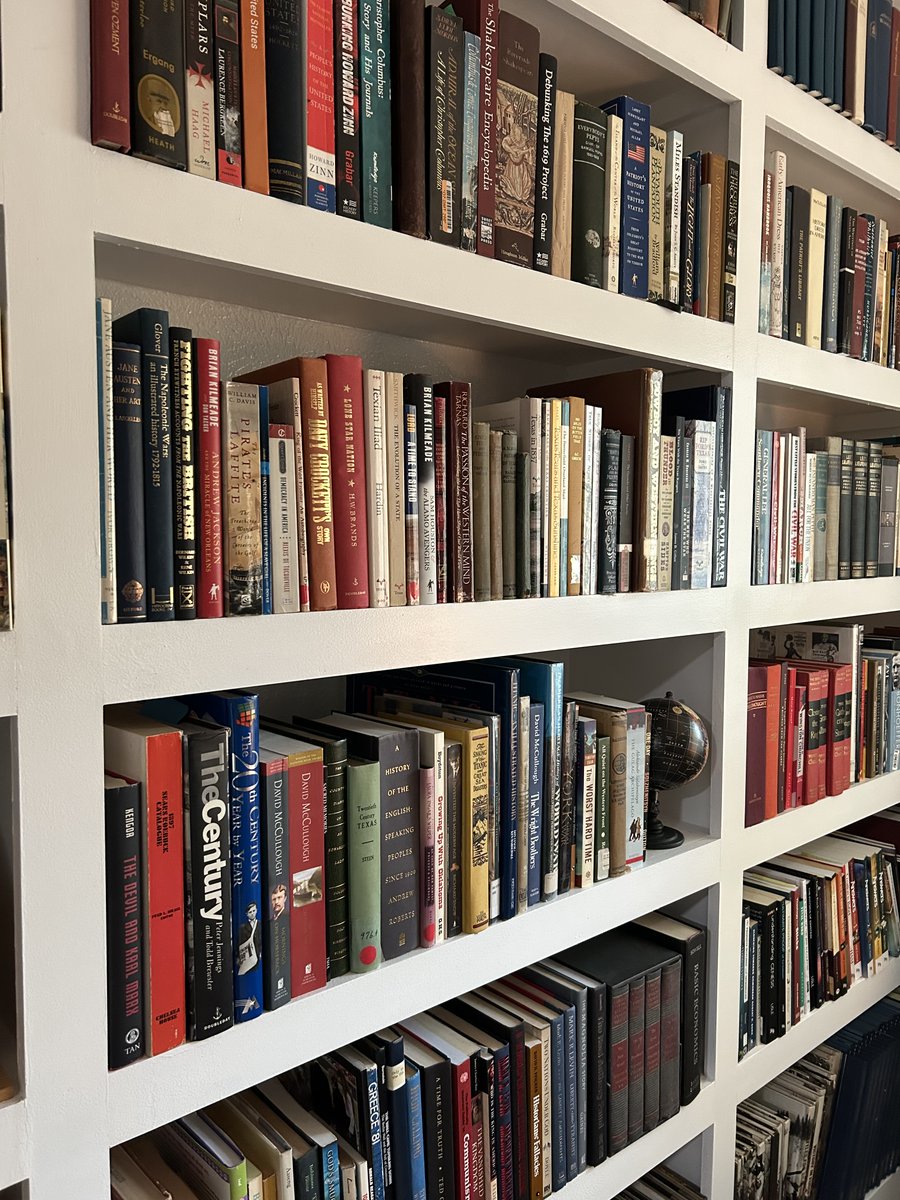
Three reasons a home library is vital to western civilization:
1. Internet censorship
2. Changeable and vanishing eBooks
3. Artificial intelligence
If hundreds of homes preserved the good books in print, we would not have to worry about losing our documented history.
Morale still matters!
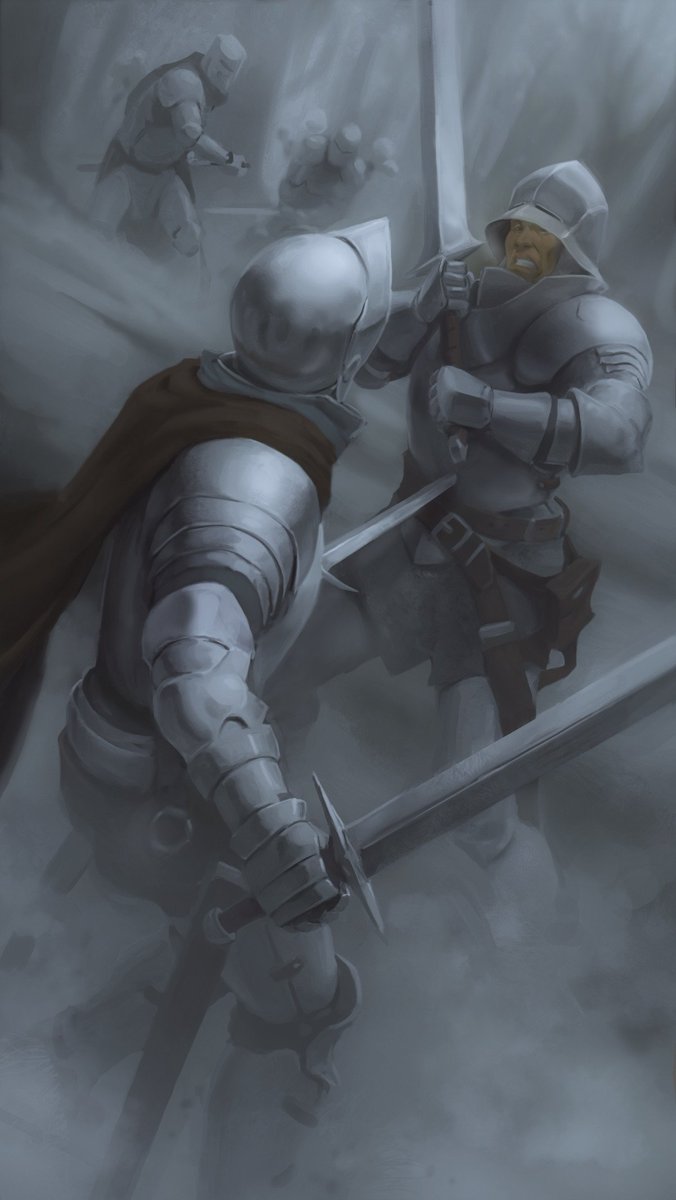
Classic Gaming & D&D's morale rules seem all but forgotten by the modern gamer.
This mechanic lets monsters flee or surrender realistically instead of fighting to the death like WotC and Paizo prefer.
Do you use morale?
What's your best morale tale?
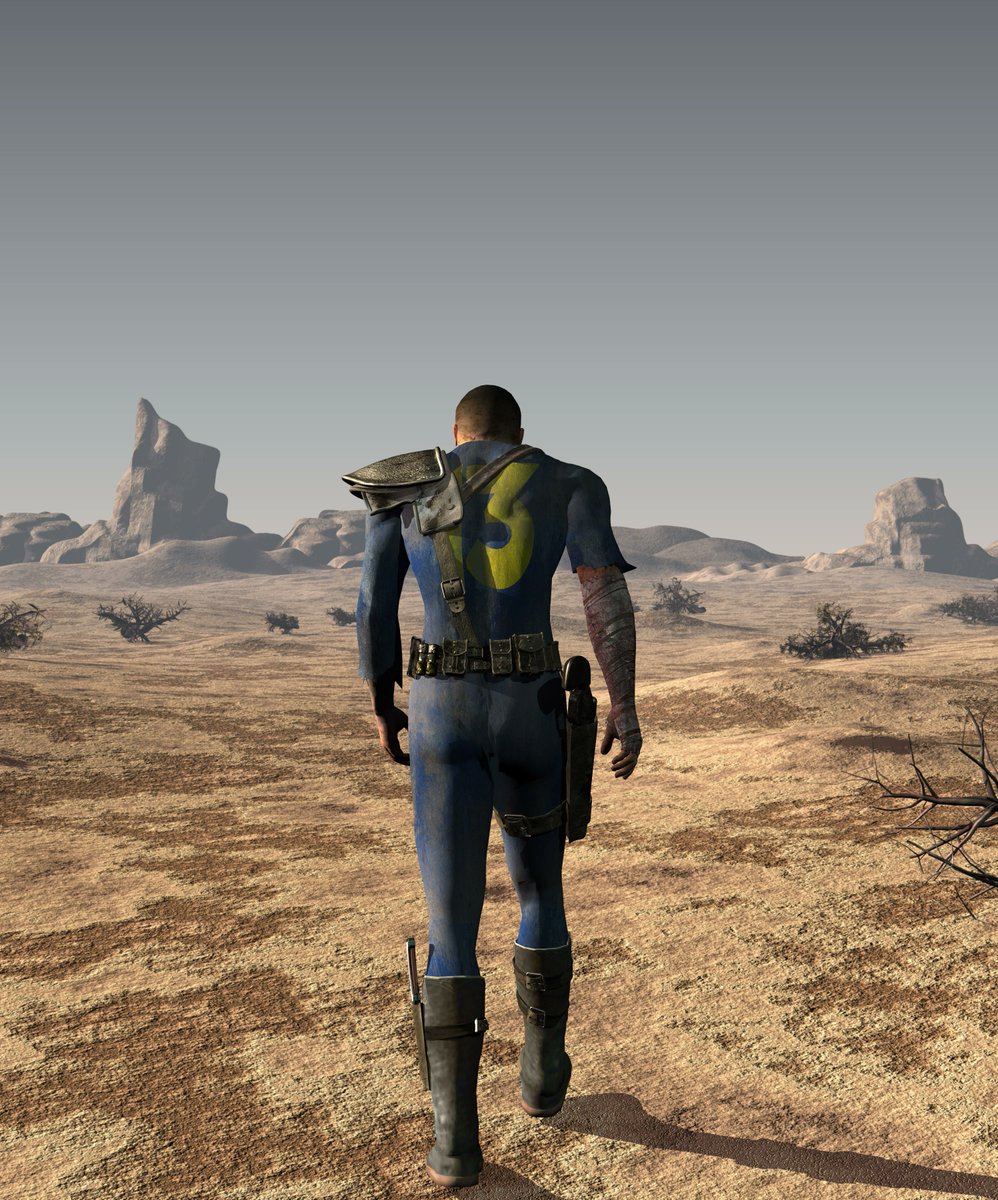
Modern Fallout fans will never truly understand how heroic, fearless and unique Fallout was. Fallout was created as the answer to: What would the world be like after a Nuclear Catastrophe? Not, how can I collect endless junk and shoot mindless enemies. Fallout wanted to say something whilst entertaining you. It wasn't selling you worthless season passes and cash shop currency. Fallout was a game made by hard working nerds, doing their best in a brutal industry with very little resources. Fallout used to be really special. Fallout used to be a RPG.
@SandyofCthulhu The solution should obviously be to flat-out stop emphasizing modern, real world groups via in-game content, thereby completely separating fantasy from reality.
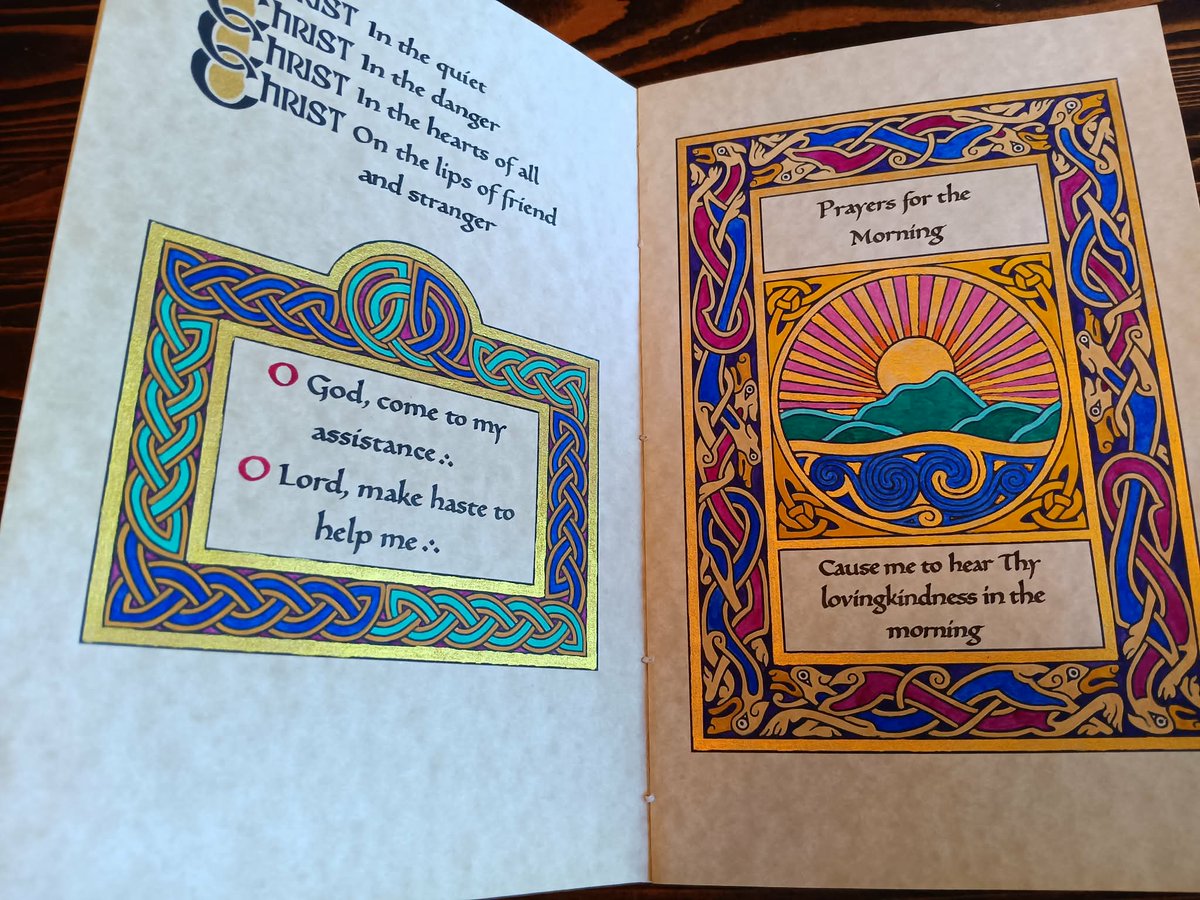
Good morning! The first 40 Poetic Eddas are in the mail to backers, and we reached our initial funding goal for the Celtic illuminated prayer book in the first 6 hours! Thank you all!
https://t.co/Mp16je20ht
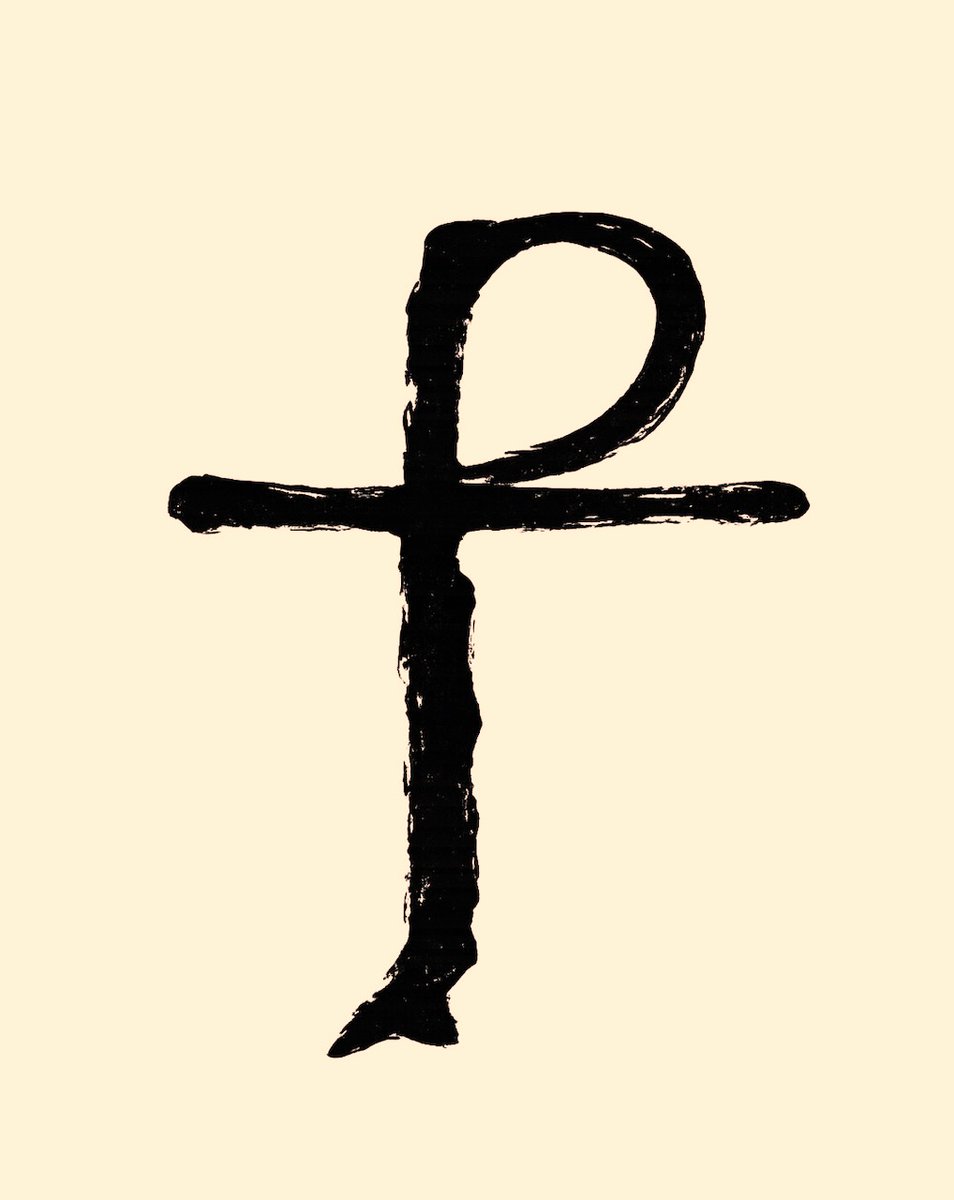
This is likely the earliest Christian symbol, exactly as it appears in the oldest manuscript of the Gospel of Luke (c. AD 200). It is a clever ligature — superimposing the Greek letters tau (Τ) and rho (Ρ) to depict a man hanging on a cross. Even better, the scribe formed this image within the Greek word for "cross" (ΣΤΑΥΡΟΣ, stauros) in the words of Jesus: "Whoever does not carry their cross and follow me cannot be my disciple" (Luke 14:27). And, yes, this is my next T-shirt.
The Celtic or Irish Wolf, a complex and Otherworldly creature.... Wolves, it would seem, have always had varied personalities as diverse as their human counterparts. The Irish werewolf was not considered a “monster” at all. The werewolf was the guardian and protector of children, wounded men and lost persons, and even recruited by kings in time of war.
The Irish werewolf or Faoladh, differs from the typical western European werewolves and the faoladh was often considered “good”. The faoladh is a man or woman that shapeshifts into a wolf, and is often a protector or guardian of others rather than an unthinking, bloodthirsty creature. Where one shapeshifting wolf could be seen as evil, for example, the next might very well turn towards a travelling priest and begin to preach the gospel.
Wolves were hunted into extinction in Ireland but the country was once called Wolfland up until Middle Ages, due to the amount of wolves roaming there. They feature prominently in Irish folklore with stories of people transforming into wolves passed through the generations.
In some folklore, the faoladh were that of the Laignach Faelad. These were not doomed, kind-hearted or guardian werewolves, but vicious werewolf warriors mentioned in a medieval Irish text called the Cóir Anmann. Here, a tribe of man-wolf shapeshifters were from what is now known as Tipperary Island, followers of the bloodthirsty Irish god, Crom Cruach (the Bowed God of the Mounds.) These ancient mercenary soldiers would fight for any king willing to pay their price. Their brutality in battle made them desirable to any ruthless and desperate king willing to hire them. The price for their services? Not gold, but the flesh of newborns they would feed on.
📷 : Credit to the Owner
#archaeohistories