How do you dismantle a transnational criminal network operating across multiple countries, trafficking vast quantities of wildlife products, and withstanding significant financial losses from law enforcement seizures?
📘 Our latest report, "Disruption and Disarray II: Case Study of a Major Wildlife Trafficking Network", examines how an intelligence-led investigation exposed and disrupted one of the most sophisticated wildlife trafficking networks uncovered by the Wildlife Justice Commission.
🌍 The investigation began as two separate operations targeting rhino horn traffickers in southern Africa and pangolin scale and ivory traffickers in West Africa. 🔗 In 2021, a breakthrough connected the two investigations, revealing a wider criminal network operating between Africa and Asia.
The investigation ultimately led to the arrest, prosecution, and conviction of four high-level traffickers, including the network's principal.
It also explores the lessons this investigation offers for future efforts to disrupt transnational organised wildlife crime 👉 https://t.co/hmCQlVu0E5
This week’s Wildlife Win of the Week is from South Africa.
A pangolin named Rambo has been rescued from the illegal wildlife trade after at least three weeks in captivity, and the operation led to the arrest of two suspects. He was reportedly kept in a chicken-wire cage, tightly bound to stop him curling up, and deprived of food and water. When he was rescued by the Limpopo Pangolin Collective, he was severely underweight, dehydrated and injured. After intensive veterinary care, Rambo has gained more than 2kg, and he managed to eat on his own for the first time during his 11th supervised foraging walk. His recovery is ongoing.
The rescue took multiple trips and a 900km journey. The first attempt failed when the suspected captors didn’t show up, but a second trip days later brought Rambo to safety. The suspects were tracked down about two weeks later and are in custody awaiting the outcome of legal proceedings.
Pangolins are widely described as the world’s most trafficked mammals, and the IUCN now considers all eight species threatened with extinction. All eight are listed on CITES Appendix I, which bans international commercial trade, yet trafficking of pangolins and their parts continues.
Rambo’s rescue is a win for one animal, and the arrests show that those holding wildlife can be tracked down. Following the trail beyond the people who held him, to the networks behind the trade, is what will make trafficking riskier and less profitable.
Link to article: https://t.co/cdnM2ryxGE
In 2019, the Wildlife Justice Commission launched Operation Bagheera to investigate reports of growing jaguar trafficking in Latin America and potential links to markets in Asia.
Our investigation identified reports of Asian involvement, seizures of jaguar teeth in Bolivia destined for China, and arrests connected to the trade.
⌛ Four years later, in 2023, we reopened Operation Bagheera to assess what had changed.
Over three years, WJC conducted multiple deployments across Bolivia, Brazil, Chile, Colombia, Panama, Peru, and Suriname. 🌎
🔍 The investigation combined intelligence analysis, covert surveillance, undercover engagements, and direct liaison with law enforcement partners.
Our findings suggest that the illegal jaguar trade has declined compared with the levels observed in 2019 and has become more difficult to access. This decline demonstrates the impact that sustained law enforcement pressure can have on illegal wildlife trafficking, disrupting criminal networks and making it increasingly difficult for traffickers to operate.
But important gaps remain, including understanding the live jaguar trade and whether demand for jaguars in the exotic pet trade could be increasing.
Read the report: https://t.co/uJKUUWX4rS
This week’s Wildlife Win of the Week is from Colombia.
Authorities in Tumaco, Nariño, found 4,235 shark fins weighing more than 376 kilograms at a seafood business, and arrested a man in connection with the find. Prosecutors say the fins came from more than 1,000 sharks. The species include hammerhead, tiger, silky, thresher, copper and blacktip sharks.
Many of these species are in serious trouble: almost 70% of requiem sharks, a family that includes tiger, silky, copper and blacktip sharks, are threatened according to the IUCN, and all hammerhead and requiem sharks are now regulated under CITES.
The evidence indicates the fins were due to be moved to Ecuador and sold there. According to Colombian prosecutors, the shipment was then intended to continue to the Asian market. The suspect has been described as one of the biggest shark fin traffickers in Colombia. A judge ordered him held in custody while the case proceeds, and he has not accepted the charges, which include unlawful use of natural resources and wildlife trafficking.
This is a win for the sharks that never reached the market, and a sign that authorities are going after the people behind the trade. Tumaco is a known pressure point: most of Colombia’s shark fin and meat seizures between the March 2021 ban and July 2023 came from Tumaco or nearby Buenaventura. A seizure of this scale also shows how organised shark fin trafficking can be, and why sustained pressure on the networks moving fins from coast to market matters.
Link to article: https://t.co/zwMqYcVIrI
This week, governments voted to begin negotiations on a new protocol to the UN Convention against Transnational Organized Crime (UNTOC), paving the way for a stronger international response to environmental crime, including wildlife trafficking, illegal mining and waste trafficking.
The fourth protocol to the Convention would stand alongside those addressing human trafficking, migrant smuggling, and firearms trafficking, recognising the seriousness of organised environmental crime and the need for coordinated international action.
The Wildlife Justice Commission contributed evidence and expertise throughout negotiations in Vienna, highlighting the links between environmental crime, organised crime and corruption.
What happens next? A dedicated committee will negotiate the protocol over four sessions, creating an opportunity to strengthen legislation, improve cross-border cooperation and close the gaps that criminal networks exploit.
This is an important milestone. Now, the focus must be on turning this decision into meaningful action to disrupt criminal networks and protect wildlife.
#WildlifeWinOfTheWeek #WildlifeCrime #EnvironmentalCrime #UNTOC
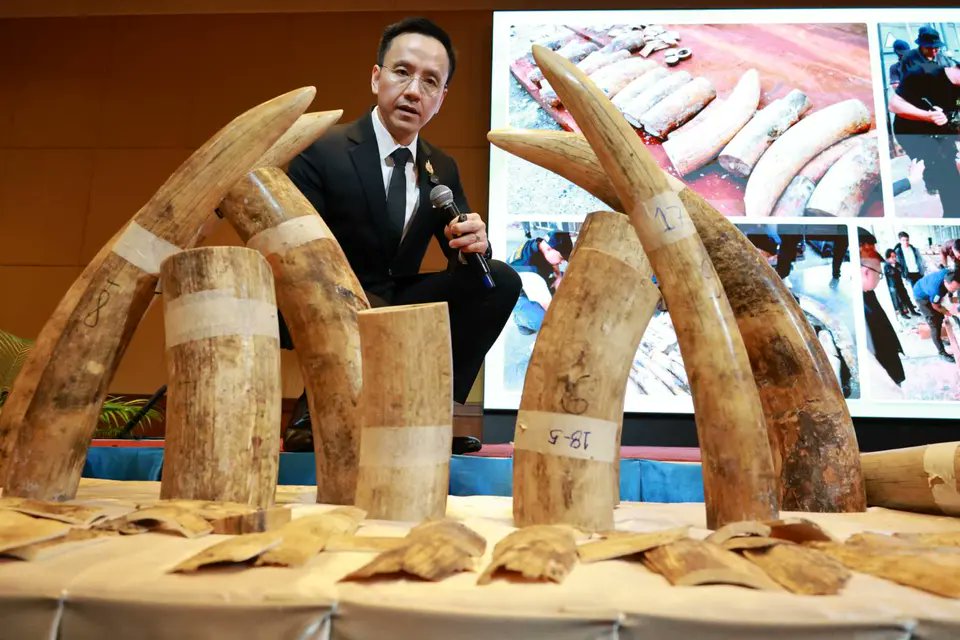
Thai authorities seize 3.1 tonnes of ivory following intelligence provided by the Wildlife Justice Commission https://t.co/0ubijRkZRv #Media releases #News
Wildlife trafficking, corruption and drug trafficking may have more in common than we think.
At #UNTOC13, we discussed how these crimes intersect in the Caribbean, with perspectives from governments, prosecutors and law enforcement experts.
Understanding these links can help uncover the wider criminal networks that threaten biodiversity, deplete natural resources and deprive coastal communities of livelihoods and income.
🐆 Is the illegal jaguar trade shrinking, or just is it a vanishing act?
The new Wildlife Justice Commission report released this month conducted an analysis of the jaguar trade across seven Latin American countries between 2023 and 2025. The results were compared with their investigation in 2019.
There are encouraging developments!
✅ In Bolivia, open trade has shrunk. Jaguar bone paste was easy to buy in 2019. This time investigators couldn’t source any.
✅ The data about trafficking in Bolivia, Colombia, Peru and Suriname is less encouraging though it may be that some traders have left the business.
✅ Evidence of international trafficking turned up in only two of the seven countries.
WHY THIS MATTERS: In the early 2010s, jaguar teeth and bones began moving to China. Jaguar bone paste is boiled down the same way as tiger bone paste and sold to the same buyers. As wild tigers grow scarcer, the fear is that the jaguar has become the stand-in.
🔍 A word of caution from those on the ground: finding fewer cases doesn’t necessarily mean less trafficking. To show a real decline, you’d need the same areas checked with the same methods and effort over time, and the 2019 investigation focused mainly on Bolivia. A quieter market may simply mean the trade is harder to detect, has moved elsewhere, or has shifted into private networks. Crediting law enforcement would also need evidence linking it to an actual drop in trafficking. In much of the region, enforcement remains weak.
⚠️ What the report contains that is cause for great concern:
* In Suriname, traders still cook jaguar bone paste for buyers in Asia. In Peru, an active network was found to be trafficking jaguar parts between Lima and Iquitos.
* Brazil has the most jaguars and also the greatest number of poaching incidents recorded. This issue was only minimally investigated. Mexico and Ecuador weren’t investigated at all.
* Live jaguars are now the most-poached “product,” primarily in Mexico.
* Recorded poaching and seizures from 2019 to 2025 account for at least 188 jaguars. This number is likely underreported, accurate records are likely incomplete.
Though the report offers valuable insight, the results are nevertheless cause for great alarm. The lives of jaguars are still endangered.
Much work is left to be done. 🌿
📄 Full report: https://t.co/haFaXu1jUc
#GMFER #MarchAgainstExtinction #Jaguars #WildlifeTrafficking #LatinAmerica
Jaguars Under Threat: Inside Latin America’s Illegal Wildlife Trade
Jaguars are being killed for their teeth, bones and skins, while some are captured alive and sold into the illegal pet trade.
A new investigation across seven Latin American countries has exposed different markets for jaguar products, from local sales of skins and claws to international demand for bone paste and fang jewellery. Live jaguars accounted for 38% of the seizure records examined between 2019 and 2025.
Investigators found no evidence that captive breeding supplied the illegal trade, pointing to continued pressure on wild populations.
Watch the full video.
@CITES@WWF@TRAFFIC_WLTrade@PantheraCats@UNODC@WJCommission
#Jaguars #WildlifeTrafficking #IllegalWildlifeTrade #WildlifeConservation #EndangeredSpecies #LatinAmerica #Biodiversity #NWS
An investigation by the Wildlife Justice Commission (WJC) found that an opportunistic, small-scale trade persists across seven countries, while documenting specific international connections involving Peru and Suriname.
https://t.co/VHu9Sst61L
So, what does the illegal jaguar trade look like today?
The Wildlife Justice Commission has published a new report providing an updated intelligence picture of the illegal jaguar trade in Latin America.🔍
Based on an investigation conducted between 2023 and 2025, the report compares current findings with our 2019 investigation in Bolivia to assess changes in the level and dynamics of the trade.
🌎The investigation covered Bolivia, Brazil, Chile, Colombia, Panama, Peru, and Suriname.
Read the report: https://t.co/HbObFsGD3v
This week’s Wildlife Win of the Week comes from South Africa.
The Constitutional Court has dismissed an application by the South African Hunters and Game Conservation Association to have the animal well-being provisions in the National Environmental Management: Biodiversity Act (NEMBA) declared unconstitutional and invalid. The provisions stay in place.
Had the challenge succeeded, animal well-being would have lost its place in South Africa’s biodiversity law, the framework that governs how wildlife is managed, permitted and protected. Instead, the court has upheld provisions that took years of public participation, stakeholder engagement and scientific input to shape.
At the heart of the ruling is the recognition that wild animals are sentient beings, capable of physical, physiological and mental states that affect their quality of life. That means how animals experience their lives is a legitimate consideration in wildlife management and decision-making, not just their numbers or their commercial value.
The focus now shifts to implementation. Authorities will need to build animal well-being into permitting, oversight and enforcement, including finalising outstanding measures like the revised Threatened or Protected Species (TOPS) Regulations.
Link to article: https://t.co/2XnlRMlx0a
Thai authorities have seized a large quantity of ivory hidden in a timber shipment from Zambia, using intelligence shared by ECF grantee @WJCommission. This is Southeast Asia’s third major ivory seizure since August.
Learn more: https://t.co/UfTpaKgJGw
📸 Thai Customs
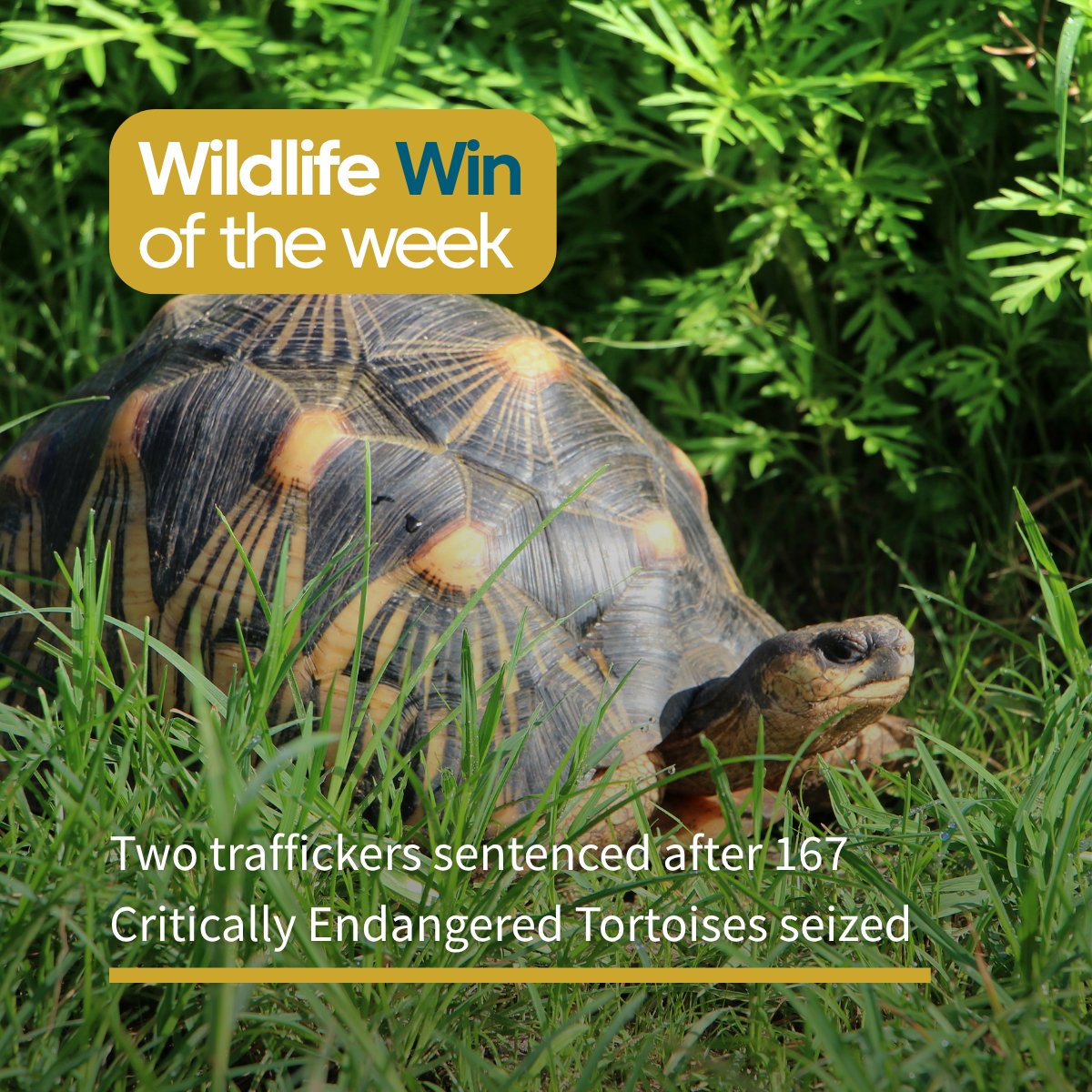
🐢 This week’s Wildlife Win of the Week comes from Madagascar.
In March 2026, the Wildlife Justice Commission provided operational and intelligence support to Madagascar’s Ministry of the Environment and Sustainable Development who arrested three men and seized 167 radiated tortoises.
Madagascar’s Anti-Corruption Court sentenced one of the men, a high-level trafficker, to 10 years in prison and a second to five years. Both were also fined approximately USD 22,700. The third suspect was found not guilty.
The Wildlife Justice Commission would like to thank and acknowledge the great work done by the MEDD team who acted decisively and professionally to achieve this result.
Radiated tortoises are classified as Critically Endangered by the International Union for Conservation of Nature (IUCN). Yet illegal collection for the pet trade continues to threaten the species.
167 tortoises kept out of the illegal trade, an organized criminal network disrupted and two traffickers behind bars. Cases like this show what’s possible when civil society and law enforcement collaborate.
Sustained cooperation like this is key to disrupting trafficking networks, making wildlife crime a high-risk activity and helps to save species from extinction.
Link to article: https://t.co/QRtPongl6q
Tortoise traffickers sentenced in Madagascar following Wildlife Justice-supported operation
Two wildlife traffickers have been convicted and sentenced in Madagascar following the seizure of 167 radiated tortoises in Toliara, in an operation supported by the Wildlife Justice Commission.
On 3 March 2026, officials from Madagascar’s Ministry of the Environment and Sustainable Development (MEDD) arrested three men suspected of involvement in an illegal tortoise-trafficking operation. The arrests followed a Wildlife Justice investigation into criminal networks trafficking protected tortoises from Madagascar to Asia. ��
Radiated tortoises are among the most iconic species native to southern Madagascar and are classified as Critically Endangered on the IUCN Red List. Illegal collection for the exotic pet trade remains one of the primary drivers of population decline. The species has also been listed under Appendix I of the Convention on International Trade in Endangered Species of Wild Fauna and Flora (CITES) since July 1975, providing the highest level of international protection from commercial trade.
The convictions remove two traffickers from the trade and deliver a significant financial and operational blow to the network, making wildlife trafficking riskier and less profitable.
Wildlife Justice will continue working with partners in Madagascar and across the region to disrupt the criminal networks threatening the country’s unique wildlife and help save species from extinction. 🤝
https://t.co/6Ho58D37TS
Another Wildlife Win of the Week coming from South Africa.
The Hawks — South Africa's elite police unit for serious organised crime — have arrested a fifth suspect in one of South Africa's most brazen wildlife trafficking cover-ups. Nguyen Huu Dong, manager of the Voi game lodge, is accused of staging a fake armed robbery in December 2025 to mask the illicit sale of 98 rhino horns; some of which had already turned up in shipments intercepted at Singapore's Changi Airport a month earlier.
Dong is also the cousin of Chu Dang Khoa, alleged head of a wider trafficking syndicate spanning South Africa, Mozambique, and parts of Central and West Africa, with routes into Southeast Asia. He now joins four other suspects already facing charges in the case.
This arrest is a real step forward. It starts to expose the network behind a single heist, not just the horns themselves. Cases like this show why sustained, cross-border investigation is so essential to holding these networks accountable.
Link to the article: https://t.co/Lz3RYb3trK
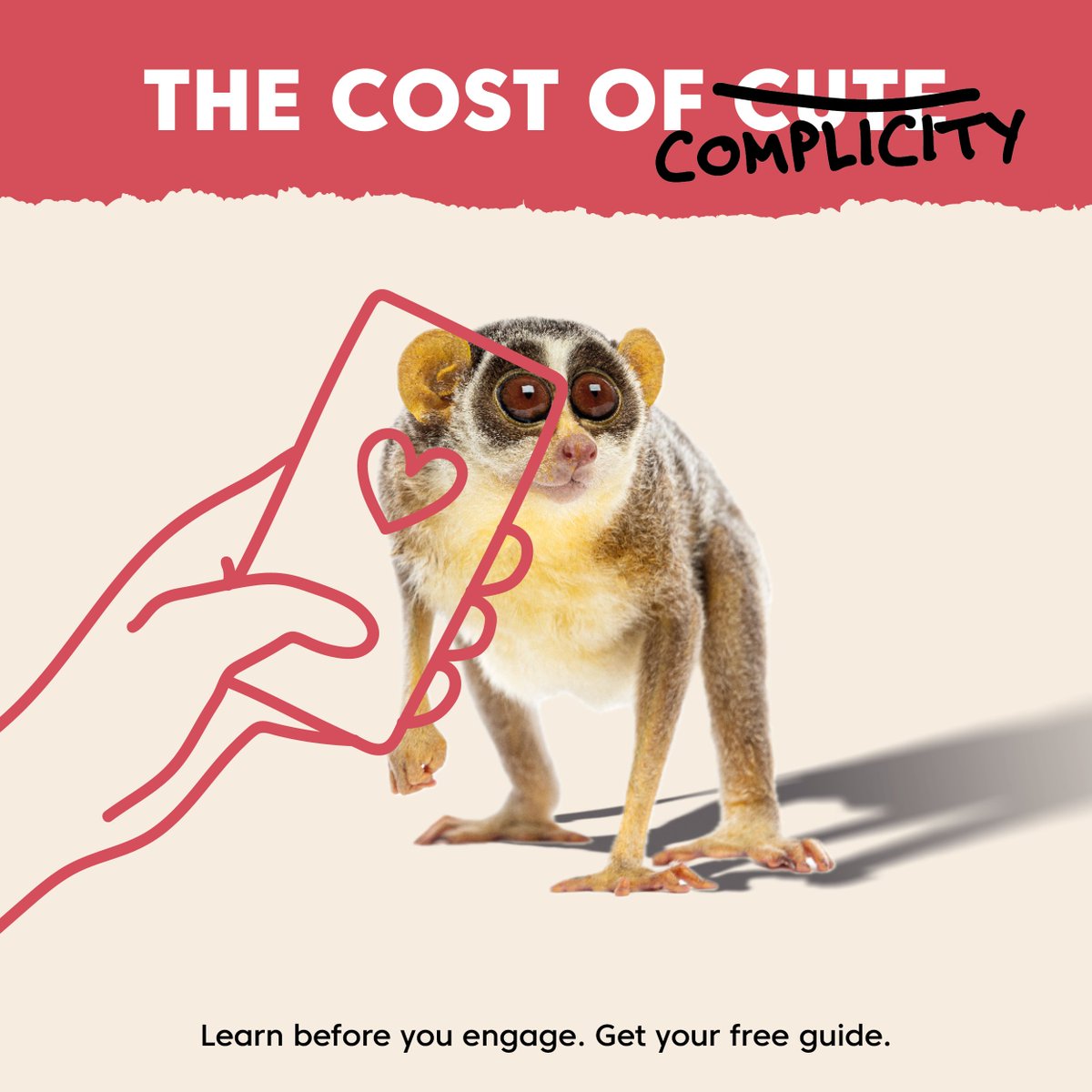
The illegal pet trade cannot exist without demand. That means everyone has a role to play in stopping it.
By refusing to buy wildlife, reporting content that promotes exotic pets, and raising awareness about the issue, you can help cut off the demand that fuels these criminal networks.
To help people better understand the issue and take meaningful action, we have developed a practical guide on how you can help fight the illegal pet trade. It provides clear, practical actions that everyone can take to help protect wildlife.
While we work to disrupt criminal networks at the top, you can help at the source by reducing the demand that keeps the trade alive.
Download our free guide. Take action.
#TheCostOfCute #EndWildlifeTrafficking #BePartOfTheSolution
🎙️ Podcasts are a powerful way to take complex issues beyond reports, conference rooms, and field investigations, and into conversations with new audiences.
Through our own podcast, Wildlife Kingpin, we explore the people, networks and investigations behind wildlife trafficking, bringing the realities of wildlife crime to life.
We’re also grateful to have been invited onto podcasts around the world to share insights from our investigations and discuss what it takes to disrupt the criminal networks driving wildlife crime.
🎧 Listen here:
🦈 BOAT Briefing: How sharks have become the money spinners of the sea: Olivia Swaak-Goldman’s fight against wildlife crime, 282 - https://t.co/oQSKp5R4Tu
🐒 Rewilding the World with Ben Goldsmith: Fighting organised wildlife crime with Olivia Swaak-Goldman, Fighting organised wildlife crime with Olivia Swaak-Goldman - https://t.co/aechow2QOb
🐢🦏 Wildlife Kingpin: Operation Dragon & The Rise and Fall of Ah Nam,Wildlife Kingpin - https://t.co/6ap8zhsMoH
hashtag#InternationalPodcastDay hashtag#WildlifeKingpin hashtag#WildlifeCrime hashtag#WildlifeTrafficking hashtag#OrganisedCrime
Pangolins are the world’s most trafficked mammal, relentlessly hunted for their scales. A new feature from @NatGeo explores the threats they face, and the growing efforts to protect them.
Congratulations to Henry Wismayer and Marcus Westberg on a powerful piece, beautifully capturing these remarkable creatures, the threats they face, and the people working to protect them.
The Wildlife Justice Commission is proud to be part of this fight. Our intelligence has helped Nigerian authorities target the criminal networks driving the illegal pangolin scale trade, contributing to major seizures and arrests of high-level traffickers.
As Olivia Swaak-Goldman, Executive Director of the Wildlife Justice Commission, says in the piece: “What we’ve demonstrated is that this trade is not inevitable—it can be disrupted.”
Fighting to Save the World’s Most Wanted Animal https://t.co/4o1CsuiCSr via @NatGeo