Our new open-access paper in PNAS on the Palomas and Dederiyeh Neanderthal pelves and implications for the obstetrical dilemma hypothesis. A great thank you to all our coauthors! (@MUPANTQUAT@NeanderPaloma@MarianoVLopez#TorrePacheco#Murcia)
https://t.co/lC6LXEzafM
🇨🇭 1. August in Küsnacht: 07:00–08:30 Uhr Salutschiessen (24 Schüsse) auf der Hornanlage. Anschliessend 09:00–10:00 Uhr Ökumenischer Gottesdienst in der Kirche, mit CANTUS Küsnacht & Kantorei St. Georg, danach Frühstück. #Küsnacht#1August#Wulponia
Amtseinsetzung u. Verabschiedung der Kirchenpflege Küsnacht – passend dazu die Kantate „Meine Seele rühmt und preist": einst Bach zugeschrieben, heute Melchior Hoffmann. Mit Raphael Höhn (Tenor).
So, 28.6., 10 Uhr, Ref. Kirche Küsnacht. Apéro danach.
«Die Fantasie kennt keine Regeln.» Sa, 20.06., 19 Uhr: Andreas Jost (Grossmünster-Organist, ZHdK-Professor) an der Orgel unserer Kirche – mit Bach, Mozart, Langlais und Schuberts f-Moll-Fantasie. Eintritt frei, Kollekte. #Orgelkonzert#AndreasJost
«Meine Seele rühmt und preist.»
28. Juni 2026, Küsnacht — Amtseinsetzung der neuen Kirchenpflege. Passende Musik: eine Kantate mit eigener Amtseinsetzung — zwei Jahrhunderte als Bach geführt (BWV 189), heute zu Recht Melchior Hoffmann.
10 Uhr · Ref. Kirche Küsnacht
#Küsnacht
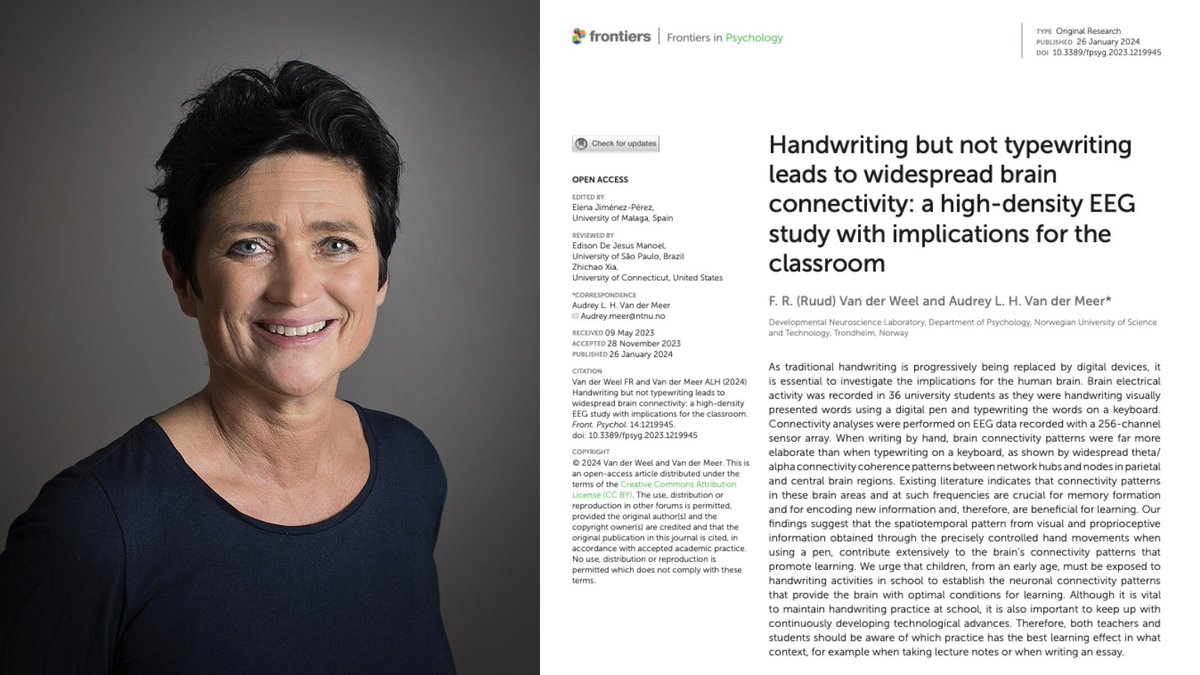
A Norwegian neuroscientist spent 20 years proving that the act of writing by hand changes the human brain in ways typing physically cannot, and almost nobody outside her field has read the paper.
Her name is Audrey van der Meer.
She runs a brain research lab in Trondheim, and the paper that closed the argument was published in 2024 in a journal called Frontiers in Psychology. The finding is brutal enough that it should have changed every classroom on Earth.
The experiment was simple. She recruited 36 university students and put each one in a cap with 256 sensors pressed against their scalp to record brain activity. Words flashed on a screen one at a time.
Sometimes the students wrote the word by hand on a touchscreen using a digital pen, and sometimes they typed the same word on a keyboard. Every neural response was recorded for the full five seconds the word stayed on screen.
Then her team looked at the part of the data most researchers had ignored for years, which is how different parts of the brain were communicating with each other during the task.
When the students wrote by hand, the brain lit up everywhere at once.
The regions responsible for memory, sensory integration, and the encoding of new information were all firing together in a coordinated pattern that spread across the entire cortex. The whole network was awake and connected.
When the same students typed the same word, that pattern collapsed almost completely.
Most of the brain went quiet, and the connections between regions that had been alive seconds earlier were nowhere to be found on the EEG.
Same word, same brain, same person, and two completely different neurological events.
The reason turned out to be something nobody had really paid attention to before her work. Writing by hand is not one motion but a sequence of thousands of tiny micro-movements coordinated with your eyes in real time, where each letter is a different shape that requires the brain to solve a slightly different spatial problem.
Your fingers, wrist, vision, and the parts of your brain that track position in space are all working together to produce one letter, then the next, then the next.
Typing throws all of that away. Every key on a keyboard requires the exact same finger motion regardless of which letter you are pressing, which means the brain has almost nothing to integrate and almost no problem to solve.
Van der Meer said it plainly in her interviews.
Pressing the same key with the same finger over and over does not stimulate the brain in any meaningful way, and she pointed out something that should scare every parent who handed their kid an iPad.
Children who learn to read and write on tablets often cannot tell letters like b and d apart, because they have never physically felt with their bodies what it takes to actually produce those letters on a page.
A decade before her, two researchers at Princeton ran the same fight using a completely different method and ended up at the same answer. Pam Mueller and Daniel Oppenheimer tested 327 students across three experiments, where half took notes on laptops with the internet disabled and half took notes by hand, before testing everyone on what they actually understood from the lectures they had watched.
The handwriting group won by a wide margin on every question that required real understanding rather than surface recall.
The reason was hiding in the transcripts of what the two groups had actually written down.
The laptop students typed almost word for word, capturing more total content but processing almost none of it as they went, while the handwriting students physically could not write fast enough to transcribe a lecture in real time, which forced them to listen carefully, decide what actually mattered, and put it in their own words on the page.
That single act of choosing what to keep was the learning itself, and the keyboard had quietly skipped the choosing and skipped the learning along with it.
Two studies. Two countries. Same answer.
Handwriting makes the brain work. Typing lets it coast.
Every note you have ever typed instead of written went into your brain through a thinner pipe. Every meeting, every book highlight, every idea you captured on your phone instead of on paper was processed at half depth.
You did not forget those things because your memory is bad. You forgot them because typing never woke the part of the brain that would have made them stick.
The fix is the thing your grandmother already knew.
Pick up a pen. Write the thing down. The slower road is the faster one.
Tobias Willi (ZHdK, Johanneskirche Zürich) spielt britische Orgelmusik von Howells, Weir, Briggs und Preston – plus eine Neukomposition von Panufnik (2025).
Sa., 18. April, 19 Uhr. Ref. Kirche Küsnacht. Eintritt frei.
#Orgel#Küsnacht#Konzert
«I did think I did see all Heaven before me, and the great God himself.»
— Händel
Ich komme gerade aus der Probe. Ich verstehe, was er meinte.
Cantus Küsnacht · «Messiah» · Kirche Küsnacht
Sa. 28.3. 19h · So. 29.3. 17h · Eintritt frei
#Messiah#Händel#CantusKüsnacht#Palmsonntag #Klassik
Argentinischer Tango trifft sakrale Akustik
17. Jan 2026 | 19:00 Uhr
Reformierte Kirche Küsnacht
Das Spitzenorchester SILENCIO spielt live – Goldene Ära in höchster Klangkultur.
Ein Abend voller Leidenschaft & Intensität an einem außergewöhnlichen Ort.
https://t.co/W86S7AYYEE
#TangoinDerKirche #SilencioTango #Küsnacht
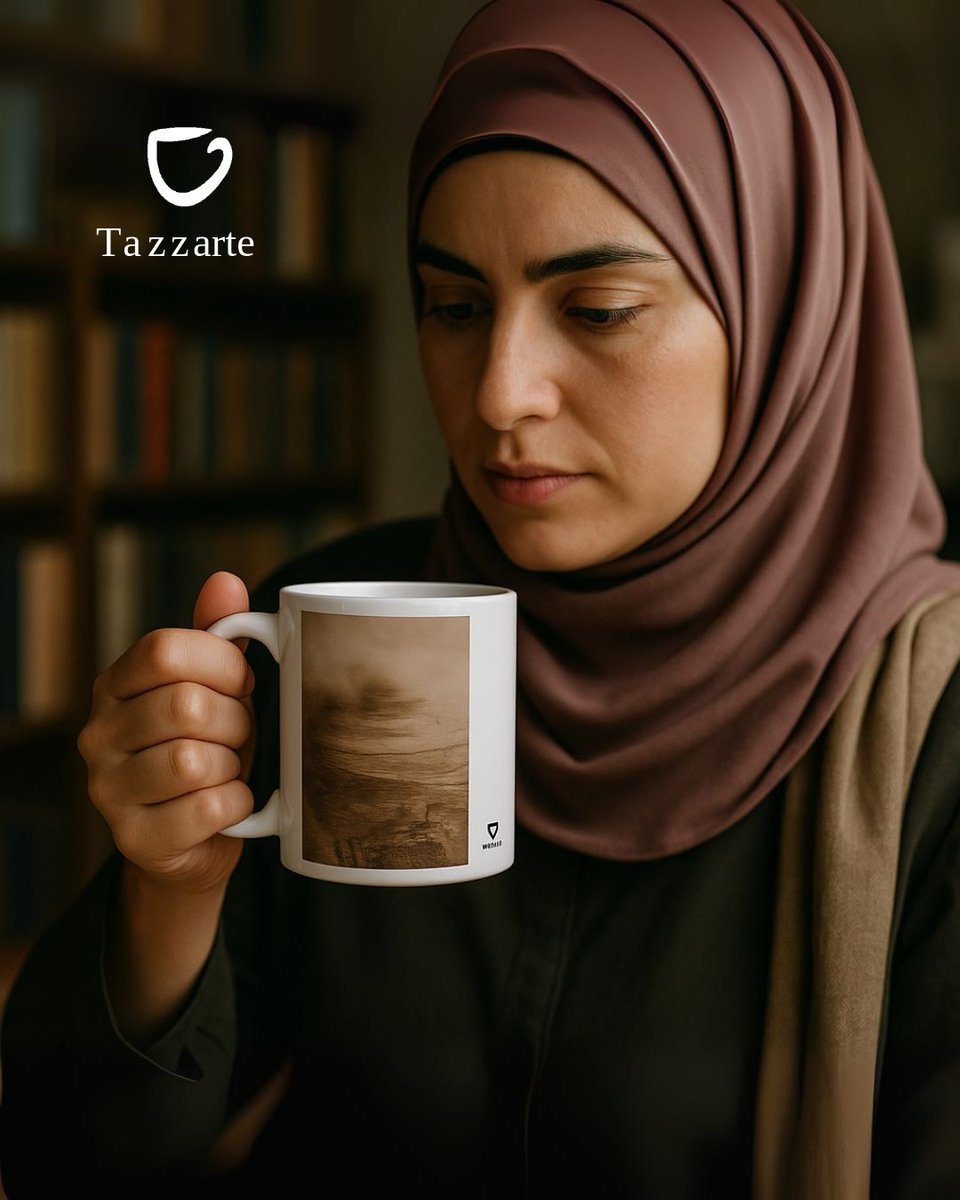
A shadowed line draws its trace across the desert—Roman roads once buried in silence, now seen from above. Poidebard’s 1930 aerial vision, reimagined in ceramic and porcelain.
Now part of the curated series by Tazzarte:
https://t.co/dlIt7ubqMO
#Tazzarte#AerialArchaeology #AntoinePoidebard #RomanRoads #ArchaeologyMug #SwissDesign #CulturalHistory #CartographicHeritage #MinimalistDesign #SepiaPrint
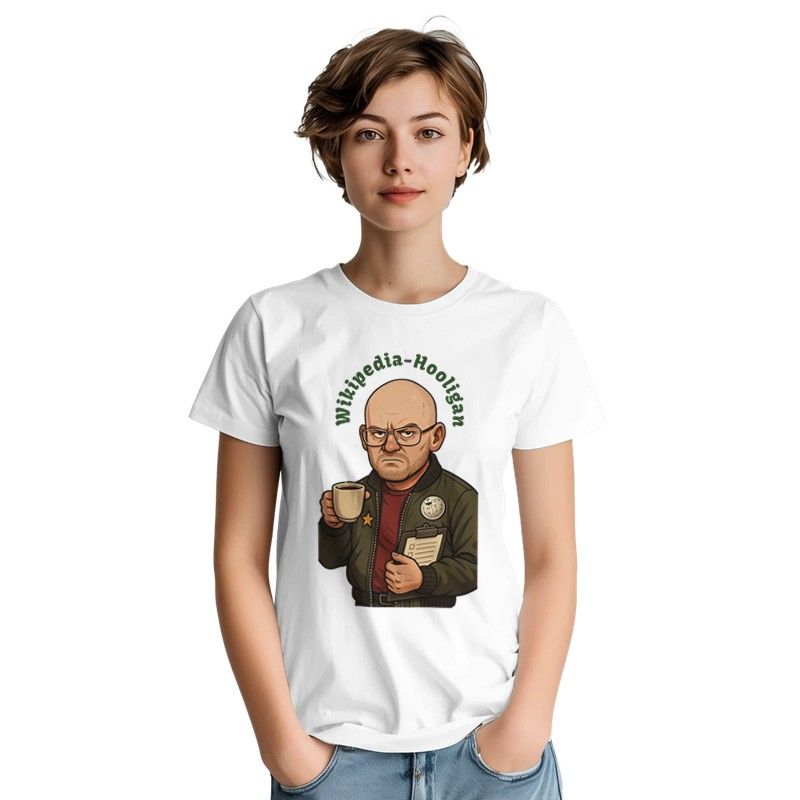
Wikipedia-Hooligan
Last week, a meticulously sourced article I wrote about a 100-year-old Swiss company was deleted from Wikipedia.
Not because it was inaccurate – but because, according to the deletion discussion, it was “citation fiction.” Another user called to “neutralize or delete the sources!”
The tone felt less like a debate and more like a stadium riot: anonymous IPs, “not notable” banners, and a euphoric urge to shout down anything that hinted at historical context.
Leading the charge: a procedural ultra with a tea emoji, admin badge, and digital clipboard. A mid-tier academic who never quite landed in scholarship, but reigns over footnotes, forums, and policies. For him, only what’s sealed in a library counts. Everything else is suspicious.
Larry Sanger, co-founder of Wikipedia, later called the platform “a broken system”.
Jimmy Wales, the other co-founder, said: “We are not finished – there is still so much work to do.”
🍵 So we made a T-shirt.
#WikipediaHooligan #Wikipedia #DigitalCulture #ContentModeration #OnlineActivism #KnowledgePolitics #MediaLiteracy #PlatformGovernance #FreeSpeech #CulturalHistory #Satire #Wissensmacht
Letzte Woche wurde ein von mir verfasster, sorgfältig belegter Artikel über ein traditionsreiches Schweizer Unternehmen mit über 100 Jahren Geschichte gelöscht.
Nicht etwa wegen Unsachlichkeit. Sondern, weil laut Wikipedia-Diskussion „Belegfiktion!“ vorliege. Oder schlimmer noch: „KI-Gesäusel in Reinkultur.“ Ein anderer rief: „Quellen neutralisieren oder löschen!“ – man weiss nicht, ob er Geschichte meinte oder Agentenliteratur.
Die Diskussionsseite fühlte sich an wie ein Heimspiel der intellektuell Unterforderten: anonyme IPs mit Pyros, Bannern („Relevanz fehlt!“) und der unbändigen Freude, alles niederzubrüllen, was irgendwie nach Kontext roch.
Angeführt wurde das Ganze von einem regelkundigen Ultra mit Tee-Emoji im Profil, Admin-Stern am Revers und digitalem Klemmbrett in der Hand. Ein ewiger Mittelbauer mit Doktortitel, akademisch nie so ganz angekommen – aber in Foren, Formularen und Fussnoten souverän. Seit Jahrzehnten ehrenamtlich im Metabereich unterwegs, löscht er beherzt, was nicht in seine auf PDF-Konsistenz getrimmte Welt passt. Für ihn zählt nur, was bibliothekarisch gesiegelt ist – alles andere gilt als verdächtig.
Larry Sanger nannte das einmal ein „monokulturelles Establishment-Organ der Propaganda“.
Jimmy Wales mahnte: „We are not finished – there is still so much work to do.“
Ich frage mich inzwischen: Ist Wikipedia noch eine Enzyklopädie – oder längst ein anonymes Tribunal des digitalen Mittelmasses?
🍵
#Wikipedia #Satire #OnlineDebatten #DigitalCulture #ContentModeration #LarrySanger #JimmyWales #Wissensmacht #Kulturgeschichte #LinkedInHumor
Your morning coffee, seen from 500 meters above ground.
This porcelain mug from Tazzarte features a 1930 aerial photograph of the Syrian steppe by Antoine Poidebard – a pioneering archaeologist and aviator who traced forgotten Roman roads from the skies.
With its sepia-toned stillness and soft vertical form, the mug becomes more than functional: a quiet tribute to observation, patience, and the power of seeing differently.
Crafted for those who value nuance – in history, in design, in life.
🔗 https://t.co/tgCGXwdky8
#Tazzarte #AerialArchaeology #Poidebard #SyrianSteppe #PorcelainMug #CulturalHeritage #ArtMug #ModernCraft #IntellectualAesthetic #CuratedLiving
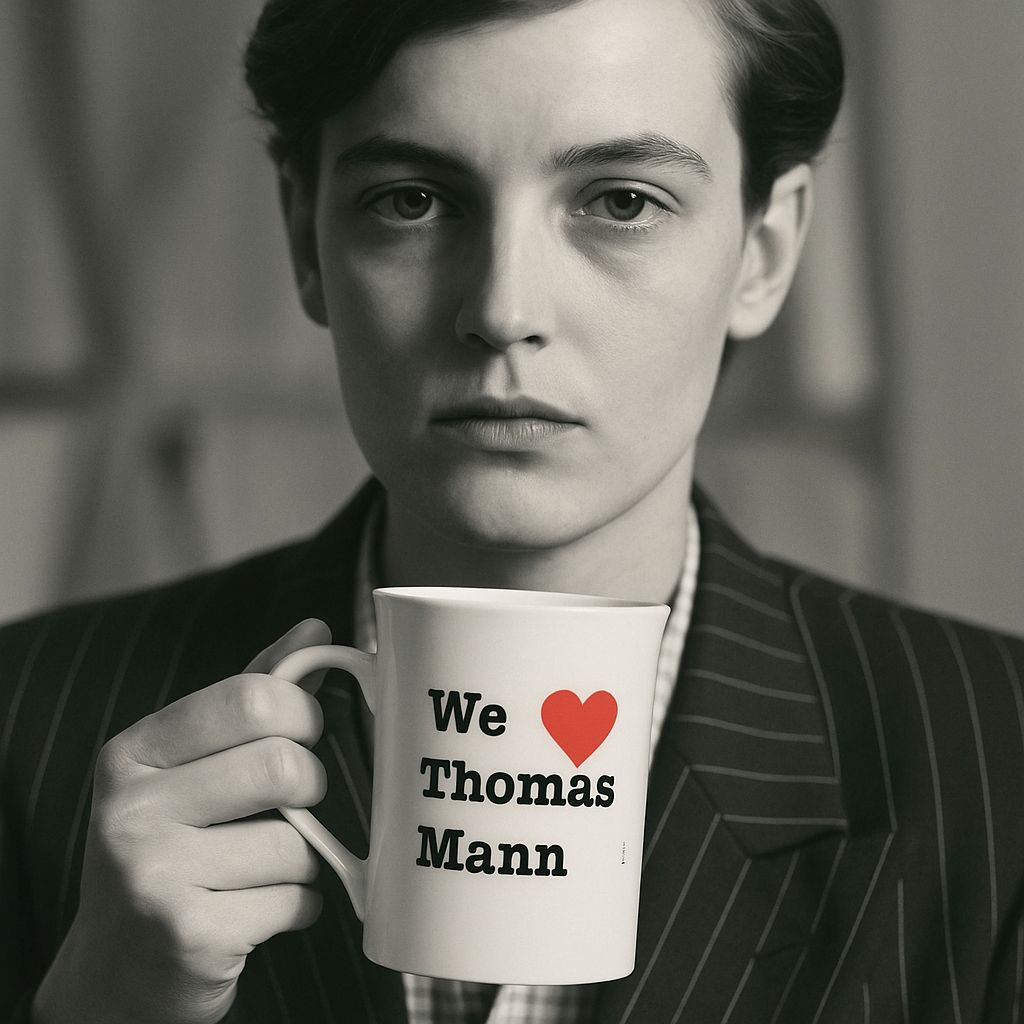
Celebrate the 150th anniversary of Thomas Mann’s birth on June 6 with this elegant 10oz porcelain mug from Tazzarte. Adorned with a subtle nod to the literary giant, it’s a refined gift for book lovers who cherish the timeless prose of Buddenbrooks or The Magic Mountain. Crafted with care, this slim mug blends literary reverence with everyday sophistication. Sip thoughtfully. #ThomasMann150 #LiteraryLegacy #BookLovers #Tazzarte #ClassicLiterature
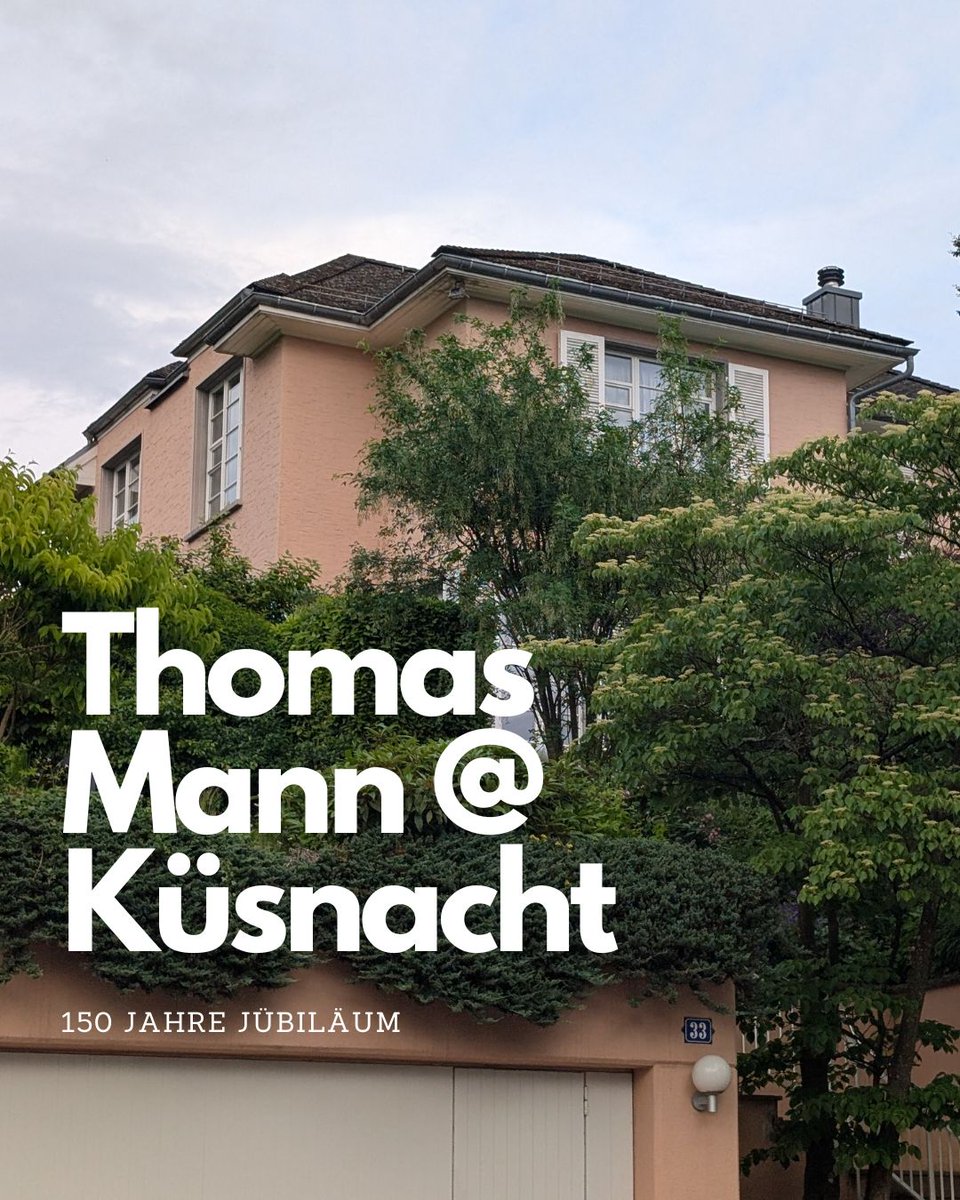
In Küsnacht am Zürichsee verbrachte Thomas Mann prägende Jahre seines Lebens. Ein Vortrag der Ortsgeschichte Küsnacht beleuchtet seine Zeit in der Schweiz, seine Werke und die kulturelle Bedeutung dieses Ortes. Ein Muss für Literaturinteressierte! 📚✨
Mehr erfahren: https://t.co/hpcJvd1k9w
#ThomasMann #Küsnacht #Literaturgeschichte #Zürichsee #Kultur #Schweiz #Literatur #Ortsgeschichte #Bildung #Veranstaltung
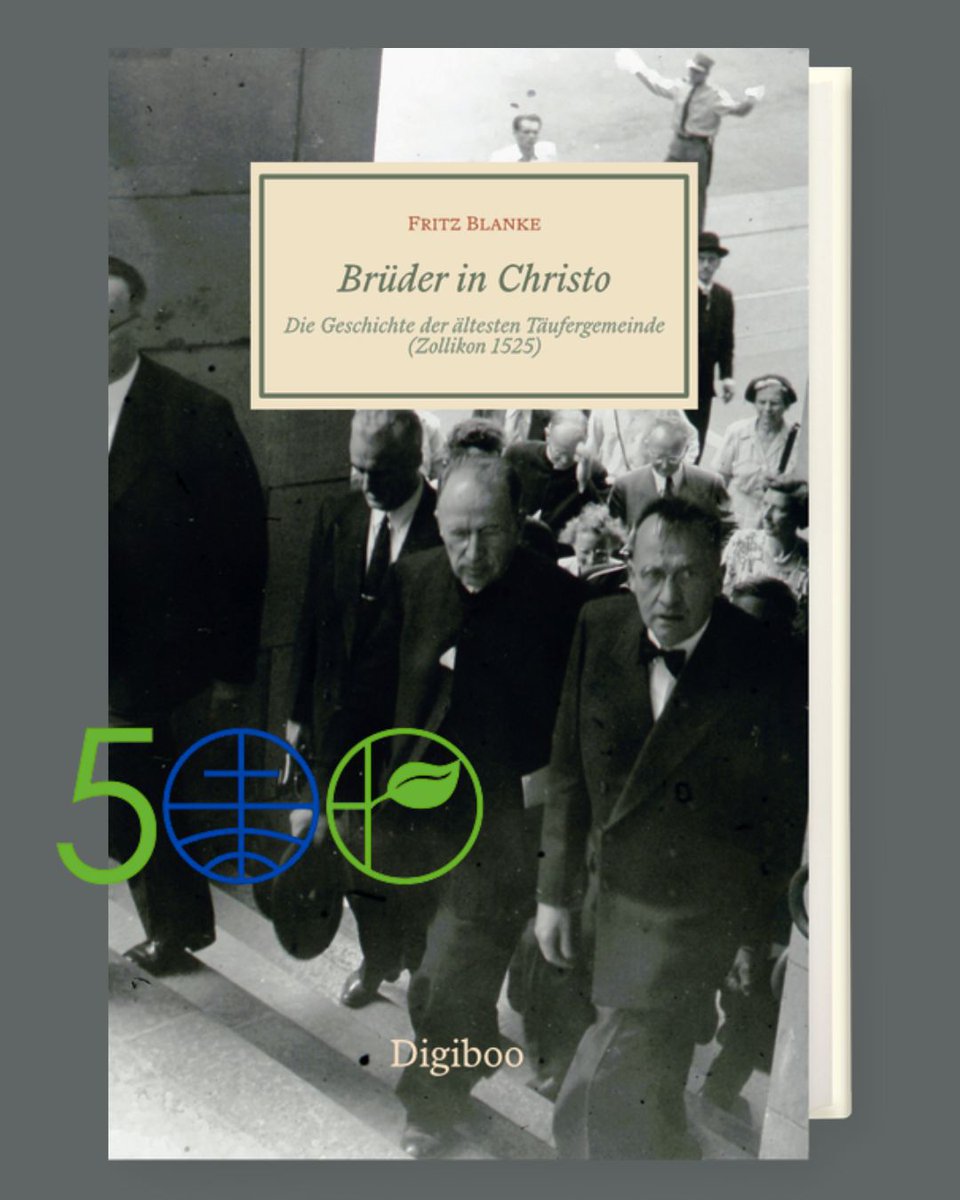
📖 Fritz Blankes "Brüder in Christo", ein Standardwerk der Kirchengeschichte, beleuchtet die Entstehung der Täufergemeinde in Zollikon bei Zürich. Die illustrierte Neuauflage des 1955 erstmals erschienenen Klassikers zeigt, wie die Täufer 1525 mit Zwinglis Reformationskurs in Konflikt gerieten. Anlässlich des 500-jährigen Jubiläums, das heute, am 29. Mai 2025, bei der Mennonitischen Weltkonferenz in Zürich gefeiert wird, ist Blankes luzide Analyse maßgeblich für Personen, die sich für Geschichte, Religionsgeschichte oder Glaubensfragen interessieren.
🔗 Jetzt bestellen: https://t.co/eW0iAvEDiF
#anabaptism500 #Täuferbewegung #Zollikon #Religionsgeschichte #FritzBlanke
In times that challenge our shared humanity, the Ubuntu 11oz Ceramic Mug carries a quiet yet powerful message from South Africa: I am because we are. Crafted from high-quality ceramic with a glossy finish, its vibrant design captures the spirit of connection and community at the heart of Ubuntu philosophy. Perfect for reflective coffee breaks or meaningful conversations, this durable, microwave- and dishwasher-safe mug is a daily reminder of unity’s enduring strength. For thinkers who value stories in every object. Discover it at https://t.co/1HC2ql2gPk #UbuntuPhilosophy #SouthAfricanHeritage #TogetherWeRise