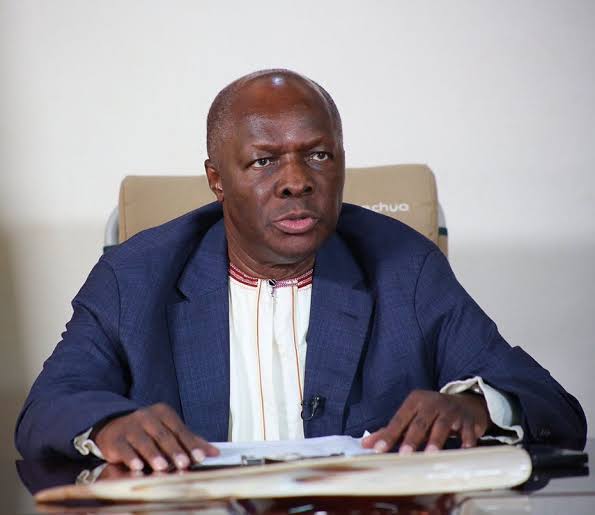
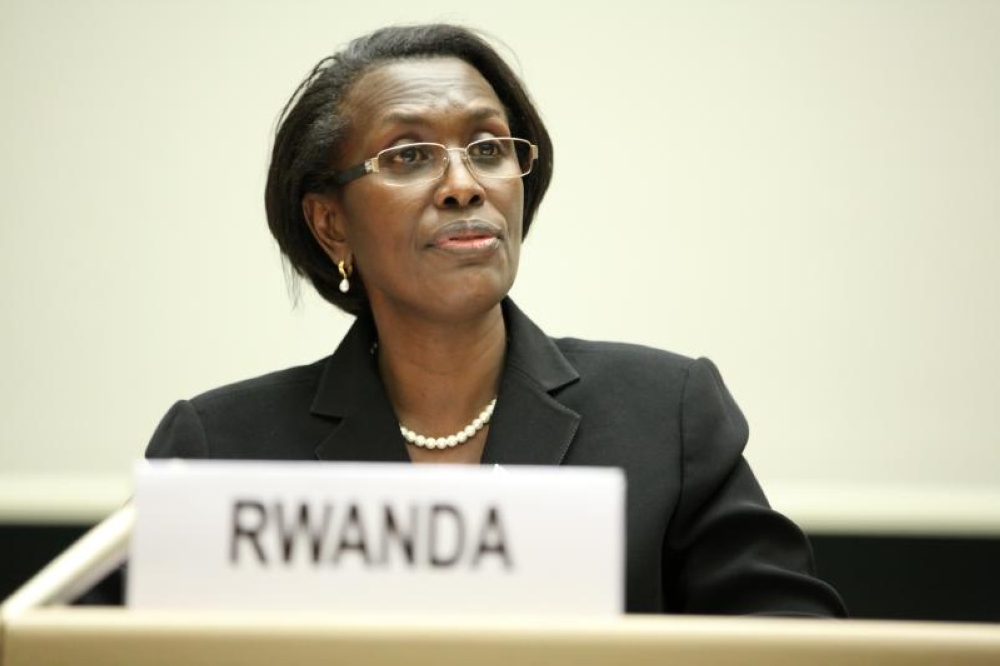
Ever wondered how Kabaka Mutebi II met the mother of Prince Crispin Jjunju - Amb. Vénantie Sebudandi? It’s a story straight out of 1980s London! 🇬🇧🇺🇬
Back in the mid-1980s, long before he returned to ascend the throne of Buganda, then - Prince Ronald Muwenda Mutebi was living in exile in the UK.
Around that same time, Amb. Vénantie Sebudandi - a brilliant, highly educated young diplomat from Rwanda was also operating in international circles abroad.
Their paths crossed in London, where political exiles, scholars, and diplomats regularly met to discuss the future of the region.
Out of that connection, their son, Omulangira Savio Jjunju Kiweewa, was born in London in 1986 - just as Uganda was turning a new political chapter.
While their paths later took different directions - with the Kabaka returning to restore his kingdom and Amb. Vénantie serving as Rwanda’s envoy to the UN and Europe - that London chapter remains a big piece of regional history.
Are you encouraged this time to find love by this story?
Those who said I should reply the issues raised by @TumukundeTT , here is my answer. I declare in advance it is AI generated. Then there is not debate between me and him, only machines. Is that what we really want?
1. The Customary Authority of the Babiito Clan
The author asks where the 100+ Babiito derived their authority, claiming they are a "self-appointed group." This completely misinterprets the foundational structure of the Tooro Kingdom. The Babiito are the royal clan; they are the literal custodians of the throne and the bloodline. When more than 100 prominent members of the royal family convene at the Karuziika (the royal palace), it is not a random committee meeting—it is the gathering of the clan’s supreme customary authority. Under Tooro tradition, the kingdom belongs to the clan, and a collective consensus of the Babiito at the palace holds ultimate customary legitimacy to resolve structural crises.
2. The Practical Threshold for Royal Claims
The author trivializes the exclusion of the alleged son by focusing narrowly on the "absence of a photograph." This is a deflection. The core issue wasn't just a missing photo; it was a total absence of prima facie evidence, institutional recognition, or prior introduction during the late Omukama's lifetime. The Babiito clan cannot halt an entire kingdom’s succession process based on eleventh-hour, unverified assertions. While a DNA test or thorough investigation is ideal in a stable environment, a kingdom facing an active succession transition cannot remain leaderless and vulnerable while chasing uncorroborated claims that the late King himself never formally presented to the kingdom.
3. The Validity of Institutional Representation
The article argues that the Queen Mother's ("Best") consent cannot be implied simply because her brother, Patrick Kawamara, represented her. However, in Tooro custom and formal diplomacy, sending a high-level family representative constitutes institutional participation. If the Queen Mother disputed the committee's mandate from the outset, the logical step would have been a formal boycott or an immediate public disavowal, rather than sending a direct proxy to participate in the deliberations. One cannot actively participate via a chosen representative and then retroactively claim the entire process was illegitimate because the final outcome did not align with their preferences.
4. The Necessity of Time Mandates
The author questions what rule makes the process "time-barred." The answer is rooted in political stability and customary continuity. A vacant throne creates a dangerous institutional vacuum. Leaving the kingdom without an Omukama invites fraction, legal limbo, and anxiety among the subjects. The urgency was not arbitrary; it was a structural necessity to ensure the seamless continuity of the monarchy. Postponing succession indefinitely to accommodate personal consultations or unverified claims risks the collapse of the institution itself.
5. Preserving the Monarchy over Individual Influence
The text implies that this process is a political ploy to diminish the Queen Mother’s influence. This reframes a constitutional and customary duty into a personal power struggle. The Royal Succession Committee’s mandate is to protect the throne and ensure it is occupied by a legitimate, widely recognized successor according to established customs. The preservation of the Tooro Monarchy as a stable, cross-generational institution must always take precedence over the personal anxieties or political influence of any single individual, regardless of their esteemed cultural position.
Dear @AndrewMwenda thank you for endeavouring to adress @TumukundeTT legitimate concerns. I was at first disappointed when you just dismissed his concerns as AI generated BUT I'm now satisfied.
Personally I agree with you to the extent that:
The Installation process of a Traditional Leader in Uganda is regulated by Art. 246 of the Constitution of Uganda and The Institution of Traditional or Cultural Leaders Act which specifically provides that:- A person maybe installed as a Traditional or Cultural Leader if that person derives allegiance from birth or descent in accordance with the Customs, traditions, usage or consent of the people led.
WILLs as provided for under the Succession Act are for purposes of Admnistration of the personal or private estate of the deceased King BUT not installation of a Traditional or Cultural Leader which follows the criteria set in the above mentioned law!
The above provision makes it mandatory that:
1. The Batooro's King is installed pursuant to Customs, traditions, usage or consent of the Batooro. The King isn't just installed simply because the deceased King willed that so and so be installed! The deceased King's wishes in a WILL are only respected if the proposed heir in the WILL meets the criteria set by Customs, traditions, usage or consent of the Babiito the Royal clan.
If the Babiito through their representatives rejected the deceased King's choice as contained in the WILL because the named person doesn't meet the threshold set, there's no much debate as to Babiito's choice as to who their next King should be.
2. It is only an eligible Prince that can be installed a King in accordance with the Batooro customs. The Customs set standards for an eligible Prince who the Babiito Royal Clan should recognise as their own by descent or by birth. Did the deceased King leave a recognised Prince or could the Babiito ascertain the eligibility of a Prince they've no idea about? If the WILL makes no specific mention of an existing known Prince, the Babiito have a right to follow their Customs to install a Prince they consider eligible.
3. Kingship isn't bequethed by WILL because it isn't a personal estate of the deceased King, therefore the King's nominee in a WILL doesn't automatically become a King if the Customs, birth, descent, usage or consent tests aren't passed. Forexample a deceased King may by WILL name a person outside the Royal Clan as his heir, though the named heir passes the test set in the Succession Act for purposes of administering the deceased King's personal estate, the said heir may fail the Kingship test.
In a nutshell, if the deceased King had in his WILL named a qualifying Prince as per the Batooro-Babiito clan usage, Customs or consent i doubt we would have any serious debate as to who qualifies to be the next King of Batooro!
The only reason the King disgnate maybe challenged is if he doesn't qualify by descent or by birth in accordance with the Customs, usage or consent of the Batooro-Babiito BUT nothing else!
@TheMutambuze The best use case for me is Expense Tracking, most good apps out there that integrate with banks do not support local banks or mobile money
Dear @MoWT_Uganda@HonByamukama Kindly replace speed bumps/ humps on all roads in Uganda, with speed cameras linked to a digital payment system. This will reduce traffic and generate the much needed revenue.
It is with utmost sadness and pain that I received the news of the death of our beloved king, Oyo Nyimba Kabamba Iguru Rukiidi iv. Oyo was not just my king, he was also my cousin and a personal friend. My condolences go to the queen mother, Best Kemigisa, his sister, Ruth Nsemere, his cousin and chief of staff, Jonathan, to all the people of the Great Kingdom of Toro and to all our friends and well wishers
OPINION: Uganda Airlines may not be there yet, but it can be.
Uganda Airlines can become a symbol of national competence https://t.co/DPh3kvBcnd #MonitorUpdates