📢 OPEN CALL FOR PROPOSALS | CIVIC ACTION AND COMMUNITY EMPOWERMENT GRANT (CACEG)
Are you a grassroots or community-based organisation working to advance human rights, strengthen accountability, and promote citizen participation in Kenya?
Through the #WakatiNiSasa (WAKASA) project, we invite eligible organisations to apply for the Civic Action and Community Empowerment Grant (CACEG), also known as the Small Grant Scheme.
The grant seeks to support locally driven initiatives that empower communities, promote social justice, protect civic space and strengthen engagement between citizens and duty bearers.
🎯 Priority thematic areas:
🔹 Democracy and the Rule of Law
🔹 Gender Equality and Non-Discrimination
🔹 Business and Human Rights
💰 Grant amount: KES 800,000–1,300,000 per organisation.
📍 Target counties: Narok, Laikipia, Turkana, Bungoma, Busia and Isiolo.
✅ Who can apply?
Eligible grassroots and community-based organisations and civil society organisations operating in the target counties that have previously received funding under the Haki Ni Yetu Project Small Grants Scheme.
Youth-led, women-led, disability-led, and other organisations representing marginalised groups are particularly encouraged to apply.
📧 Application Guidelines: https://t.co/a45NkvUhns
📅 Application deadline: Friday, 13 November 2026, at 11:59 PM (Kenya time).
#WakatiNiSasa #CACEG #SmallGrants
The decision of the Chief Magistrate to proceed with recount after it became apparent that the security & integrity of several ballot boxes & other essential electoral materials had been compromised amounted to non-compliance with electoral laws.
The EC failed in its role to ensure safe custody of all election documents..
The EC’s failure to safeguard the ballot boxes & related electoral materials required for the recount constituted non-compliance with the law.
The Chief Magistrate acted in non-compliance with the law by declaring Justine Nameere as the winner following the recount.
(Emphasis mine)
However, I am also declaring you winner
ordering the petitioner to pay costs of the petition!
“It is impossible for capitalism to survive, primarily because the system of capitalism needs some blood to suck. Capitalism used to be like an eagle, but now it’s more like a vulture and can only suck the blood of the helpless. As the nations of the world free themselves, then capitalism has less and less victims, less to suck, and it becomes weaker and weaker. It’s only a matter of time in my opinion before it will collapse completely.”
-Malcolm X
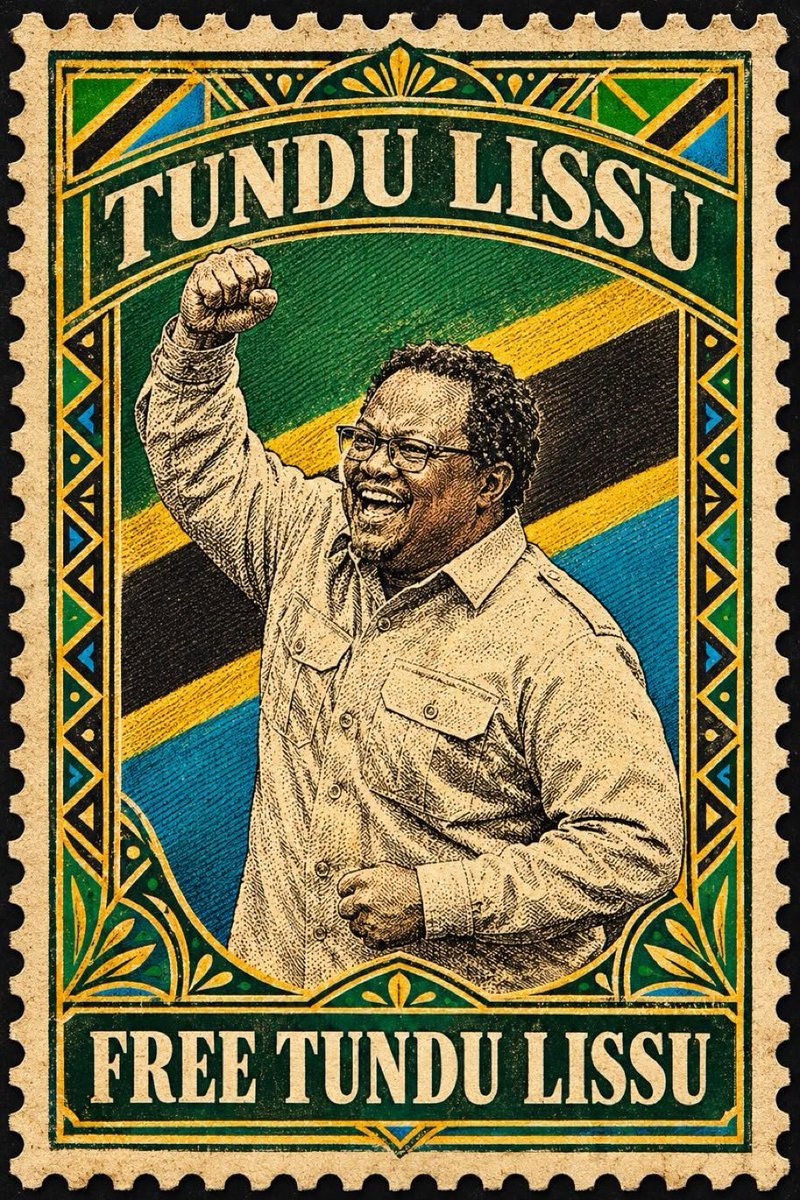
🚨 TANZANIA AT A CROSSROADS: THE CALL TO FREE TUNDU LISSU
For years, Mr. @TunduALissu has stood at the centre of Tanzania’s struggle for political reform, constitutional accountability, and genuine multiparty democracy.
His imprisonment on a treason charge following his calls for electoral reforms raises serious questions about the country’s commitment to political freedom in the East African country.
Mr. @TunduALissu arrested in April 2025 after mobilising CHADEMA around the demand for credible elections, Lissu now faces a charge that carries the death penalty and does not permit bail. His story is inseparable from the risks of political opposition in Tanzania.
In 2017, @TunduALissu survived a brutal assassination attempt in which he was shot sixteen times. Nearly a decade later, he remains a prominent figure in the fight for democratic change, but today that fight continues from behind prison walls.
The question is no longer simply what happens to Mr. Tundu Lissu; it is whether Tanzanians can demand political change without facing the full weight of the state.
His ongoing trial has become a defining test of Tanzania’s democratic institutions. Prosecutors accuse Lissu of seeking to obstruct the 2025 general election through his calls for electoral reform, while his lawyers and supporters argue that the case is politically motivated and intended to weaken the opposition, particularly after @ChademaTZ2 was excluded from the electoral process.
These competing claims must be examined through a fair and transparent judicial process. Yet the broader concern cannot be ignored: when opposition leaders are detained, political participation is restricted, and calls for electoral accountability are treated as criminal acts, public confidence in democratic institutions inevitably suffers.
With a verdict expected around 6 November 2026, the court faces a decision with implications far beyond one individual. It will test the independence of the judiciary, the protection of political expression, and the principle that peaceful demands for democratic reform should not be confused with treason.
Tanzania’s political history carries the promise of independence, national unity, and the right of citizens to shape their own future.
Those ideals mean little, however, if people cannot speak freely, organise peacefully, challenge those in power, or participate in elections they believe are fair.
Lissu’s continued imprisonment has therefore become about much more than his personal freedom. It speaks to the future of political pluralism in Tanzania and to whether the country’s institutions can protect the rights of those who disagree with the government.
A democracy cannot be measured by the absence of criticism, but by how it responds to criticism. Free Tundu Lissu. Let the courts uphold justice, let political differences be settled through democratic means, and let Tanzanians exercise their rights without fear.
The demand is straightforward: democracy must be more than a national ideal recited in speeches. It must be a reality that every Tanzanian can experience in practice.
Today is the 90th anniversary of the Long March. The Long March is not an event by itself but a political concept for the risk that political movements need to take in order to prevail. Our Tricontinental: Institute for Social Research team went to the start of the Long March and walked the first two kilometres as homage to those who did the 38,000 kms till Ya'nan.
Tings Chak wrote for us on the 90th anniversary, https://t.co/Bl80fhRbgV
I will write some day about the political concept of the Long March, which reminds me of Lenin's thoughts on insurrection as an art.
This interview of @AloikinOpoloje has rubbed the sycophants the wrong way. Apparently they did her a favor and released her thinking she will be remorseful. Now the threats are in high gear. I am featured in those threats so many times as the person influencing her. And they add that those influencing us like @kizzabesigye1 and @HEBobiwine already became rich or some nonsense like that. As if Praise has no agency of her own, has no eyes to see the gross human rights violations that she is calling out, as if, like them, she has no brain to tell right from wrong! We will name names soon. https://t.co/Fr85JwuWWL
Good morning #Tanzania
Bado wiki moja kufika #MO29
Kila mwananchi ana sababu ya kuandamana huko aliko kwa dai lake na kwa njia yoyote ya amani!
Kumbukeni Oktoba 29 ni siku ya Kumbukumbu ya wapendwa wetu waliouwawa KIKATILI na hawa waliojiweka madarakani
Pia ni kipindi cha kudai Ukweli, Haki na Uwajibikaji kutoka Serikali haramu iliyojaa dhulma
Na Nov 06 tunaenda kumdai Tundu Lissu
Wewe umejipangaje?
#FreeTunduLissu #TunatokaTena
.@HonJuliusMigos When reporting systems fail, girls pay the price. Behind every number is a girl whose future is at risk. Weak systems cannot hide the reality: teenage pregnancy is robbing our youth of opportunity.
We demand accountability, data transparency, and action to safeguard adolescents. @EduMinKenya
Source: @TheStarKenya
VOCAL Africa stands alongside the families of the Shakahola massacre victims as the court delivers its judgment.
For the survivors and grieving families, finding Paul Mackenzie guilty is only the first step toward justice. They are demanding the harshest possible sentence for those responsible and calling on the government to provide fair compensation for the immense trauma, suffering and devastating loss of their family breadwinners.
A few minutes from now, together with @_PASNET and @luchaRDC we will be talking;
Congo: 30 Years of Impunity — Who Bears Responsibility? 🇨🇩
Amplifying Congolese Voices & Turning Solidarity into Collective Action
This African Human Rights Day to hear Congolese perspectives on urgent developments and demands for civilian protection, accountability and justice.
🎙️ X Space | English & French
8pm 📍
#6MillionVoices #JusticeForCongo #AfricaUnite
Nobel Peace Prize laureate Navi Pillay has called for Israeli Prime Minister Benjamin Netanyahu to stand trial for genocide in Gaza. https://t.co/0b3ECHFEgo
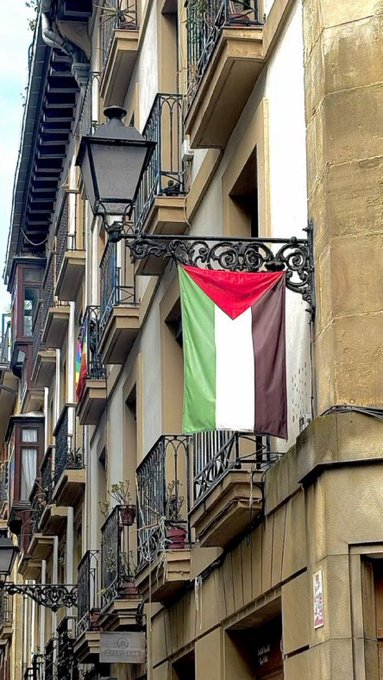
The US gov’t is accused of criminalising humanitarian aid efforts for the Palestinian people, and thus violating the US-Spanish extradition treaty https://t.co/Nt3QFmoxaF