CALL FOR PAPERS: WCS 2026
Rights in the AI Race
📍 Istanbul University | 4–5 December 2026
Does the protection of human rights limit technological expansion, or are legal frameworks being reconfigured to allow innovation at the expense of social and individual rights?
WOLAS Conference Series (WCS) 2026 seeks to foster critical dialogue on AI governance, international law, regulation, accountability, and the future of protecting human dignity in an era of rapid technological transformation.
We invite scholars and experts from germane fields of law, social sciences and technology to ponder and converse over the potential legal implications of the AI race for “human” rights.
📥 Tap the link for the call for papers and submit your abstracts by 12 October 2026: https://t.co/xG1TfFxaND
We as paid a solidarity visit to the WOLAS (@wolasorg ~ Yeryüzü Avukatları Derneği) and discussed regional human rights violations & explored potential future collaborations, including the possibility of working together on joint projects.
Thank you for hosting us.
@aveneskafadar@hsyn_eleutheron
Yeryüzü Avukatları Derneği’ne Uluslarası Hukukçular Birliği olarak bir dayanışma ziyareti gerçekleştirdik. Bölgesel insan hakları ihlalleri ve ortak projelerde çalışma arzusu ile ilerleyen zamanlarda birlikte neler yapılabilir, teati ettik. Bizleri ağırladıkları için kendilerine teşekkür ederiz.
⚖️@TunaHusnu@ugurfaruktuzun
قمنا بزيارة تضامنية إلى "رابطة محامي الأرض" (Yeryüzü Avukatları Derneği). ناقشنا خلال الزيارة انتهاكات حقوق الإنسان في المنطقة، وبحثنا آفاق التعاون المستقبلي، بما في ذلك إمكانية العمل معاً على مشاريع مشتركة. نشكرهم على استضافتنا.
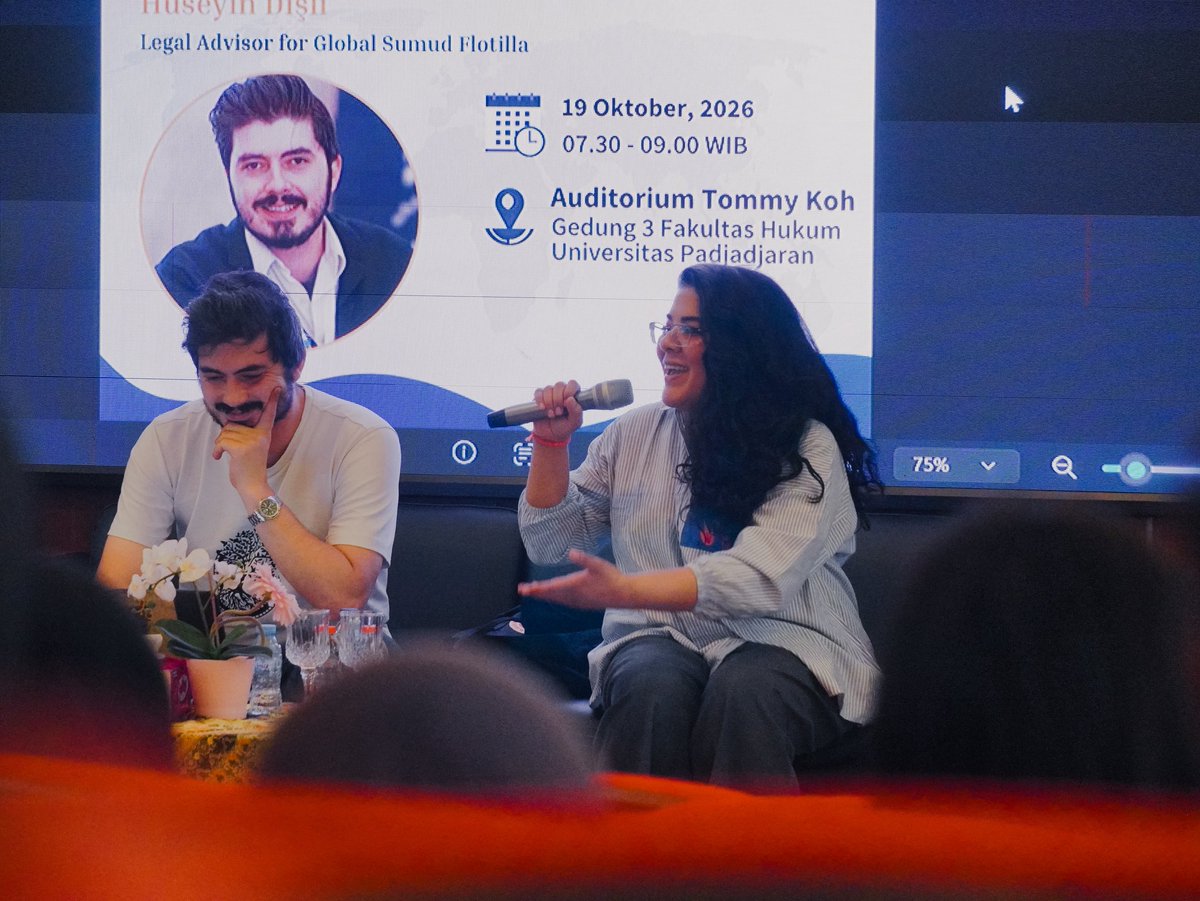
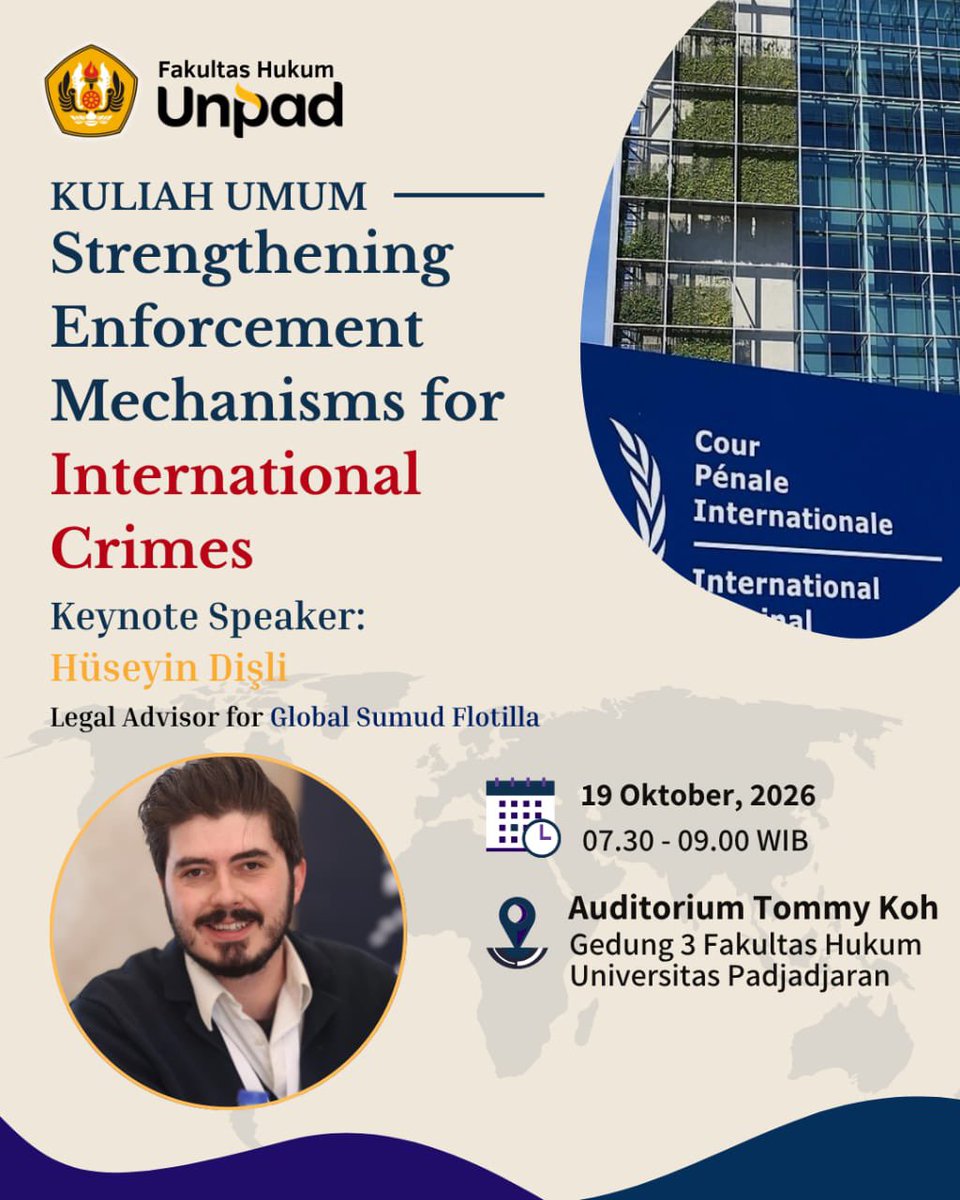
Padjadjaran Üniversitesi Hukuk Fakültesi'nin düzenlediği “Strengthening Enforcement Mechanisms for International Crimes” başlıklı seminere Yönetim Kurulu Başkan Yardımcımız Hüseyin Dişli ve WOLAS Araştırmacısı Şebnem Mayet konuşmacı olarak katıldılar.
Etkinlikte, uluslararası suçlarla mücadelede infaz mekanizmalarının güçlendirilmesi, Uluslararası Ceza Mahkemesi'nin tamamlayıcılık ilkesi ve yargı yetkisi sınırları ele alındı.
--
Our Vice President, Hüseyin Dişli, and Senior WOLAS Researcher Şebnem Mayet attended as speakers at the seminar titled “Strengthening Enforcement Mechanisms for International Crimes”, organised by the Faculty of Law, Padjadjaran University.
The event addressed the strengthening of enforcement mechanisms in combating international crimes, the principle of complementarity of the International Criminal Court, and the limits of jurisdictional authority.
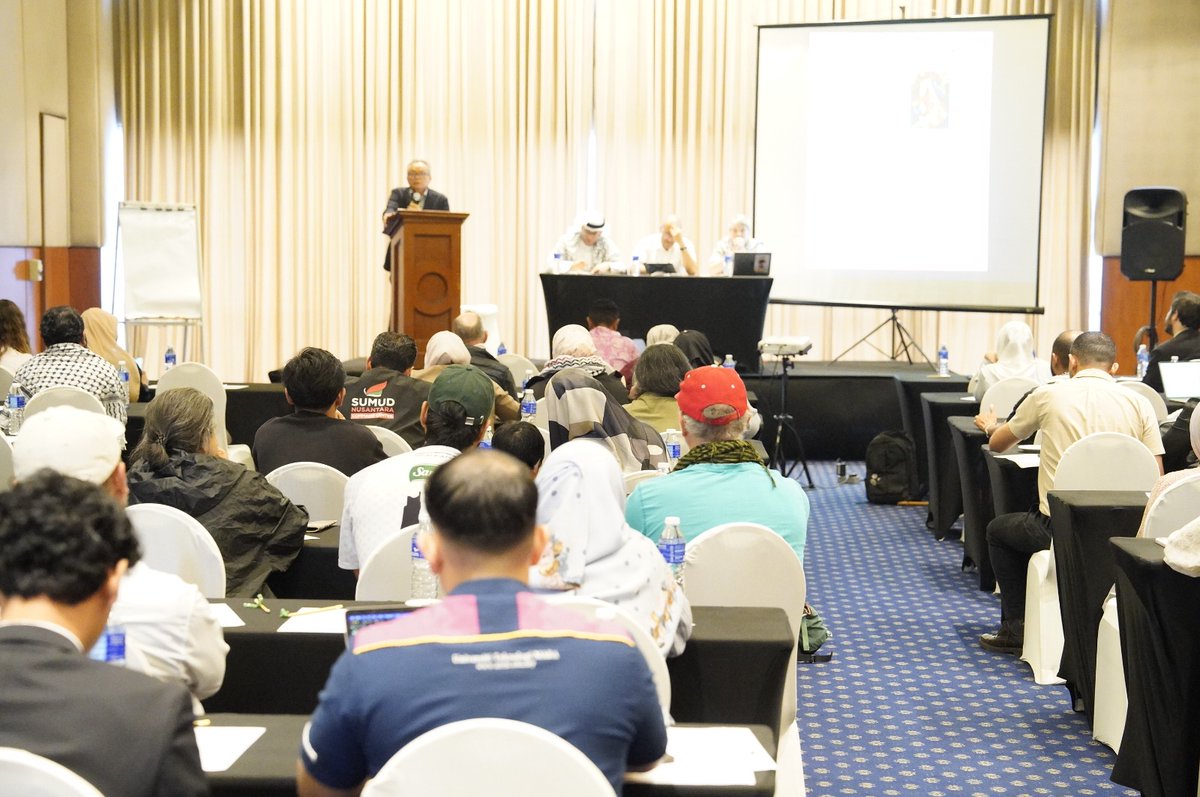
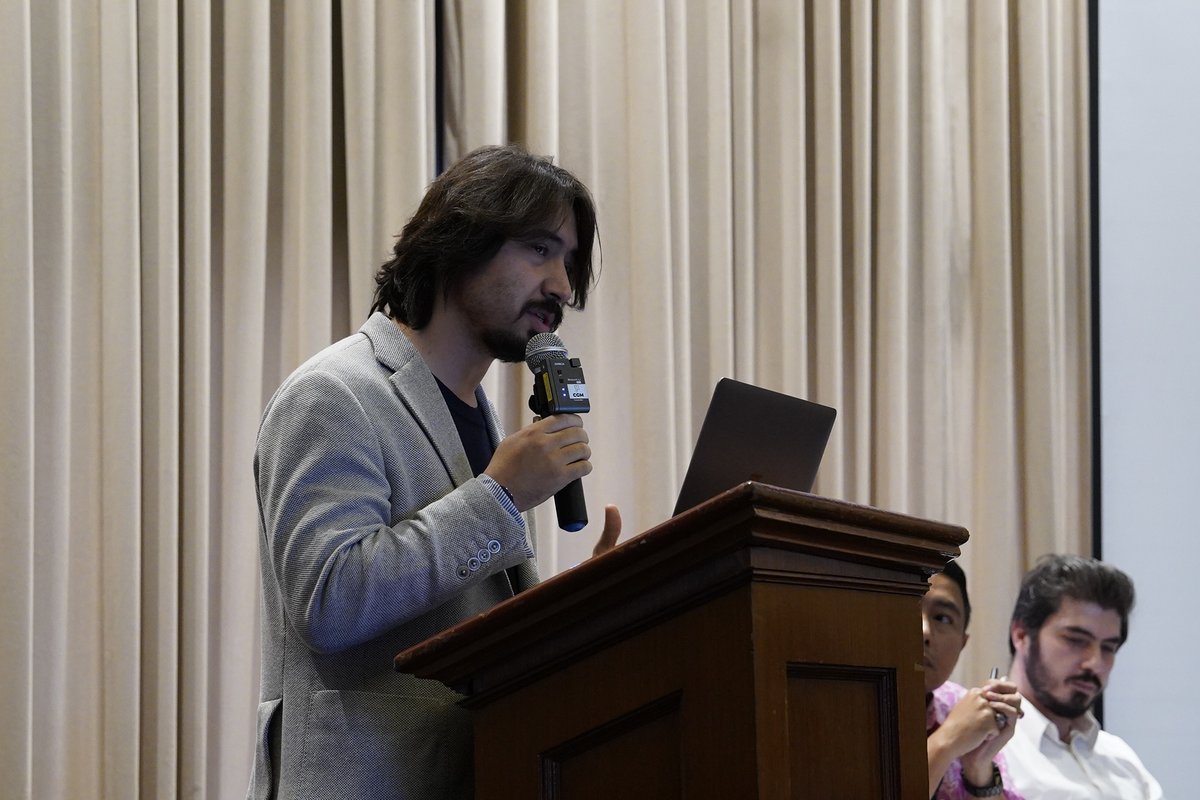
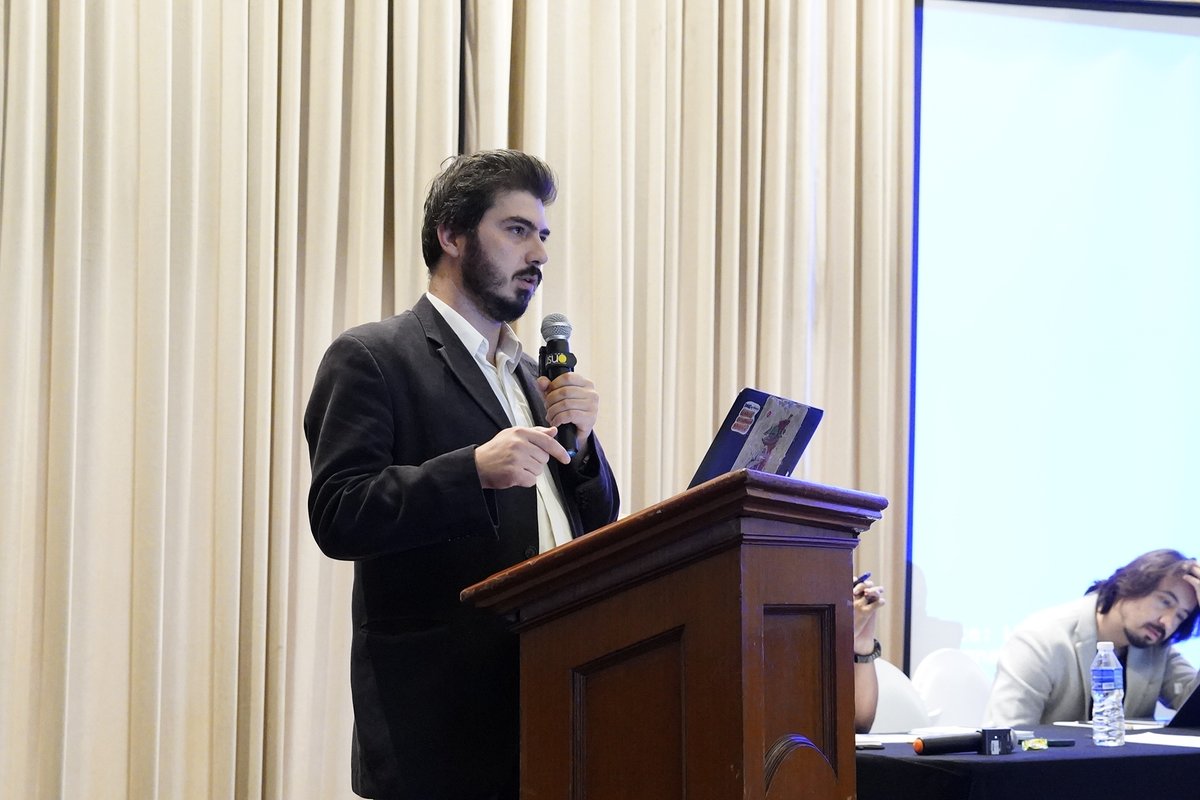
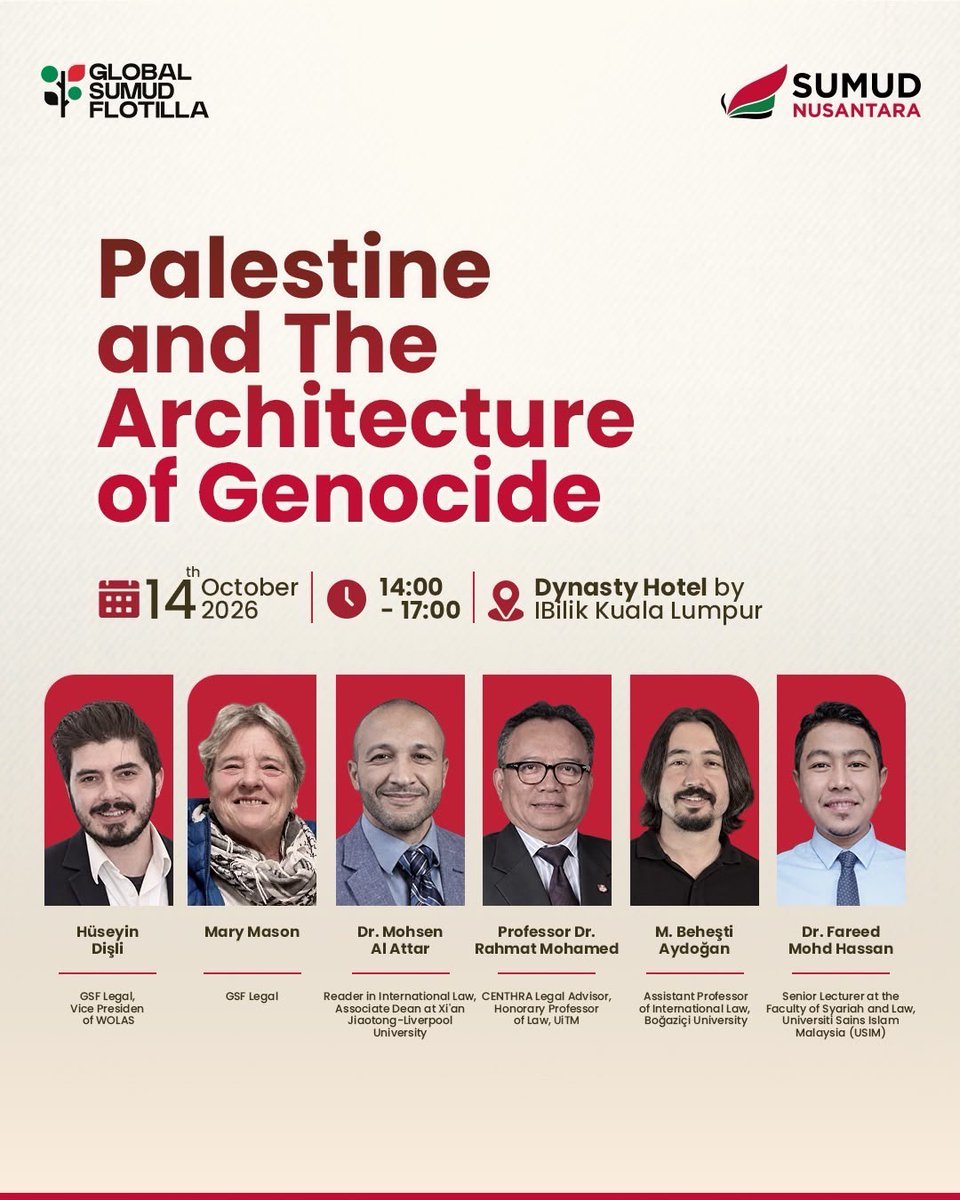
Global Sumud Filosu Genel Kongresi Malezya’nın Kuala Lumpur şehrinde 45 ülkeden 200 delege ile gerçekleşti. Kongre kapsamında organize edilen “Palestine and The Architecture of Genocide” başlıklı sempozyumda Yönetim Kurulu Başkan Yardımcımız Hüseyin Dişli ve Yönetim Kurlu Üyemiz M. Beheşti Aydoğan konuşmacı olarak yer aldılar.
Sempozyum kapsamında Gazze’de işlenen soykırım bir olay olarak değil bir soykırım modeli olarak ve Barış Kurulu da kolonyal tahakkümün modernizasyonu olarak ele alındı.
--
The Global Sumud Flotilla General Congress took place in Kuala Lumpur, Malaysia, with 200 delegates from 45 countries. Organised as part of the congress, our Vice President, Hüseyin Dişli, and Board Member M. Beheşti Aydoğan featured as speakers at the symposium titled “Palestine and The Architecture of Genocide”.
During the symposium, the genocide committed in Gaza was addressed not merely as an isolated incident, but as a systematic model of genocide, whilst the Board of Peace was examined as a modernisation of colonial subjugation.
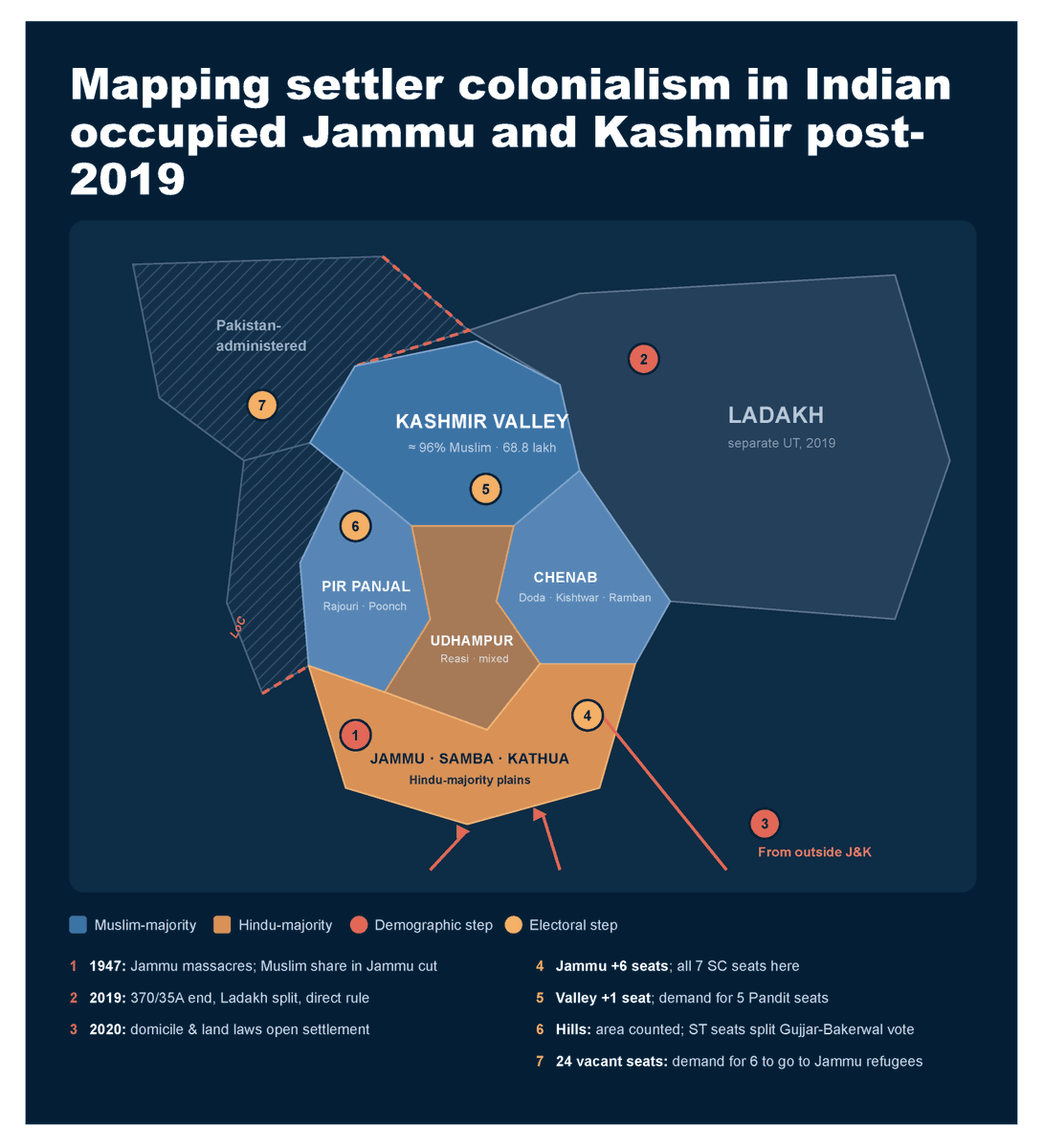
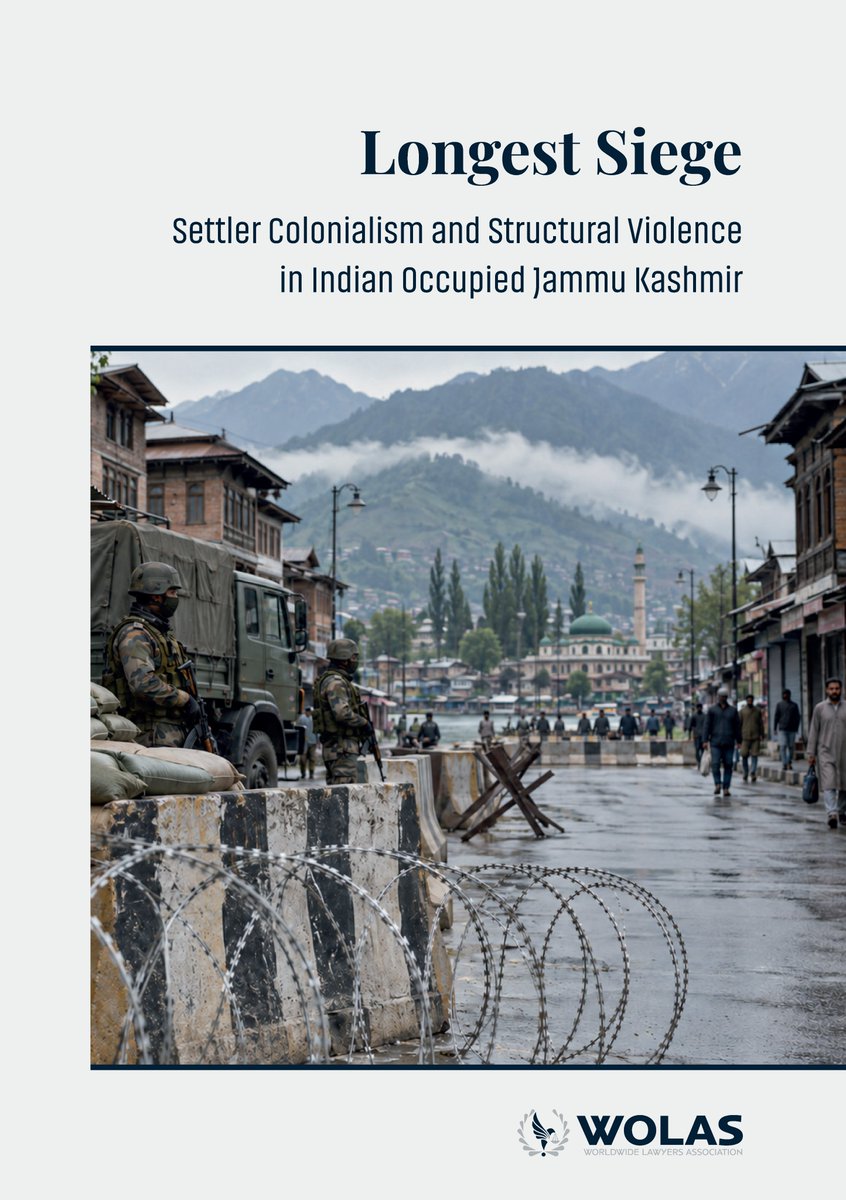
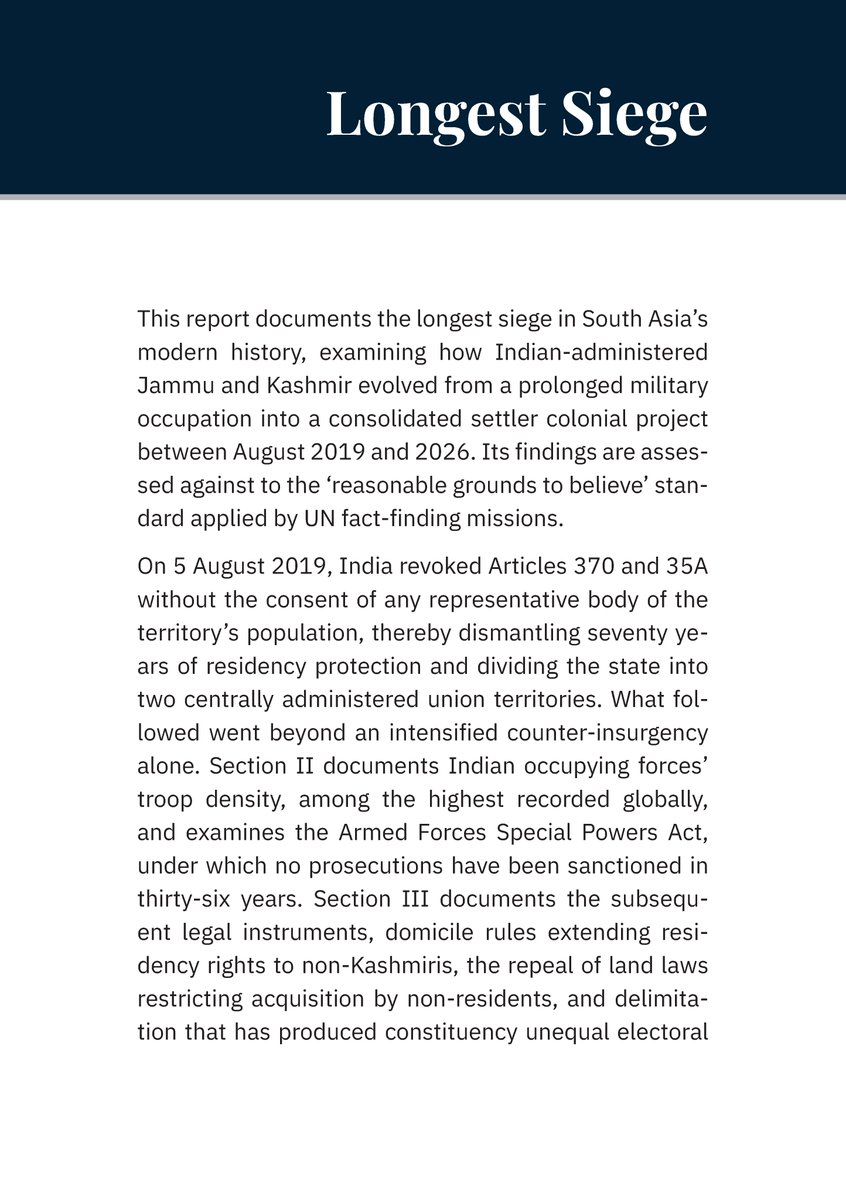
Our legal investigation, Longest Siege: Settler Colonialism and Structural Violence in Indian Occupied Jammu Kashmir, documents how New Delhi transformed a prolonged military occupation into a structural settler-colonial project between August 2019 and 2026.
Grounded in India's own official Gazette notifications, parliamentary records, Supreme Court of India judgements, UN OHCHR reports, and primary interviews from the territory, the evidentiary record establishes that the threshold for war crimes and crimes against humanity has been met:
🔴 890 central laws extended and 205 local laws repealed since August 2019, alongside 83,742 domicile certificates issued to non-residents in breach of Article 49(6) of the Fourth Geneva Convention prohibiting population transfer.
🔴 2.5 million new voters added via temporary-resident suffrage (+30 percent) and electoral boundaries redrawn to skew representation between Hindu-majority and Muslim-majority constituencies to a 4:1 ratio.
🔴 Over 900,000 armed personnel deployed under the Armed Forces Special Powers Act (AFSPA), with zero prosecutions sanctioned by the central government in 36 years.
🔴 26,129 arbitrary arrests under the PSA and UAPA (2019 to 2026), where annual conviction rates sit below 1 percent while chargesheets of up to 15,000 pages turn pre-trial detention into the punishment itself.
🔴 Punitive explosive demolitions of civilian homes without trial (April 2025) and the May 2026 order to demolish all structures within 15 km of the Line of Control, violating Article 33 of the Fourth Geneva Convention.
🔴 4,249 books withdrawn from universities and libraries by September 2026, human rights archives seized, up to 200 passports of journalists and lawyers suspended, and Eid prayers at Srinagar's Jamia Masjid barred for 8 consecutive years.
🔴 Material and doctrinal convergence with Israel, including Heron UAVs, Tavor rifles, Pegasus spyware targeting journalists, West Bank-style biometric household tracking, and corroborated testimonies submitted to the UK Metropolitan Police War Crimes Unit regarding Israeli operatives participating in interrogations in Kashmir.
Where peremptory norms of international law are violated, no state can claim immunity behind domestic jurisdiction. WOLAS is initiating universal jurisdiction mechanisms in third-state courts and advancing 7 legal avenues that do not require Indian state consent.
Worldwide Lawyers Association labels New Delhi rule in India-administered Kashmir as “settler colonialism” akin to Israeli occupation of Palestine, and announces plans to file universal-jurisdiction cases overseas against Indian officials
https://t.co/kkqkRGhupT
📄 Read the full chapter-by-chapter breakdown in our detailed post below, and download the complete 95-page report (English) at https://t.co/wNzIrE2OL0
🖇️Details: https://t.co/QSrLK3gZP2
NEW REPORT | Longest Siege: Settler Colonialism and Structural Violence in Indian Occupied Jammu Kashmir
The Worldwide Lawyers Association (WOLAS) has published its 95-page legal report examining how Indian-administered Jammu and Kashmir evolved from a prolonged military occupation into a consolidated settler colonial project between August 2019 and 2026. Released on the 79th anniversary of the 27 October 1947 military intervention that ended Jammu and Kashmir's seventy-three days of post-British independence, the report assesses seven years of legal, demographic, and institutional transformation against the reasonable grounds to believe standard applied by United Nations fact-finding missions.
Where peremptory norms of international law are engaged, including the prohibitions on torture, war crimes, and crimes against humanity, states cannot insulate their conduct from international scrutiny by characterizing violations committed under their control as matters of domestic law. The findings in this report rest on primary documentary records, official Gazette of India notifications, Indian parliamentary disclosures, judgements of the Supreme Court of India, United Nations OHCHR and Special Procedures communications, cross-verified quantitative datasets from the Legal Forum for Kashmir (LFK) and the Kashmir Law and Justice Project (KLJP), and five in-depth interviews with Kashmiri legal practitioners, academics, journalists, and families of political prisoners.
Key Findings (2019 to 2026)
•Legislative and Demographic Engineering: On 5 August 2019, India revoked Articles 370 and 35A without the consent of any representative body of the territory's population, dismantling seventy years of residency protection and dividing the state into two centrally administered union territories. Since 2019, 890 central laws have been extended to the territory while 205 former state laws were repealed and 130 modified. Under the Domicile Rules introduced in April 2020, 83,742 domicile certificates were issued to individuals who were not previously state subjects, according to figures presented to the Legislative Assembly in April 2025. Combined with the repeal of agrarian land protections, military strategic area designations, and the approval of segregated housing colonies in Srinagar and Budgam since 2022, these measures breach Article 49(6) of the Fourth Geneva Convention and Article 8(2)(b)(viii) of the Rome Statute, which prohibit an occupying power from transferring parts of its own civilian population into occupied territory.
•Electoral Malapportionment: In August 2022, voting rights were extended to temporary residents, including military personnel and migrant workers, adding an estimated 2.5 million voters and expanding the electorate by 30 percent. Subsequent constituency delimitation reconfigured electoral boundaries to produce sharp disparities in voter weight, with the ratio of representation between Hindu-majority and Muslim-majority constituencies reaching four to one.
•Militarisation, Impunity, and Collective Punishment: With over 900,000 armed military, paramilitary, and intelligence personnel, the territory has the highest soldier-to-civilian ratio recorded globally. Under the Armed Forces Special Powers Act (AFSPA), the central government has failed to sanction a single prosecution of armed forces personnel in thirty-six years of the statute's operation (rejecting 47 of 50 requests, with 3 pending), supplying the statutory policy element required under Article 7 of the Rome Statute. Between 2019 and June 2024, 1,363 Cordon and Search Operations and the destruction of 1,180 civilian homes were documented. Following the April 2025 Pahalgam attack, military forces used explosives to demolish the family homes of unconvicted suspects without judicial warrant or due process, and on 27 May 2026 India's Home Minister ordered the demolition of all construction within 15 kilometres of the Line of Control, in breach of Article 33 of the Fourth Geneva Convention prohibiting collective punishment.
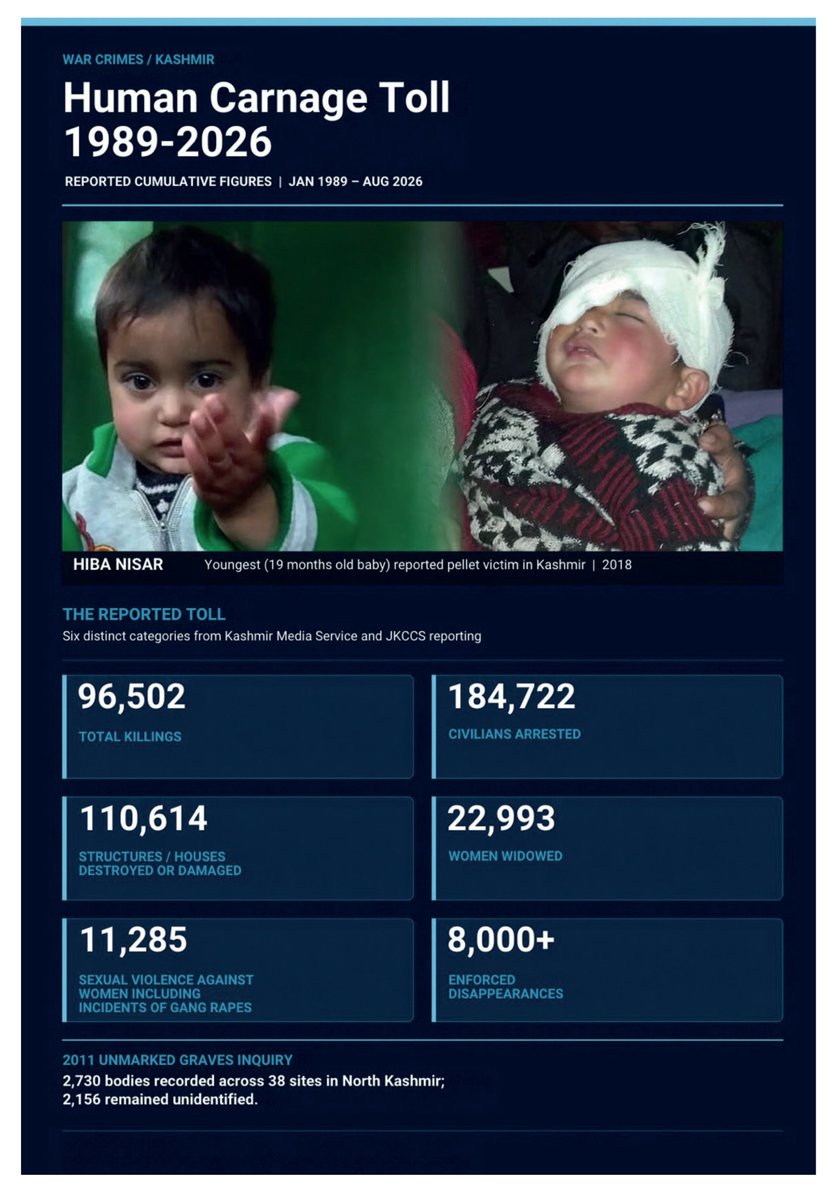
•Punitive Legality and Erasure of Political Leadership: Between 2019 and 2026, 26,129 arbitrary arrests were documented under the Public Safety Act (PSA) and the Unlawful Activities Prevention Act (UAPA), against a broader cumulative record between January 1989 and August 2026 of 96,502 killings, 184,722 civilian arrests, 110,614 structures destroyed or damaged, over 8,000 enforced disappearances, and 2,730 bodies recorded across 38 unmarked grave sites in North Kashmir. As recorded by the Supreme Court of India in May 2026 (Syed Iftikhar Andrabi v. NIA, Jammu), the annual UAPA conviction rate in Jammu and Kashmir remained below 1 percent between 2019 and 2023 (dropping to zero in 2019), while chargesheets running from 1,000 to 15,000 pages turn prolonged pre-trial detention into the sanction itself. Since 2019, four senior political leaders (Syed Ali Shah Geelani, Muhammad Ashraf Sehrai, Altaf Ahmad Shah, and Ghulam Muhammad Bhat) have died in custody or prolonged detention, and close to two dozen pro-self-determination organisations have been banned under the UAPA. In March 2026, 65-year-old Asiya Andrabi was sentenced to three concurrent life terms and co-accused Sofi Fahmida and Nahida Nasreen to 30 years each for political expression despite being acquitted of all violence-related charges, while political prisoners including Dr. Ashiq Hussain Faktoo (held since 1993), Masrat Alam Bhat, Shabir Ahmad Shah, and Yasin Malik remain subjected to prolonged incarceration.
•Persecution of Human Rights Defenders and Institutional Displacement of the Bar: Local human rights monitoring bodies, notably the Jammu Kashmir Coalition of Civil Society (JKCCS) and the Association of Parents of Disappeared Persons (APDP), were raided by the National Investigation Agency and had their operational space dismantled. Defenders Khurram Parvez and Irfan Mehraj were held for 1,703 and 1,219 days respectively before receiving conditional bail in July 2026 that prohibits them from travelling to Kashmir, while Mohammad Ahsan Untoo was re-arrested under the PSA in September 2026 despite acute liver damage. In June 2024, authorities banned the scheduled elections of the Jammu and Kashmir High Court Bar Association (JKHCBA) and formally recognised a rival lawyers' body within four days, while former 20-time JKHCBA President Mian Abdul Qayoom, who has one remaining kidney, was denied medical bail again in December 2025 and February 2026.
•Surveillance, Censorship, Passport Confiscation, and Archival Erasure: Following the 2019 to 2020 communications shutdown, authorities mandated commercial CCTV networks and introduced the household-level biometric JK Family ID database. On 23 September 2026, the Higher Education Department informed the Legislative Assembly that 4,249 books had been withdrawn from colleges and libraries across the territory (94 percent from Kashmir division), following an August 2025 order forfeiting 25 scholarly works on Kashmir and the erasure or confiscation of newspaper and human rights archives. Between 98 and 200 passports belonging to journalists (including Pulitzer laureate Sanna Irshad Mattoo), academics, and lawyers have been suspended or blocked via no-fly lists, while Eid prayers at Srinagar's central Jamia Masjid and Eidgah have been barred for eight consecutive years through May 2026. Over the same period, authorities have used state-choreographed diplomatic visits, the May 2023 G20 Tourism Working Group meeting in Srinagar (boycotted by China, Türkiye, Saudi Arabia, and Egypt), tourism promotion, and state-aligned cinema to advance a narrative of normalisation.
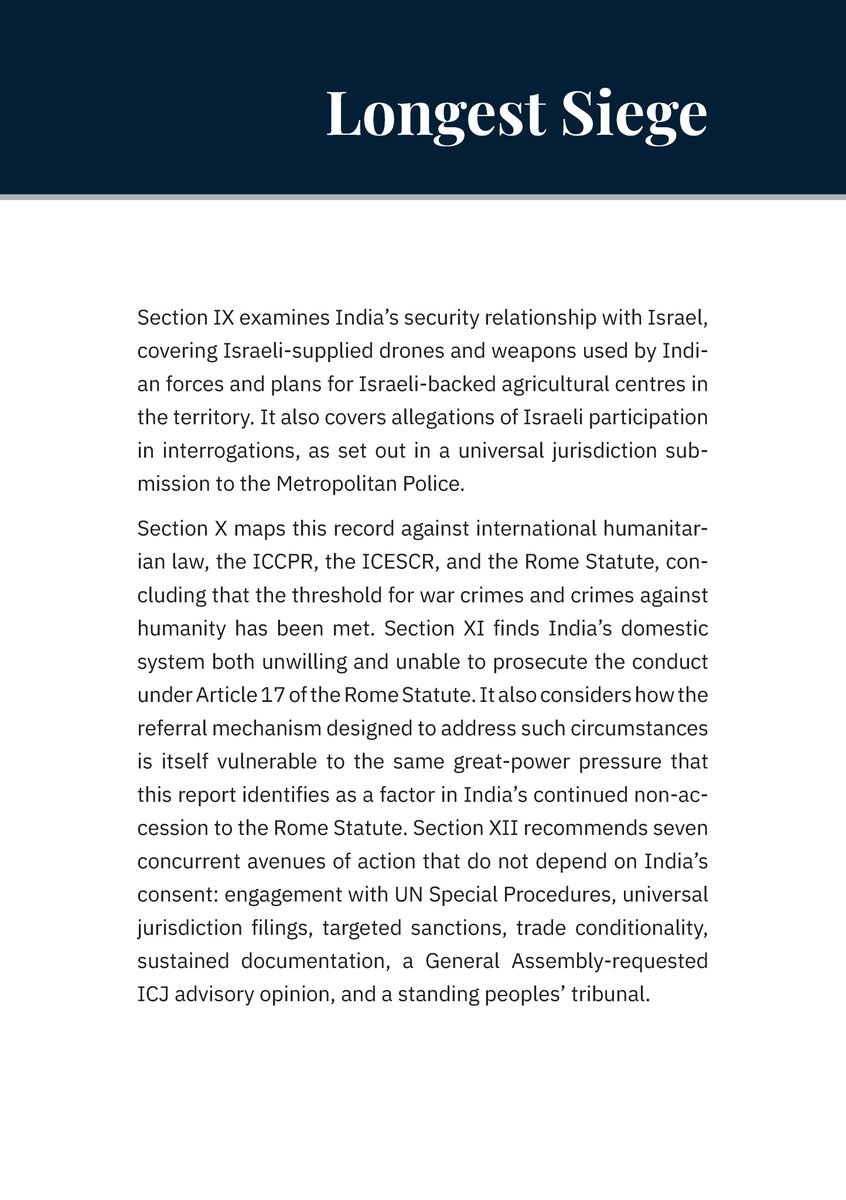
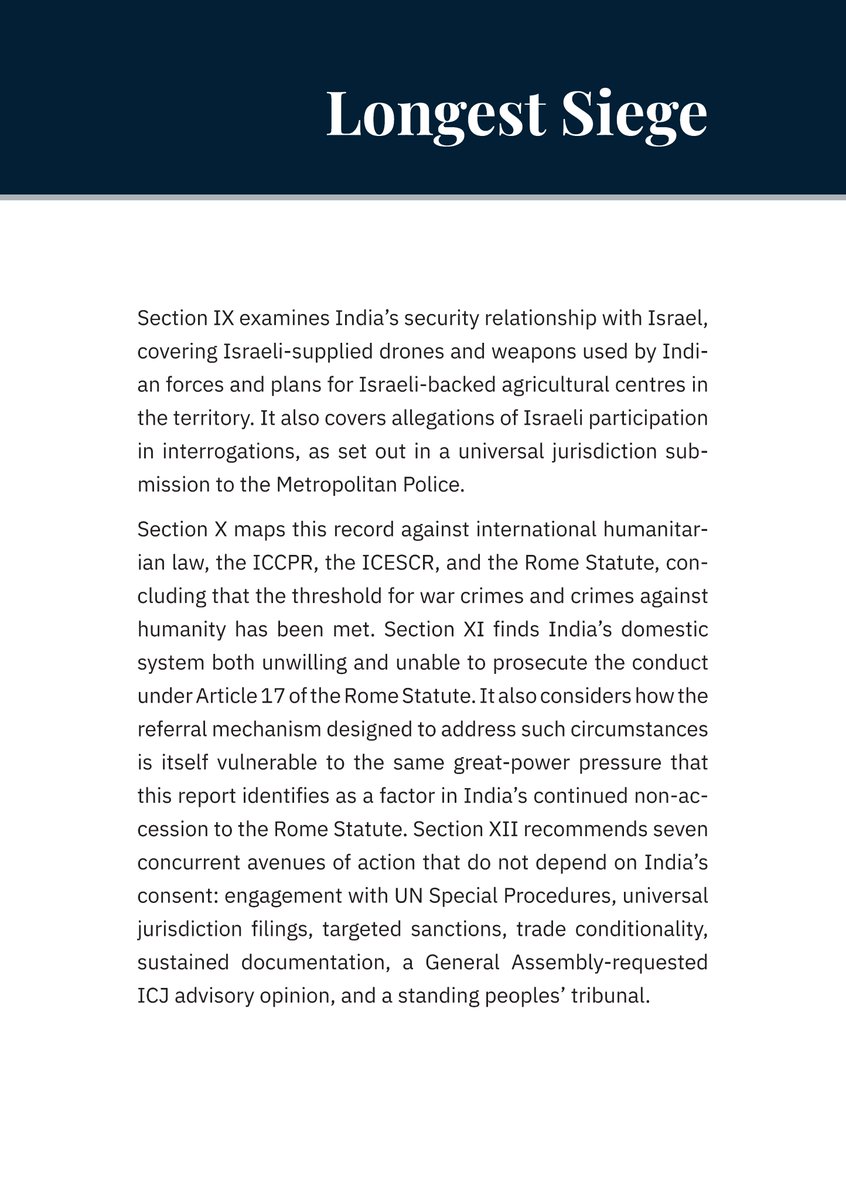
•The India and Israel Security Relationship: The report examines the defence, intelligence, and doctrinal relationship between India and Israel in Kashmir, covering Indian forces' deployment of Israeli Heron UAVs, Tavor rifles, and Pegasus spyware targeting Kashmiri journalists and political figures, household tracking comparable to the West Bank Blue Wolf database, plans for Israeli-backed agricultural centres in the territory, and witness testimonies compiled in a January 2022 universal jurisdiction filing to the UK Metropolitan Police War Crimes Unit alleging the participation of Israeli intelligence operatives in interrogations and torture in Kashmir.
Accountability and Recommendations
Mapping this evidentiary record against the Geneva Conventions, the ICCPR, the ICESCR, and the Rome Statute, the report concludes that the threshold for war crimes and crimes against humanity has been met, and that India's domestic legal system is both unwilling and unable to prosecute these offences genuinely under Article 17 of the Rome Statute.
WOLAS recommends seven concurrent avenues of action that do not depend on India's consent:
1.Sustained engagement with UN Special Procedures and, where Human Rights Council composition permits, the establishment of an independent commission of inquiry.
2.Universal jurisdiction filings in third states against named commanders and officials, based on specific documented incidents.
3.Targeted sanctions against named officials responsible for conduct shielded by the AFSPA, imposed unilaterally by states willing to act.
https://t.co/j1cgt3FEFQ and arms-transfer conditionality, parliamentary scrutiny of defence exports, and enforcement of existing corporate due-diligence obligations.
5.Continued documentation to international corroboration standards to build the evidentiary record for future accountability processes.
6.A UN General Assembly request for an International Court of Justice (ICJ) advisory opinion, bypassing Security Council referral and Indian consent, on the lawfulness of the revocation of Article 370 and the compatibility of the domicile regime with Article 49(6) of the Fourth Geneva Convention.
7.A standing peoples' tribunal process convened regularly to counter systemic invisibilisation.
📄 The full report is available at: https://t.co/c0tEiIEdwH
#Kashmir #JammuAndKashmir #LongestSiege #InternationalLaw #HumanRights #WOLAS
"En Uzun Abluka" Raporumuzu Açıkladık: "Keşmir Basit Bir İç Güvenlik Sorunu Değil, Planlı Bir Mülksüzleştirme ve İlhak Sürecidir"
Keşmirlilerin "Kara Gün" olarak andığı 27 Ekim 1947 işgalinin 79. yıl dönümü arifesinde, "En Uzun Abluka: Hindistan İşgali Altındaki Cammu Keşmir’de Yerleşimci Sömürgecilik ve Yapısal Şiddet" başlıklı 95 sayfalık raporumuzu İstanbul’da düzenlenen basın toplantısıyla kamuoyuna duyurduk.
📌 Yönetim Kurulu Başkanımız Av. Enes Kafadar, Anadolu ile Keşmir arasındaki tarihi ve manevi bağlara, Mekke Ortak Savunma Antlaşması çerçevesindeki bölgesel güvenlik risklerine ve Batı Şeria ile Gazze’deki sindirme yöntemlerinin Keşmir’e taşınmasına dikkat çekerek; raporun uluslararası yargı mekanizmalarını harekete geçirecek stratejik bir delil dosyası olduğunu ve bölgedeki savaş suçlarının cezasız kalmaması için tüm hukuki süreçlerin takipçisi olacağımızı vurguladı.
📌 Yönetim Kurulu Üyemiz Dr. Hasan Basri Bülbül, 2019 sonrasında Dördüncü Cenevre Sözleşmesi’ni ihlal eden demografik mühendislik uygulamalarını, 900 bini aşan askeri yoğunluğu, 36 yıllık kovuşturma zırhını, 26.129 keyfi gözaltıyı, toplatılan 4.249 kitabı ve Hindistan’ın onayını gerektirmeyen 7 somut uluslararası hukuk mekanizmasını sundu.
📌 Toplantımız, bölgeye dair doğrudan saha tecrübesi bulunan katılımcıların değerlendirmeleri ve soru-cevap oturumuyla tamamlandı.
Katılım gösteren tüm basın mensuplarına, meslektaşlarımıza, akademisyenlere ve hak savunucularına teşekkür ederiz.
🔗 Raporun Türkçe ve İngilizce tam metni için: https://t.co/JfQrOfMm1q
Worldwide Lawyers Association labels New Delhi rule in India-administered Kashmir as “settler colonialism” akin to Israeli occupation of Palestine, and announces plans to file universal-jurisdiction cases overseas against Indian officials
https://t.co/kkqkRGhupT
❝Keşmir semalarındaki insansız hava araçları, İsrail yapımı Heronlar. Yine sokaklarda halka doğrultulan silahlar, İsrail menşeli Tavor tüfekleri. Avukatlar, insan hakları savunucuları ve gazeteciler, İsrail menşeli Pegasus casus yazılımı ile dinlenmektedir❞
🔴 Yeryüzü Avukatları Derneği, Cammu Keşmir'deki insan hakları ihlallerine ilişkin raporunu açıkladı
https://t.co/j9rU6PPcbu
Yeryüzü Avukatları Derneği’nin Keşmir raporu, Hindistan’ın İsrail yapımı Heron İHA’ları, Tavor tüfekleri ve Pegasus casus yazılımını kullandığını ortaya çıkardı.
🖊 @neslyhanonder
https://t.co/7tPFjeDPRw
"En Uzun Abluka" Raporumuzu Açıkladık: "Keşmir Basit Bir İç Güvenlik Sorunu Değil, Planlı Bir Mülksüzleştirme ve İlhak Sürecidir"
Keşmirlilerin "Kara Gün" olarak andığı 27 Ekim 1947 işgalinin 79. yıl dönümü arifesinde, "En Uzun Abluka: Hindistan İşgali Altındaki Cammu Keşmir’de Yerleşimci Sömürgecilik ve Yapısal Şiddet" başlıklı 95 sayfalık raporumuzu İstanbul’da düzenlenen basın toplantısıyla kamuoyuna duyurduk.
📌 Yönetim Kurulu Başkanımız Av. Enes Kafadar, Anadolu ile Keşmir arasındaki tarihi ve manevi bağlara, Mekke Ortak Savunma Antlaşması çerçevesindeki bölgesel güvenlik risklerine ve Batı Şeria ile Gazze’deki sindirme yöntemlerinin Keşmir’e taşınmasına dikkat çekerek; raporun uluslararası yargı mekanizmalarını harekete geçirecek stratejik bir delil dosyası olduğunu ve bölgedeki savaş suçlarının cezasız kalmaması için tüm hukuki süreçlerin takipçisi olacağımızı vurguladı.
📌 Yönetim Kurulu Üyemiz Dr. Hasan Basri Bülbül, 2019 sonrasında Dördüncü Cenevre Sözleşmesi’ni ihlal eden demografik mühendislik uygulamalarını, 900 bini aşan askeri yoğunluğu, 36 yıllık kovuşturma zırhını, 26.129 keyfi gözaltıyı, toplatılan 4.249 kitabı ve Hindistan’ın onayını gerektirmeyen 7 somut uluslararası hukuk mekanizmasını sundu.
📌 Toplantımız, bölgeye dair doğrudan saha tecrübesi bulunan katılımcıların değerlendirmeleri ve soru-cevap oturumuyla tamamlandı.
Katılım gösteren tüm basın mensuplarına, meslektaşlarımıza, akademisyenlere ve hak savunucularına teşekkür ederiz.
🔗 Raporun Türkçe ve İngilizce tam metni için: https://t.co/JfQrOfMm1q
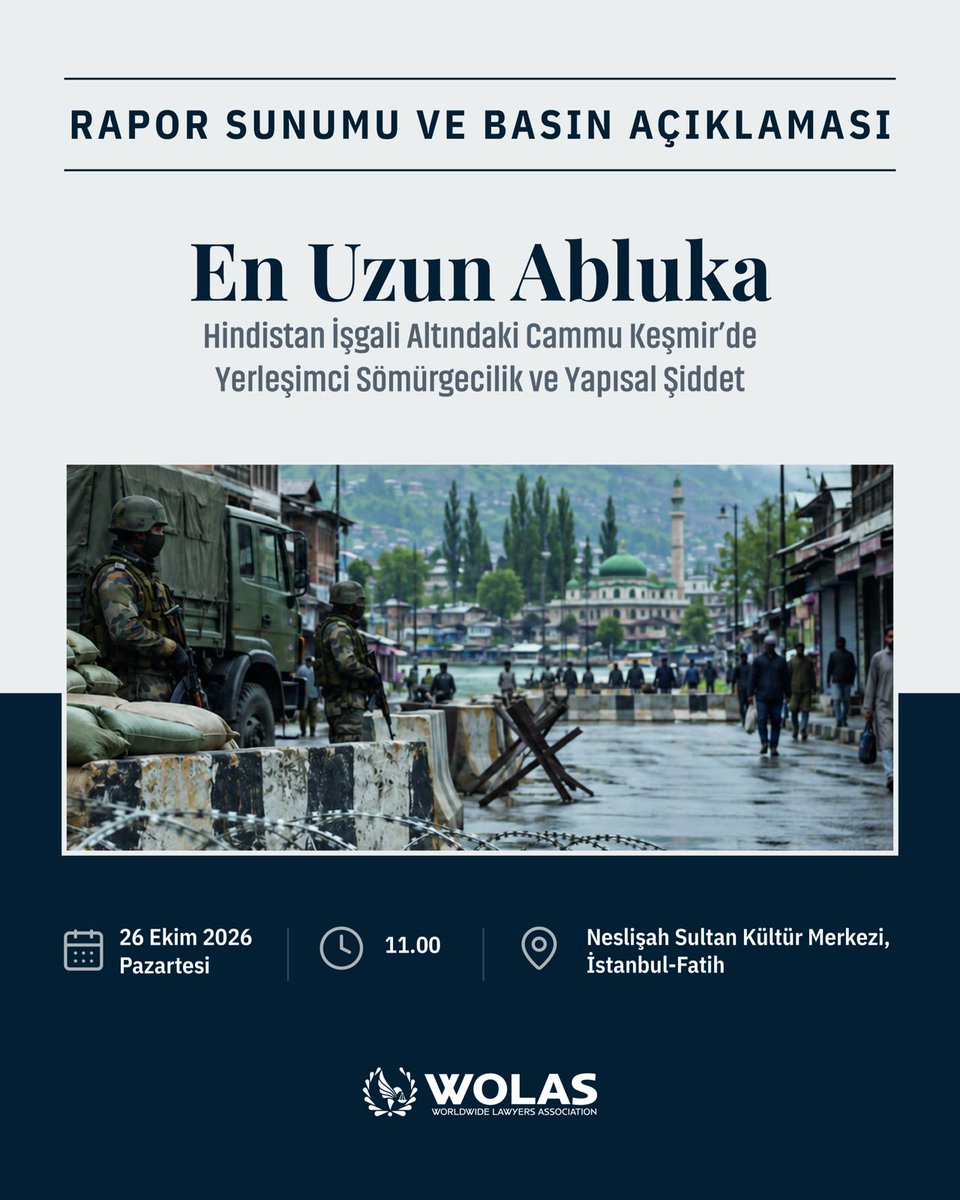
Bugün saat 11.00’de Fatih Neslişah Sultan Kültür Merkezi’ndeyiz.
Keşmir’de "Kara Gün" olarak anılan 27 Ekim 1947 işgalinin 79. yıl dönümü arifesinde, "En Uzun Abluka: Hindistan İşgali Altındaki Cammu Keşmir’de Yerleşimci Sömürgecilik ve Yapısal Şiddet" raporumuzu kamuoyuna açıklıyoruz.
Rapor sunumunun ardından bölgeye dair doğrudan saha tecrübesi bulunan konuşmacılarımızın tanıklıklarını dinleyeceğimiz ve uluslararası hukuk mekanizmalarını tartışacağımız programımız; basın mensuplarının, hukukçuların, araştırmacıların ve tüm kamuoyunun katılımına açıktır.
📍 Yer: Neslişah Sultan Kültür Merkezi (Fatih / İstanbul)
🕚Saat: 11.00 – 12.00
Cezasızlık Duvarı Nasıl Aşılacak? (Açık Davet) Raporumuz, savaş suçları ve insanlığa karşı suçlar eşiğinin aşıldığı Cammu Keşmir’de Hindistan’ın onayına ihtiyaç duyulmadan işletilebilecek 7 somut uluslararası hukuk mekanizmasını ortaya koyuyor.
Dr. Hasan Basri Bülbül’ün rapor sunumu, Av. Enes Kafadar’ın açılış konuşması ve bölgeye dair doğrudan tecrübesi bulunan katılımcıların tanıklıklarıyla gerçekleştireceğimiz lansmana tüm ilgilileri bekliyoruz.
🗓️ Yarın (26 Ekim Pazartesi) | Saat: 11.00
📍 Neslişah Sultan Kültür Merkezi, Fatih / İstanbul
Dünya kamuoyu benzer işgalleri konuşurken, Güney Asya’da 79 yıldır süren bir işgal sessizce "yerleşimci sömürgeciliğe" dönüştürüldü.
WOLAS olarak aylar süren saha mülakatları ve hukuki incelemeler sonucunda hazırladığımız 95 sayfalık "En Uzun Abluka: Hindistan İşgali Altındaki Cammu Keşmir’de Yerleşimci Sömürgecilik ve Yapısal Şiddet" raporumuzu yarın 11:00’de (26 Ekim Pazartesi) İstanbul’da açıklıyoruz.
Raporda neler var? 🧵👇
Hindistan-İsrail Güvenlik Ekseni ve Yöntem Aktarımı: Raporda, Yeni Delhi’nin bölgedeki gözetim ve yerleşim mimarisinde İsrail ile kurduğu savunma ve istihbarat ilişkileri ayrı bir başlıkta inceleniyor:
⚫️Hane bazlı biyometrik fişleme ve gazetecileri hedef alan Pegasus casus yazılımı,
⚫️Arazi ve demografi hedeflerini perdeleyen İsrail destekli tarım merkezleri,
⚫️Londra Polis Teşkilatı Savaş Suçları Birimi’ne yapılan evrensel yargı yetkisi başvurusunda yer alan, İsrailli istihbarat görevlilerinin Keşmir’deki sorgu süreçlerine bizzat katıldığına dair tanıklıklar.