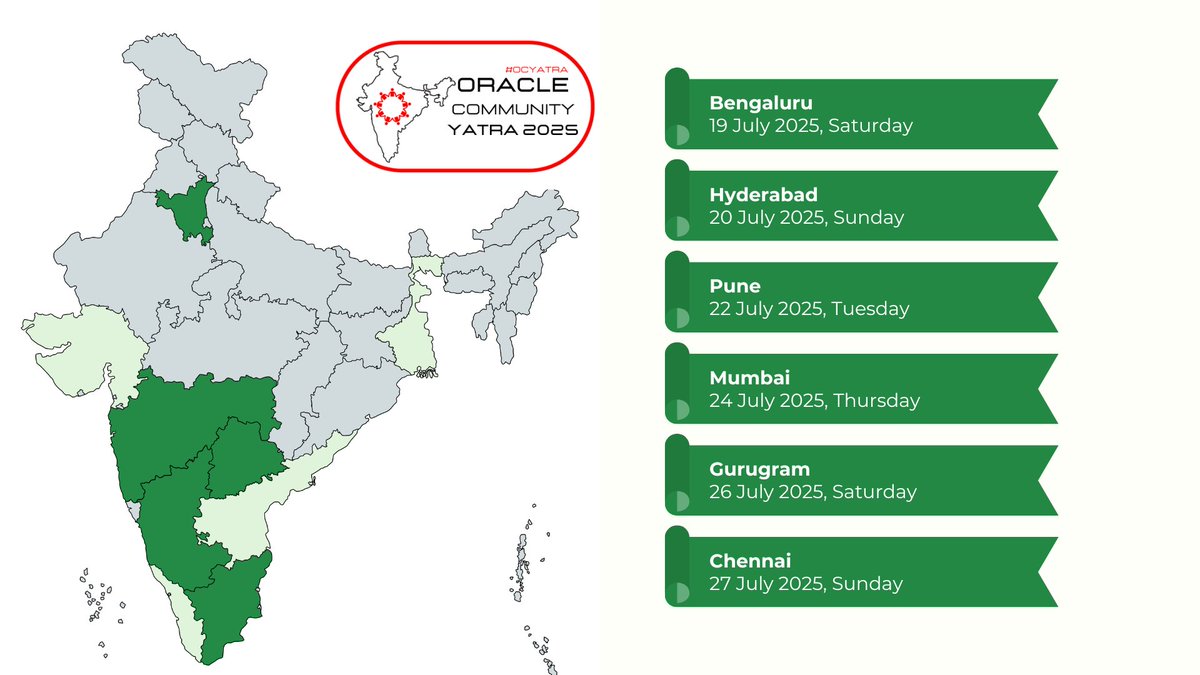
🚀 Oracle Community Yatra 2025 is Coming to a City Near You! 🌍🎤
Get ready for an incredible journey of learning, networking, and innovation! Oracle Community Yatra 2025 is set to bring top Oracle experts, real-world insights, and cutting-edge technology discussions to cities across the region.
📅 Book your calendars!
🔔 Watch this space for exciting announcements!
https://t.co/YdOCxibzDG
Join us as we explore the latest in Oracle Cloud, Database, Multicloud, AI, and more! Don't miss this opportunity to connect with industry leaders, grow your knowledge, and be part of the Oracle community like never before.
@Oracle@oracleugs@oracleace@OracleDevs@oracledevcomm@OracleDatabase@OracleCloud@googlecloud@awscloud@Azure
#aioug #OCYatra25 #Oracle #Community #CloudCommunity #TechConference #OracleCommunity #TechYatra
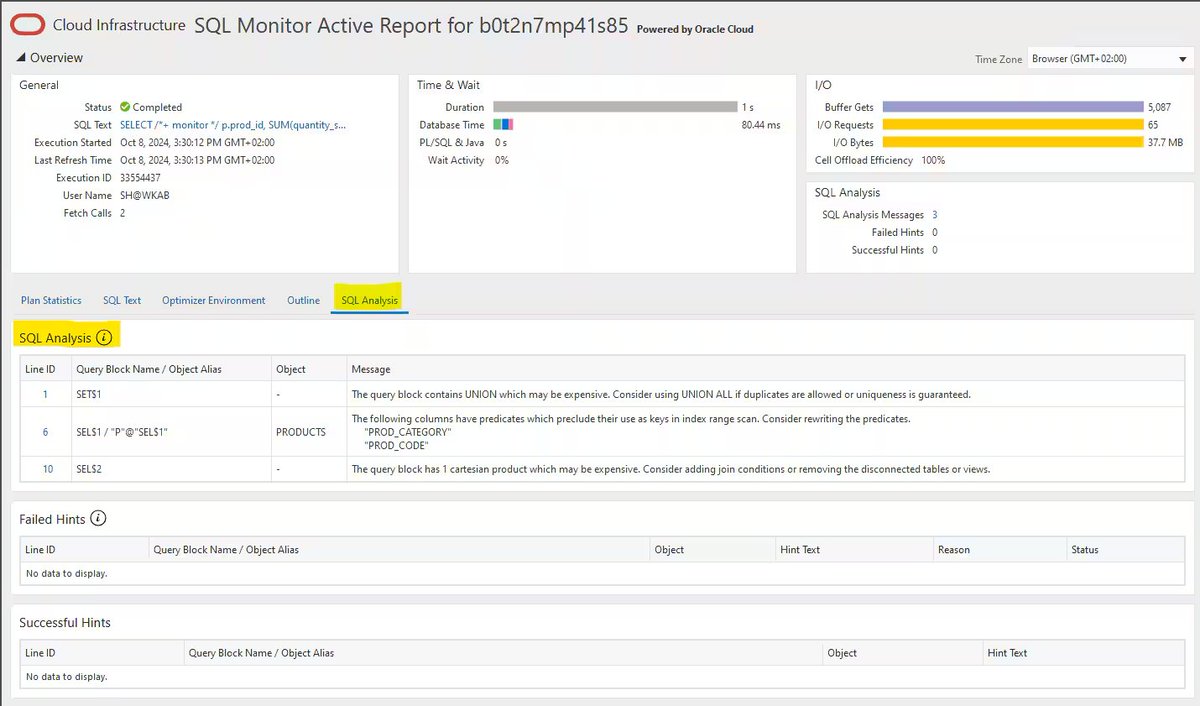
A pretty recent summary article from Oracle on enabling and getting SQL monitoring reports in various ways (including historical captures):
Real-Time SQL Monitoring: a MUST for SQL Tuning
https://t.co/S749xeCO4U
(I'm working on something new & related too ;-)
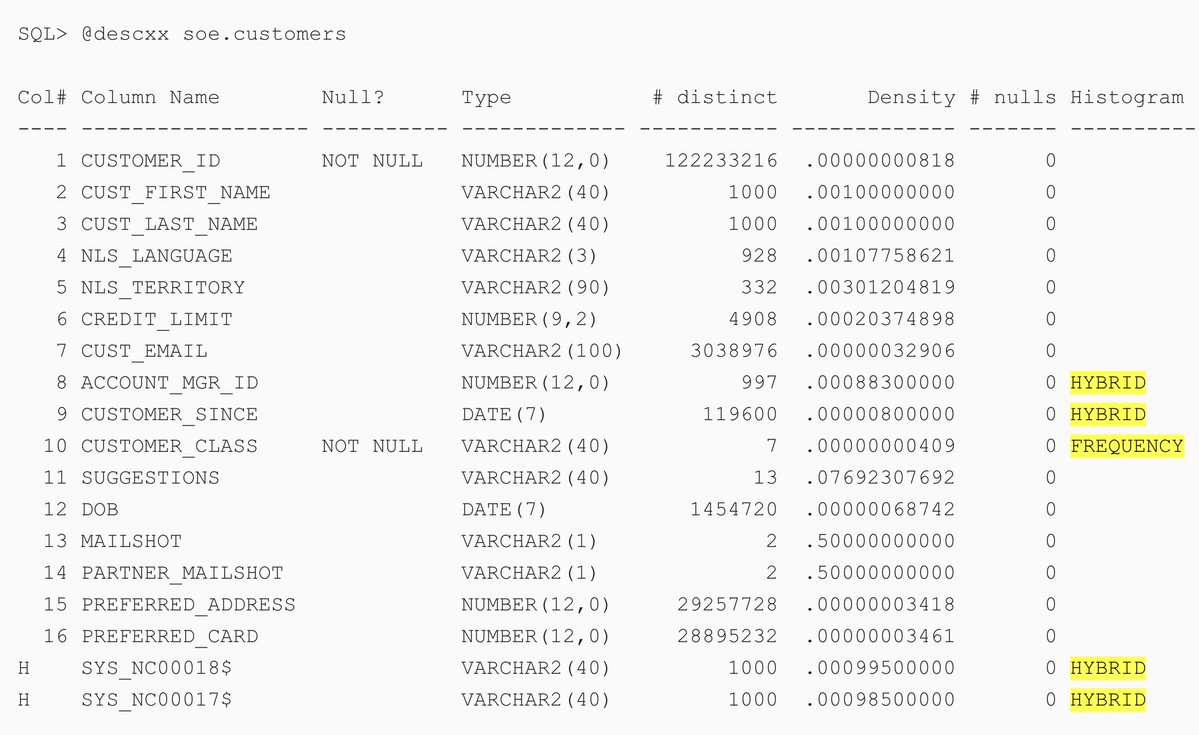
New blog: "Get Oracle Partition High Values as VARCHAR2 types instead of LONG in Oracle 19c and earlier"
There's also some SQL "performance trap" advice & data 23/26ai data dictionary internals in there.
Link in comments (testing if it changes "reach" :-)
Get Oracle Partition High Values as VARCHAR2 types instead of LONG in Oracle 19c and earlier (new blog).
There's also some data 23/26ai data dictionary internals!
https://t.co/PIkyCLc4gJ
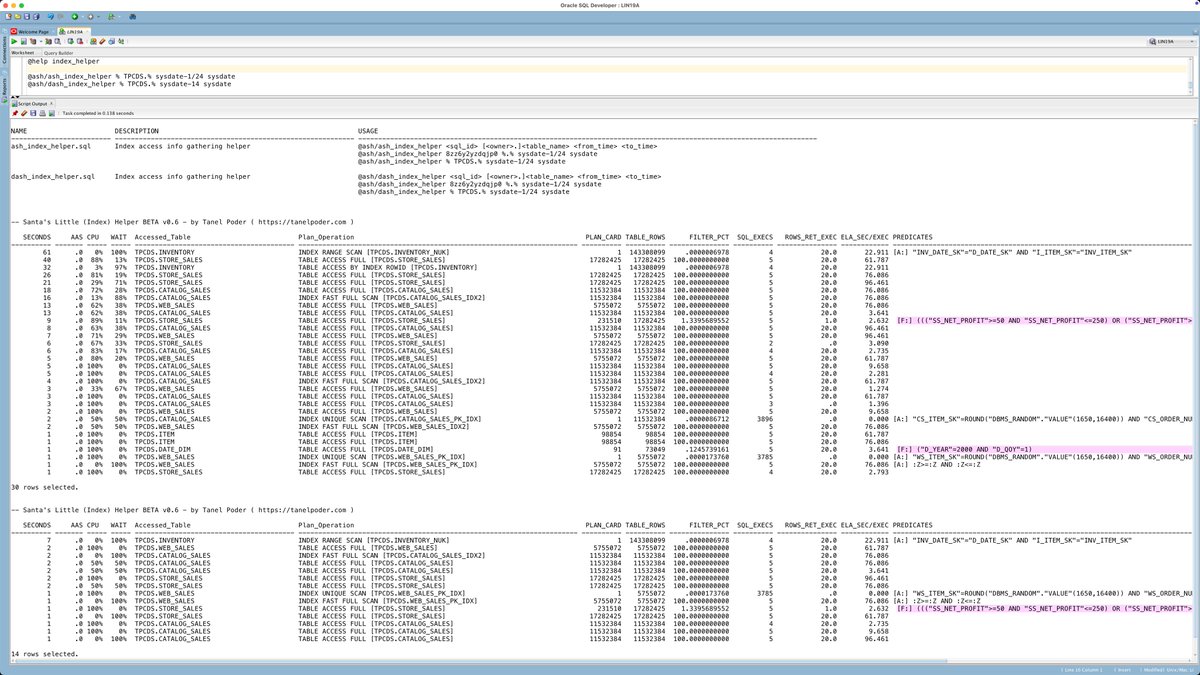
I wrote an Oracle "ash_index_helper.sql" script 5 yrs ago, trying to pull all relevant info of top time-consuming *access paths* into one place, as a single SQL script.
Summarize access paths to a schema or just one table/SQL.
Too complex for a single script, time for AI? 😎
Reasons why SELECT * is bad for SQL performance:
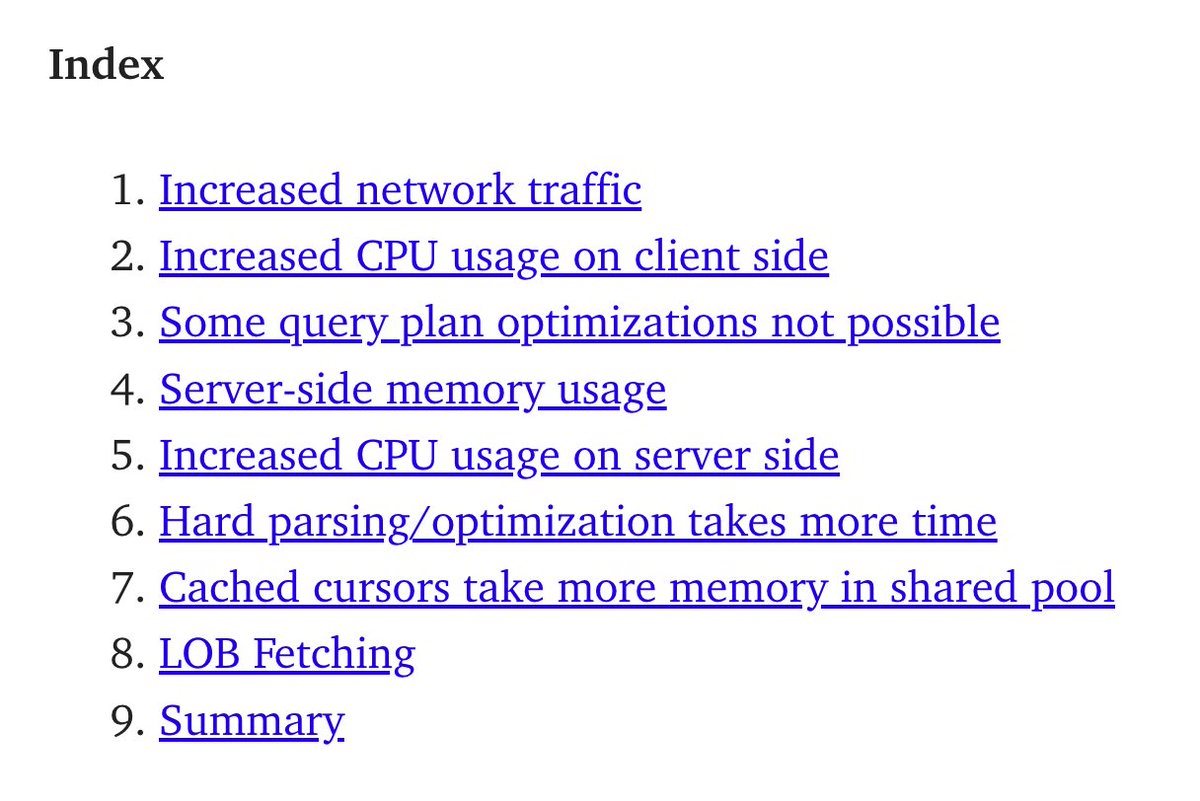
An old blog (with Oracle-specific examples) with a whole range of reasons why. It's not only about network traffic and SQL plan execution, but client side processing and memory usage as well.
https://t.co/6X5qhdpuFY
The first deep dive in my new special-focus training series starts on Wednesday:
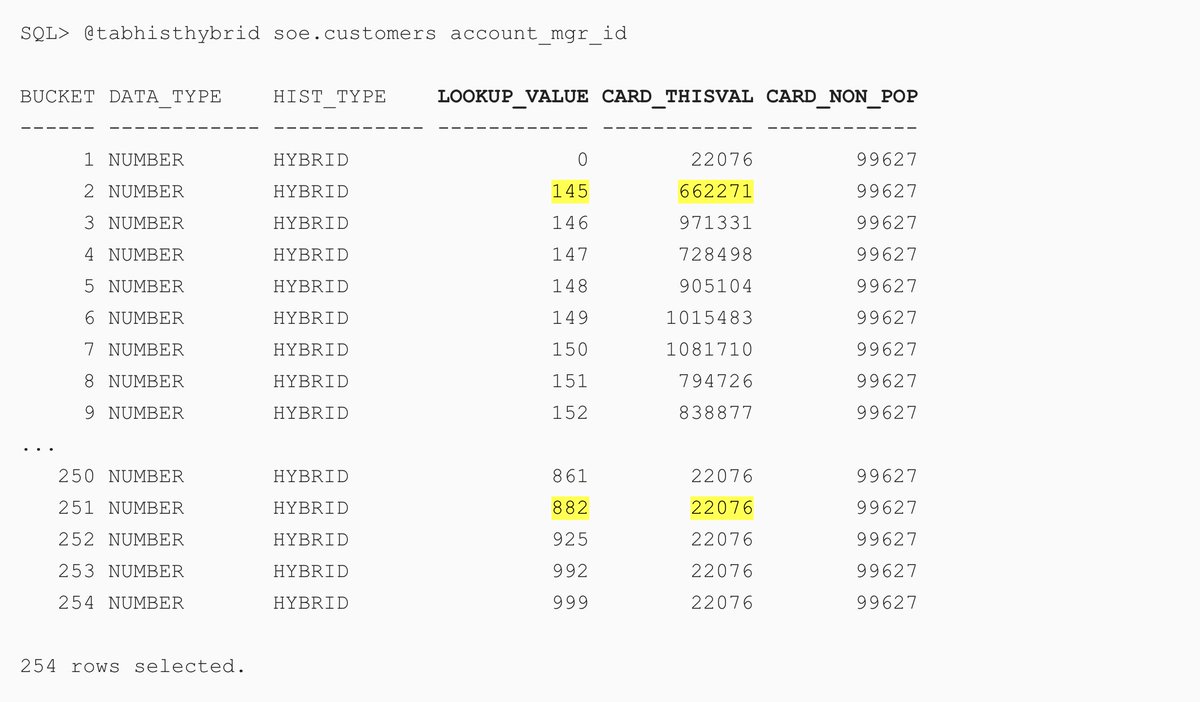
"Handling the Optimizer, Statistics and Workloads on Partitioned Tables in Oracle Databases" (5-6 Nov 2025 + Q&A followup sessions).
One demo table has 100k partitions ;-)
Sign up here:
https://t.co/NmwgHaFr4C
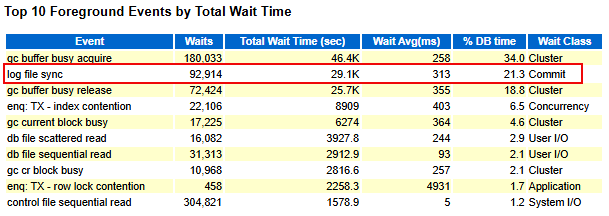
Misconfigured control_file_record_keep_time=365 bloated the control file → RMAN vs LGWR contention on control file → log file sync spiked → RAC flooded with gc waits.
#oracle#oracleace#oracleaw
Filter tables on their partition key to get partition pruning in Oracle #SQL
=> your query is more efficient
But with reference partitioning, this key is in the parent table!
@davidmkurtz shows how filtering these by foreign key enables pruning
https://t.co/V3OYZy1YFM
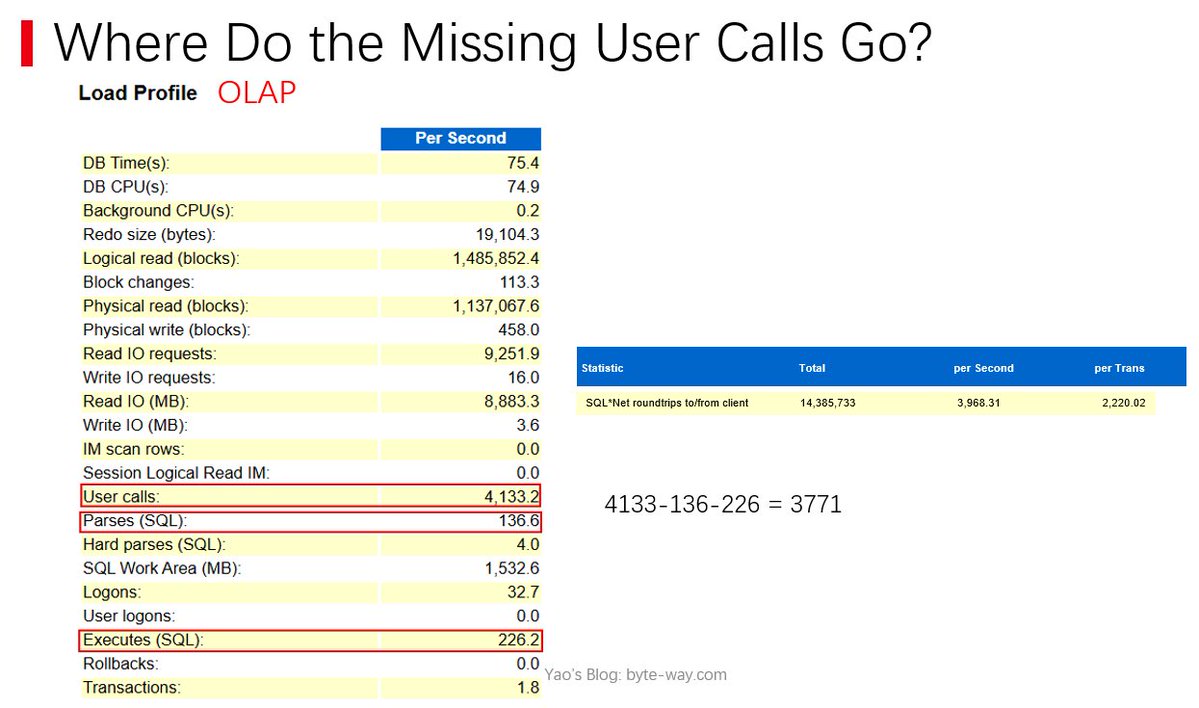
parses 136/s + executes 226/s = 362, but user calls hit 4,133/s. The gap (≈3,771) comes from fetches—big result sets exceed arraysize, forcing multiple fetches. SQL*Net roundtrips confirm (≈3,968/s).
#oracle#oracleace#awr
The xCapture and xtop eBPF tools are now in beta, with a demo dataset!
With a pre-recorded xcapture dataset from my dev server, now you can play with xtop "thread activity sampling" drilldown even on your laptop, without having to run xcapture yourself!
(link in replies :-)
If you have eBPF "biolatency" style IO latency monitoring tools always-on, you might want to reduce its tracepoint CPU overhead by not storing IO start times in a shared hashtable at all.
In my results, 59x lower tracepoint CPU overhead at 37M IOPS 😎
https://t.co/wuQuTRILFG
Didn't realize that Oracle Cloud now also offers AMD CPU-based (small) compute VMs under their "always free" offering, in addition to the ARM ones:
https://t.co/7ZgQcKyald
Fresh video! Want to run MERGE in parallel for your massive partitioned tables? There is a little bit of nuance required to make sure you get the performance you want.
https://t.co/H8zZlKOZPV
To find rows matching a #SQL query, the Oracle optimizer can use
ACCESS - get all of a subset of rows (usually via an index)
FILTER - check a set of rows, discarding unwanted data
But how does it pick which to use?
@connor_mc_d investigates https://t.co/5kCWSVNheG