🚨 Join the hybrid event “Fragility Forum 2026”!
📅 8–10 June 2026
🕒 8:00 AM–5:00 PM (ET)
🏢📍 Virtual & In-person at World Bank Headquarters (Washington, DC, USA)
➡ Info and registration: https://t.co/JW6ozW0GAg
🧵
At the Holy Fire ceremony in Jerusalem, the Ethiopian Orthodox community gathers at Deir es-Sultan in soft prayer, gentle chants, and quiet devotion ✨- adding a beautiful and unique touch to this shared moment at the Church of the Holy Sepulchre 🕯️
Ethiopia’s ancient Christian civilization is facing a growing wave of jihadist violence. In this first part of a new series, Uzay Bulut examines the historical roots of Islamic expansion in Ethiopia and the ongoing persecution of Christians today.
https://t.co/Lsb84Gd2cT
The people of Africa did not cause the climate crisis.
Yet they’re paying the highest price – through droughts, floods, hunger & deadly heat – with far too little support to adapt & make the transition to clean energy.
This is climate injustice – plain & simple.
Landed in Addis Ababa a short while ago. Honoured by Prime Minister Abiy Ahmed Ali’s gesture of welcoming me at the airport. Ethiopia is a nation with great history and vibrant culture. India and Ethiopia share deep civilisational ties. I look forward to engaging with the Ethiopian leadership to further strengthen our partnership in diverse areas.
@AbiyAhmedAli
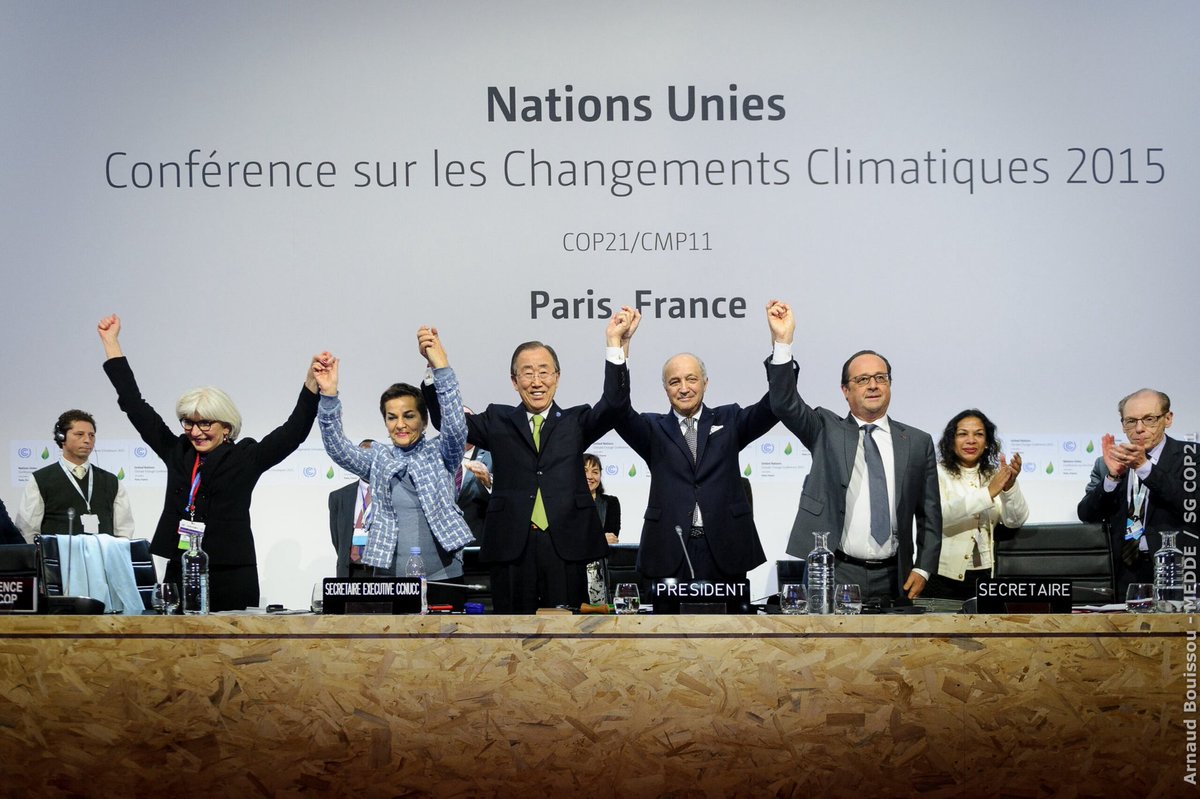
2009 world leaders at COP15, to FINALLY solve the climate crisis. They failed. 6 yrs later…COP21 gave us Paris Agreement. FINALLY we would solve the problem. 10 yrs later GHGs continue rising. Warming accelerates. 1.5C soon lost. We follow path to disaster. Not much to celebrate
PIK authors have retracted their study on the economic commitment of climate change. Scientific self-correction is essential; the team took the concerns seriously. Economic risks from global warming remain significant, especially in vulnerable countries.
https://t.co/y3HvSe3u16
Travel Update
Ethiopian Airlines Group wishes to inform its customers and partners that the recent mandate issued by the U.S. Federal Aviation Administration (FAA) will not affect Ethiopian Airlines’ international flight operations to and from the United States. All Ethiopian Airlines operated flights connecting Africa and the U.S. will continue to operate on schedule.
The airline notes, however, that passengers connecting from domestic U.S. points or offline cities on other carriers may experience schedule adjustments or additional verification procedures as a result of the FAA directive. Ethiopian Airlines advises all such travelers to allow extra time for their journeys and verify connection details with their respective airlines prior to departure.
We encourage all affected passengers connecting through one of our gateways (IAD, JFK, EWR, ORD, ATL) to/from another US gateway to check with their respective airlines and allow extra time for connections to ensure a smooth travel experience. Ethiopian Airlines remains committed to providing safe, reliable, and seamless service for all our customers traveling between the United States, Africa, and beyond.
BREAKING NEWS
The Royal Swedish Academy of Sciences has decided to award the 2025 Sveriges Riksbank Prize in Economic Sciences in Memory of Alfred Nobel to Joel Mokyr, Philippe Aghion and Peter Howitt “for having explained innovation-driven economic growth” with one half to Mokyr “for having identified the prerequisites for sustained growth through technological progress” and the other half jointly to Aghion and Howitt “for the theory of sustained growth through creative destruction.”
#NobelPrize
Sincerely appreciate @SecScottBessent's kind congratulations.
As the Secretary rightly stated, Japan & the U.S. are the closest allies and friends. I hope that our two countries will become more secure and prosperous together by further advancing cooperation of our mutual benefit.
ベッセント財務長官から頂いた温かいお祝いのお言葉に、心より感謝申し上げます。
ベッセント長官がおっしゃられるように、日本と米国は、最も近い同盟国であり、友人です。双方の利益となる協力をさらに進めることで、日本と米国が、より安全で、より豊かになっていくことを願っております。
Wangari Maathai was the first female professor in Kenya and the first African woman to be awarded the #NobelPeacePrize. She founded the Green Belt Movement, which led to the planting of millions of trees.
Today we announce the 2025 Nobel Peace Prize.
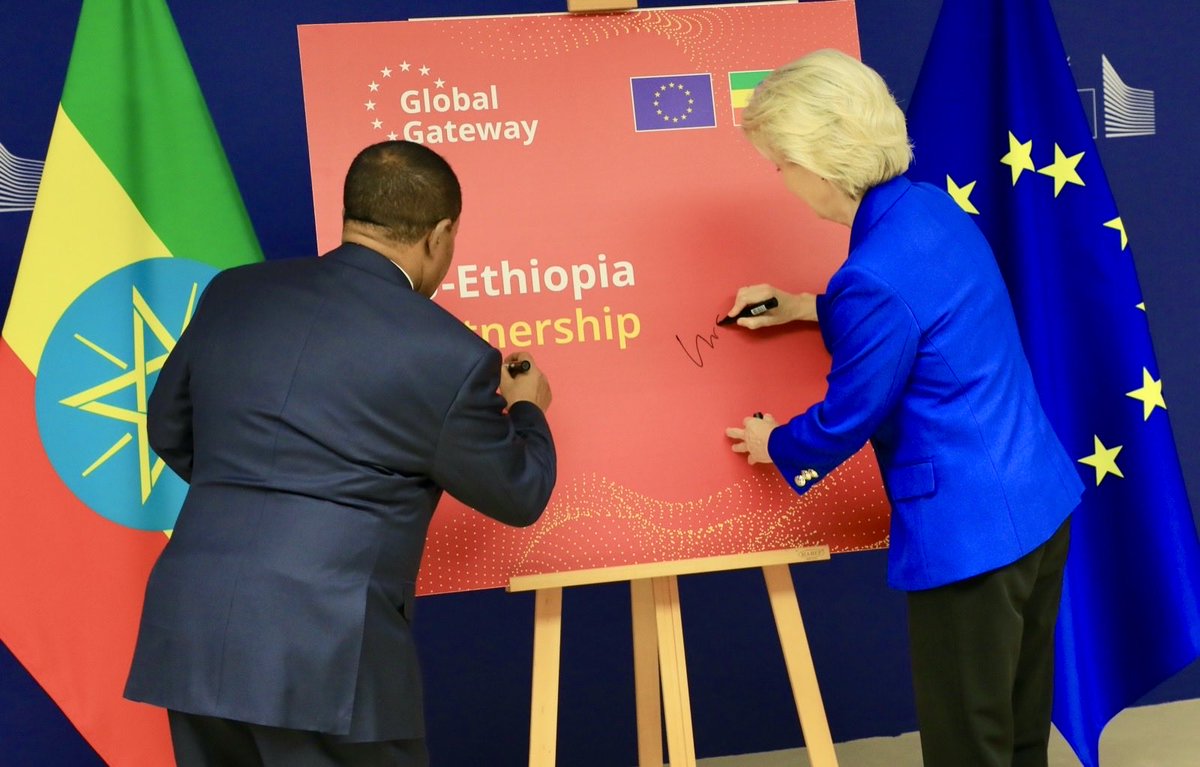
At the Second #GlobalGateway Forum, I had the pleasure of signing a Partnership Agreement with H.E.Ursula von der Leyen, President of the @EU_Commission.This milestone transforms the longstanding Ethiopia–EU cooperation into a truly strategic partnership particularly in digitization, renewable energy, agrifood systems, health, sustainable infrastructure, and peace and security.
🇪🇹🤝🇪🇺
I was very pleased to receive such warm words of congratulations from @realDonaldTrump.
Truly hoping to work together with President Trump to make our 🇯🇵🇺🇸 Alliance even stronger & more prosperous, and to advance a Free and Open Indo-Pacific.
トランプ大統領から、温かいお祝いのお言葉を頂き、大変嬉しく思います。 日米同盟をより一層強く、より豊かにするために、そして、自由で開かれたインド太平洋(FOIP)を進めるために、トランプ大統領と共に取り組んでいくことを楽しみにしております。
BREAKING NEWS
The 2025 #NobelPrize in Physiology or Medicine has been awarded to Mary E. Brunkow, Fred Ramsdell and Shimon Sakaguchi “for their discoveries concerning peripheral immune tolerance.”
Valuable "tell it like it is" article in @TheAfricaReport asking whether the African Union is irrelevant? A damning fact: 93% of decisions taken by AU over last 3 years not yet implemented. And where has AU actually made peace?
https://t.co/S1PZc4n7fh
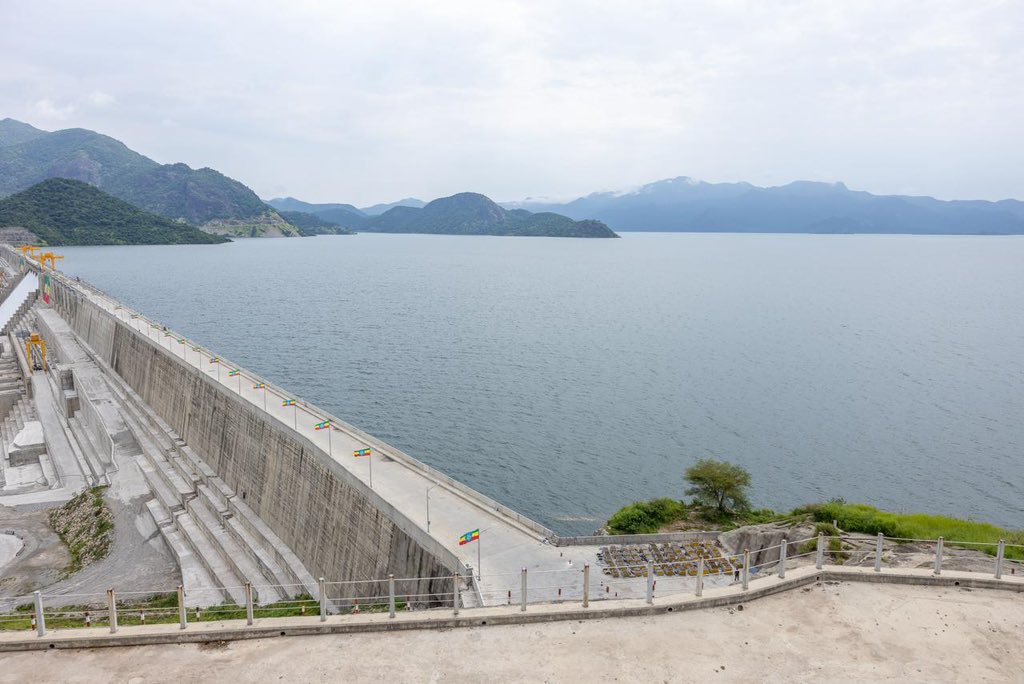
The Grand Ethiopian Renaissance Dam is a bold affirmation of Africa’s ability to marshal its own resources and shape its destiny. Funded entirely by the Ethiopian people, it is more than an infrastructure project; it is Africa’s largest hydropower facility, with an estimated capacity of 6,450 megawatts, and a continental symbol of self-reliance and progress.
For Kenya, it offers immense promise. We are ready to sign a power purchase agreement with Ethiopia to offtake surplus electricity to power our industries, ICT hubs, manufacturing, and agro-processing, while strengthening competitiveness, creating jobs, and driving sustainable growth.
No nation should be denied the chance to build such transformative assets because, with time, they become shared sources of prosperity.
Yet, even as we celebrate, we remain mindful of differing perspectives among Nile Basin countries. Kenya reaffirms its support for equitable use of shared waters and urges Ethiopia, Egypt, and Sudan to continue pursuing trilateral talks in good faith. Dialogue and compromise remain the surest path to a fair agreement that safeguards prosperity and stability for all.
Honoured to join fellow leaders in witnessing the historic inauguration of the Grand Ethiopian Renaissance Dam at Benishangul-Gumuz Region. Congratulations to Prime Minister Abiy Ahmed and the Ethiopian people on this remarkable achievement.
With us were Presidents @IsmailOguelleh (Djibouti), @HassanSMohamud (Somalia), Salva Kiir Mayardit (South Sudan), Barbados Prime Minister @miaamormottley, Prime Minister of Eswatini Russell Mmiso Dlamini and Africa Union Commission Chair Mahmoud Ali Youssouf.
'And as their land becomes less fertile, their choices become
harder. Some turn to migration, understandably seeking better
prospects'
Former @FCDOGovUK boss James Cleverly making the case for UK global support in a time of #climate shifts...
https://t.co/dg2QnOQLco
Egypt’s Scare Tactic Flatly Fails, No Guarantee of Future Water Security
For half a century, Egypt relied on scare tactics and diplomatic dominance to control utilization of the Nile River. That strategy has now collapsed. Ethiopia’s mega project, the Grand Ethiopian Renaissance Dam (GERD), is complete and will be inaugurated in the second week of September 2025.
Ethiopia has long aspired to harness Nile waters for development, first commissioning technical assessments in the 1960s. Those ambitions stalled for decades due to lack of donor support and relentless Egyptian pressure. The breakthrough came in 2011, when the late Prime Minister Meles Zenawi launched the dam construction as Egypt was distracted by the Arab Spring.
A defining feature of GERD is its financing: the project was built entirely with Ethiopian resources, without donor money. U.S. President Donald Trump claimed on three occasions that Washington had supported the dam, a statement firmly rejected by Addis Ababa.
The launch marks a geopolitical turning point. Ethiopia now wields newfound leverage over Egypt, whose survival and economy are heavily dependent on the Nile. Ethiopia has repeatedly assured both Egypt and Sudan that the dam will only generate hydropower, not divert water. Cairo, however, continues to demand a binding agreement—something Ethiopia refuses, citing the 1959 colonial-era treaty between Egypt and Britain that excluded Ethiopia despite being the source of 86 percent of the Nile waters.
Egypt has boycotted the decade-long tripartite negotiations with Ethiopia and Sudan, leaving no ongoing talks. Cairo’s last-minute attempt this year to rally African leaders against Ethiopia fell flat, hindered by its historically poor image in sub-Saharan Africa and Ethiopia’s stronger influence within the African Union and Nile Basin countries. Sudan, while formally aligned with Egypt, is embroiled in civil war and unable to lend meaningful support.
U.S. pressure, especially under Trump, also failed when Ethiopia rejected a proposed binding agreement crafted to satisfy Egyptian demands. Decades of containment strategy—blocking international finance, deterring partners, and undermining Ethiopia’s capacity—worked in the past but could not stop the GERD.
Looking ahead, Ethiopia is likely to plan additional Nile projects, a scenario that would further tighten Egypt’s position. Ultimately, Cairo may be forced to accept fair-use negotiations with Addis Ababa.
Meanwhile, Egypt has deployed troops to Somalia under the African Union peacekeeping mission—an uncomfortable development for Ethiopia, another major troop-contributing country. The move appears to be yet another scare tactic.
At the same time, Ethiopia is moving to establish a naval force on the Red Sea, signaling its ambition to project power and secure its strategic interests.
Egypt’s hostile approach neither guarantees Cairo’s water security nor prevents Addis Ababa from pursuing further Nile projects. The balance of power over the Nile has shifted, and Ethiopia is now in the stronger position. Read more in Wazema Substack page, see the photo!!