Japanese supernatural horror Never After Dark hits U.S. theaters September 25.
A medium investigates a haunted house where a ghost appears at midnight, only to discover the haunting may be connected to her own past.
https://t.co/f9Eo598s4a
probably one of the reasons why i'll never get tired of going back to korea is the transportation system. it sounds like such a small thing, but having trains and buses that arrive when they're supposed to, apps that tell you exactly where you are and when the next ride is coming, and a system that just works makes such a huge difference in your day-to-day life.
it makes me realize how much time, energy, and stress efficient public transportation can save. in the philippines, commuting often feels exhausting before the day even begins. in korea, moving around feels easy. it gives you more time to enjoy where you are instead of worrying about how to get from one place to another.
it's one of those things i appreciate more every time i visit 🥹
🔸Are the Tacloban high school shooters fans of the Columbine shooter?
I saw the photos of these suspects in the San Jose National High School shooting in Tacloban today and can’t help but notice what’s written on one of the suspect’s shirts…
One of the guys was wearing a shirt featuring KMFDM, a prominent industrial metal band formed in the 1980s.
The acronym stands for the German phrase Kein Mehrheit Für Die Mitleid, which translates to "No Pity for the Majority."
If that sounds familiar, it's because this exact band was heavily linked to the infamous 1999 Columbine High School shooting in the US, as those shooters were massive fans.
Seeing this logo pop up in a Philippine school shooting is a chilling detail we can't ignore.
얼굴은 아이돌, 본업은 도예가 이경환
이경환은 도예가는 SNS를 통해 작업 과정과 일상의 리듬을 공유해옴
아이돌 같은 비주얼과 탄탄한 피지컬을 가지면서도 본업인 도예가로서 흙을 빚고 작품을 만들어 많은 인기를 누림
현재 연남동 도자기 공방을 운영하고 있으며 모델로 활동하며 엠포리오 아르마니, 크리스챤 디올, 지미추 등 패션 브랜드와도 인연을 맺음
2025년 12월에는 첫 에세이 나를 빚는 시간을 출간하며 도예가로서 흙과 마주한 시간과 삶에 대한 생각을 글로 풀어냄. 잘생긴 도예가 이경환님 드라마 주인공같음…
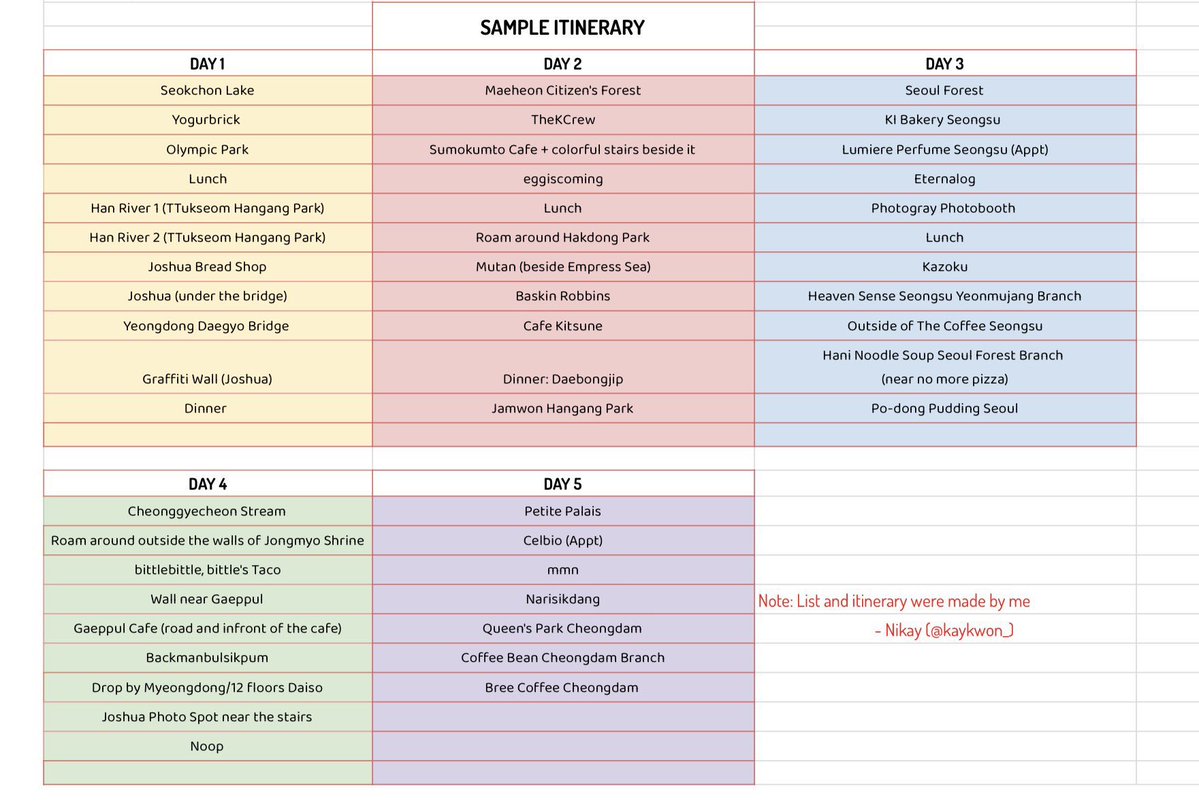
List of Seventeen Places to Visit (South Korea)
Sample itinerary specifically for Carats below 👇🏼
Link: https://t.co/jrpL1g6sKc
NOTE: This itinerary may or may not work for you. This itinerary is specifically made for our trip next month but you can always use this as reference for your trip. References were also added if there are other places you want to check. Outside areas like Jeju and Busan are not added on the list but you can use the reference links for it.
I will also keep updating the list so check it any time you want!
SEE YOU, CARATS! Manifesting for everyone to be able to visit Korea and have a carat-ful experience ✨🩷🩵
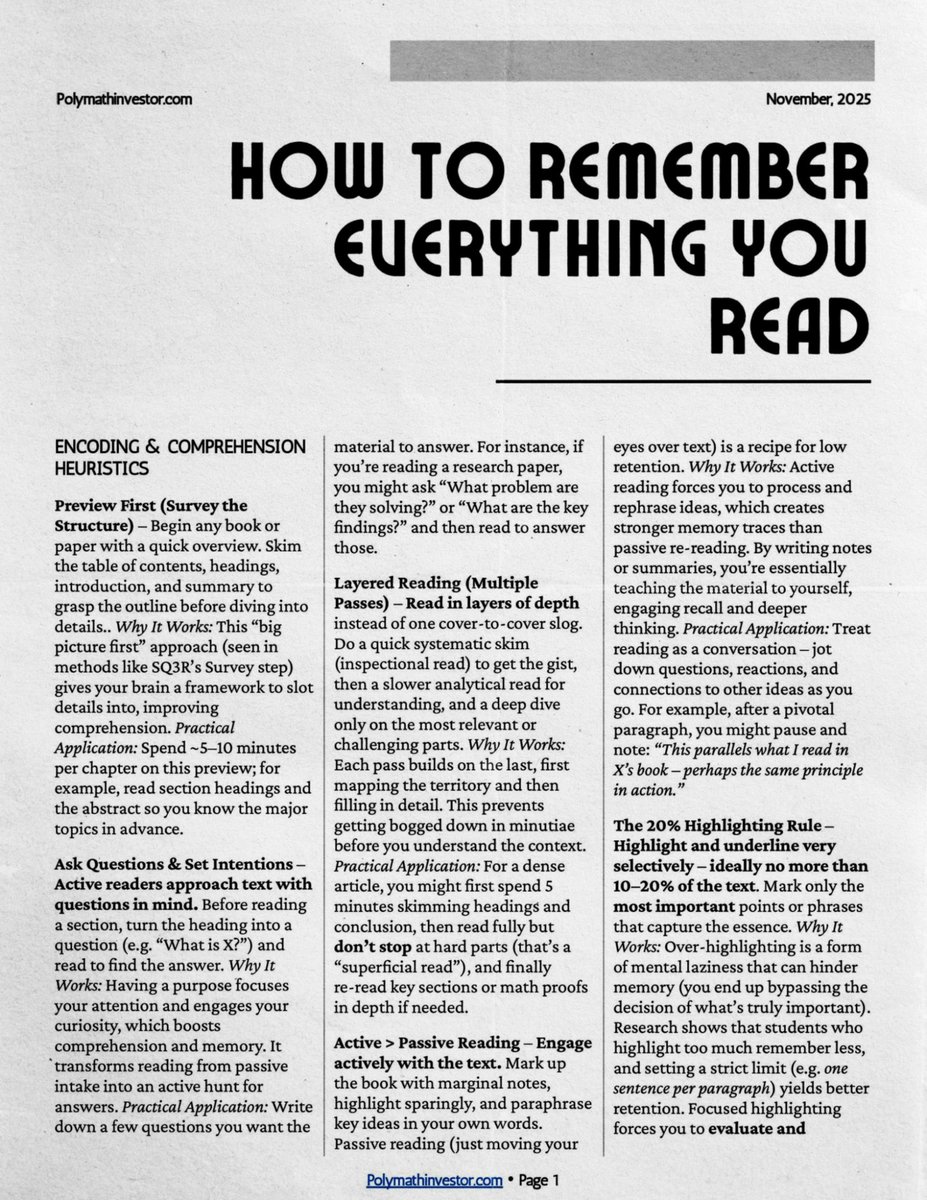
A few months back, I published this guide on how to remember everything you read.
Re-sharing it here for anyone who finds these protocols useful.
(1/11)
Former Singapore PM Lee Kuan Yew on the fundamental difference between American and Chinese society:**
Why do America and China see the world so differently? Lee Kuan Yew argues it comes down to one thing: history.
"The difference in the core philosophy between the American and the Chinese... it's a reflection of your history."
He traces America's worldview back to its origins:
"You came over in the Mayflower. You were seeking religious freedom so much so that you refused to allow it to be taught in the schools. You believed in the individual as the creator of all things."
That belief in the individual shaped everything that followed:
"You captured the wild west. I mean, on horseback. New town, main street, you be mayor, I'm sheriff, you're saloon keeper. We build a gold rush town or cattle or whatever it is."
And then came extraordinary fortune:
"You have been immensely fortunate and successful. Two world wars left Europe in a shambles and you emerged as the undamaged technological and industrial power."
China's story, Lee explains, looks nothing like this.
"China has a completely different and a checkered history. 4,000 to 5,000 years of ups and downs. Long periods when there was no governments, anarchy, warlords."
He shares a personal moment that brought this reality home to him:
"I once had a Chinese masseur when I was in Beijing working my game shoulder and we were talking and I said during the war, Japanese time, what currency did you use? So Japanese currency if it's in Japanese controlled areas or other currencies in other areas. So I said how many currencies are there? Two, three? Says 14 or 15 depending on which warlord's area you're in."
So how did the Chinese people survive centuries of chaos, when the state itself kept collapsing?
"Why have they survived in spite of anarchy, disaster, floods, famines? Because there was a social network independent of government that sustained them. The immediate family, the extended family, the clan. You owed them an obligation. You cannot turn them away. That's how they survived."
This is the philosophical fork in the road. America placed the individual at the centre. China placed the family.
Lee describes the system Singapore deliberately chose to preserve:
"If we keep those family bonds, those traditional life raft systems not dependent on the state, which places the emphasis on family, extended family, and then the government, and not the individual at the expense of the family and the state, which is the American system."
He acknowledges what the American system produces:
"So you have Bill Gates or John Chambers of Cisco... you look up Forbes or Fortune or whatever and 50 of the best and the brightest and the wealthiest. That's your experience. That's not China's experience."
But the goal in Asia is different:
"Yes, we also now want to try and get our little Bill Gates going, but in the context of keeping our society solid so that we will survive as a people."
He closes with a sharp reminder of why these two civilisations may never fully understand each other:
"You have never been occupied. You have only had one civil war. So you will never understand what it is."
The takeaway is uncomfortable but worth sitting with: a society's values aren't chosen in the abstract. They're forged by what that society had to survive. Individualism is a luxury of stability. Family-first collectivism is the inheritance of centuries of collapse.