𝗢𝗻 𝗯𝗶𝗼𝗹𝗼𝗴𝗶𝗰𝗮𝗹 𝗮𝗻𝗱 𝗮𝗿𝘁𝗶𝗳𝗶𝗰𝗶𝗮𝗹 𝗰𝗼𝗻𝘀𝗰𝗶𝗼𝘂𝘀𝗻𝗲𝘀𝘀: 𝗔 𝗰𝗮𝘀𝗲 𝗳𝗼𝗿 𝗯𝗶𝗼𝗹𝗼𝗴𝗶𝗰𝗮𝗹 𝗰𝗼𝗺𝗽𝘂𝘁𝗮𝘁𝗶𝗼𝗻𝗮𝗹𝗶𝘀𝗺
Excellent paper discussing how considering biology is important to understand consciousness.
https://t.co/f5bizhkQCy
⛓️ October’s most-read Structural Biology paper challenges textbook views of synapses, revealing a complex ‘synaptoplasm’ instead of a dense post-synaptic layer: https://t.co/5m0rvmW1Yx
Have a paper people should see? See what our Editors look for: https://t.co/jYrVfaJKT4
Neuroplasticity = the brain’s ability to change.
But plasticity itself isn't “good” or “bad.”
In a bad environment:
• High plasticity → rapid learning of the wrong lessons
• Low plasticity → can't unlearn them
Here's how to unlock your plasticity 🧵
🐶Motion imitation should never limit itself to simply replaying the motions in the dataset on flat terrains.
In our #CoRL2025 work Motion Priors Reimagined, we extend motion tracking to complex locomotion and navigation tasks, to make skills "useful".
🔗https://t.co/X4QZgX5q2J
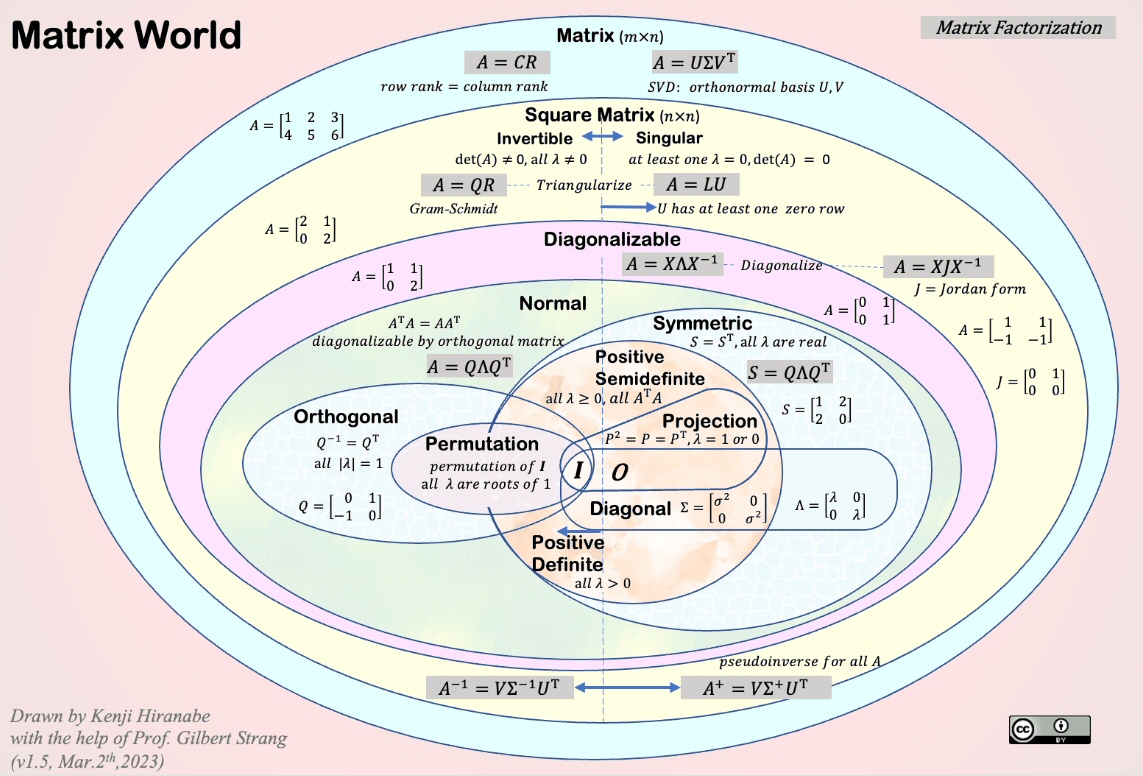
Principal Component Analysis (PCA) is the gold standard in dimensionality reduction.
But PCA is hard to understand for beginners.
Let me destroy your confusion:
For agents to improve over time, they can’t afford to forget what they’ve already mastered.
We found that supervised fine-tuning forgets more than RL when training on a new task!
Want to find out why? 👇
Does a smaller latent space lead to worse generation in latent diffusion models? Not necessarily! We show that LDMs are extremely robust to a wide range of compression rates (10-1000x) in the context of physics emulation.
We got lost in latent space. Join us 👇
*Alice's book got a (minor) upgrade!*
Thanks to the dozens of people who gave feedback, now with 1000% less typos and errors, a novel set of Colab lab sessions, and a brand-new CC-BY-SA license. 🙃
https://t.co/jdjs9Gor0v
I still remember back in grad school. My friend in NLP used to show off, bragging that he had LSTM all figured out. I envied him. Fortunately, my field was Computer Vision. I could survive just knowing my SVMs. In 2024, the inventor of LSTM himself is finally back with the extension: xLSTM. Here's my Excel implementation. Not for the faint of heart. Download: https://t.co/77wgxlQNoR I guess I can brag to my NLP friend now. 😉
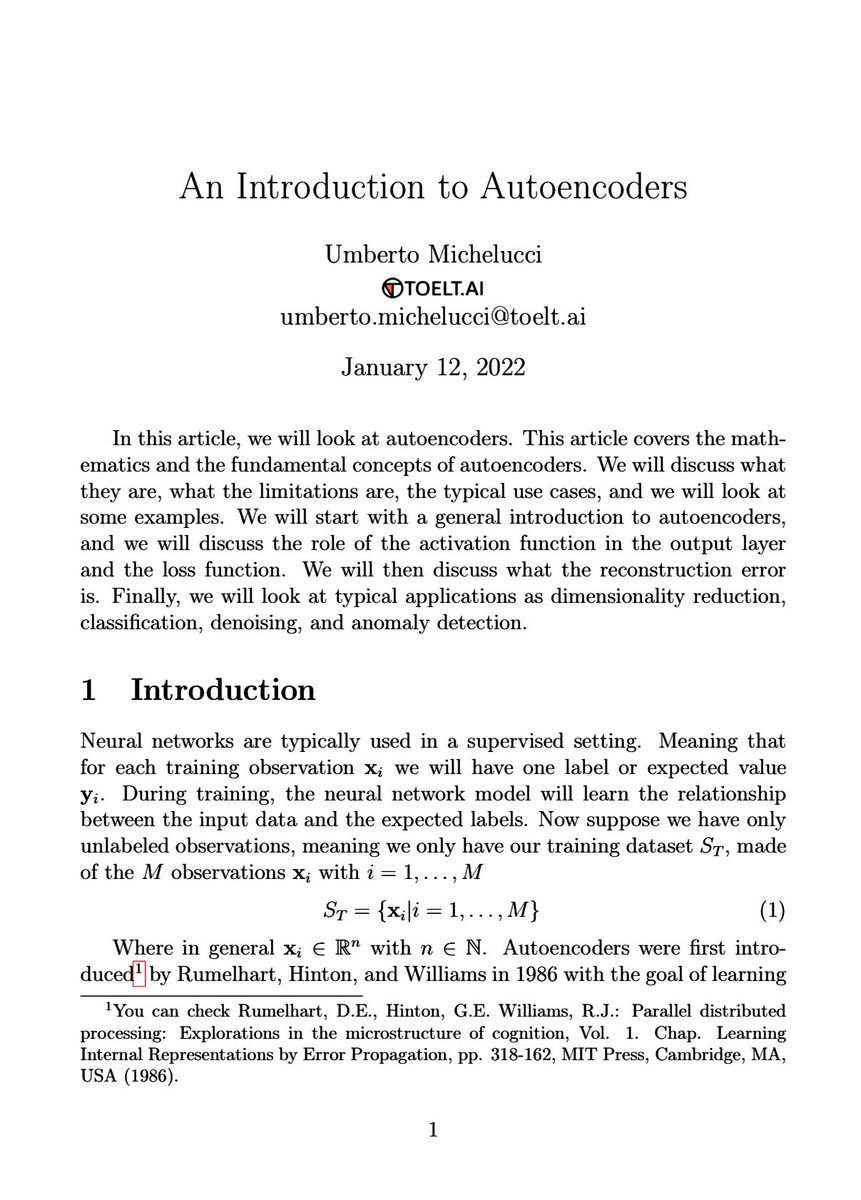
Autoencoders are neural networks that learn efficient data representations by encoding inputs into a lower-dimensional space and then reconstructing them. They’re widely used for dimensionality reduction, denoising, and feature learning.
https://t.co/HM3IlK1RdT
We introduce PuzzleJAX, a benchmark for reasoning and learning. 🧩💡🦎
PuzzleJAX compiles hundreds of existing grid-based PuzzleScript games to hardware-accelerated JAX environments, and allows researchers to define new tasks via PuzzleScript's concise rewrite rule-based DSL.
The brain uses orthogonal sub-dimensions in neural space as communication channels.
This is a great new paper using Neuropixels from ~6500 neurons on 8 cortical and deep regions in mice.
Simplifying the space helps a lot to understand the idea.
Here is my toy model and notes:
Our paper on autonomous scientific research is accepted to Findings of #EMNLP2025! 🎉
We introduce Agent Laboratory, a framework that accelerates scientific discovery by teaming human researchers with LLM agents.
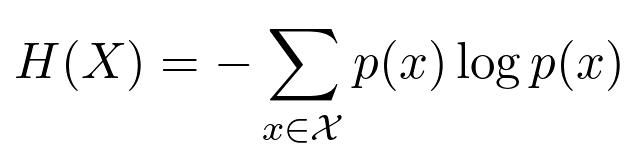
Measuring information content in bits is very useful. Information theory made digital communication, cryptography and machine learning possible.
But information is not just a quantity: it also has a shape. (1/6)
The fastest way to get smarter is to read smarter people.
I went through @tbpn’s Metis List and pulled together blogs from some of the most influential people in AI. I’ve also added a few gems outside the list 🧵
I find the most value in blogs where people share applied insights and digest SOTA research. Share your favorite AI blogs in the comments!