🌡️It’s now certain: the world will exceed 1.5°C of warming, at least temporarily. But we can still bring temperatures back down this century, and it will take going beyond net zero.
The good news: we already know how to get there. Read how: https://t.co/W8NnQRKNas
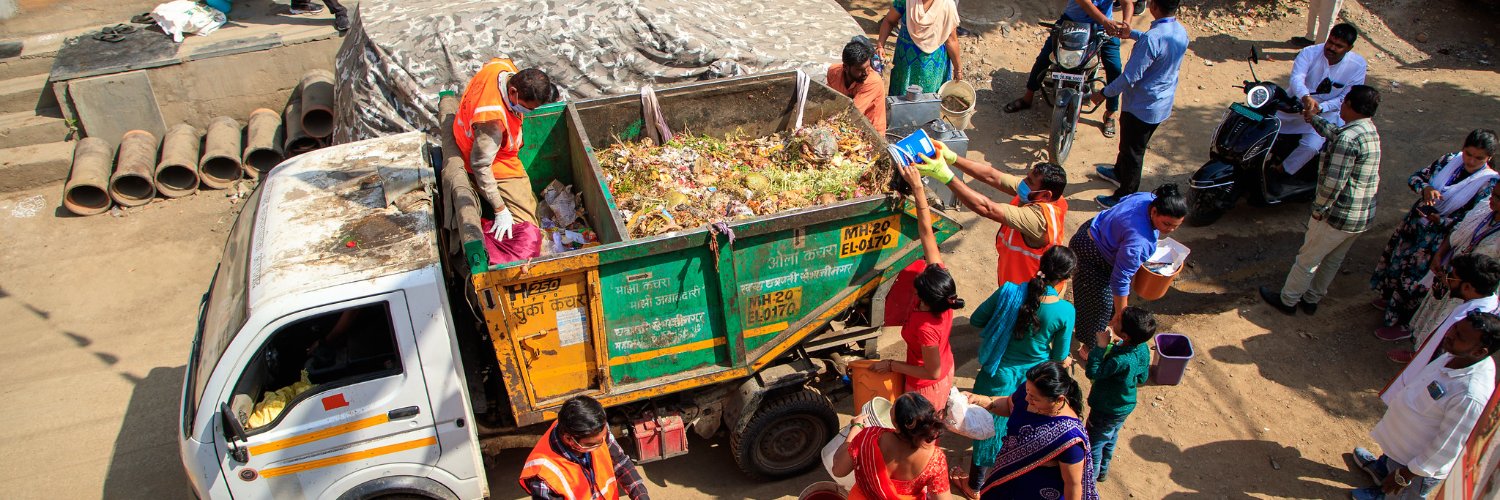
We’ve teamed up with IKEA Foundation for this year’s IKEA Foundation Week campaign, Can You Save the Tomato?, to help people rethink food.
In the campaign, our colleague Dr Susan Chomba explains how the way we produce, distribute and consume food affects our climate, and shares solutions to reduce waste and emissions.
Hear from Susan and see if you can save the tomato at https://t.co/UJ0fsMEUtw.
#IFW26
Local priorities should be central to data center development.
The local impacts of data centers have taken center stage in U.S. media as people are eager to protect their communities from irresponsible water use, climbing electricity prices and pollution.
Many communities with data centers in their backyard are already facing above-average environmental burdens.
But data centers can support local communities with early engagement and community benefits agreements (CBAs).
Read more about the local impacts of data centers: https://t.co/cJZooVjZjW
Dive deeper into the technical possibilities of CBAs for data centers: Powering Progress: https://t.co/TPv4lfjhrW
WRI Polsky Center for the Global Energy Transition World Resources Institute Carla Walker Ian Goldsmith Devashree Saha Jolie Villegas
🚨 New data from #SystemsChangeLab finds that global efforts to conserve forests and land are not just falling short — they are largely moving in the wrong direction.
📊 Explore the data and see what’s needed to reverse course: https://t.co/RSMTI4436N
🌊Ocean-based climate solutions could potentially exceed one-third of the total emissions reductions needed to meet global climate goals.
But perhaps even more compelling is the wide range of co-benefits that come with them:
⛈️Protecting coastal communities from storms
👔Providing jobs
🐟Harboring wildlife
🍽️Improving food security
Full video: https://t.co/ByvZEm6mDg
🐟Freshwater species help keep water clean, cycle nutrients and support food systems. Yet they are disappearing at alarming rates.
🪷Protecting freshwater biodiversity is critical for a sustainable future.
👉New research from #SystemsChangeLab highlights where change is needed: https://t.co/2bxoZtisk9
Carbon calculators usually focus on individual choices: what you eat, how you travel, how you power your home.
@WRIClimate’s new calculator is different. It’s designed for decision-makers whose choices affect large numbers of people, from policymakers and city planners to companies and large institutions.
Try it: https://t.co/SLR3q6dDDy
With total global renewable electricity generation capacity growing nearly 7-fold in the past 25 years, renewables are becoming a bigger part of our lives.
But how about costs? Jobs? What happens when the sun isn't shining? We answer your questions: https://t.co/VqYVAVCnA4
For years, governments and communities have poured money into fighting wildfires and recovering from them.
But often overlooked are the benefits of reducing the risk that wildfires become catastrophic in the first place. A decade ago, Forest Resilience Bonds was developed as a solution.
Ten years in, its benefits are taking shape on the ground👉 https://t.co/BXG1WShsB1
What does it take to move from promising agricultural practices to systems change?
Farmers, researchers, governments, funders, businesses and civil-society organizations working together, combining local knowledge and evidence to identify what works, where it works and what it takes to scale. That’s the opportunity behind #Restore4Food.
Learn more 👉: https://t.co/n60pjfHxxS
When it was adopted in 2015, the Paris Agreement was a breakthrough.
In its second decade, the geopolitical environment it's facing is entirely different. Yet it still plays a central role in providing a political space for climate issues and establishing collective ambition.
We reflect on why the Paris Agreement remains critical to climate action: https://t.co/PVJuGxUqOS
🌡️It’s now certain: the world will exceed 1.5°C of warming, at least temporarily. That means even more intense weather extremes, fires, glacier melt and sea-level rise.
But we can still bring temperatures back down this century, and it will take going beyond net zero.
Net zero stops temperatures from rising. Going net negative, by removing more CO2 from the atmosphere than we emit, brings them back down.
The good news: we already know how to get there. Read the new Insights article from @WRIClimate: https://t.co/IXUekHeW2s
#ClimateScience #NetZero #CarbonRemoval #ClimateAction
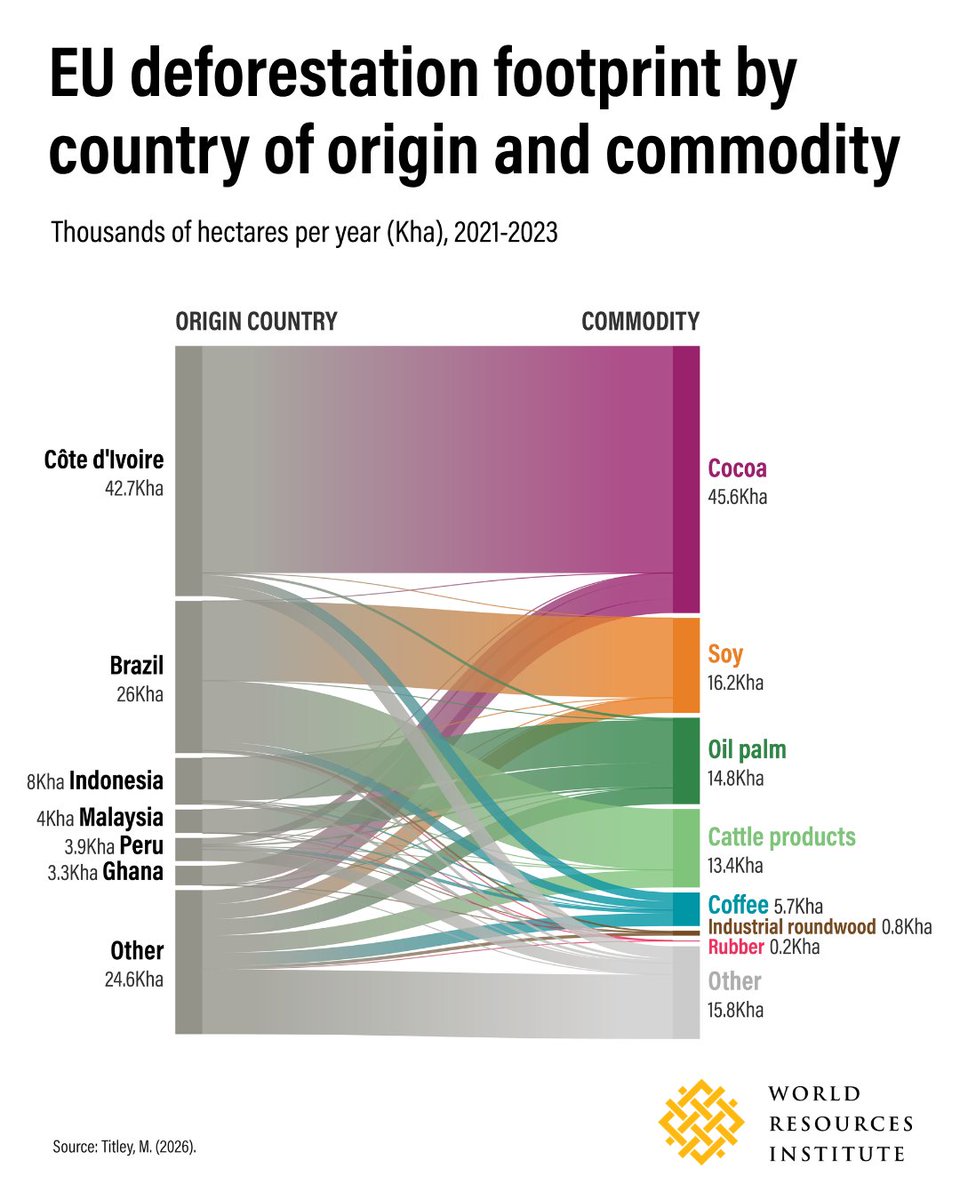
The EU’s deforestation footprint is not spread evenly across the hundreds of agricultural commodities it imports.
Our newest research finds nearly 74% of deforestation linked to the EU’s demand for seven commodities covered by the EU's deforestation policy occurs in just six countries.
With this analysis, we are able to identify where EUDR implementation can have the greatest reach.
Learn more: https://t.co/enOkn1J6Ep
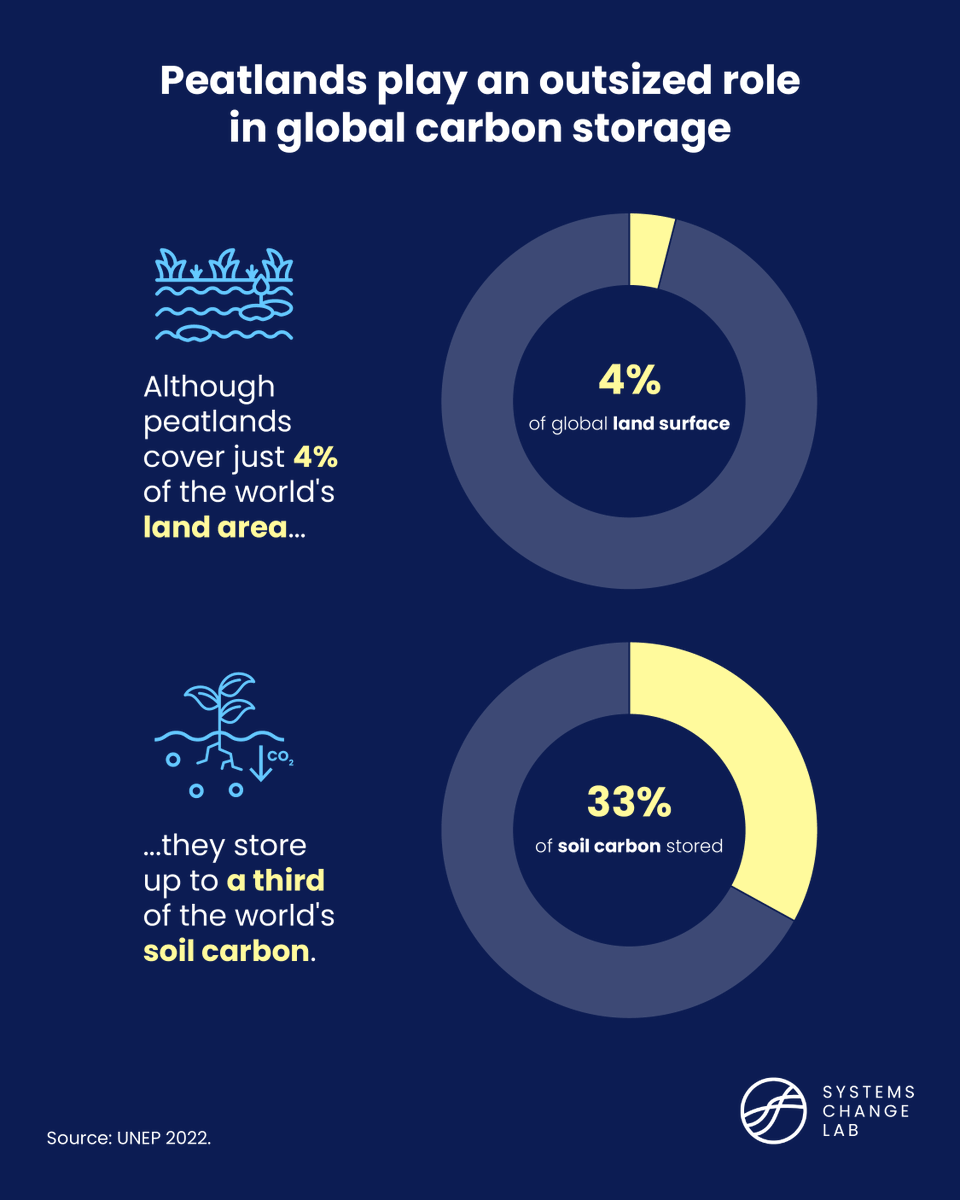
🌿Peatlands are carbon vaults.
They cover just 4% of the world’s land, yet store up to one-third of all soil carbon.
Protecting, restoring, and sustainably managing these ecosystems is critical for people, nature, and climate.
👉Explore the latest data: https://t.co/2bxoZtisk9
🔌🪫Most EV batteries are retired at ~70–80% capacity, leaving a chunk of usable energy. This creates a clear second stage in the battery lifecycle, where most value is lost.
The structure and governance will determine whether that can change 👉
https://t.co/oS0Nw5AVG6
🌲🚰Every time someone in Wyoming turns on the tap, there’s a good chance their drinking water begins in a forest.
Encampment is the first Wyoming community to tap the state's clean water funding to proactively protect its forests from wildfires and safeguard the town's water supply.
The Encampment project demonstrates that financing watershed restoration is possible. Read more about this and other #SolutionsInFocus➡️ https://t.co/AUSePxUuzU
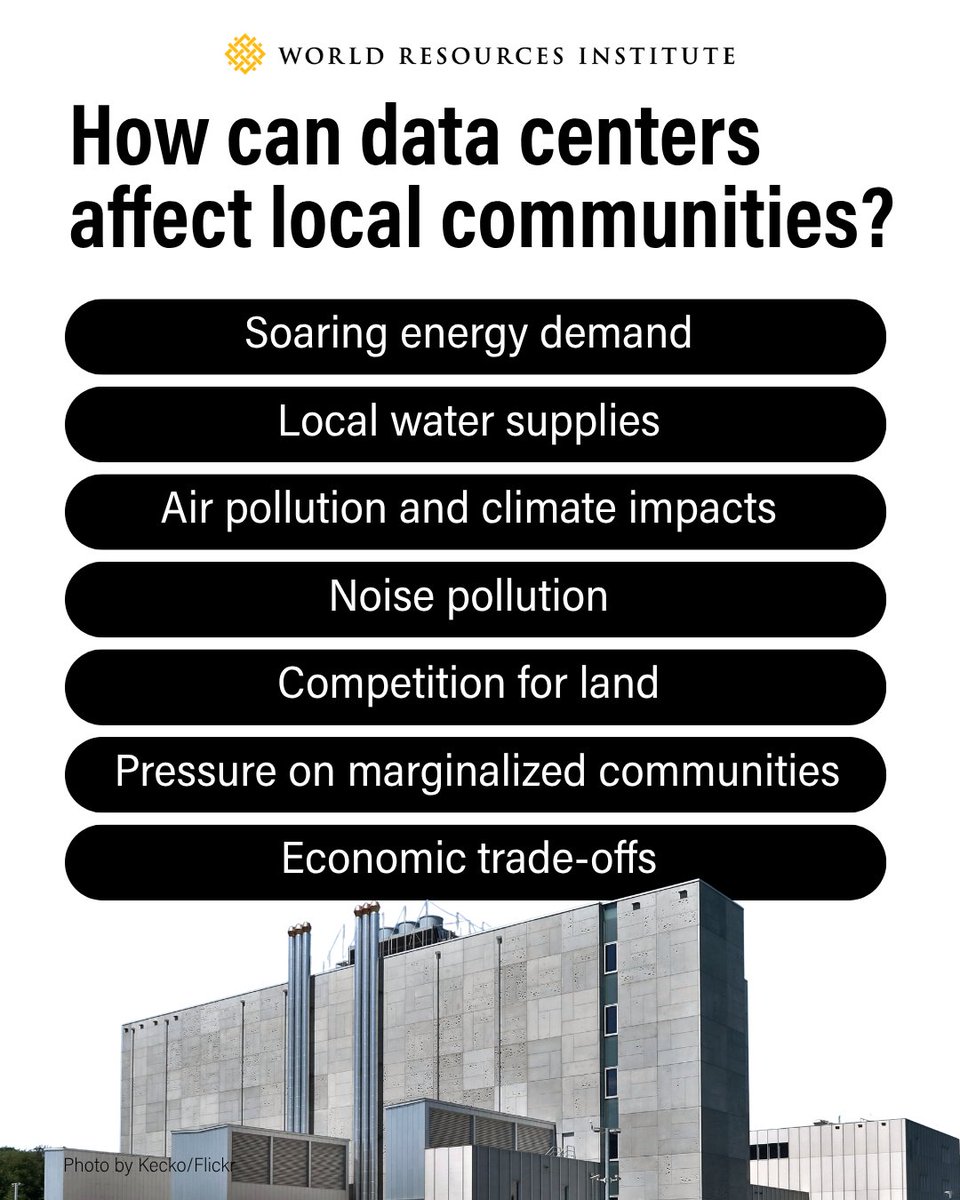
💬Everyone is talking about data centers. But how exactly do they impact our lives? What can states do to deal with these impacts?
We examined seven ways data center growth is reshaping local conditions in the US: https://t.co/2cov4cTJmL
The world’s tropical forests are under pressure from deforestation. And with the EU being the second-largest importer of goods linked to tropical deforestation, addressing its consumption is crucial.
The EU Deforestation Regulation can help with that. We explain how👉 https://t.co/enOkn1J6Ep
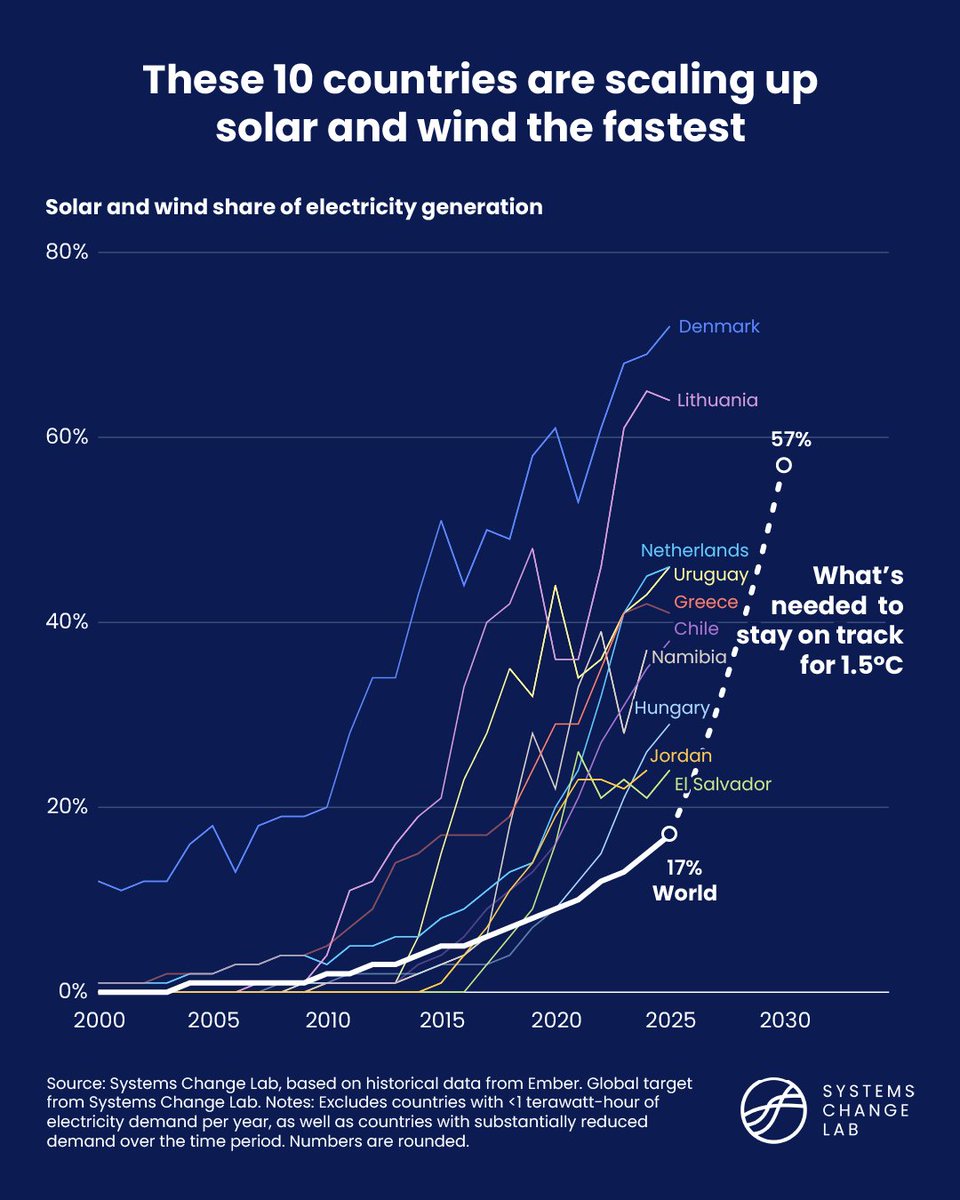
These 10 countries have scaled up renewable energy the fastest:
🇺🇾 Uruguay
🇳🇦 Namibia
🇳🇱 The Netherlands
🇩🇰 Denmark
🇱🇹 Lithuania
🇸🇻 El Salvador
🇨🇱 Chile
🇬🇷 Greece
🇭🇺 Hungary
🇯🇴 Jordan
Read the latest research from #SystemsChangeLab: https://t.co/DRqvsHwU2K