Directors of the National Insitute of Justice and the Bureau of Justice Statistics have joined forces to make clear that the politicalization of crime rates is not based on data . Their oped makes clear the need for using data to derive public policy: https://t.co/c0wcVoxQOg
NIEM to become an open standard under the leadership of OASIS. The evolution of NIEM to an open standard with potential global implications will enable much broader participation. See https://t.co/gMCYW6Wgpm https://t.co/JEUNV42hrY
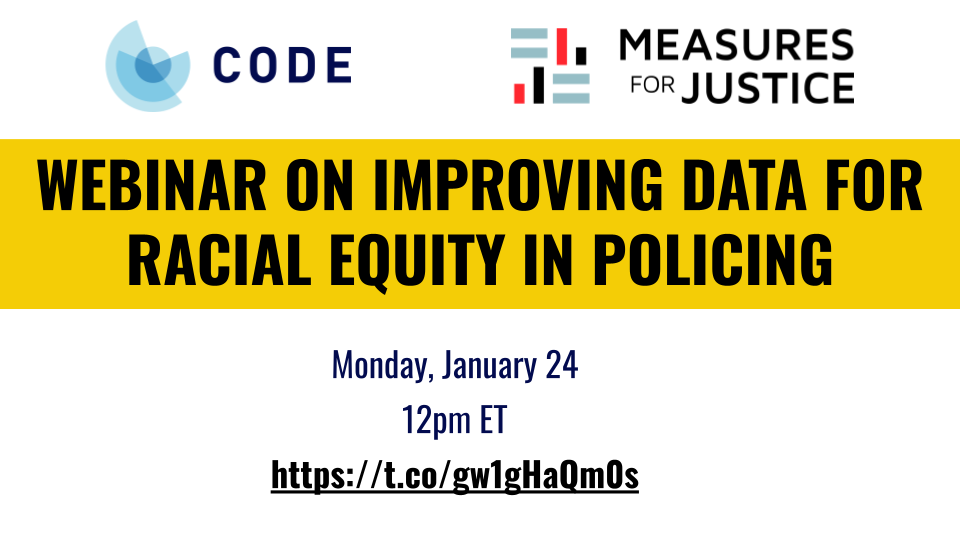
If you missed yesterday's public webinar on the use of data for improving racial equity in policing, featuring @MforJ's Amy Bach, @samswey, @darrellkmalone, @wormeli, @channman21, @ciccolinijulie, and Damon @xprize you can find the recording here: https://t.co/DGYFu82Cu1
Our upcoming Webinar with @MforJ will explore the latest advances on data for #racialequity in policing. Learn more and register to watch live at 12:00 pm ET on January 24: https://t.co/XEFPq3KmFQ
Testimony to Congress on the history of criminal justice statistics since the President’s Crime Commission of 1967 is available at https://t.co/F17bbVCozv.
A new podcast by the Public Technology Institute discusses some of the current news regarding NIEM and the plans for this year. It is being released in two segments. The first round was published on the 13th and can be found at: https://t.co/eTaMAggYO4
The National White Collar Crime Center has posted a webinar led by Paul Wormeli and Kay Chopard that addresses the future of protecting the integrity of digital evidence, discussing zero trust architecture and other issues. See https://t.co/ydop4BvcyI…
@square1justice Convene a Presidential nonpartisan commission to redefine the purpose, constraints and limitations of each component of the criminal justice non-system to create its place in the functioning of government.
Replying to @square1justice
Convene a Presidential nonpartisan commission to redefine the purpose, constraints and limitations of each component of the criminal justice non-system to create its place in the functioning of government.