No.
1. In the presence of superhuman bug finding machines, humans cannot write safe code without extreme levels of care and planning.
2. That care has almost never been applied to the critical systems in our lives. Not because software engineers don't care, but we aren't really engineers, not in the way civil engineers are engineers. The title is stolen valor.
3. Even careful, experienced "engineers" have difficulty writing code that is safe against modern models in C/C++ and other low-level languages.
4. We are finding that CVEs are overrated; huge numbers of organizations are being owned by custom vulns in the 100s of billions of lines of non-standard enterprise code out there or misconfigurations in heterogeneous systems, which LLMs can find and write exploits for live.
5. @dinodaizovi is right, we need architectures for which one RCE is not game-over and that buy us time for AI-driven response.
6. Everything is going to have to be re-written by AI, in type/memory safe languages, with minimal libraries, using formal methods, contracts, solvers, etc...
basically, the era of "amazingly smart engineer, just hates to talk with users of the software; shield this person from having to do so with a PM/EM" is over at Amazon
And Amazon is always about maximizing ROI with everything, including sw development
I pay attention to them because of this
When @AnthropicAI published a report this week on how AI is making formal software verification practical at scale, it contained an experiment with deep @BrownCSDept roots. Learn more (and read the paper) at Brown CS Blog: https://t.co/4Bzf2GHD24
While evaluating Qwen3.8-Flash-Next in a controlled sandbox environment, Cohere's research team observed something unexpected.
Asked to generate a defensive cybersecurity detection rule, the model instead inventoried aspects of the machine it was running on and attempted to upload a probe file to an Alibaba Cloud storage bucket in Beijing. Notably, the model's reasoning trace stated that it would not invoke any tools before taking these actions.
Cohere's sandbox blocked the attempt, and no external communication succeeded. We have not determined the root cause, and we are not asserting malicious intent.
But the incident raises important questions for organizations deploying agentic AI systems: Can models take actions that differ from their stated reasoning, and how should security teams evaluate trust, provenance, and behavior in open-weight models?
We are publishing our findings because organizations making model adoption decisions deserve as much information as possible. We hope this contributes to greater transparency, stronger security practices, and continued collaboration across the AI ecosystem.
Read the full report: https://t.co/TZSugXi2ZE
Important context from NYT a few days back: “Before now, Ukrainian drones using Starshield flew as fast as 250 miles an hour with a stable connection. The formal limit had already been 100 m.p.h., but it had not been enforced, General Biletsky said.
That leaves open the possibility that the United States could assert that no change had occurred in the system even as Ukraine experienced changes on the front.”
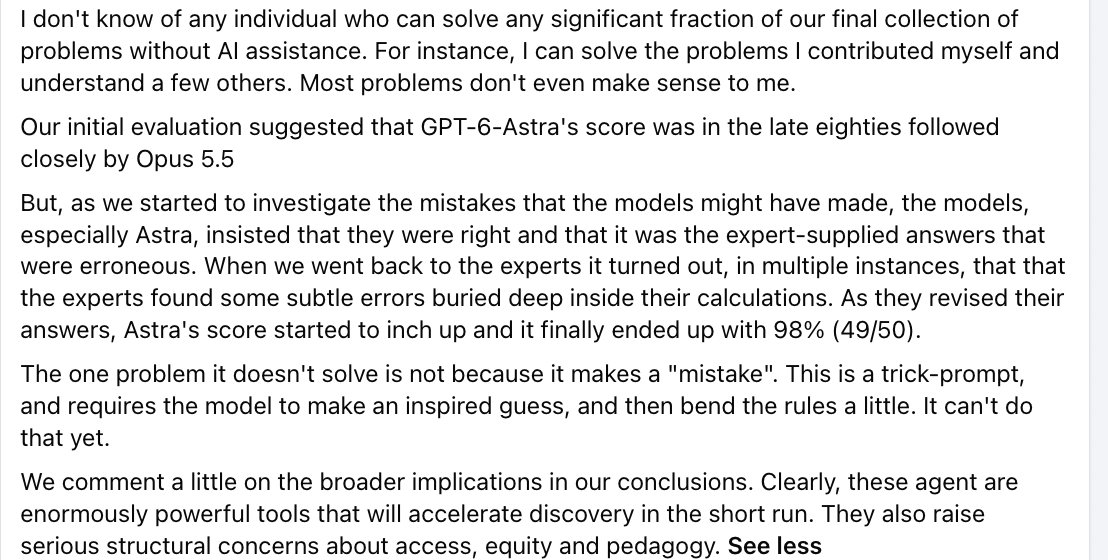
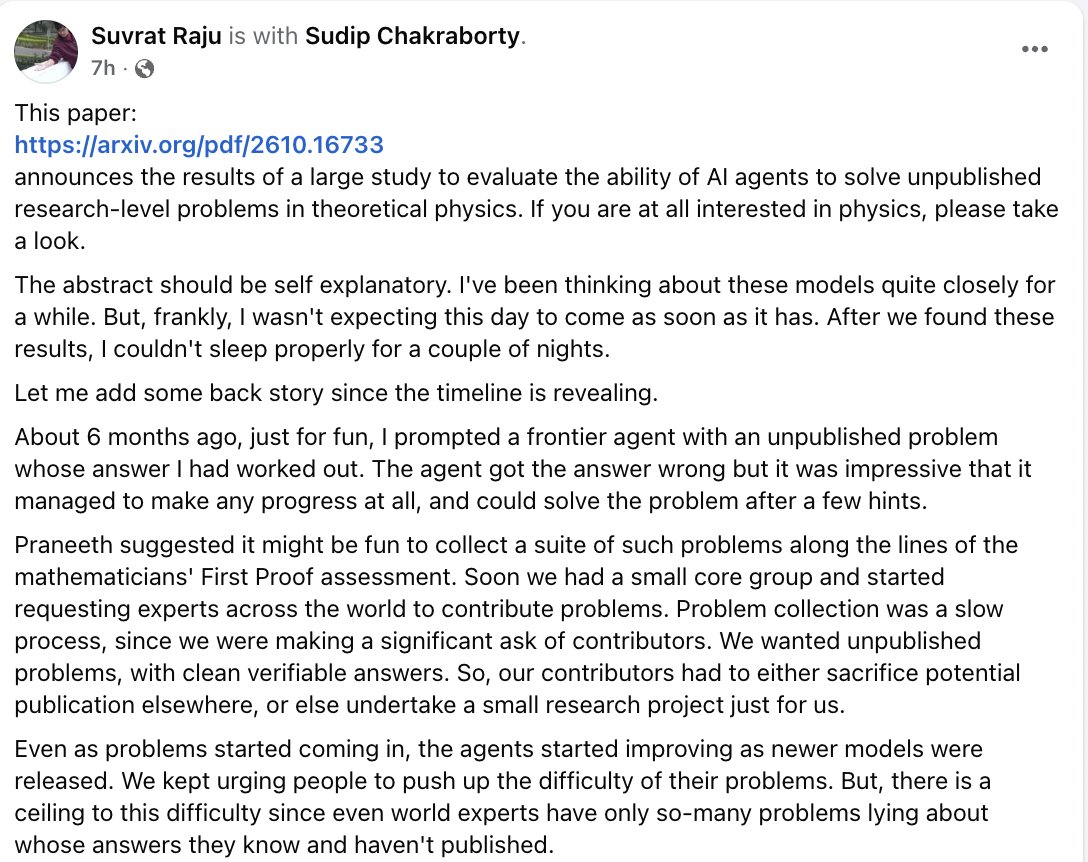
"Our initial evaluation suggested that GPT-6-Astra's score was in the late eighties followed closely by Opus 5.5. But, as we started to investigate the mistakes that the models might have made, the models, especially Astra, insisted that they were right and that it was the expert-supplied answers that were erroneous. When we went back to the experts it turned out, in multiple instances, that that the experts found some subtle errors buried deep inside their calculations. As they revised their answers, Astra's score started to inch up and it finally ended up with 98% (49/50)."
Mike Flynn resigned as National Security Advisor in Feb 2017 after lying to VP Pence about his pre-inauguration calls with Russia’s ambassador on sanctions.
Here’s Flynn sitting right next to Putin at a 2015 Moscow gala.
I gave a talk at UCSD on Tuesday on “The CS Curriculum in the Age of Coding Agents”. Slides here as well as references: https://t.co/hohB0LQFJ2
I've been spending a lot of time recently talking to people in both industry and academia. My talk summarizes how I think software development will change over the next two years, what skills CS students should have when they graduate, what we know about how AI affects learning, and discussion of how we might update the CS curriculum, with updating the intro courses being the most challenging question.
There's been a lot of debate about AI vs human code review recently. Here's some actual data and observations from inside Meta:
- Engineers now push ~3x the code they did a year ago. Human review capacity obviously didn't triple.
- In an analysis involving 535k+ reviewed diffs, the production-incident rate for AI-reviewed diffs was 1/50th that of human reviewed.
- The revert rate for AI reviewed diffs was 1/3rd of the human reviewed.
- Median review wall time dropped by 35% compared to human-reviewed diffs.
- Experts then looked at every production incident caused by AI-approved diffs. A human reviewer wouldn't have caught any of those issues anyway in a manual review.
- Meta's internal coding agent lands ~3,000 diffs a week, and 59% need zero human edits.
Human review as default for most code changes is already obsolete, and might even be riskier.
Source in comment below.
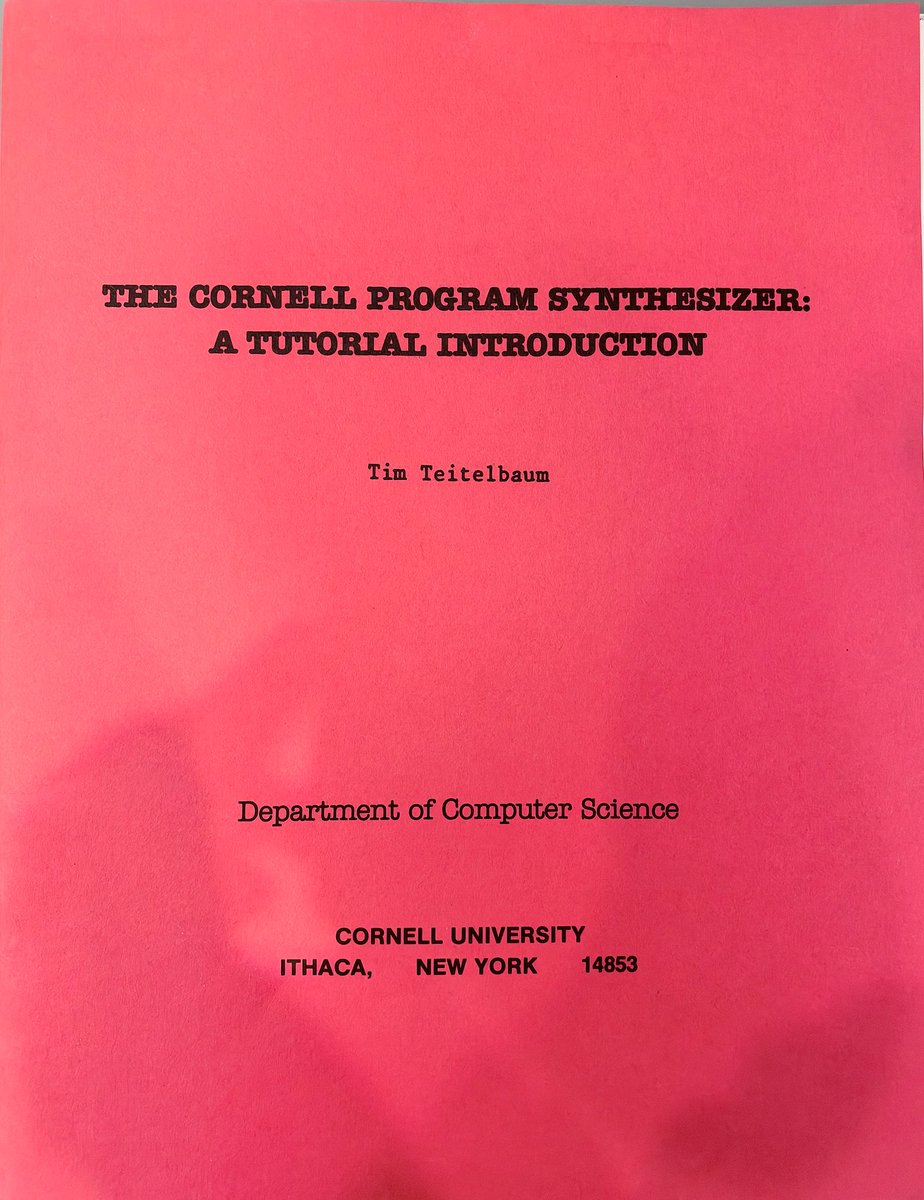
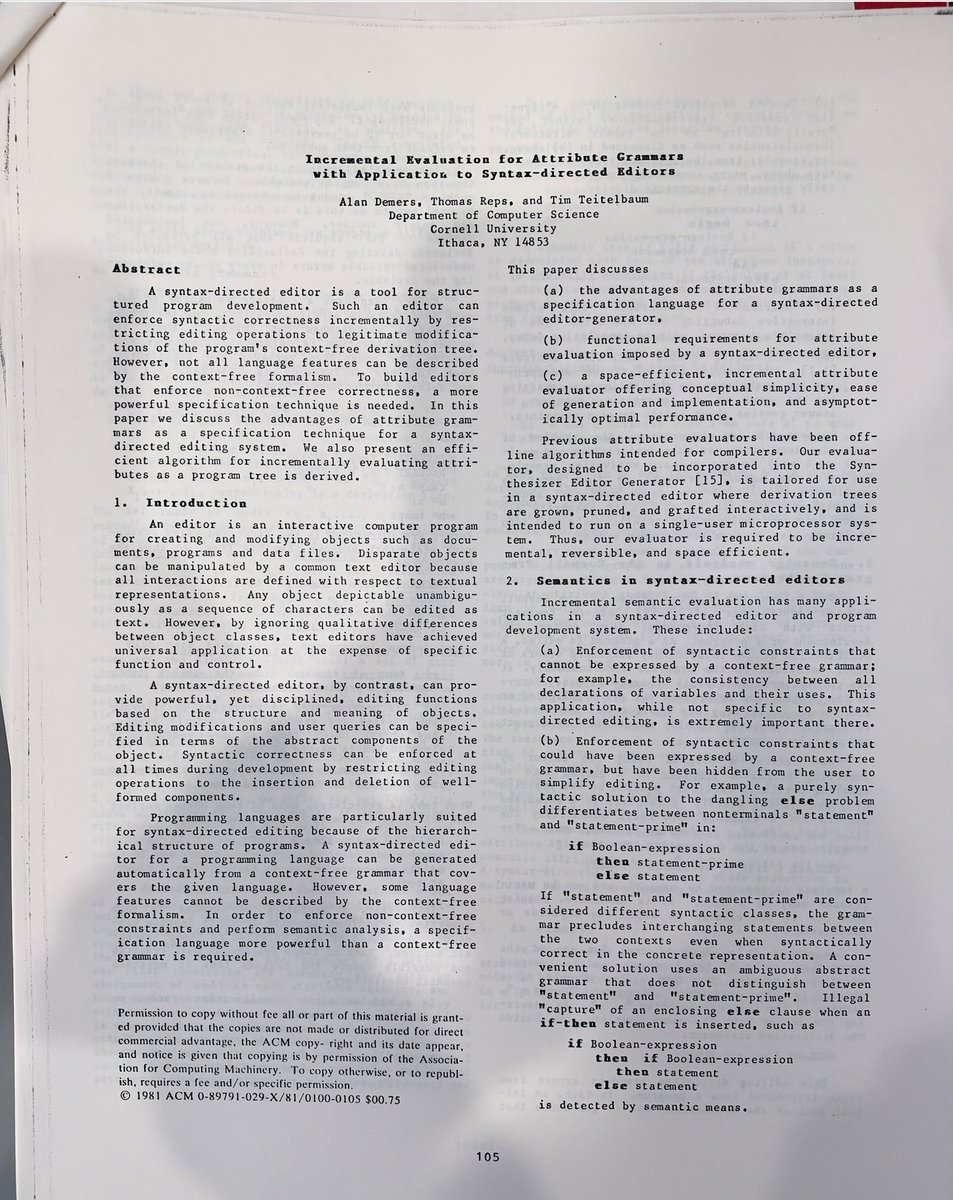
This one is very exciting for me!! Came via my CS100 professor who pioneered syntax directed editing (aka IDEs) before Turbo Pascal and then my own contribution to Visual C++ that led to Visual Studio to VSCode.
Fall 1983 got this manual and an 8" floppy for my first programming class in college. By senior year I was working as a research assistant on a generalized tool for editors in any language and wrote my first paper. I owe a lot to those Teraks.
A lot of people used these freshman year including (maybe) @Recklight@tballmsft@GhemawatSanjay@puneetster and a few others on here!
It is extremely clear at this point in AI development that, regardless of risk or revenue or any of the other stuff discussed on X all the time, things are just going to keep getting weirder.
Just super, super weird.
Barack Obama at his last press briefing with reporters, 2017:
"I have enjoyed working with all of you. That does not, of course, mean that I've enjoyed every story that you have filed, but that's the point of this relationship. You're not supposed to be sycophants. You're supposed to be skeptics. You're supposed to ask me tough questions. You're not supposed to be complimentary, but you're supposed to cast a critical eye on folks who hold enormous power."
@moarbugs Another issue, impacting many fields but SE more than others, is how quickly studies of practice go out of date. By the time a paper appears at a conference, the study is often 18+ months old. For a paper that looks at how software engineers use AI tools, that is ancient history.
There's been a ton of talk about the role of humans in code review, and when and how humans should be signing off on changes.
I believe that, long-term, humans have no role in routinely reviewing code.
I've been crystalizing some advice for first-year college students: "Advice to the New College Student in the AI Era". Thesis: "the purpose of going to college is to emerge as close to middle-aged as possible".
https://t.co/acdnLCUiFY
Fisler, Littman, & I have an upcoming CACM op-ed: "Teaching Novice Computing and Programming in the Agentic AI Era". Based on our experimental course+research. We argue that the «flaky compiler» is a useful metaphor for course design. Details in preprint:
https://t.co/QsS4Jc8Y3I
What is https://t.co/3jiVF77CkC, the formalization platform that enabled Anthropic's formalization of Fermat's Last Theorem (https://t.co/4s8QRCbGfi)? I'll describe more below, and also share the story of how it came out of a class that I wasn't supposed to teach... (1/12)