The River Effra is south London’s main lost river. It once flowed from West Norwood and Dulwich, through Herne Hill, Brixton and Kennington to Vauxhall where it met with the River Thames. This is a guide to walking the course of the lost River Effra.
https://t.co/6USKaE3vOM
A real home takes centuries to build, but moments to destory.
700-year-old church tower of All Hallows Staining, built around 1320, and the grade II Lambe’s Chapel Crypt, which dates from 1200, being suffocated by the hand of modernity ⏳️ @Lost___London@PubHistoryTours
As part of the 110th Anniversary of the Great Explosion, there will be an exhibition in the Visitor Information Centre in Market Place from Tues 17 March with information about the Great Explosion of 1916, and some of the families who were involved.
#visitfaversham#historicswale
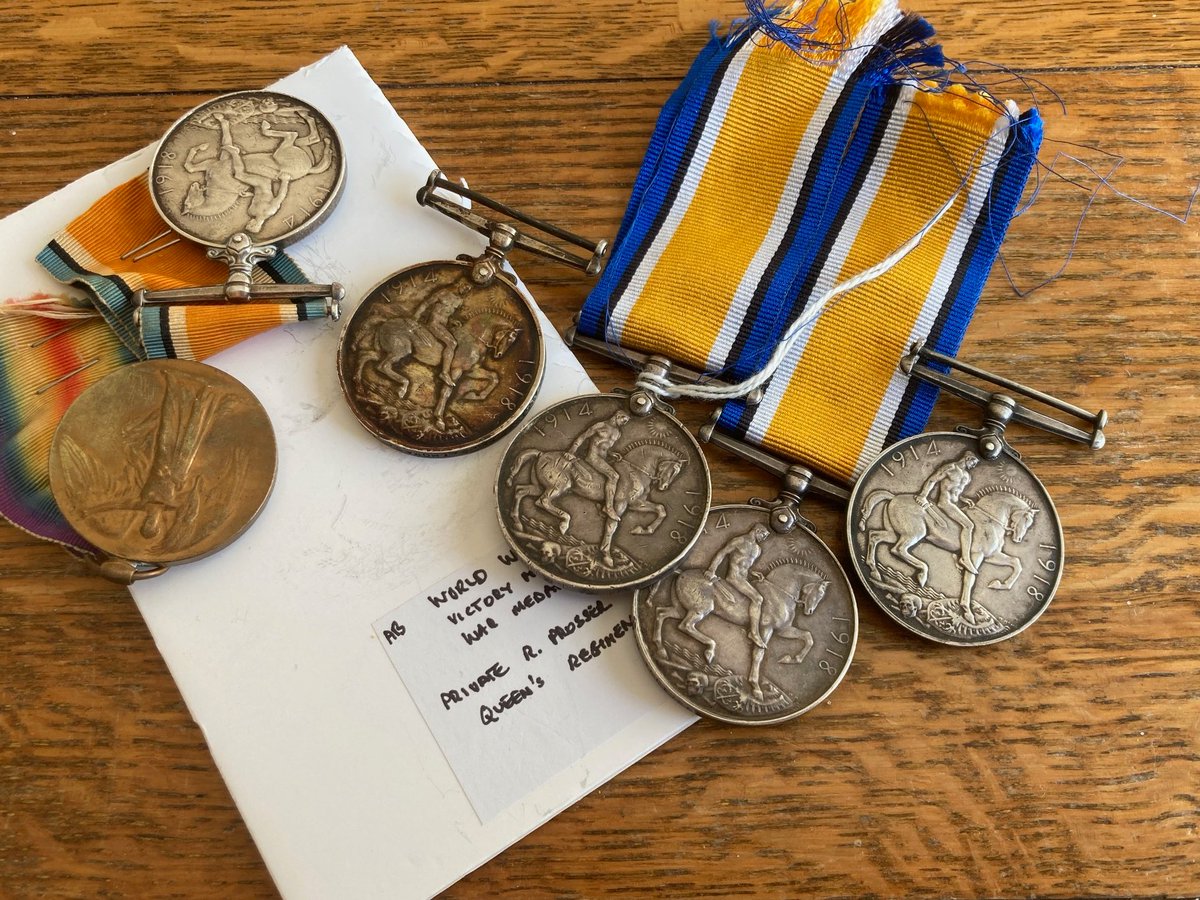
@DaviesAntiques I acquired a couple of medals, via a deceased relative who may have had them from a deceased friend. Have researched the recipients, and now I will remember them even if no-one else does.
6.5 million war medals were cast in silver, individually named and awarded to the men and women who fought in World War One. Sadly, due to families not remembering the recipient, these are now regularly turning up as scrap at bullion dealers. Managed to save these. #antiques
Mr Thomas Backshall of Paddock Wood #Kent who had been making basket hoops by hand for 73 years when this photograph was taken in 1936. (Photo: John Topham / TopFoto) #rurahistory 🏴
An early Anglo-Saxon silver-gilt plated disc brooch dating to around AD 500–600, excavated at Wingham in Kent 🇬🇧
This is high-status work from the early Anglo-Saxon period, both in materials and in craftsmanship. The brooch is built around a silver base, plated with gold, and framed by a nielloed border that gives a sharp visual contrast to the brighter decorative elements. At its centre sits a cross formed from cloisonné garnet and glass, a striking detail that hints at the growing influence of Christianity during a period that still balanced older beliefs and new ideas.
Surrounding the central design are four shell bosses, adding depth and rhythm to the surface, while fine gold filigree and applied decoration complete the piece. Every element is deliberate. Nothing here is casual or purely ornamental. This was meant to be seen, recognised, and understood as a marker of identity and status.
Disc brooches like this were typically worn by women, often as part of dress fastenings at the shoulder or chest, and they carried strong social meaning. The quality of this example suggests it belonged to someone of considerable standing within their community. The choice of garnet, imported materials, and skilled techniques links Kent closely to wider trade networks across the North Sea and beyond.
Its discovery at Wingham places it firmly within a landscape already known for rich early medieval archaeology. Kent, at this time, was one of the most outward-looking parts of early Anglo-Saxon England, with strong connections to Frankish Europe. This brooch fits that picture perfectly.
Even after fifteen centuries, the balance of colour, texture, and design still works. It feels confident, deliberate, and modern in a way that is hard to ignore. A small object, but one that carries an enormous amount of history in its surface.
British Museum
#drthehistories