Now that Delhi Police has arrested the cook, they should also arrest the sweeper, the security guard, the receptionist and the liftman.
Arrest everyone but the corrupt MCD engineers, the inept fire dept officials and the extortionist local police personnel.
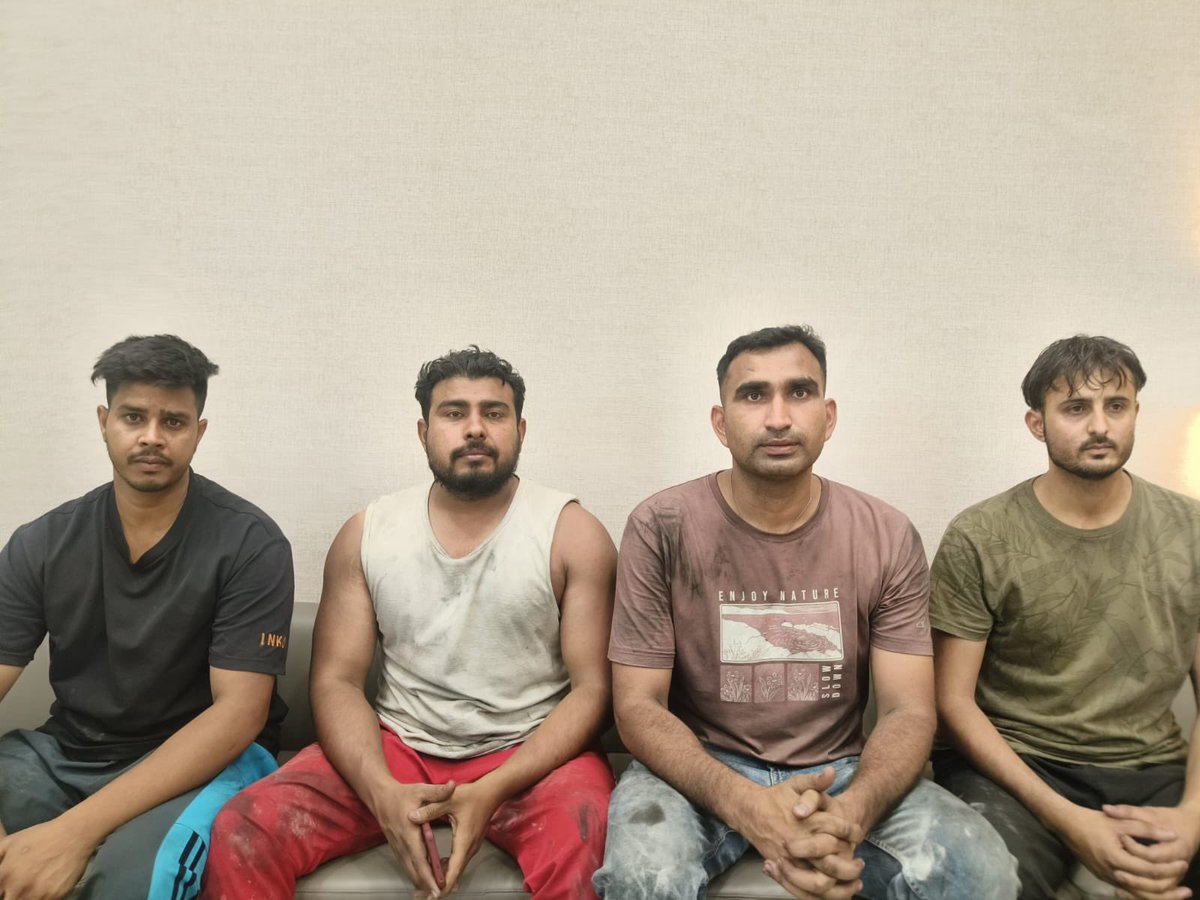
When systems fail, individual heroes rise. These are people who rescued people and administered CPR in the hauz rani fire . (L to R) Amir Khan, Mohd Shoaib, Wasim Raja and Mohd Afzal
VIDEO | Delhi Malviya Nagar fire: A shop owner laid out around 20-22 mattresses from his shop so that people could safely jump on them to escape fire.
Shop owner Armaan says, "I have my shop here, I got information about the fire, there was a massive fire, nobody could get inside or come out. Then 7-8 persons somehow entered. Then I put around 20-22 mattresses from my shop and laid them outside, people jumped on it... Most of them were safe."
#MalviyaNagarFire #DelhiFire
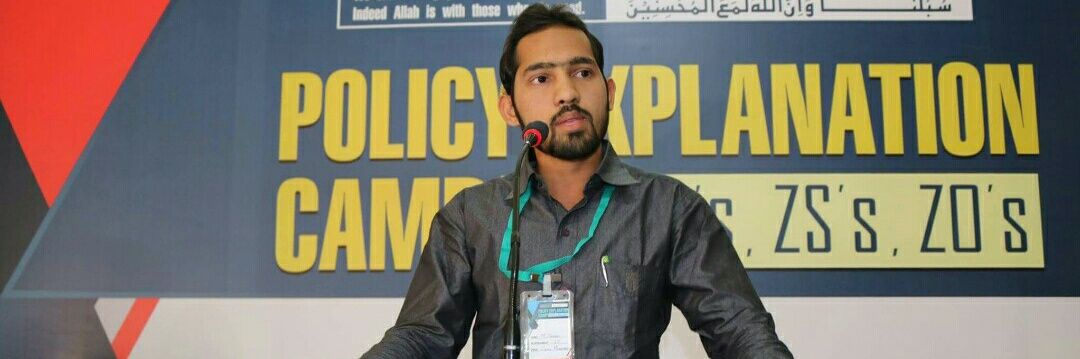
जेल से आते वक़्त मैं दो रोटी साथ ले कर आया था। जो मेरे उस दिन के रात के खाने का हिस्सा थीं। इन रोटियों को ना सिर्फ़ चबाना मुश्किल है पचाना भी बहुत मुश्किल है। छह साल तीन महीने जेल में इन रोटियों को खाने बाद हर उस नयमत का एहसास हो गया जो अल्लाह ने अता कर रखी थी। आयिंदाह भी यह एहसास बाकी रह के अल्लाह रब्बुल इज़्ज़त ने क्या क्या नयमतें नवाज़ी हैं। साथ ही मेरे उन भाइयों की फ़िक्र भी मौजूद रहे जो अभी भी इन रोटियों को ज़िन्दान्न में तोड़ रहे हैं। यह एक मुश्किल काम है लेकिन नामुमकिन नहीं राह ए हक़ पर चलने वालों को ये सब झेलना ही पड़ता है। मुश्किल सिर्फ़ इस यकीन के साथ आसान हो जाती है के अल्लाह रब्बुल इज़्ज़त इन परेशानियों का बेहतरीन बदला देगा।
#JailKiRoti #FreedomFeels
CBSE अध्यक्ष - ट्रांसफ़र।
CBSE सचिव - ट्रांसफ़र।
एक-सदस्यीय “जाँच” समिति - गठित।
और असल ज़िम्मेदार, धर्मेंद्र प्रधान - सुरक्षित।
अधिकारियों को हटा दिया। मंत्री को बचा लिया।
यह जवाबदेही नहीं - यह cover-up है।
हमारी माँग आज भी वही है: शिक्षा मंत्री को बर्ख़ास्त किया जाए और स्वतंत्र न्यायिक जाँच हो - ये मांगें कोई मोदी सरकार की एक महीने पुरानी अंदरूनी फ़ाइल नहीं जो यूं ही भुला दी जाए।
अगर प्रधानमंत्री को 18.5 लाख CBSE छात्रों की परवाह होती - धर्मेंद्र प्रधान जी कब के हटाए जा चुके होते।
This is an unbelievable piece of work by Sarthak and something that requires amplification.
Let me explain what he found, in simple terms.
Sarthak is a Class 12 student from the 2025-26 batch, one of the 17 lakh students whose answer sheets went through CBSE's new On-Screen Marking system.
He spent days reading through CBSE's evaluation tenders, scraped all 576 tenders CBSE has issued, and tracked how the rules changed across three versions of the same tender.
The core finding is that the company that won the contract to scan and grade 17 lakh students' answer sheets is Coempt Eduteck.
Coempt used to be called Globarena Technologies. Globarena was the company behind the 2019 Telangana intermediate exam disaster, where software failures led to 3.8 lakh students getting wrong or missing marks, and 23 students died by suicide.
A government committee found systemic failure and negligence. Six months later, Globarena rebranded to Coempt Eduteck.
So a company with that track record won a contract to handle 17 lakh CBSE students. Sarthak's investigation is about how the rules were rewritten to let that happen.
The tender was issued three times.
> First tender, February 2025. It existed, then disappeared from the public GeM portal. Sarthak scraped all 576 CBSE tenders and this one was missing from the archive entirely.
> Second tender, May 2025. Four companies applied including TCS and Coempt. All four failed the technical evaluation. Cancelled.
> Third tender, August 2025. Coempt won. Between the second and third tender, a series of rule changes happened, and every single one made it easier for Coempt to qualify.
Here is what changed, one by one.
01. The old rules disqualified any company with a history of abandoning work, failing to complete contracts, or financial weakness. The new rules deleted this clause entirely. Coempt's Telangana history stopped being a barrier.
02. The old rules disqualified any company that was "blacklisted earlier." The new rules changed this to "currently blacklisted." Because Globarena rebranded after Telangana, removing the word "earlier" effectively erased their past.
03. The rules required Rs 50 crore average turnover over three years. Coempt's exact average came to Rs 50.86 crore. They cleared the bar by less than 1%. Earlier, a smaller company had asked CBSE to lower the bar to Rs 30 crore for fairer competition. CBSE refused. So the bar was kept high enough to block small players, but sat exactly low enough for Coempt to scrape through.
04. Software maturity is measured on the CMMI scale, 1 to 5. The old rules required Level 5. The new rules dropped it to Level 3. Coempt is a Level 3 company.
05. The cooling-off period for engaging retired CBSE officials was cut from two years to one. This makes it easier to use recently retired insiders to influence the process.
06. The old rules required experience with large projects of at least 5 lakh students each. The new rules removed the student count and counted cumulative answer-book volume across small projects instead. Coempt has many small fragmented university contracts. This helped Coempt and hurt TCS.
07. The old rules required bidders to own their own data centre and disaster recovery centre on Indian soil. The new rules allowed third-party MeitY-empanelled cloud hosting. Coempt runs on AWS and Azure. This helped Coempt and hurt TCS, which owns its own data centres. It also means student data is no longer on sovereign, Indian infrastructure.
08. The old rules required the bidder to own or control the complete source code of its software. The new rules deleted this. Coempt's platform runs on Microsoft's proprietary IIS, which they don't own.
09. A last-minute corrigendum, issued right before bid submission, removed CBSE's own power to blacklist the firm if its software failed catastrophically. So even a Telangana-scale failure couldn't get Coempt banned from future government tenders.
10. The penalty structure shifted from punishing mistakes to punishing delays. The old rules fined the vendor for wrong scanning, merged pages, and unscanned books. The new rules dropped those and instead levied Rs 50,000 per day for delays. This incentivises rushed scanning over accurate scanning.
11. The old rules had a hard accuracy threshold, error rate not to exceed 0.5%. The new rules removed this number entirely.
12. The old rules specified proper book and robotics scanners. The new rules just say "sufficient scanners." The definition was vague enough that, as Sarthak notes, the scanning could be done with a phone on a stand.
13. On the security side, the contract required a VAPT (vulnerability and penetration test) certified by CERT-In before go-live, and a restricted beta phase before launch. The system clearly wasn't restricted, because the other researcher, Nisarga, was able to access it and find vulnerabilities four days before go-live. So the mandatory security audit appears to have been bypassed.
These are more than a dozen rule changes, all between the failed tender and the winning tender, all pushing in the same direction, all benefiting the one company with the worst track record in the field.
The security holes Nisarga found last week now have an explanation. The system was built by a vendor that was specifically allowed to skip the security certification, the source code ownership, the data sovereignty, and the quality thresholds the original rules demanded.
Following things need to happen immediately;
1. An immediate CAG audit of the tender process.
2. A parliamentary debate on the topic.
3. An independent investigation into
> Why the first tender vanished?
> Why the disqualification clauses were deleted?
> Why the turnover bar was held exactly where it was?
> Why the security level was dropped?
> Why the blacklisting power was removed at the last moment?
Sarthak, this is genuinely exceptional investigative work. Far better than most journalists with full resources ever manage. Take a bow. :)
17-year-old Sarthak Sidhant has exposed how CBSE manipulated its own selection process to benefit COEMPT, using CBSE’s own documents.
The details in his blog reveal how CBSE changed the RFP to unduly benefit COEMPT, at the cost of TCS.
He has revealed the hollowness of Dharmendra Pradhan ji’s denials. The PM remains silent, as usual. The question is simple: who are they protecting, and why?
An independent judicial inquiry is now essential to uncover the full extent of this scam.
Sarthak’s work shows that India’s Gen Z is brilliant and fearless. And sooner or later, they will find out the full truth.
Petrol and diesel prices have been raised four times in two weeks. They are likely to go up further, along with food and overall inflation. The war Israel and the U.S., both India’s close partners, have launched in India’s neighbourhood is having a direct crushing effect on the lives of millions of Indians.
I don’t know whether this is an era of war or not. But this particular war is certainly hurting India and its rise. If India doesn’t speak for its own interests and speak out against policies that hurt its interests and the well-being of its people, nobody else will.
This level of hate is not even seen in fringe in other countries.
But in India, even a major ruling party politician can arbitrarily ruin the lives of children just based on identity.
What India is going through right now is not normal even benchmarking to very low standards.
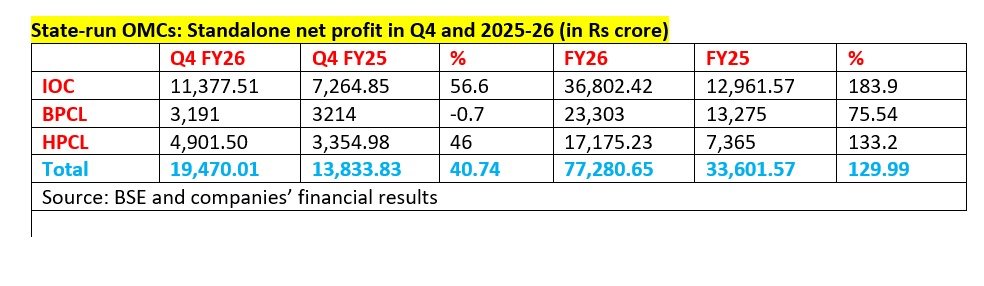
State-run oil firms report 41% jump in Q4 net profit. The three state-run oil companies, controlling over 90% of domestic fuel retail market, have registered a combined net profit of ₹19,470 crore in January-March 2026 quarter, a 40.74% growth over the same period last year, despite the impact of global energy supply disruptions in March. The three companies saw a 130% jump in their combined net profit in 2025-26, to ₹77,280.65 crore as compared to ₹33,601.57 crore in 2024-25.
https://t.co/kdpxY0Daj0
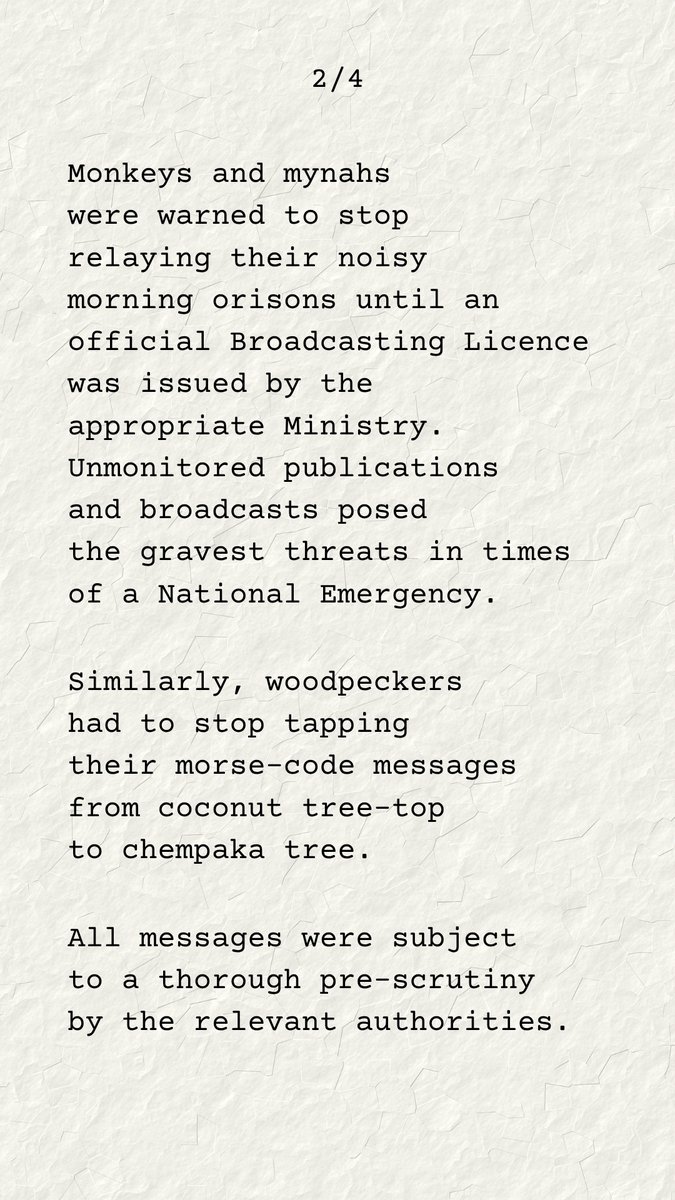
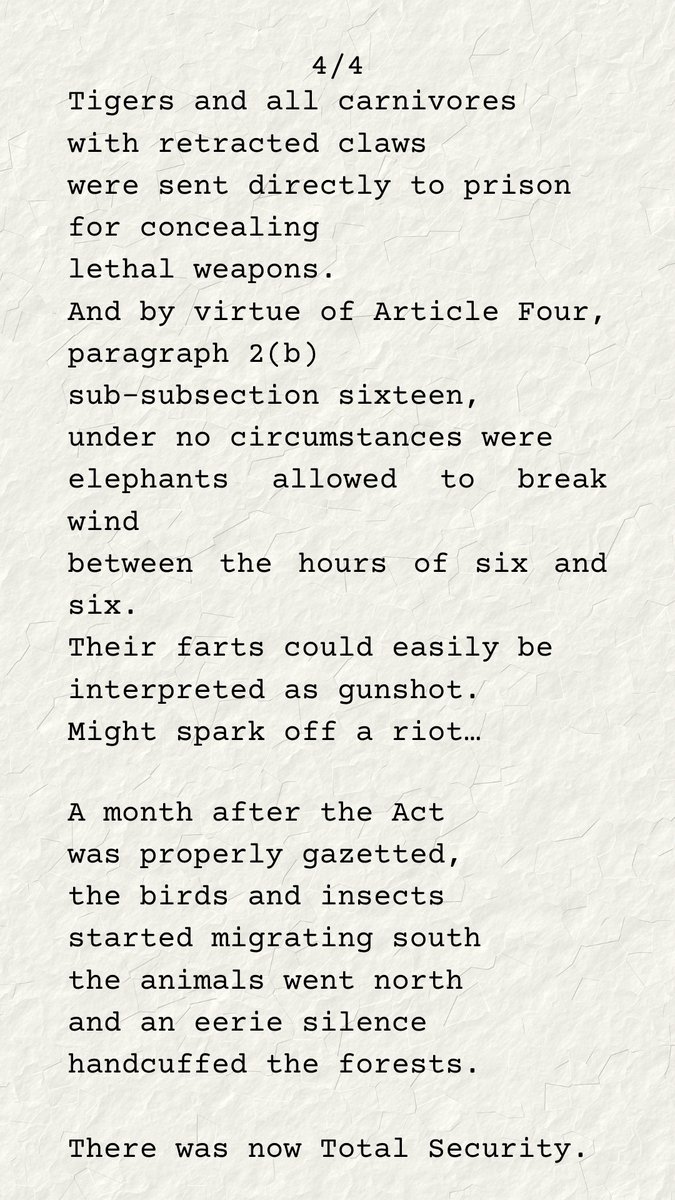
Even by the standards of a country ranking 157 of 180 nations in the World Press Freedom Index, the reaction of the authorities to the ‘Cockroach Janata Party’ is beyond extraordinary. The public response to that imaginative prank should have signalled to them a deep discontent, even distress, among young people. Instead, as The Indian Express reported, it was framed as jeopardising the country’s ‘national security’ and ‘posing a threat to the sovereignty of India.’ Decades ago, the Malaysian lawyer and poet Cecil Rajendra wrote this brilliant poem that captures the idiocy of it better than any pompous editorialising could (not that our ‘mainstream’ media would dare do even that much).
The CJI needs a PR win after the 'cockroach' comments. So expect fireworks in court on Monday. Except, do remember that the accused in the case also deserve a fair trial, not prejudiced by adverse commentary from the CJI prior to trial.
India has exported 11,581,070 kilograms of Sheep & Goat meat to the world in the year 2024-25. Mostly to United Arab EMTs, Qatar, Kuwait, Bahrain, and Oman.
Also, India exported 1,254,775,310 kilograms (about 1.25 billion kg) of Cara Beef in the year 2024-2025. It exported mostly to Vietnam, Egypt, Malaysia, Iraq and Saudi Arab. Majorly from Uttar Pradesh, Maharashtra, Andhra Pradesh, Telangana and Kerela.
Happy Bakra Eid wishes in Advance.