Research in @JAMAHealthForum from @wschpero and @pragyakakani finds that expansion of Medicaid eligibility may protect access to pharmacies in low-income communities. Learn more: https://t.co/I5jB6J8GBu
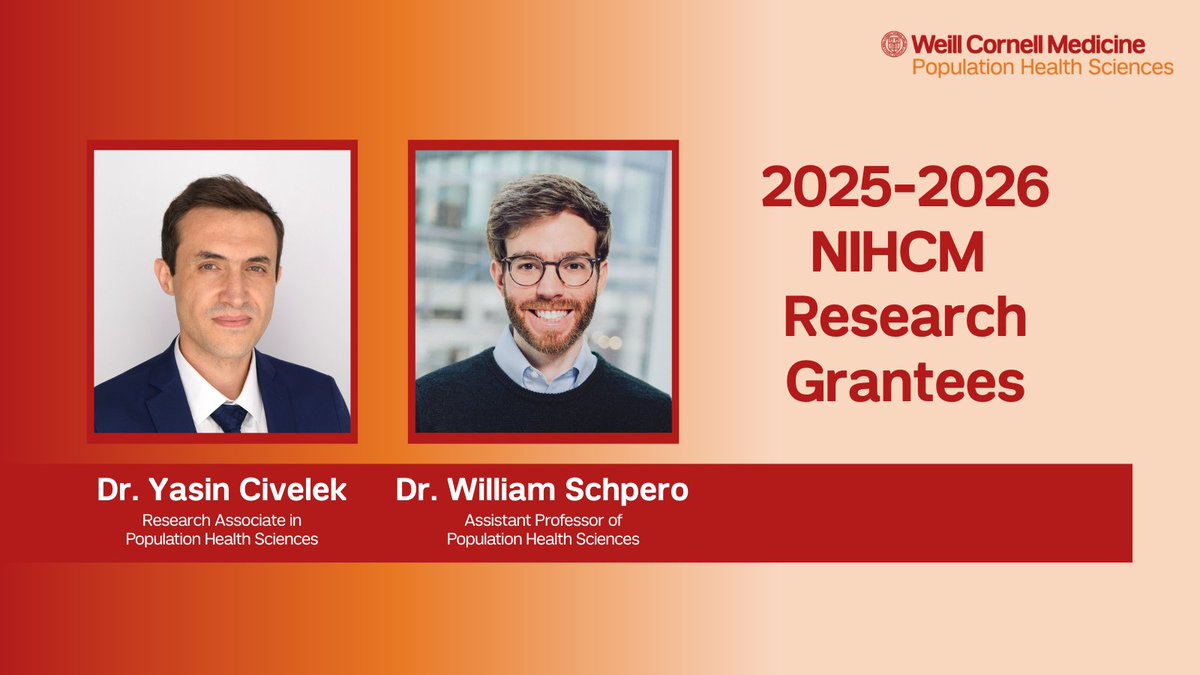
We’re proud to announce that @wschpero and Dr. Yasin Civelek are part of the 2025-2026 cohort of @NIHCMfoundation Research Grantees! Congrats to Dr. Schpero and Dr. Civelek on this achievement: https://t.co/cuCOWPzoKN
Who delivers maternity care matters. 👩⚕️
More than 90 percent of births are physician-led.
But what happens when Certified Nurse Midwives (CNMs) gain full authority to practice independently?
🧵 Here’s what I find in my #JMP:
Research from @wschpero, @EmmaBethMcGinty, and Michael Liu in @Health_Affairs Scholar finds that for a decade, more than 60 percent of the US population lived in regions with psychiatric bed shortage. Learn more: https://t.co/8fYoGgmNbL
.@WSchpero and colleagues have developed a checklist, described in @JAMAHealthForum, to improve Medicaid policy research. Learn more: https://t.co/T2VaXX4fS0
We are excited today to launch the T-MSIS Analytic Files (TAF) Analysis Reporting Checklist, which is designed to guide reporting of research using the TAF, the new generation Medicaid claims data.
See @JAMAHealthForum: https://t.co/8dbaGeM5zk
Links to key resources⬇️
1/N
For more:
➡️ Publication in @JAMAHealthForum: https://t.co/8dbaGeM5zk
➡️ Checklist and Related Resources: https://t.co/9Q2qpvWdo6
➡️ Video Explainer: https://t.co/w0h3M3GElf
5/N
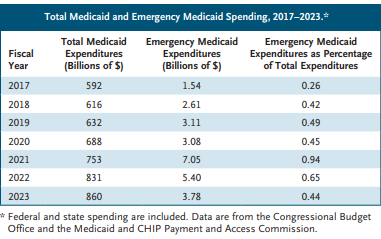
For decades, the narrowly defined Emergency Medicaid (EM) program has reimbursed hospitals for emergency care provided to uninsured, low-income immigrants.
In @NEJM, we write in defense of state flexibilities in EM, which now seem at risk: https://t.co/N9lzlGxmOR
🧵Emergency Medicaid accounts for <1% of Medicaid spending — yet saves lives & money.
Restricting it ignores evidence, burdens states, and harms those who keep our communities running.
Our latest via @NEJM: Preserving State Authority and Access to Care
https://t.co/i1jhB9Rogs
In their new Forefront article, @DhruvKhullar, @wschpero, @EmmaBethMcGinty, @colleenlbarry, and Amelia M. Bond of @WeillCornell and @CornellBPP discuss a survey which suggests that many of the country’s leading health care policy experts believe that work requirements are likely to result in large numbers of people disenrolled from the Medicaid program for administrative reasons without a substantial increase in rates of employment. https://t.co/sMXeZQJC5t
Check out our article at Health Affairs Forefront:
https://t.co/Ak7rMXRhY6
Dig through individual responses (with comments) on the CHPC website:
https://t.co/Obhiet9I2r
3/3
For many years, the Clark Center at Chicago Booth has regularly surveyed leading economists to assess consensus on timely economic policy issues.
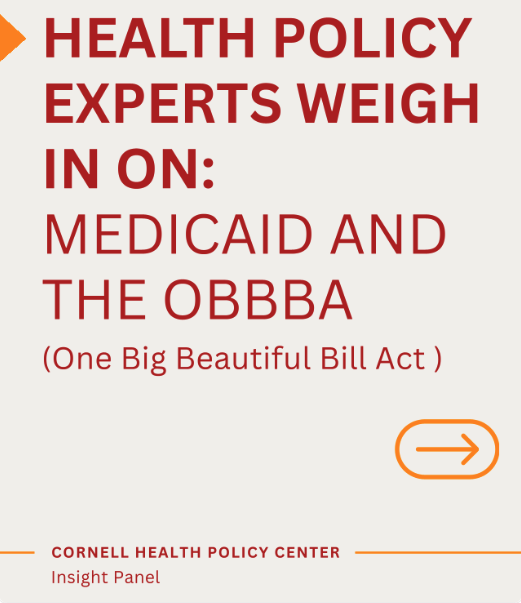
We are excited today to launch the Cornell Health Policy Insight Panel, where we extend that model to health policy.
1/N ⬇️
Every 5-6 weeks, the Cornell Health Policy Center (CHPC) will survey 64 leading health policy researchers on the most pressing health policy topics of the day.
To start: effects of Medicaid work requirements under the One Big Beautiful Bill Act.
2/N
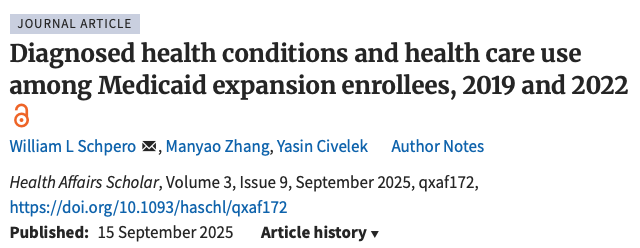
During debate on the OBBBA, I realized we know very little about health care needs and use in the adult Medicaid expansion population.
We have a short paper out in @Health_Affairs Scholar this week that uses national Medicaid claims data in an attempt to fill that gap:
⬇️ 1/N
2. The OBBBA includes work requirement exemptions for certain groups, including folks who are "medically frail" or in treatment for SUD.
Our paper is an early proof-of-concept that states could use claims to automate exemptions (if allowed to do so in final regs).
5/N