@GannaMetzger, @wtjackson, et al. report surprising pH sensitivity findings in the EV-D68 lifecycle, different from poliovirus. @dapontediaz, @CameronLabUNC & @VogtVirusLab give thoughts on how EV-D68 and PV differ even though both can cause #AFM. #mBio https://t.co/lgvwABm3xO
@GannaMetzger from @wtjackson lab demonstrates the low-pH requirement for formation and stability of #EV-D68 capsids. #AFM#mBio @Alagie82 @KatelynJ_Mille https://t.co/ZBfrmyl527
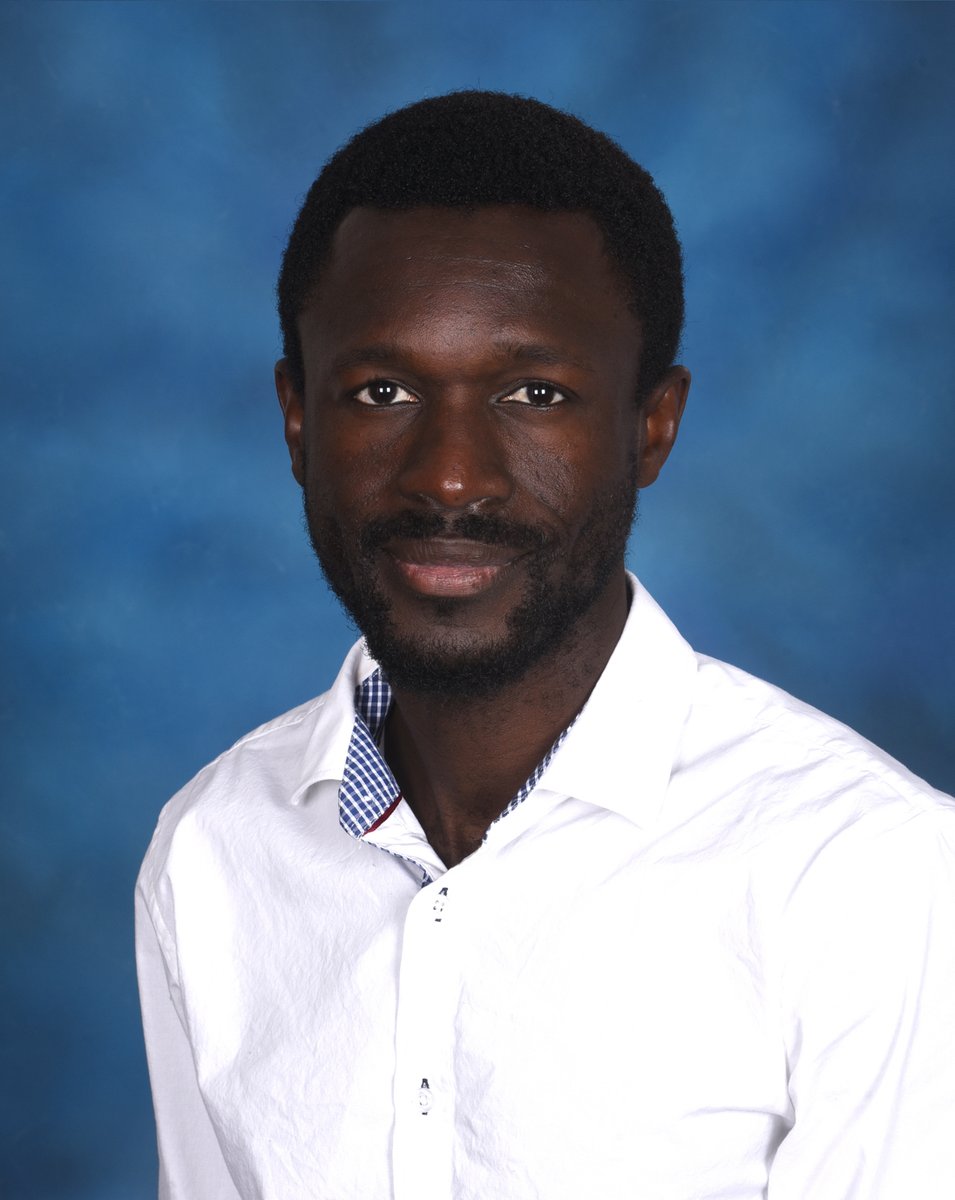
Postdoc at the University of Maryland and #ReviewedPreprint author Alagie Jassey is delighted to be able to give back to the teaching hospital laboratories where his scientific career began, using the award to buy microscopes and a trip to present at the University of The Gambia.
Postdoc at the University of Maryland and #ReviewedPreprint author Alagie Jassey is delighted to be able to give back to the teaching hospital laboratories where his scientific career began, using the award to buy microscopes and a trip to present at the University of The Gambia.
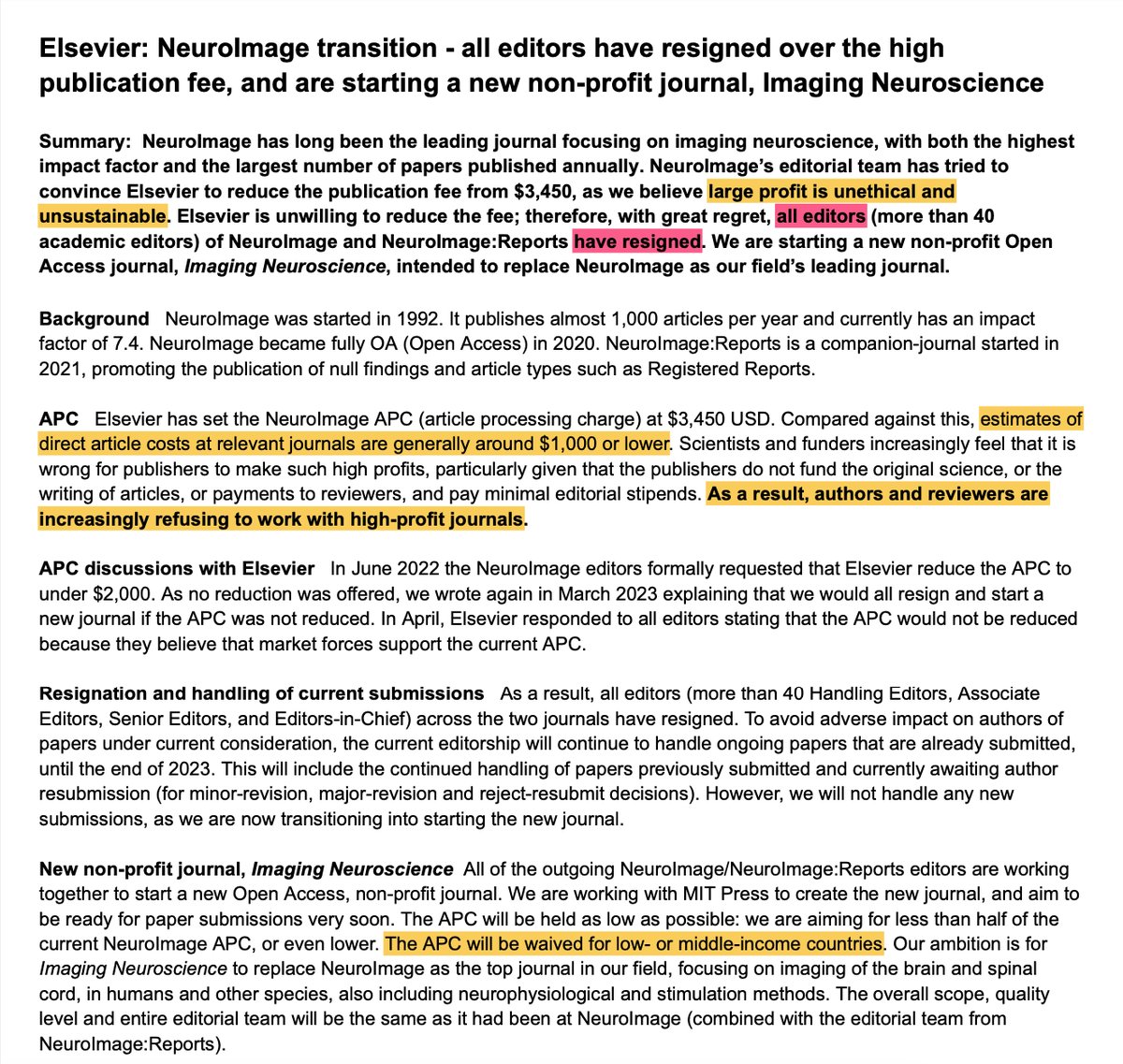
All Editors of NeuroImage (IF = 7) resigned because Elsevier didn’t want to reduce the hefty publication fee (it’s $3,450 !!!). And then started their OWN journal!
Just a reminder - the profit margin for academic publishing often reaches 40% (while for non-academic - 15%).
Obviously, who would reduce the profits to 15% only to make authors happy? It’s all about business. Profits should NOT drop.
This is one of the reasons why we have to pay A LOT to publish an open-access #research paper.
Let's look at numbers. NeuroImage publishes ~1,000 articles per year and it’s fully open access. Thus, it gives ~ $3.5 million in direct revenue from APC.
In the letter, the editors say that “the estimates of direct article costs at relevant journals are generally around $1,000 or lower”, which gives you some idea of profit margins just from this journal.
At first, the editors proposed a compromise by reducing the APC to $2000. However, after some “battles”, Elsevier stated that “the APC would not be reduced because they believe that market forces support the current APC”.
Outcome of this situation?
1. All 40 editors have resigned.
2. All editors decided to start a new NON-profit journal “Imaging Neuroscience”:
- It's under MIT Press
- Fees <50% of the current APC for NeuroImage
- The overall scope, quality level and entire editorial team will be the same as previously for NeuroImage
- The APC will be WAIVED for low- or middle-income countries.
My thoughts:
1. It is a great move by the editors. As I know how academics love to disagree with each other, I find this cooperative nature of their efforts mind-blowing.
2. This sets an example of how an editorial team can make their own journal.
3. This can be the beginning of a major shift in academic publishing.
Big changes take much time. But milestone events are often noticeable, and this resignation is clearly one of them.
Finally, all this suggests that prestige of a journal should NOT originate only from the impact factor and editorial board members.
It should be also based on how accessible the APC is for an average research group.
#science #AcademicTwitter
Logging in to twitter for the first time in a long time! Virology tweeps, if you're not aware of issues at the journal "Virology" you should probably take a minute to check something. (1/8)
It’s up to each individual to decide whether they want to serve this journal, I don’t care one way or the other, but it’s worth checking to see if your name is being used without your knowledge (or if it’s being hilariously misspelled!)
I have been told by colleagues that they didn't know they were listed as being on the editorial board. The board listings are also riddled with misspellings and inaccuracies. See if you can spot some of my favorites! https://t.co/e7Lw5suZhn
It’s up to each individual to decide whether they want to serve this journal, I don’t care one way or the other, but it’s worth checking to see if your name is being used without your knowledge (or if it’s being hilariously misspelled!)