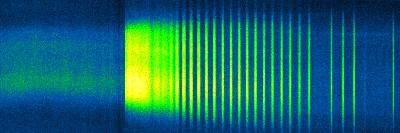
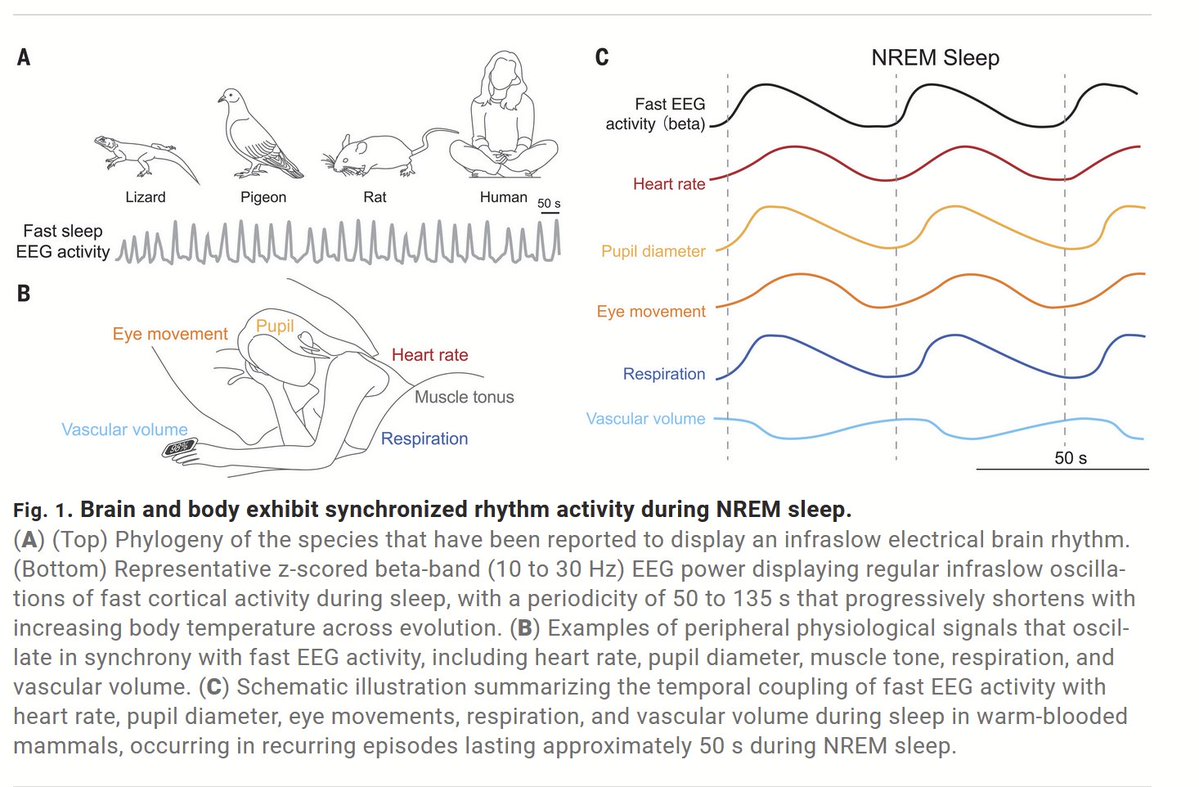
Sleep may synchronize the brain and body in ways that protect against dementia.
During sleep, norepinephrine, dopamine, serotonin, and acetylcholine oscillate together in ~50-second rhythms that help drive cerebrospinal fluid flow and glymphatic clearance of amyloid-β and tau. #SleepScience #Neuroscience #Dementia
https://t.co/DZajmvq1NB
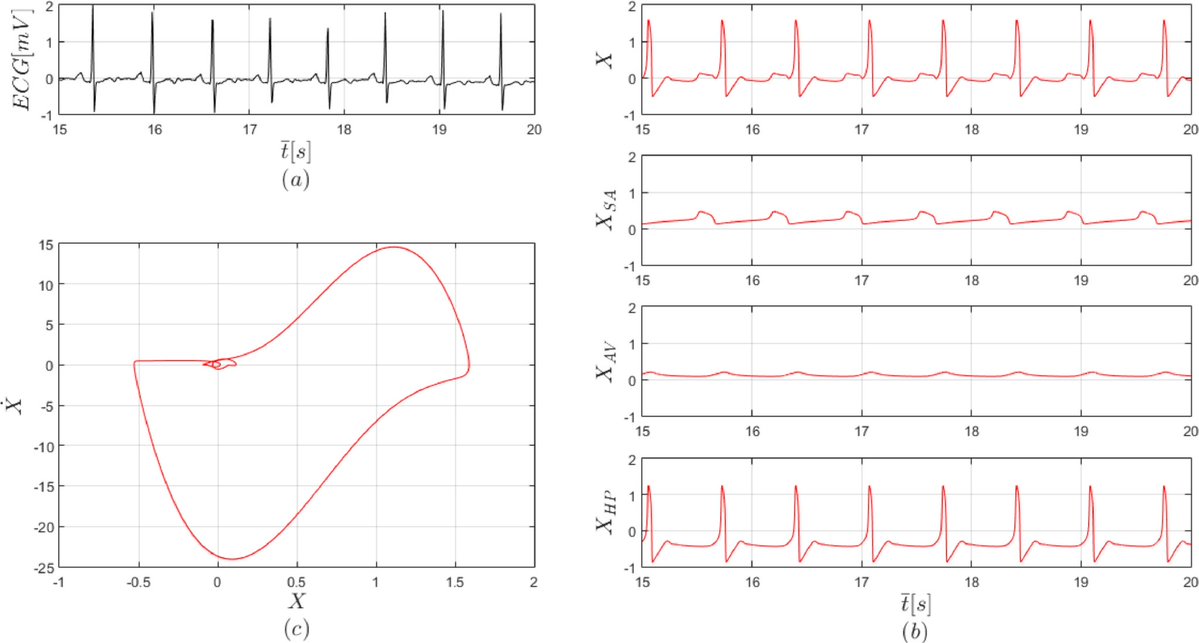
An interesting phenomenon in dynamical systems is the limit cycle.
A limit cycle is an isolated periodic trajectory, often taking form as a self-sustaining oscillation, where a system’s state follows a closed path and repeatedly returns to the same values.
@alec_helbling dynamical systems have so many more cool properties if you go from strict periodicity to allowing for things that are only kind of periodic https://t.co/ST98CCzYox
💥 🚀 New preprint! 🎉🥳
How do hundreds of organelles organize themselves into near-perfect patterns inside a cell, without a blueprint? We dive deep into how basal bodies (BBs) self-organize in MCCs - and how actin actively tunes their dynamics into order 🍪
����👇 (1/17)
When we looked closely, it was all there. High-resolution imaging confirmed that actin gradually organizes into a cross-linked meshwork around BBs. During expansion, it transitions from disordered → structured, forming “cushions” that keep BBs apart 🪢🪢🪢 🦾 (13/17)
~ memory is a flock of birds ~
i built a hopfield network and taught it the alphabet - then watched it remember in real time by adjusting the temperature.
no neuron has the whole picture. the memory is distributed across every neuron’s connections.
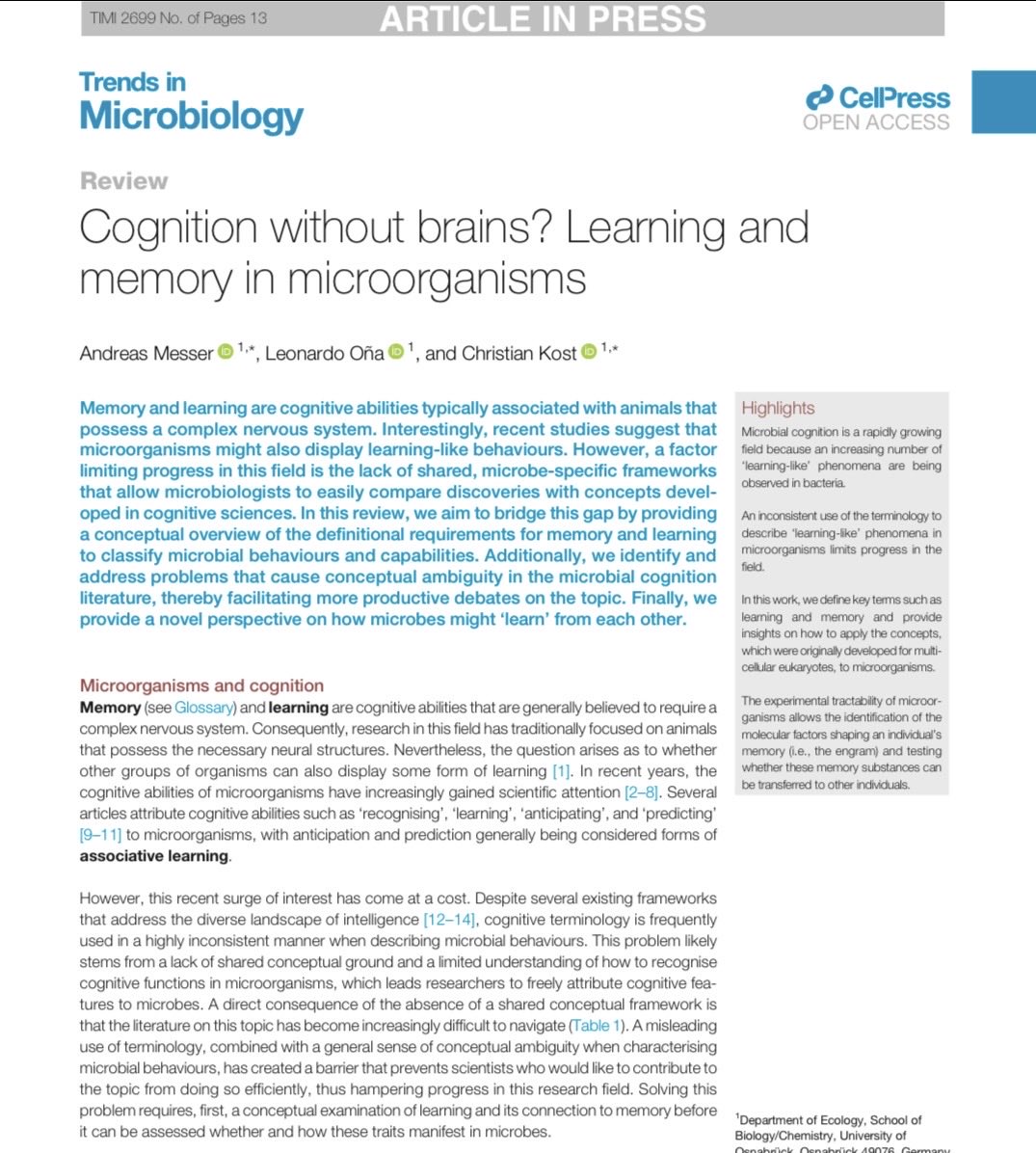
AI has stimulated great interests in single-cell cognition and learning. Although AI often drew inspiration from neuroscience, there are only a few cases these models shed light back on biology https://t.co/QU63sTyCsf
How can a single cell learn without a brain? We explore this in my new paper with @WallaceUcsf! We discovered that single cells may learn using molecules similar to those that animal brains use to learn, like CaMKII. Cells can also propagate memory states to their progeny! 🧵1/n
@silvirouskin Different NIH institutions were originally created for lobbying for more funding to basic research. Now it created the impossible task for explaining to the public that biology is not divided by these institutions. Talking about false premises.
"This is not biology! You can't get this in biology!"
Medicine laureate May-Britt Moser and artist Olafur Eliasson discuss the intersection of art and science at an event in 2015 at the Nobel Week Dialogue: The Future of Intelligence.
Watch the discussion in full: https://t.co/ugZ5SrR2BX
#WorldArtDay
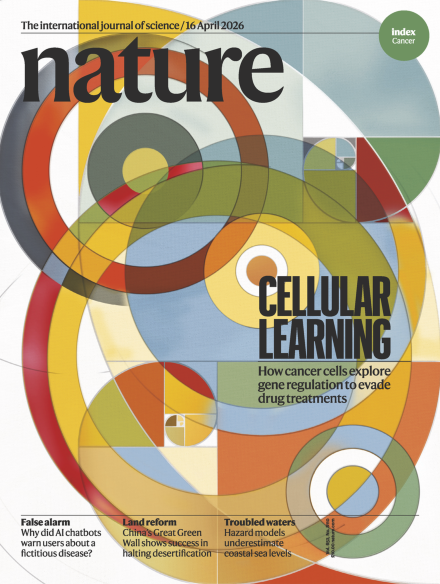
We're in this week's Nature! We propose a model of how a cell learns by running an evolutionary algorithm: exploring different gene-regulatory combinations and using feedback responses to stabilize those combinations that reduce stress levels.
Full text: https://t.co/yQYic2owl0
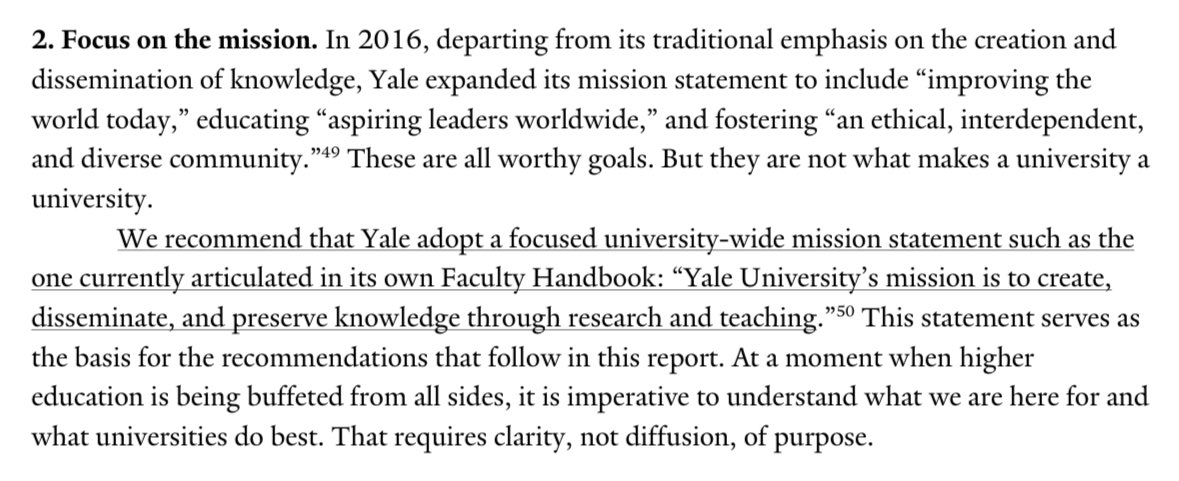
The second recommendation: “Focus on the Mission.”
“In 2016, departing from its traditional emphasis on the creation and dissemination of knowledge, Yale expanded its mission statement to include ‘improving the world today,’ educating ‘aspiring leaders worldwide,’ and fostering ‘an ethical, interdependent, and diverse community.’ These are all worthy goals. But they are not what makes a university a university.
“We recommend that Yale adopt a focused university-wide mission statement such as the
one currently articulated in its own Faculty Handbook: ‘Yale University's mission is to create, disseminate, and preserve knowledge through research and teaching.’ This statement serves as the basis for the recommendations that follow in this report. At a moment when higher education is being buffeted from all sides, it is imperative to understand what we are here for and what universities do best. That requires clarity, not diffusion, of purpose.”
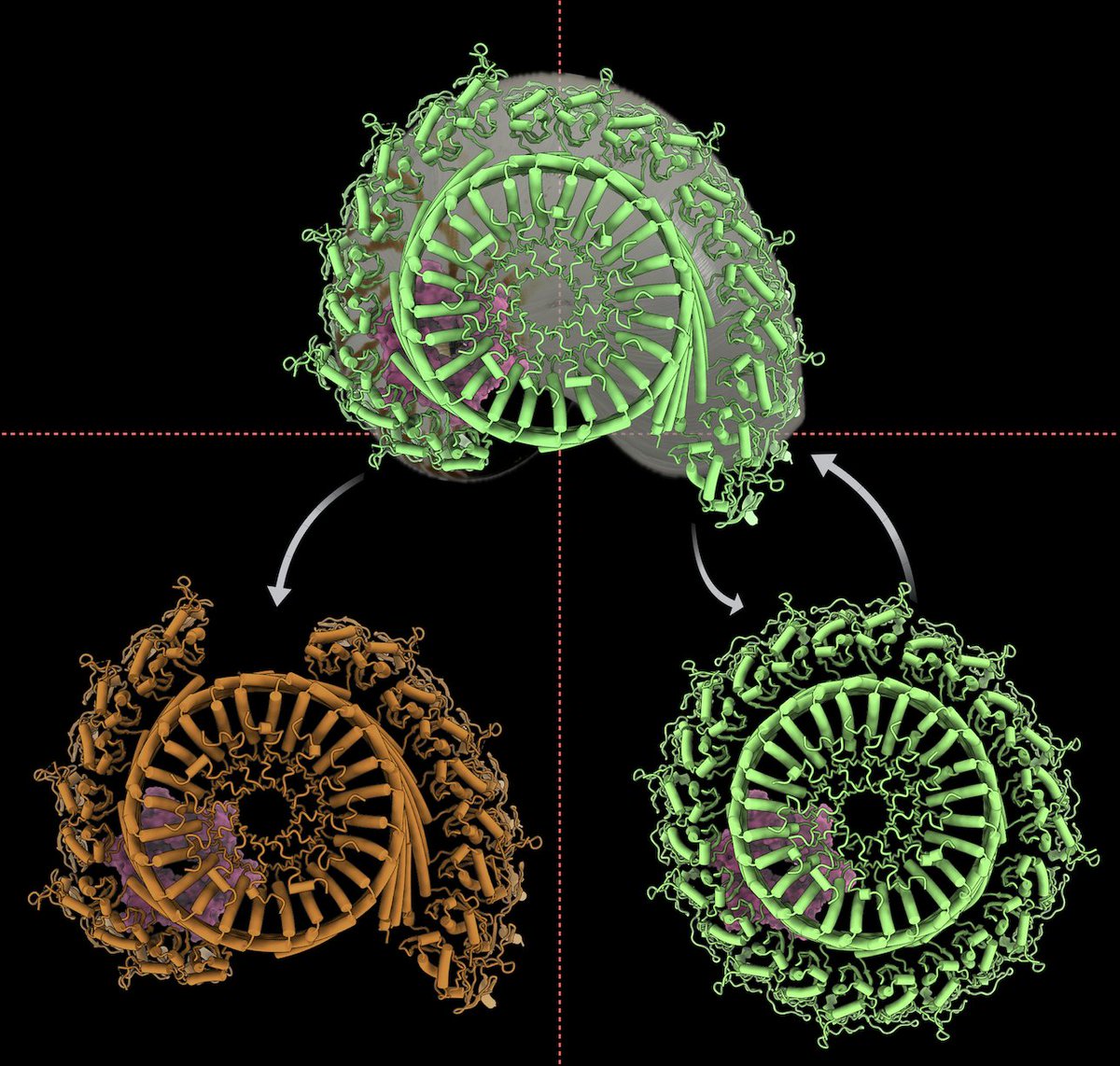
What is the biologically active conformation of SPFH membrane assemblies?
Our new @CellReports paper shows it’s the dynamics that matter. SPFH complexes switch states to regulate proteolysis and locking them “closed” impairs bacterial fitness under stress. https://t.co/qoW181hrZy
Did you think that small gene regulatory networks are only capable of very simple dynamics? Guess again! Even very simple networks are capable of a rich dynamics. Check out our brand new review paper in Current Opinion in Systems Biology: https://t.co/H5dnjNRm89
Calcium oscillations are one of the most universal signals in biology. Yet we still know surprisingly little about how these periodic (or aperiodic) events arise.
Happy to present our lab's latest work:
https://t.co/5Tztn1Ig2u