Today we are releasing Cloudflare OS, a chatbot with connectors, just like every other tech company is doing.
Except actually, it's different. This is a remake of Sandstorm[.]io, my startup from 10 years ago, except this time built on Cloudflare Workers (the platform I've spent the last 9 years building) and deeply leveraging AI. This is more or less the culmination of my secret 10-year master plan.
This is a full-on personal app vibe coding platform, in which the sandbox is so secure that you can pretty much go wild -- the AI cannot introduce a significant security bug. We believe a company's security team can feel comfortable giving non-technical users permission to vibe code and then sleep soundly at night.
How is that possible? It's the Sandstorm security model, revisited. A "Gadget" is the same thing as a Sandstorm "Grain": a fine-grained app instance. For example, if you have a document editor app, each document runs as a separate instance of the app, in a separate sandbox (one "Gadget").
This means two things, both of which I think are Big Deals:
1. The platform can manage all access control, by controlling who can access the Gadget at all. There is no way the Gadget can accidentally leak itself to an attacker -- even an attacker who has access to other Gadgets based on the same app.
2. Since everyone is running their own copy of the code, everyone can freely *modify* their copy of the code.
Think about #2 a bit more.
What if, when you wanted a new feature in the software you are using, you could just prompt your agent to add it?
This doesn't work in the cloud Software-as-a-Service model, because you are not running your own copy of the app.
Sandstorm tried to change that 10 years ago, but the world wasn't ready, because not enough people had the skills or patience to actually modify their software. AI has changed that. Now you just ask the agent -- the same agent that you are using to help you interact with the Gadget can also modify the code of the Gadget.
And it is so fun.
https://t.co/qzwdrAQhtK
everyone's talking about their teams like they were at the peak of efficiency and bottlenecked by ability to produce code
here's what things actually look like
- your org rarely has good ideas. ideas being expensive to implement was actually helping
- majority of workers have no reason to be super motivated, they want to do their 9-5 and get back to their life
- they're not using AI to be 10x more effective they're using it to churn out their tasks with less energy spend
- the 2 people on your team that actually tried are now flattened by the slop code everyone is producing, they will quit soon
- even when you produce work faster you're still bottlenecked by bureaucracy and the dozen other realities of shipping something real
- your CFO is like what do you mean each engineer now costs $2000 extra per month in LLM bills
How many trading accounts have you blown❓
The goal of this poll is to showcase top mistakes & help people learn from others mistakes.
Comment below the top mistakes you've made & share the biggest piece of advice you wish you would have known sooner!
I'll start 👇
I have been trading for close to 4 years. The first 2 years I felt lost & overwhelmed with very little progress. Sound familiar? If so, this thread is for you!
Here are 5 extremely important tips I wish I knew sooner that would have saved me a lot of time & money:
Oops.
$ROKU said it “does not know” to what extent it would be able to recover the cash it has deposited with the recently-failed $SIVB. Roku said it had cash and cash equivalents of around $1.9B as of Friday, with around $487M — or roughly 26% — at the bank.
Friday was a Significant day - Bank of Japan intervention and a Federal Reserve Policy path shift, it was an inside job. Three things you need to know:
https://t.co/9gkVoBIc5I
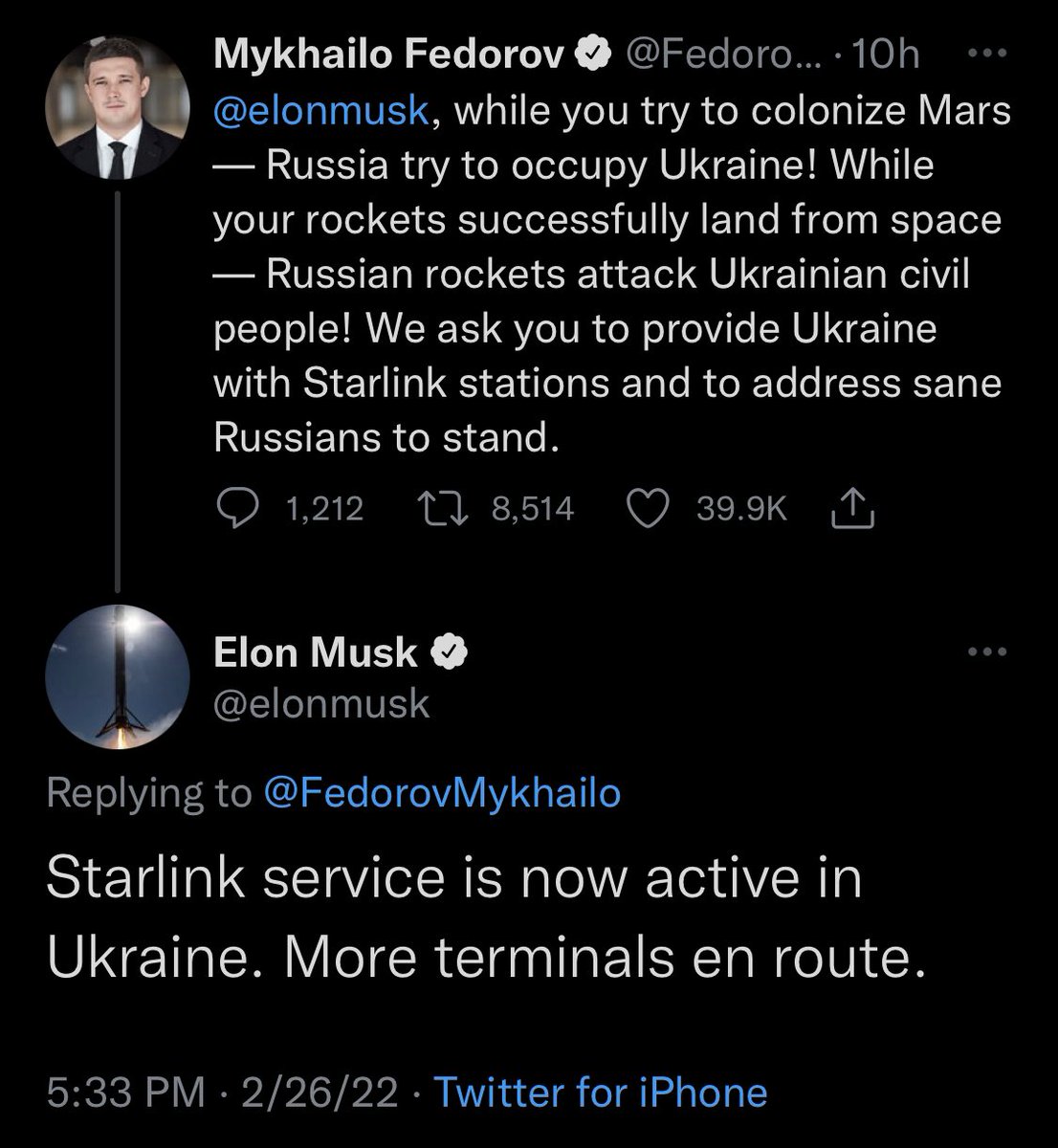
The Vice Prime Minister of Ukraine asked Elon Musk to get Starlink internet service to Ukraine and Elon responded 10 hours later that it was done.
Just incredible.