How does Amazon's KDP algorithm actually work?
After publishing 222 books and generating over $2M in estimated royalties, here's how I think about it.
First, nobody outside Amazon knows the exact formula.
But we do know enough to make better decisions.
1. RELEVANCE: Can Amazon find your book?
Amazon needs to understand what your book is about and which shoppers it might be relevant to.
Your title, subtitle, keywords and categories help communicate this.
If someone searches for "baseball mindset for kids" and you've written a book about exactly that, you want Amazon to understand the connection.
You can't sell a book people never discover.
2. CLICKS: Does your book attract attention?
Now imagine your book appears alongside 20 competitors.
Why should someone click yours?
Your cover is competing for attention in a sea of thumbnails.
Can shoppers read the title? Does the cover clearly communicate the topic? Does it look like something they'd want to buy?
This is why I'm obsessed with the squint test.
Getting impressions is one thing. Getting clicks is another.
3. CONVERSIONS: Do people actually buy it?
A click isn't a sale.
Once shoppers land on your product page, they're evaluating everything.
Your description.
Your price.
Your reviews.
Your sample pages.
The quality and relevance of the book itself.
You need to give them a compelling reason to buy yours instead of the alternatives.
4. SALES MOMENTUM: Is your book selling consistently?
Amazon's bestseller rankings consider recent sales, with recent activity carrying more weight.
This is why a book can climb the rankings quickly during a strong sales period and fall again when sales slow down.
But don't confuse bestseller rank with search position. They're different systems.
5. ADVERTISING: Can you profitably reach more buyers?
Amazon Ads can help get your book in front of relevant shoppers.
But paying for visibility doesn't guarantee organic rankings.
And if your book doesn't convert, increasing your budget can simply make you lose money faster.
That's why I look at royalties, advertising spend and profit rather than obsessing over impressions.
Here's the framework I use:
Relevance gets you discovered.
Your cover earns the click.
Your product page and book earn the sale.
Sales momentum influences bestseller rankings.
Ads help you test and scale demand, if the economics work.
The exact algorithm is a black box, and there's more to it than these five points.
But after eight years of publishing, I've learned not to waste my time looking for secret tricks.
Find a topic people want.
Make a book worth buying.
Present it better than the competition.
Then get it in front of the right readers.
Stop trying to beat the algorithm. Start trying to win the customer.
Designers & agency owners, lets connect 🙋🏻♂️
My path:
- Software engineer
- CPO & co-founder
- 2 companies founded, 1 exited
Now all in on Design Engineering.
AI writes the code.
It can't tell what feels right.
Taste is the one thing it won't replace.
What are you designing?
Cafe Cuties Icon sketches🍒🍓
I helped guide the overall art direction and visual style for the new Cafe Cutie icons. These are some of my early sketches!
I LANDED MY FIRST ADVENT CALENDAR CUSTOMER TODAY!!!🎄
We agreed on the price, but I'm not invoicing her yet.
She's my first customer, so I want to build it, test everything, and make sure she's happy before taking her money.
Does this officially count as a sale, or am I celebrating too early? 😂
day 9/90. €747 / €5,000
still sick. but progress is progress:
→ mockups + copy for my upwork profile are done
→ next: screen recordings to show the UI/UX in motion
→ framer template is in the final stages
almost there
#buildinpublic#framer
Working in a fast pace agency will make you to get used to churning out mid designs😂💔.
Since I stopped working at this agency, I have been learning how to design slowly, testing out variations which I don’t normally do before🫠.
As a small biz, $60k in receivables can break a business. I have to run payroll.
Clients assume we will reserve their date and services w/out a deposit. I don’t do that.
So today I’m building an agent named Natalie who will diplomatically be pursuing payments due 🙃
Still clocking in for someone else’s dream while your own ideas sit unused after 6 p.m.?
You’re not stuck. You’re just not charging for the stuff you’re already decent at.
These are 10 services people are quietly offering on the side—using skills they already have or can learn fast. No warehouse, no team, and no dramatic ���I quit” moment required.
1. Freelance writing or editing.
Businesses still pay real money for clear blog posts, newsletters, product descriptions, and emails that don’t sound like a robot wrote them. If you can explain things without putting people to sleep, you can charge for it. One good client can turn into recurring work you do after dinner.
2. Social media management.
Plenty of small business owners hate posting, replying to comments, or figuring out what to say. They’ll happily pay someone to handle it for them a few hours a week. You don’t need a huge following—you need to show you can keep a page consistent and not embarrass them.
3. Virtual assistant work.
Inbox cleanup, calendar scheduling, research, light bookkeeping, chasing invoices. Solopreneurs and small teams are drowning in admin and will pay someone organized to take it off their plate. This one is especially easy to start while still working full-time because the hours are flexible.
4. Short-form video editing.
Everyone is posting Reels and TikToks now, and most people hate editing. If you’re decent at CapCut, Premiere, or even just Canva + phone footage, you can turn long videos or raw clips into short, scroll-stopping content for coaches, local businesses, or creators. Demand is high and the projects are usually quick.
5. Graphic design or template creation.
Logos, Instagram carousels, pitch decks, Canva templates, thumbnails. You don’t need to be a full-time designer—just better than the average person with Canva. Many people sell simple templates once and keep getting passive sales, or do custom work for local businesses.
6. Online tutoring or skill teaching.
Whatever you already know well (a subject, a language, Excel, photography, guitar, coding basics), someone is willing to pay you to teach it one-on-one or in small groups. Platforms make it easy to start, and evenings/weekends work fine.
7. Bookkeeping or basic financial admin for small businesses.
A lot of freelancers and tiny companies hate keeping their books clean. If you’re comfortable with spreadsheets or tools like QuickBooks/Xero, you can offer monthly cleanup, reconciliation, and simple reports. Steady, repeat clients are common here.
8. Resume + LinkedIn rewriting.
Job seekers will pay to have someone make their experience sound stronger and more clear. You don’t need to be a career coach with a fancy title—just good at spotting weak bullet points and fixing them. This one has a clear, one-time deliverable that people understand quickly.
9. AI setup or prompt help for businesses.
Small companies know AI exists but have no idea how to actually use it without wasting hours. You can help them set up useful workflows, write better prompts, or turn ChatGPT/Claude into something that saves them real time. Early movers are still finding plenty of clients.
10. Product photography or simple UGC-style content.
Local shops, Etsy sellers, and small brands need decent photos or short videos of their products. A phone + decent lighting is often enough to start. You can also create user-style videos for brands that want authentic-looking content without hiring a full production crew.
Most of these work because they solve a specific pain for people who are busy or not great at that particular thing. Start with the one that feels least painful for *you*, get one or two small clients, and improve from there.
Which of these feels most doable for you right now—and what’s the skill you’re already decent at that you haven’t tried charging for yet?
Most times, you just need to follow your clients brief while maintaining your expertise as a designer.
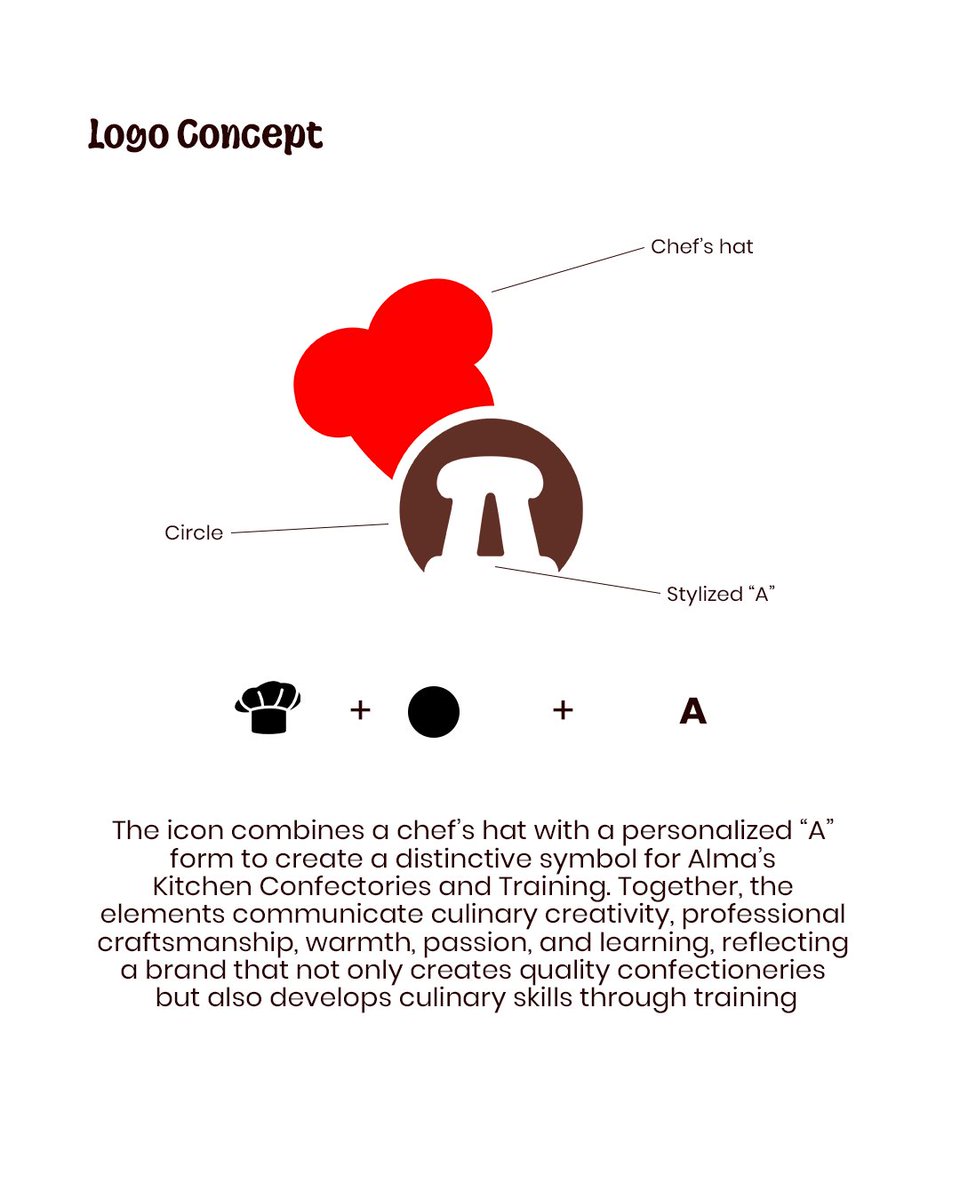
This is a mini brand Identity design I worked on. Mainly the logo and little visual systems for a Food Brand.
It's just one of the project I'm proud of this year.🎉💯
Redesigned an entire website in 10 days.
Day 1–2: UX audit. What’s broken, what’s working, what nobody uses.
Day 3–4: wireframes. No colour, no fonts, just structure.
Day 5–6: three directions. The client picked one.
Day 7–10: final designs and iterations.
Speed isn’t about rushing. It’s about deciding fast.