Nice example of R mottling, epigenetic silencing of the R gene when it is passed through the pollen. Why does it involve flipping from one state to another in sectors? We don’t know.
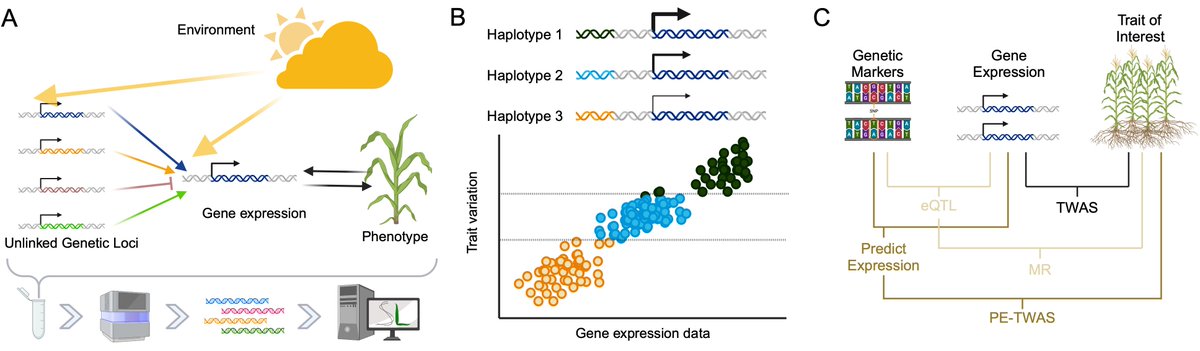
Transcriptome wide association studies in plants can address some of the biggest limitations of GWAS, particularly identifying specific candidate genes. New review lead by @vla_torres with input from @DelinBio (1/2)
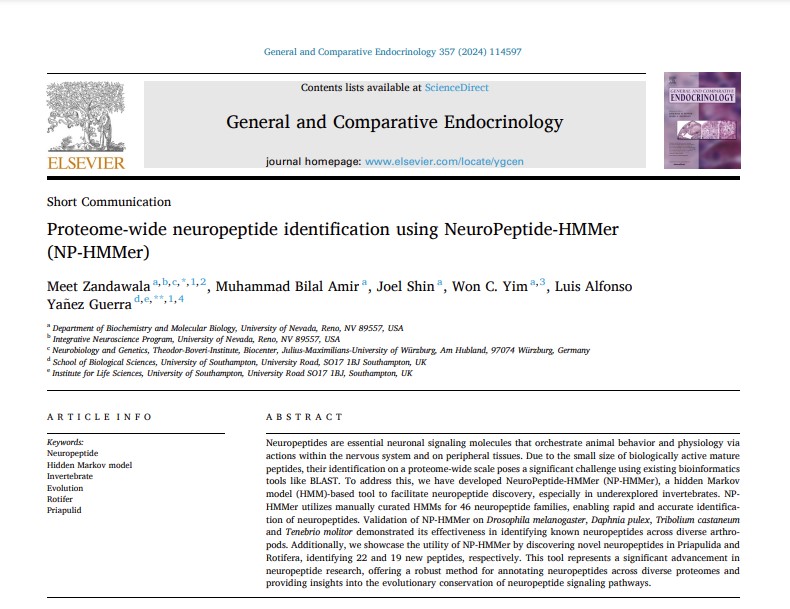
Just published: Our new tool, NeuroPeptide-HMMer, uses hidden Markov models to discover neuropeptides, even in underexplored invertebrates. It will help us uncover novel peptides and understand their evolutionary roles. #Neuroscience https://t.co/KhYagOHVEo👋@zandawala
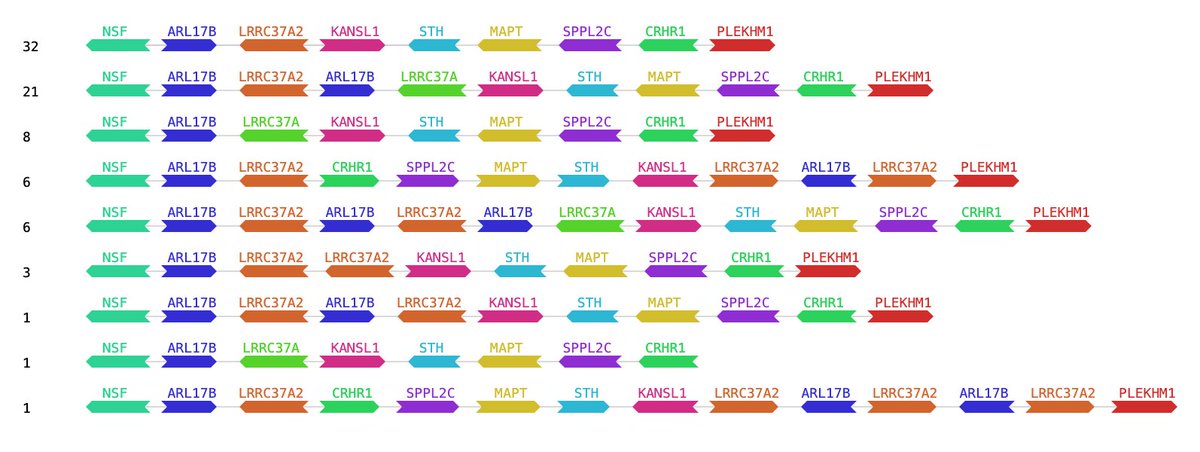
Pangene now published in Bioinformatics: https://t.co/lqGhzDJ938. In addition to showcasing applications (see the 17q21.31 inversion below), we also reviewed the theoretical formulation of bidirected graphs and discussed the definition and the finding of "bubbles" in such graphs.
Just published: JCVI library: a versatile Python toolkit that unites genome assembly, annotation, and comparative genomics. A must-have for genome research! #Genomics#Bioinformatics#Python https://t.co/TvtLqnZWK6
Our undergraduate researcher, Tianyu, gave a beautiful talk at the OSC Symposium focusing on the reimplementation of TIR-Learner v3 with efficient in-memory computation and clever multithreading schemes. Tianyu is looking for grad schools in computational biology!
In this study in @NatureGenet we deliver a new assembly to the Arabica coffee genome, tracing its origins to a fusion 610k years ago and identifying genes for disease resistance and chemical compositions. Thanks to all collaborators!
https://t.co/ZxT1cqYEVG
Minipileup, a straightforward pileup-based multi-sample variant caller. Useful for data inspection or when mainstream callers are not applicable. Initially developed in 2012 as part of htsbox. Now released in a separate repo: https://t.co/QXEkQXKSHz