A recent paper by @gsiemens et al. focussed on "artificial cognition as extending and augmenting human cognition", and here is a wonderful example of how to do it.
Can artificial intelligence classify philosophical ideas? I asked #GPT3 (not ChatGPT) to offer me tags for the 1603 sentences in my History of Philosophy and wrote a detailed post about the results, trying to measure GPT-3’s success in different ways:
https://t.co/k2s5xWk568
@denizcemonduygu@ChrisAldrich If I can be of any help, please tell me.
I did not use Force Directed, but a circle for the densely connected, and DAG for the rest.
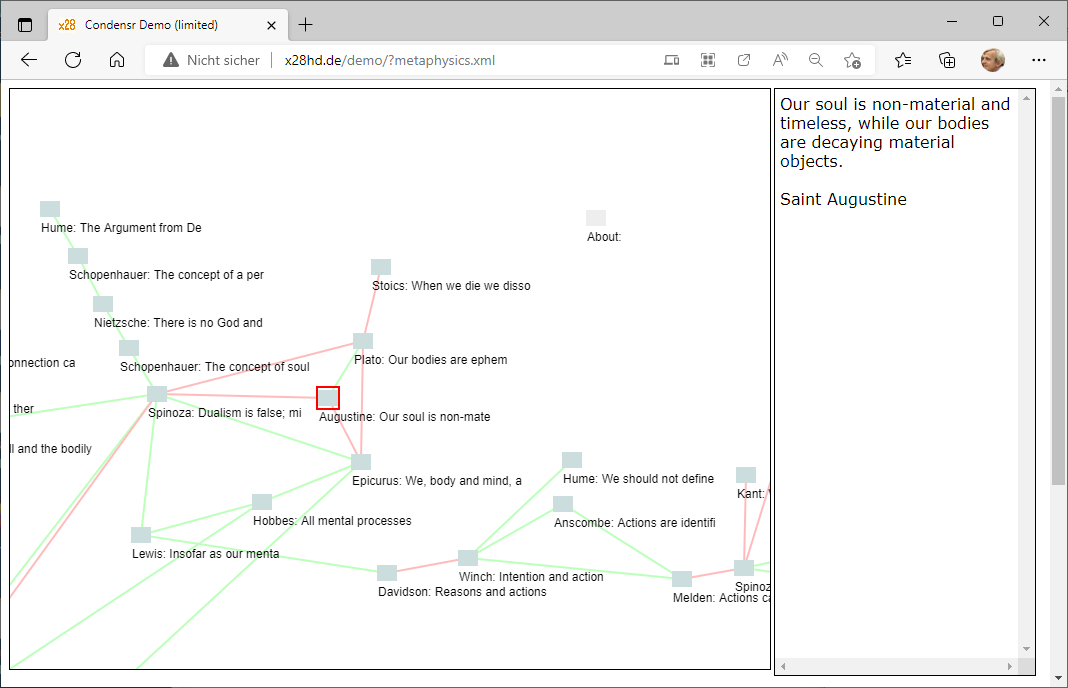
@ChrisAldrich I would love to see this great content by @denizcemonduygu in two dimensions rather than linear. I once copied a sample into the https://t.co/dcn8eSHGcl, see https://t.co/JR1ubsGnoC
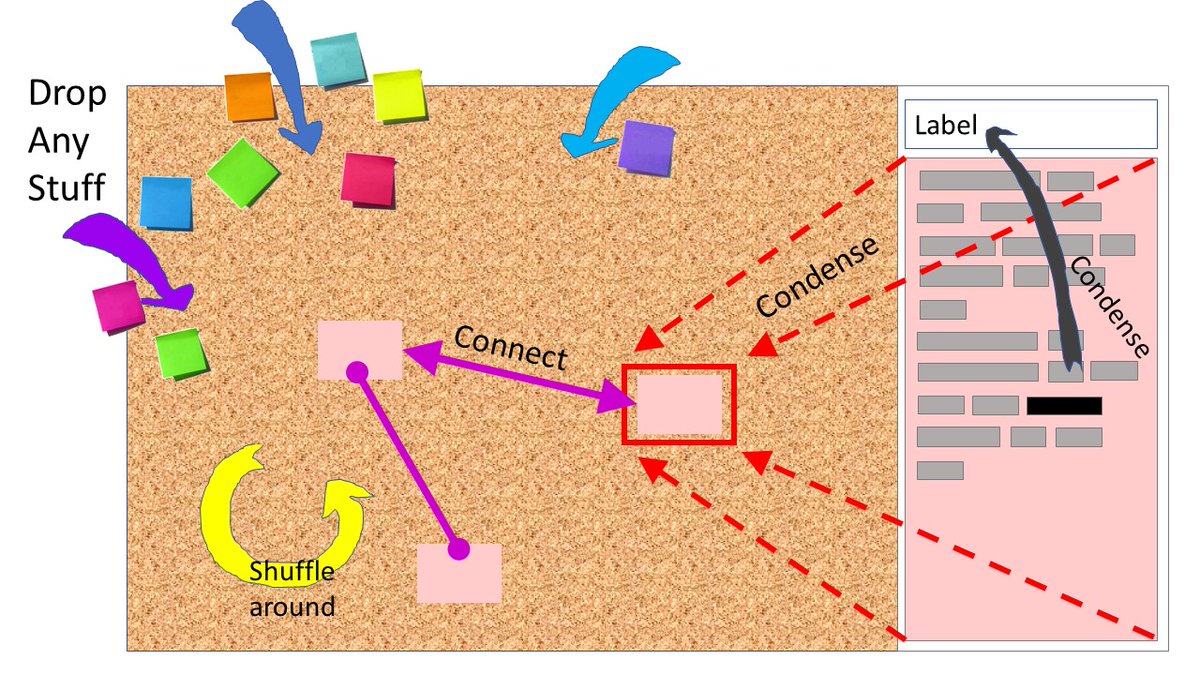
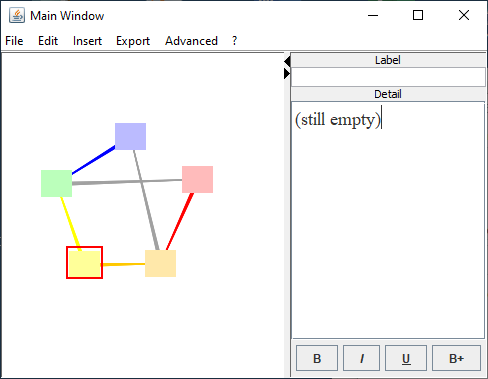
My tool has now a new Release and an updated User's Manual. But it is still a passive tool, like a hammer, not an active, distracting, patronizing and pampering prosthesis. #ToolsForThought
@jarango@saliemchiu What else? Perhaps Dillon's 1996 "Myths, Misconceptions, [...]" which attacked e.g. "Myth 1: Associative Linking of Information Is Natural in That It Mimics the Working of the Human Mind". In: Rouet et al. Hypertext and Cognition, Erlbaum