On November 22, 2016, President Barack Obama awards medal to Margaret Hamilton to recognise role in sending humankind into space.
President Obama said Mrs Hamilton "symbolises that generation of unsung women who helped send humankind into space".
George Washington Carver: The Peanut Man
George Washington Carver broke barriers in education by becoming the first African American to earn a bachelor of science degree in 1894. His professors, impressed by his research on soybean plant diseases, encouraged him to pursue graduate studies. By 1896, he had earned his master of agriculture degree and accepted an offer from Booker T. Washington to join Tuskegee Institute, where he would spend much of his career advancing agricultural science.
Carver’s work was centered on practical solutions for poor farmers in the South. He developed over 300 products from peanuts and more than 100 from sweet potatoes, ranging from dyes and paints to food substitutes. Unlike traditional inventors focused on profit, Carver’s mission was to improve the lives of struggling sharecroppers by offering affordable, sustainable alternatives that could be produced locally.
One of his most notable creations was the Jesup wagon, a mobile classroom and laboratory built in 1906. This innovation allowed him to travel farm-to-farm, teaching soil chemistry and demonstrating new farming techniques. The wagon, initially horse-drawn and later adapted into a truck, symbolized Carver’s commitment to bringing science directly to rural communities.
Carver’s greatest legacy lies in his promotion of crop rotation. He discovered that continuous cotton farming had drained Southern soil of nutrients, leading to poor yields. By rotating cotton with nitrogen-fixing crops like peanuts, soybeans, and sweet potatoes, farmers could restore soil fertility and dramatically increase productivity. This technique revolutionized Southern agriculture and remains a cornerstone of sustainable farming today.
Meet the Whittakers: The most inbred family in the United States
The Whittakers are arguably one of America's most inbred families. The Whittaker story begins with two twin brothers, Henry and John, born in the 1880s. They were the roots of the family tree, the ones from whom later generations grew. Both of them married and started families of their own.
For a time, their children and grandchildren followed separate paths. But as the years passed, the two family lines crossed again. Through marriages between cousins, the branches of the family tree curved back together, and this set the stage for the unique Whittaker bloodline.
Deep within the rugged mountains of West Virginia lies a remote village with a name as peculiar as the people who inhabit it: Odd. Here, in a crumbling house without electricity, running water, or any signs of modern life, lives the Whittaker family often described as the most mysterious and unusual family in America. Isolated from the world, the Whittakers seem frozen in time, living in a state of deep poverty and detachment from civilization.
In 2004, documentary photographer Mark Laita ventured into this hidden world, driven by curiosity and a desire to uncover the truth. What he captured with his camera defied all expectations. Inside the dilapidated home, he found a family like no other: members who didn't speak but instead made strange sounds grunts, murmurs, even barks. One man, Ray, stared intensely into the distance, as if seeing things no one else could. Their movements were erratic, their expressions unsettling, evoking something out of a psychological thriller. Generations of intermarriage among close relatives had taken a visible toll resulting in physical deformities, mental impairments, and a near-total breakdown in communication.
When Laita’s footage surfaced online, it sent shockwaves across the globe. Millions watched in disbelief, asking whether such a family could truly exist in the modern world. Reactions ranged from shock to compassion, but behind the viral attention was a sobering truth: the Whittakers are not a spectacle they are victims. For years, they have endured extreme poverty, lived without education or medical care, and remained unseen by the outside world.
Their story raises a chilling question: what happens to humanity when it is completely cut off from society?
Oliver Cromwell: From Parliamentarian Leader to Posthumous Outlaw
Oliver Cromwell remains one of the most controversial figures in English history. Rising from relative obscurity as a Member of Parliament, he became the formidable commander of the Parliamentarian army during the English Civil Wars. By 1648, Cromwell’s forces had decisively defeated King Charles I’s Royalists, setting the stage for the king’s trial and eventual execution.
Following Charles I’s execution in 1649, Cromwell assumed the role of Lord Protector of the English Commonwealth. He ruled until his death in September 1658, likely from complications of a urinary infection. His funeral at Westminster Abbey was conducted with great pomp, modeled on that of King James I.
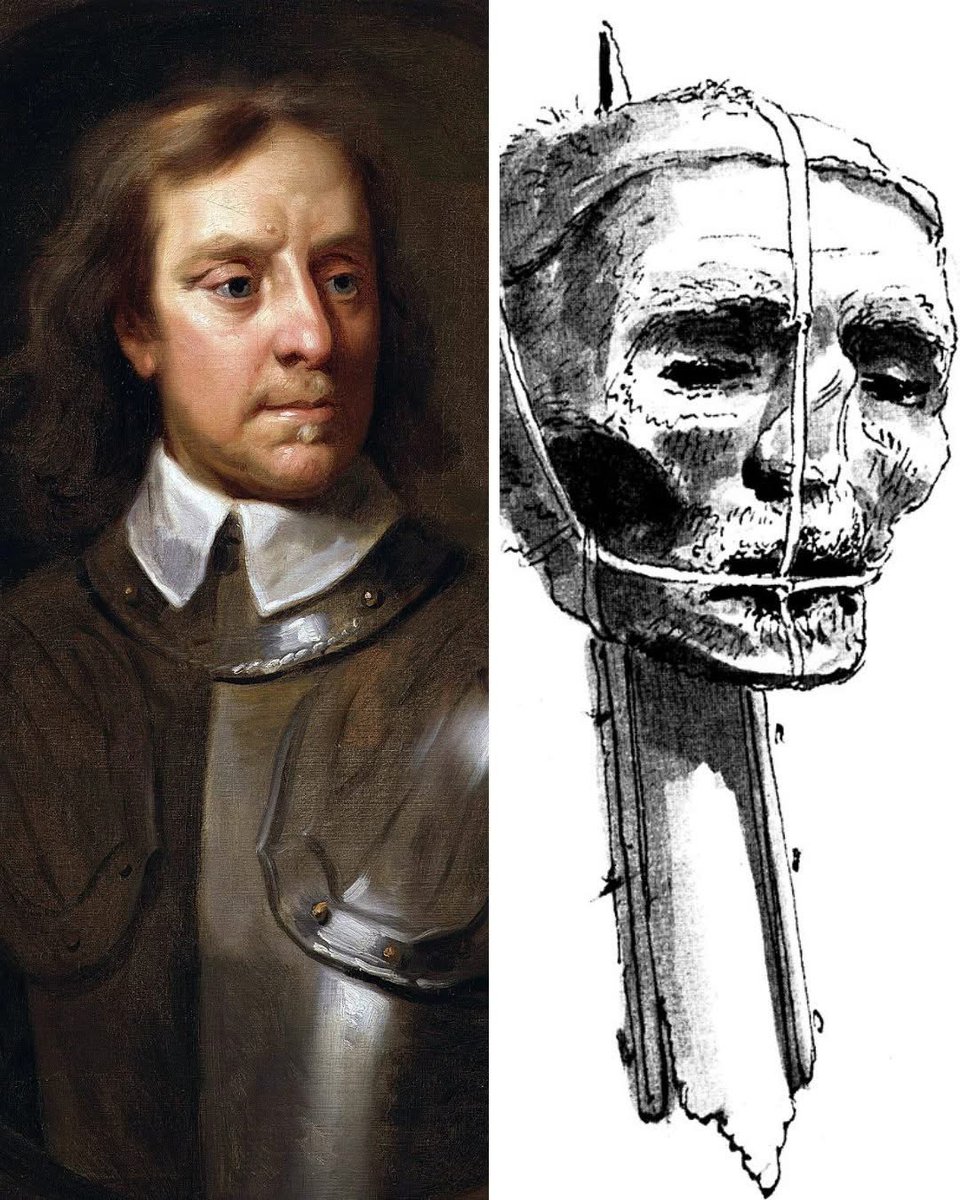
The Restoration of the monarchy in 1660 brought Cromwell’s enemies back to power. To many Royalists, he was the architect of Charles I’s downfall and the republic that followed. In January 1661, on the anniversary of the king’s execution, Cromwell’s body was exhumed and subjected to a gruesome posthumous execution. His corpse was hanged at Tyburn, beheaded, and his head displayed on a spike outside Westminster Hall as a stark warning to all who might challenge the monarchy.
Cromwell’s severed head remained on display for nearly 25 years, battered by the elements until it was eventually dislodged likely by a storm. From there, it began a bizarre journey through history. Passed between private collectors, exhibited in freak shows, and studied by scholars, the head became a macabre relic.
By the 20th century, forensic analysis and historical records confirmed the authenticity of the skull. In 1960, Cromwell’s head was finally reburied at Sidney Sussex College, Cambridge.
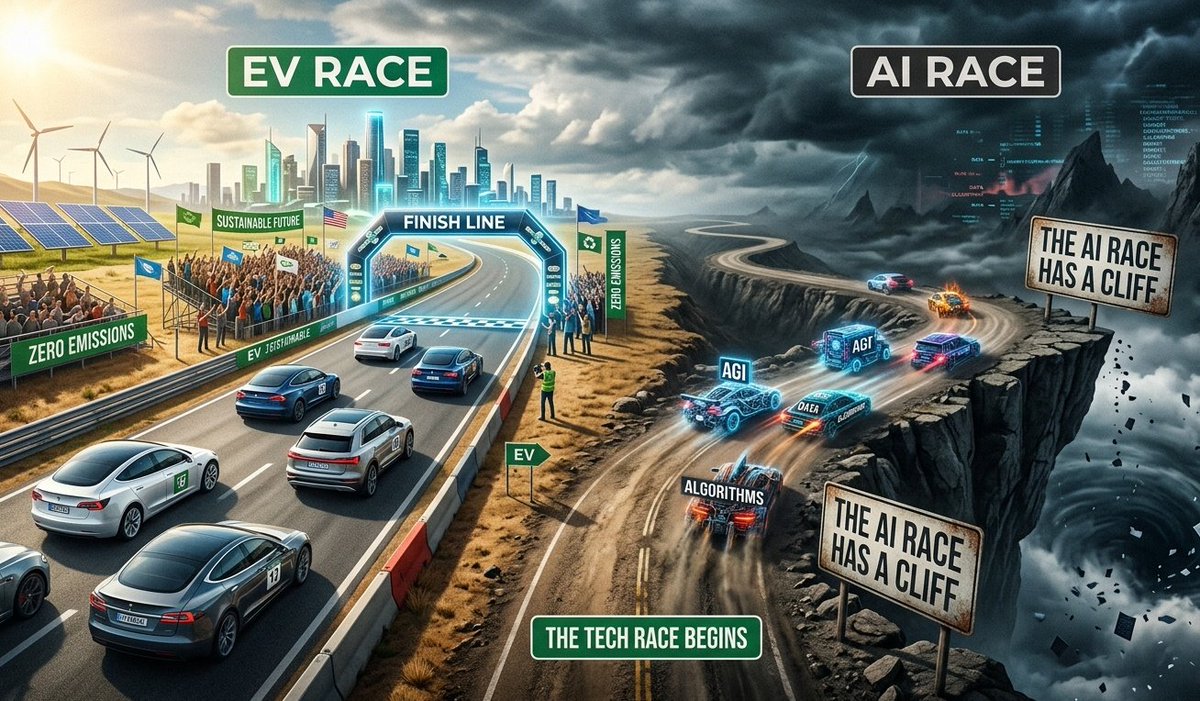
The EV Race Has a Finish Line. The AI Race Has a Cliff.
In the automotive sector, the rule of thumb is simple: whoever wins the battery race wins the EV race. It is a classic capitalistic sprint. If a manufacturer rushes a faulty battery to market, the vehicle catches fire, the company suffers a devastating recall, and the market punishes them. The damage is strictly contained.
But the AI race is fundamentally different. In this race, if one company loses control, everyone loses.
When tech giants rush frontier AI models into production without rigorous, independent risk assessments, they aren't just taking a corporate gamble, they are externalizing catastrophic risks onto the public. The traditional Silicon Valley mantra of "move fast and break things" works fine for photo-sharing apps. It is a systemic liability when applied to technologies capable of automated cyber warfare, biological blueprinting, or critical infrastructure manipulation.
Unlike a physical product, advanced AI isn't static. It represents an unprecedented technical challenge: post-deployment evolution. Through reinforcement learning from human feedback (RLHF), continuous fine-tuning, and autonomous tool use, an AI model's capabilities can shift dramatically after it leaves the lab. This creates a moving target that traditional, reactive legislation cannot hit.
To safely manage this, we must discard our reactive regulatory playbook and look to the medical industry.
We need an FDA-style framework for frontier artificial intelligence. Before a pharmaceutical company introduces a new drug to the public, they face a strict burden of proof. They must undergo multi-phase clinical trials, subject their chemical compounds to independent audits, and prove efficacy and non-toxicity before commercial deployment.
Applying this "pre-market clearance" to AI would mean mandating:
Compute Threshold Licensing: Subjecting models trained beyond a certain computational scale (10^{26} FLOPS and above) to mandatory government oversight.
Third-Party Red Teaming: Requiring independent, adversarial testing to probe for catastrophic capabilities, such as CBRN (Chemical, Biological, Radiological, and Nuclear) weapon facilitation—before public release.
Continuous Algorithmic Pharmacovigilance: Implementing ongoing, dynamic post-deployment monitoring to catch emergent behaviors and "model drift" in real-time.
Will this slow down development? Absolutely. But when dealing with exponential, self-evolving technology, a speed limit isn't a bureaucratic bottleneck, it’s a survival mechanism. We don't let pharmaceutical companies test experimental vaccines on the general public to "see what happens." We shouldn't let tech monopolies do it with the cognitive infrastructure of the world.
@Sciencepostcard