Most people think the best athletes are exceptionally good at controlling their emotions under pressure. And there's something to that, but "control" turns out to be the wrong word, and the difference isn't just semantic.
Emotional control and emotional regulation aren't the same thing. Control implies suppression: push the feeling down, stay locked in. Regulation is something more precise: knowing what the emotion is doing, where it's pointing, and whether to move with it or redirect it. One of those is trainable. The other mostly just creates a pressure cooker.
Think about what Joe Montana actually did in that huddle before the 92-yard drive. He didn't tell his linemen to calm down or focus up. He pointed to the stands and said, "Hey, there's John Candy." That's not emotional suppression, that's redirection executed at a level most coaches never even think to teach. And the reason it worked is because Montana was regulated enough to read the room, then do something completely unexpected with it.
Composure isn't the absence of pressure. It's knowing which direction to move it.
Ok hear me out for one second.
Please do not laugh. Just one second.
What if….
$HOOD buys $BULL?
It’s literally just a few billion dollars in market cap only now. A fraction of Robinhood.
They can easily double their active user count, get exposure to int’l, which oh btw IBKR and SCHW has access to already. And now really own the retail and young Millennial and Gen Z market.
It’s unthinkable I know.
But remember when TD Ameritrade got bought out by Schwab? Why not Robinhood and Webull then?
Not totally crazy right?
Or do you want to smoke what I am smoking?
@Clement_Ang17 I appreciate your insights and transparency. They're very helpful in the current market conditions. You're a real pro. Keep going!
What books are you rereading that have inspired you most?
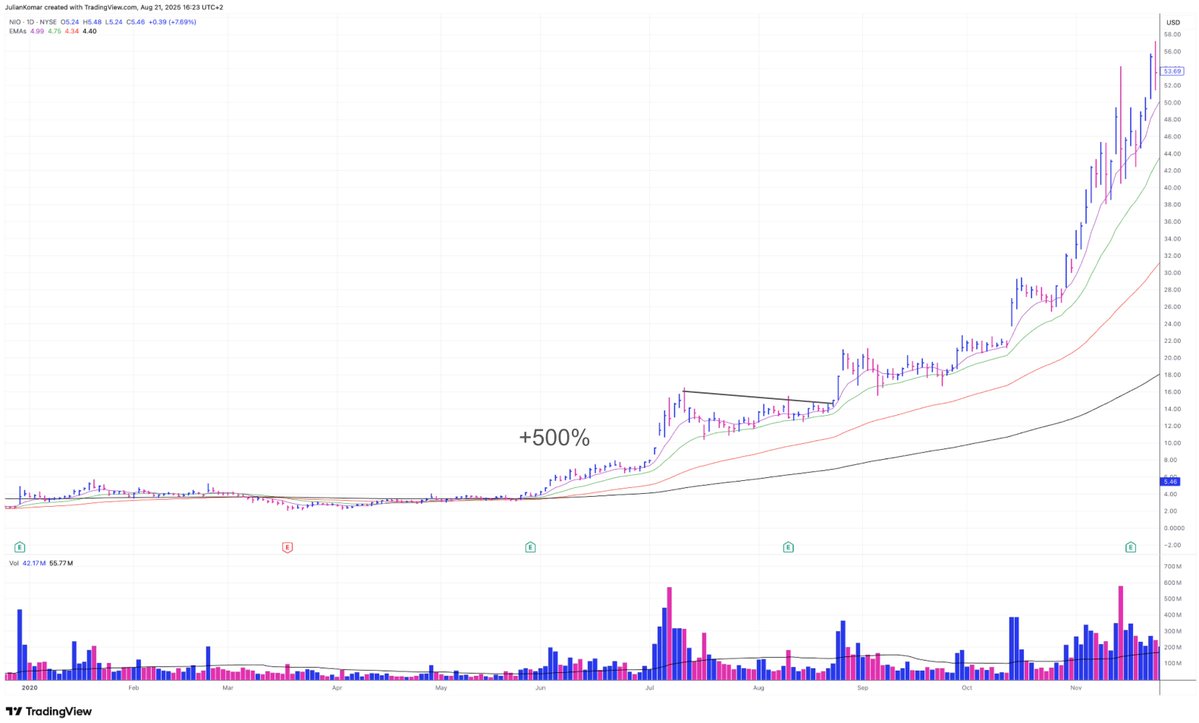
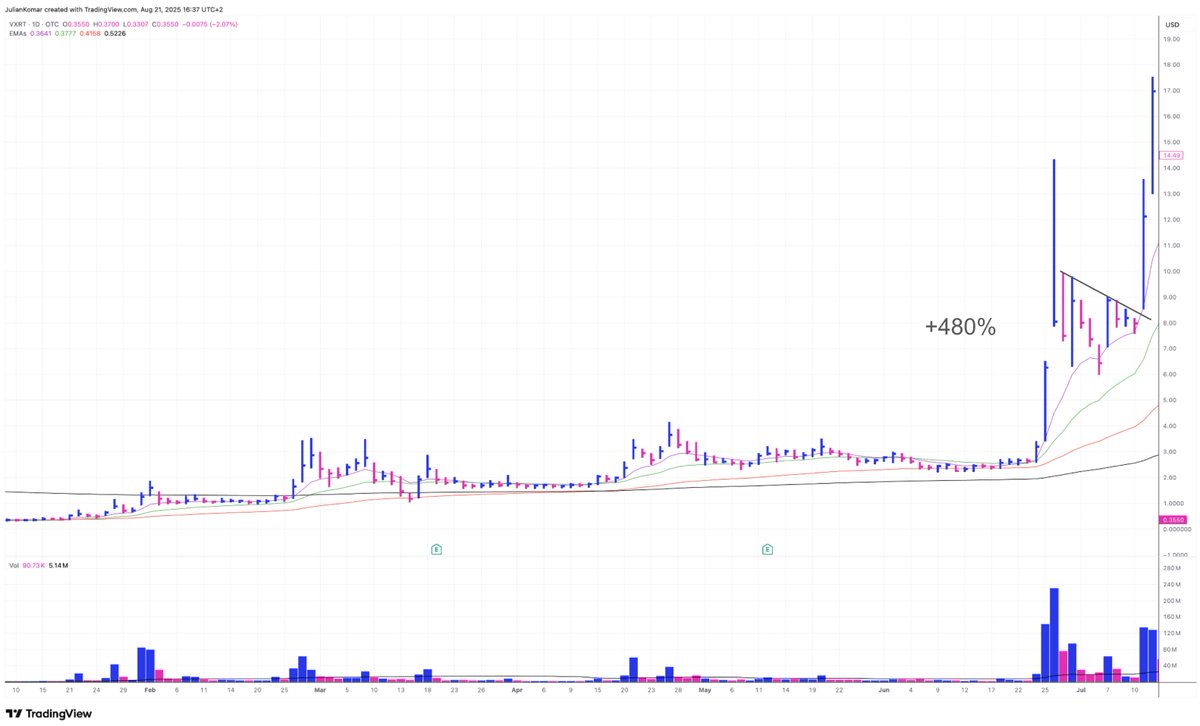
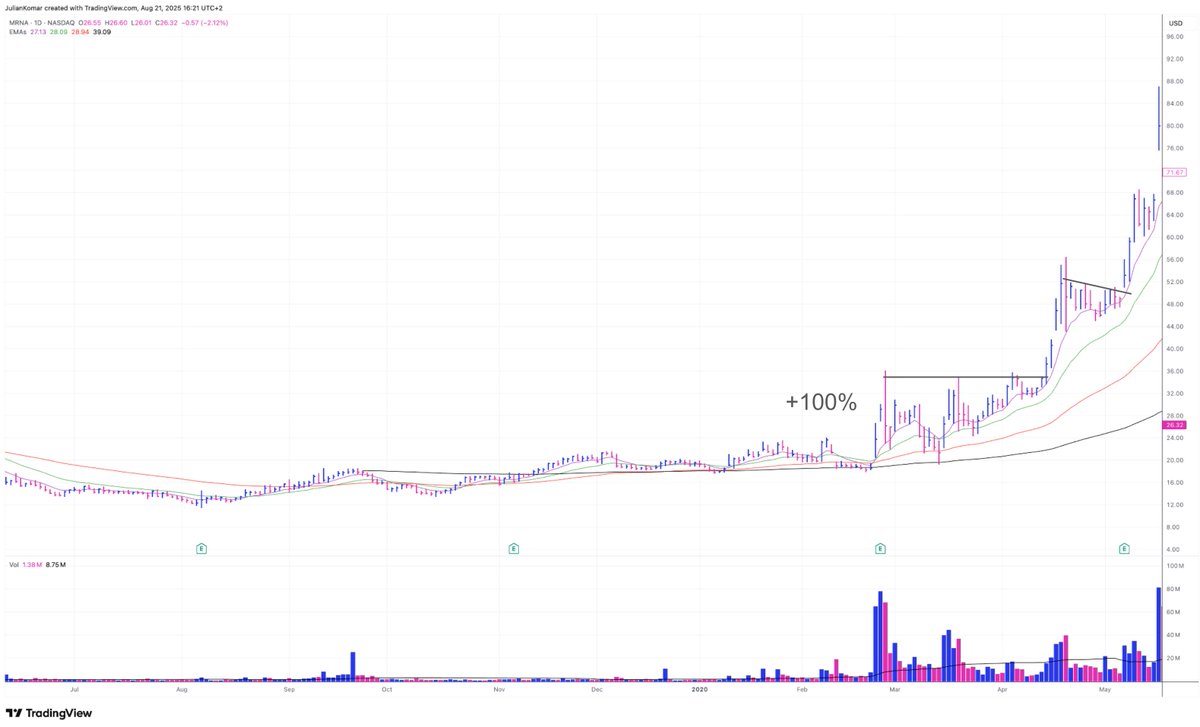
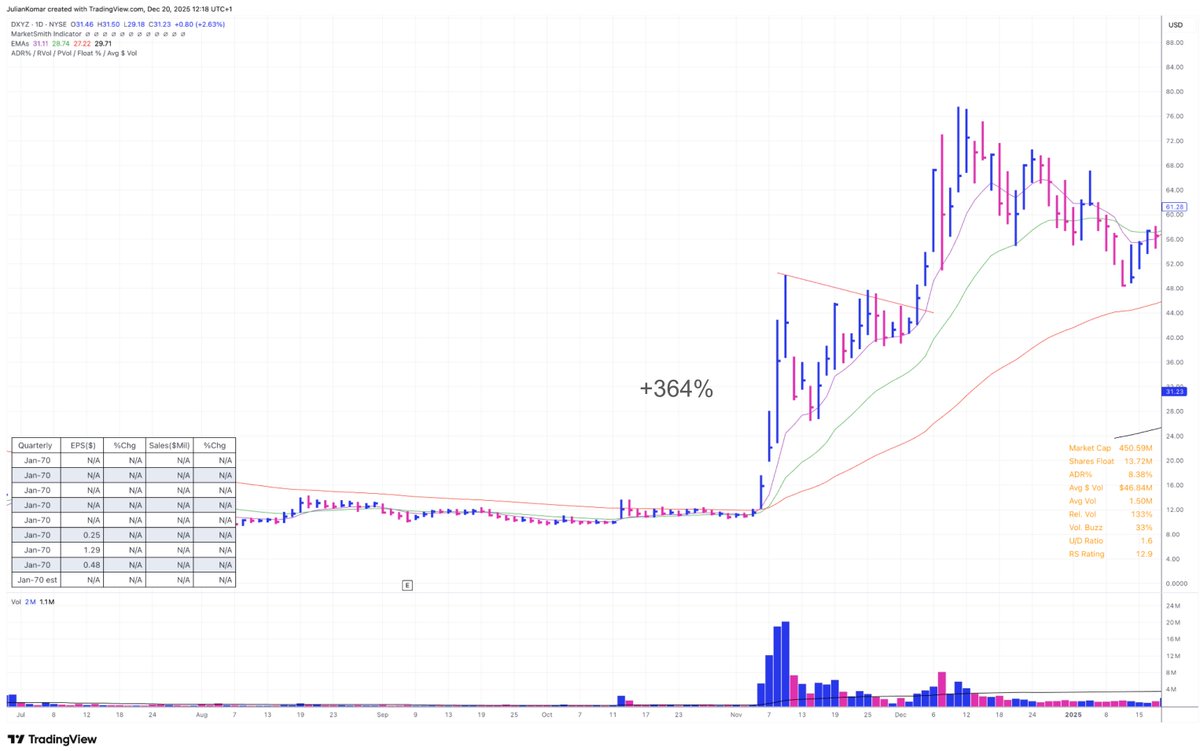
99% of traders can’t wait for 5-star setups. 😖
But your main job is not trading.
It’s waiting.
Waiting for setups so clean, so obvious, that ignoring them would feel stupid.
Setups where you think: “If this fails, fine — but I have to take this.”
That’s 5-star territory.
And it’s brutally hard.
I’m not immune to impatience.
I feel FOMO too.
I still sometimes trade things I know aren’t A+.
That’s human and most of my mistakes are very cheap.
But when I review my trading year, one thing is always clear:
Almost all profits come from very few trades.
Not from being active or busy.
Here’s what waiting for 5-star setups really looks like:
1) You say no all the time. To 99% of all stocks and to 80% of all setups.
Most charts look “okay.” Okay trades bleed capital and confidence.
2) You get comfortable with boredom.
If trading feels exciting, you’re probably doing it wrong.
The best phases feel quiet: Either you are waiting for good setups or sit in big winners.
3) The work happens before the move.
Creating a watchlist. Defining levels. Calculating risk.
When it triggers, there’s no debate. Only execution.
It takes me 1 second to execute a planned trade.
4) You accept missed trades.
Missing a winner hurts.
Sitting in bad trades hurts much more.
There a re lot of stocks moving higher without showing a good setup.
5) You let the market come to you.
No chasing. No hoping. No convincing yourself. Just waiting for great setups.
When you trade fewer, better setups:
– Stress drops
– Mistakes shrink
– Confidence builds
– Results finally compound
There is nothing that feels better:
- The planned trade.
- The one you waited weeks for.
- Low risk. Real upside.
That’s where the money is.