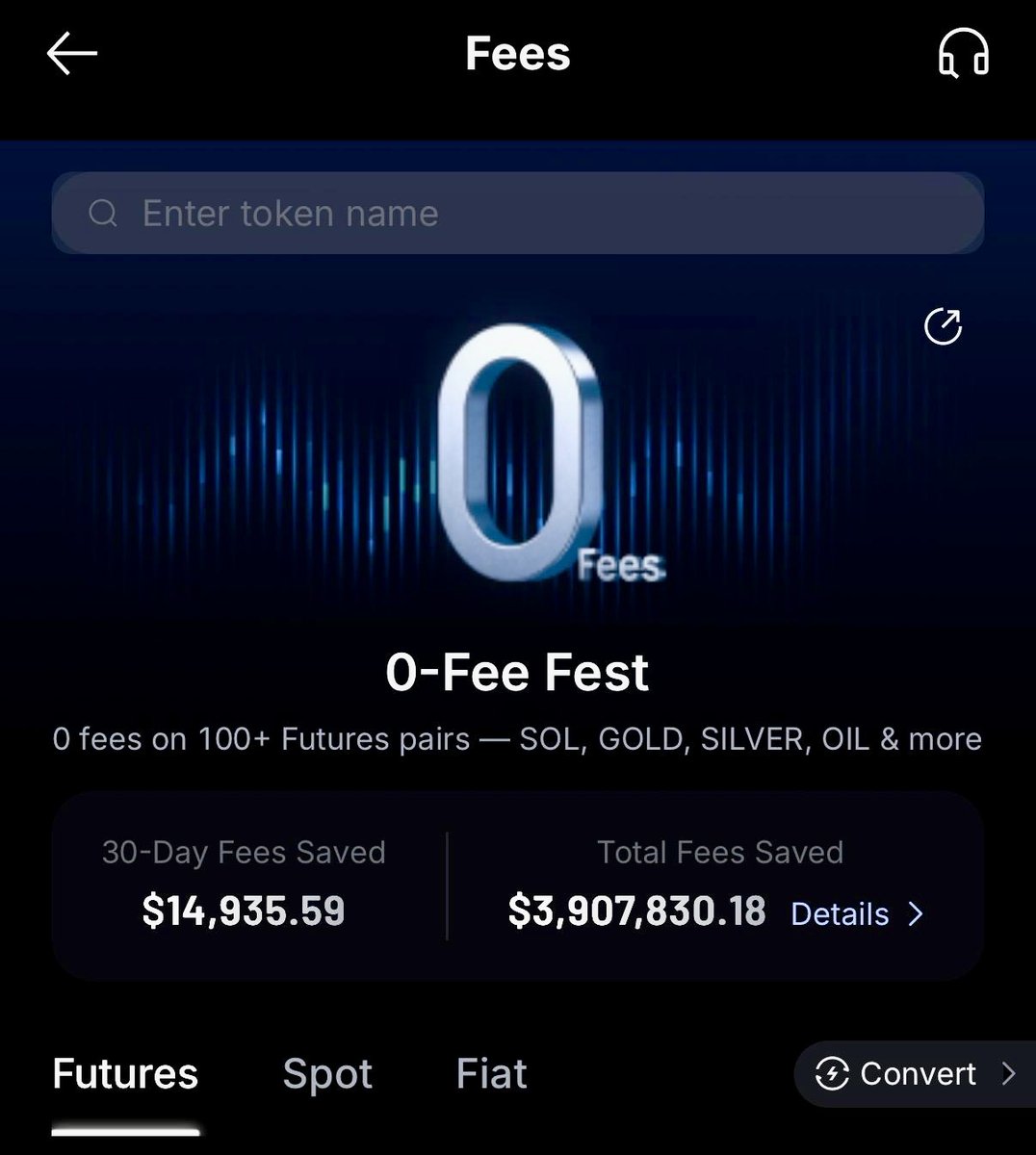
Where you trade really does matter, a lot more than most think.
Fees look small, until you actually see the impact. We’ve lived it. When you trade real size, those numbers add up fast.
We’ve traded over 7.33B USDT in volume on @MEXC and saved around 3.9M USDT, just from lower fees.
That’s money saved on fees and commissions.
Pick the right exchange and you’re already ahead. Pick the wrong one and you leak profit on every trade.
We’re not guessing. These are our trades, our results.
Real trades. Real scenarios. Real impact.
@TheCryptoSquire What's left to watch is how the final framework handles token classification, exchange oversight and the SEC/CFTC split. That's where the real market impact is likely to come from.
@CoinMarketCap 29 is still well above the kind of panic levels that have historically marked major capitulation, typically when the index falls into the low teens or even single digits.
@cryptorover The purchase itself is notable, and the average entry price may be even more interesting. Allocating at these levels reflects Bitcoins increasingly being treated as a strategic balance sheet asset rather than a tactical trade to time.
@DeItaone Inflation becoming harder to bring down is a very different problem from inflation taking off again. This cycle markets kept debating when rates would fall. Sticky inflation simply makes that timeline harder to price with confidence.
@Hedgeye Capital spending eventually shows up in supply chains. Semis have become one of the clearest expressions of the AI infrastructure buildout and trade flows are increasingly reflecting that.
@Cointelegraph A trend that has been building for years. CBs have been steadily diversifying reserves, with gold benefiting from a world that looks increasingly multipolar and less reliant on a single financial anchor.
@Hedgeye The move itself isn't that unusual, it's the level where it's happening that stands out. Bitcoin still trades as a liquidity-sensitive asset and liquidity has been driving price action far more lately.
@cryptorover Correlations rarely breaks forever. While software continues to benefit from the AI Capex cycle, Bitcoin is still trading more like a liquidity asset. This divergence may be telling us something about where capital wants to be right now.
@Cointelegraph Oracle infrastructure has become critical for the entire DeFi stack. The more capital flows through these systems, the lower the market's tolerance for outages like this.
And still holding near elevated levels. Gold has seen multi-month pullbacks before during periods of stronger $ positioning or higher real yield. However, structurally, this cycle still looks very different from previous ones, given the scale of CB buying and the macro uncertainty underneath.
@Hedgeye One sector absorbing this much of total S&P capex usually means the market is repricing what future economic leadership will look like. Worth watching how long margins can sustain these levels if rates remain structurally higher.
One of the most important macro lessons: bond yields aren’t just “interest rates”. They’re the price of money across the global financial system.
When long-duration sovereign yields rise together across major economies, the effects cascade everywhere underneath: mortgages, government refinancing, tech valuations, private markets and global liquidity itself.
After years of QE and near-zero rates suppressing yields, markets are now repricing what long-duration risk actually costs.
That doesn’t stay contained to bonds. It reprices capital everywhere.
@misterrcrypto Markets always knew the debt was there, but what's changing now is the cost of carrying and refinancing it in a structurally higher-yield environment.
@GlobalMktObserv Higher yields are never isolated to one country or one central bank cycle. When long-duration borrowing costs start repricing globally at the same time, liquidity conditions start changing everywhere underneath.