Claude Code、Codex 写代码越来越快
但项目做大之后,回头再看自己的代码库,反而容易一脸懵:
模块之间怎么调用?
数据从哪里进,又流向哪里?
开源工具:Oh My Mermaid
它可以让 AI 自动扫描整个代码库,生成带 Mermaid 图表的可视化架构文档
在 Claude Code、Codex 等 AI 编程工具里输入一条指令,就能分析项目结构、模块关系和数据流
遇到复杂模块时,它还会继续向下递归拆解
为每个子模块生成独立图表,并在本地整理成清晰的目录树
生成后的文档可以直接在浏览器里交互查看,也能同步到云端分享给团队
如果项目已经大到自己都讲不清架构了,用它扫一遍,会比重新翻代码省事很多。
I genuinely don't understand why everyone isn't using this yet.
Andrej Karpathy, OpenAI co-founder, posted a simple idea that went massively viral:
Stop using AI to write code.
Use it to build a second brain.
You point Claude Code at a folder. Drop in any source: an article, a transcript, a PDF.
Claude reads it, links it, files it into a living wiki of everything you know.
It compounds like interest. The more you feed it, the smarter it gets.
Here's the whole thing:
1) Install Obsidian
2) Create a vault
3) Open it in Claude Code
4) Paste Karpathy's wiki idea and tell Claude to build it
5) Claude makes three folders:
- raw (for sources)
- wiki (for its pages)
- CLAUDE. md (that runs it)
6) Drop any source into raw and say: "ingest this"
7) Ask questions across everything, forever
Five minutes to set up and you never start from a blank chat again.
Full step by step guide below.
Steal this. Give this article to your Hermes agent and say...
"Read this playbook. First, audit yourself against all 12 jobs in here and score where I actually am on each. Then map my stack: what memory, project tool, and APIs am I missing? This article uses Obsidian for memory, Linear for work, and connects Granola, Gong, and HubSpot. Tell me which of those I have and which gaps are costing me the most. Then pick the one change that buys me the most time this week, and set it up with me right now, step by step. Last, design me a /goal loop so you keep grinding on it after I close this thread instead of waiting for my next message."
TWO WEEKS AGO ANTHROPIC OPEN-SOURCED THE OBSIDIAN VAULT THAT RUNS THEIR ENTIRE COMPANY. THIS GUY IN TOKYO REBUILT IT FOR HIS OWN BRAIN IN 3 MONTHS
40 books in. 12,000 atomic notes. 0 flashcards
feeds every book, paper, and podcast transcript into Claude. Asks for atomic notes - one idea per note, phrased as a claim. Pastes into Obsidian. Links each note to whatever it touches: past readings, half-finished ideas, working questions. Reviews the graph once a week. Six months in, one new idea instantly connects to twenty things he already knows. His graph looks like a smaller version of Anthropic's
he doesn't know what "active recall" means. He's never watched a productivity YouTube video. He picked the whole workflow up from one tweet in April
started in April
still on default Obsidian. no plugins, no premium templates, no fancy tag system
you're reading this on a device that could open Claude and Obsidian side by side tonight and start the same graph before bed
@HowToPrompt__ They have some work to do https://t.co/NGhBS4ILwr cuts context by over 90% and runs entirely on device. Also it's trimodal working across audio, vision and text.
China has killed the entire vector database industry.
They open-sourced TencentDB Agent Memory. It gives any AI agent long-term memory that runs 100% locally.
No Pinecone. No cloud APIs. No repeating yourself every session.
- 61% fewer tokens
- PersonaMem accuracy: 48% → 76%
- Zero external API dependencies
- Runs on plain SQLite
Most memory systems compress your history into an opaque vector pile. when recall goes wrong, you're guessing. this one doesn't compress, it builds a semantic pyramid.
L0 Conversation → L1 Atom → L2 Scenario → L3 Persona.
Short-term state gets encoded as a Mermaid graph in your agent's context. verbose tool logs get offloaded to disk. when the agent needs proof, it drills back via node_id to the exact raw log.
no lossy compression. every layer is readable markdown you can just open and inspect.
5.1k stars. 100% Open Source.
Por aca te dejo 6 repos de AI Agents que están creciendo rápido en github
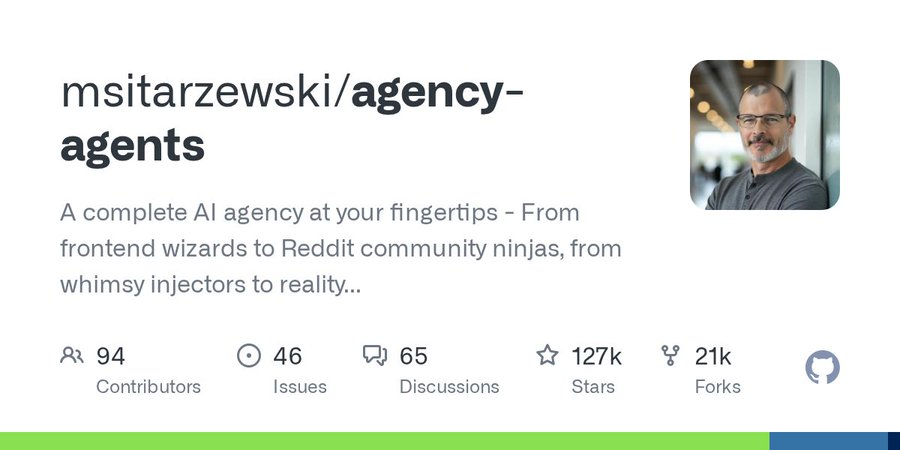
1. agency-agents
Agencia de IA completa con 232 sub-agentes especializados en 16 áreas (frontend, Reddit, copywriting, etc.). Se instala con un solo script en Claude Code y otras herramientas.
https://t.co/ShBpArRMNt
2. codebase-memory-mcp
Convierte todo tu codebase en un knowledge graph ultra rápido. Soporta 158 lenguajes, reduce tokens más del 99% y responde en milisegundos.
https://t.co/RWnCvNRGVL
3. OpenMontage
Convierte tu agente de coding en un estudio completo de producción de videos. Planificación, guion, assets, edición y renderizado con solo prompts en lenguaje natural.
https://t.co/DMbUQbjd5j
4. Agent-Reach
Dale “ojos” a tu agente para navegar internet. Lee y busca en X, Reddit, YouTube, GitHub y más. Todo gratis combinando herramientas públicas (sin pagar APIs).
https://t.co/uXVIElF7Mk
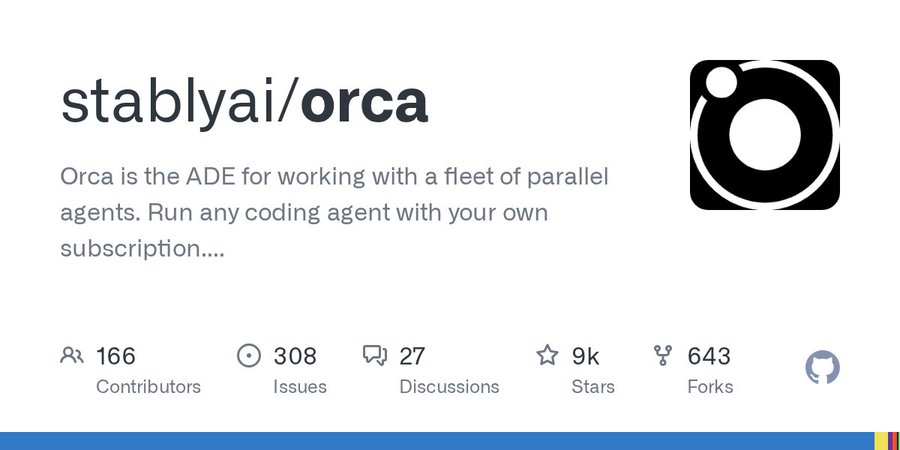
5. orca
Gestiona y ejecuta múltiples agentes de coding en paralelo. Disponible en desktop y móvil, usando tu propia suscripción. Ideal para trabajar con flotas de agentes.
https://t.co/xUsr4Q1YuX
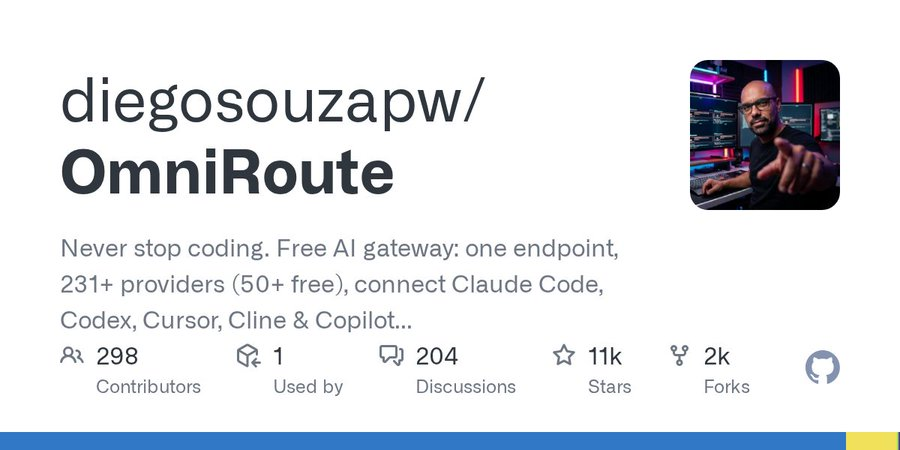
6. OmniRoute
Gateway gratuito que une 237 proveedores de IA (90+ gratis) en un solo endpoint. Reduce el consumo de tokens hasta un 95%. Perfecto para Claude Code, Codex, Cursor, etc.
https://t.co/WAkQa7Cx5F